 GSP
12 GSP training topics
Every common GSP challenge, with first steps and guides to read.
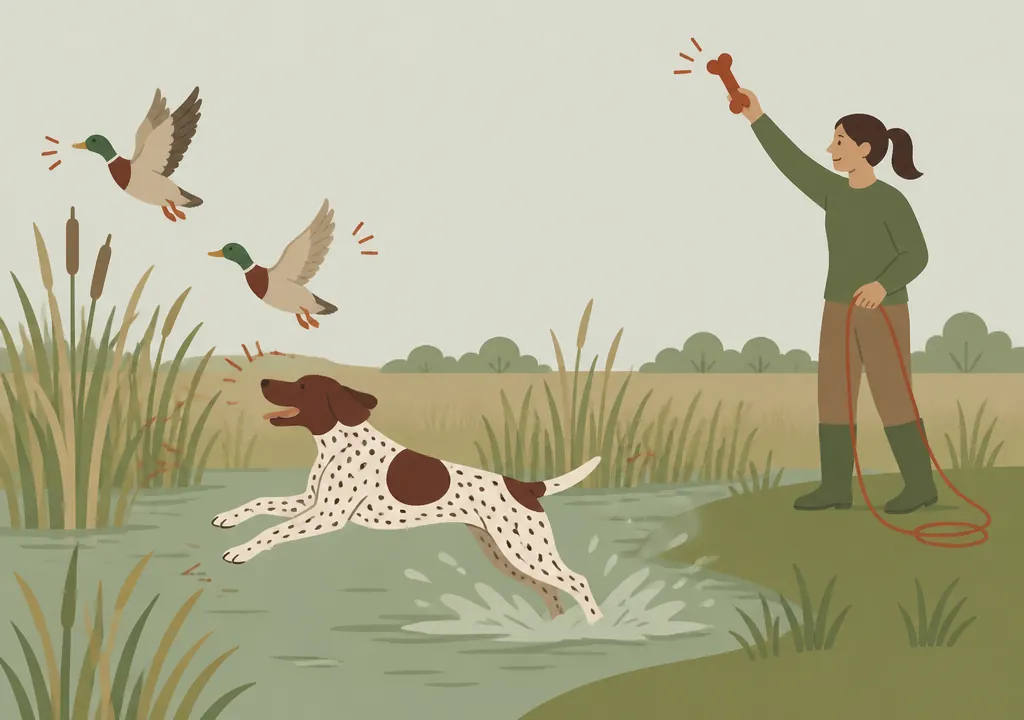
Running off after birds
A recall that beats a flushed bird.
No birthday arrives when a German Shorthaired Pointer suddenly owns a reliable recall. A young dog turns in the kitchen, then fails when open space, motion and scent compete, so build reliability in stages on a long leash.
The full guide follows recall from the first head turn through arrival and distraction.
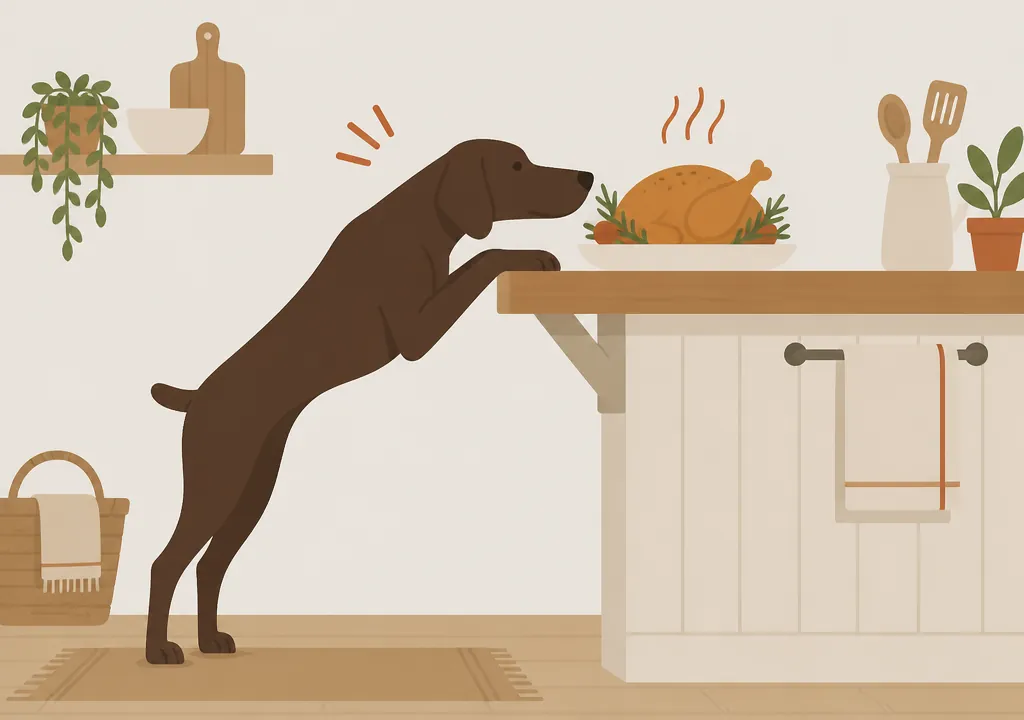
Counter surfing
A tall dog and a tempting kitchen.
A tray of cupcakes is vulnerable while you find a container, answer the door or carry the first plate into another room. For a German Shorthaired Pointer, that unfinished household task may create the only opening needed. Moving food farther back helps only if the dog truly cannot reach it and nobody leaves the next item near the edge.
The kitchen plan therefore needs to cover the work between putting food down and putting it away. A gate, a comfortable waiting place and clear responsibility for plates can make that work much easier.
Read the full guide: Cupcakes on the Counter: Keeping a German Shorthaired Pointer Off
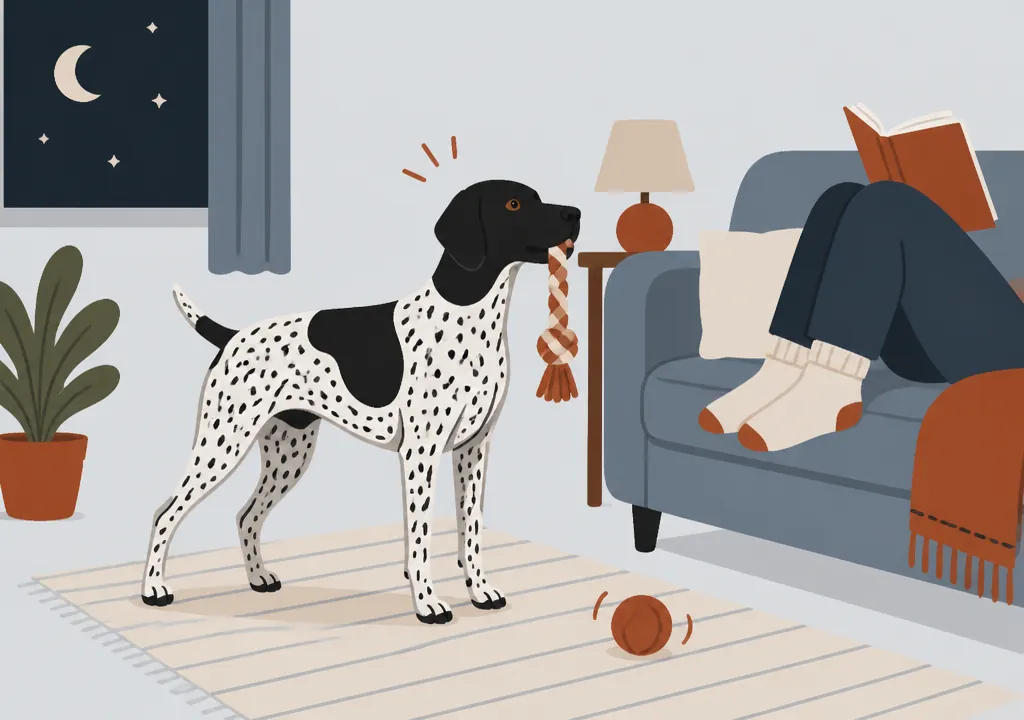
Never settling
An off switch for a working dog.
Two walks done, and at nine at night the GSP is still tearing laps around the living room. Nothing is wrong, since the breed rates 5 of 5 for energy and for mental stimulation needs.
The full guide sets out the running and hiking that make a settled evening possible.
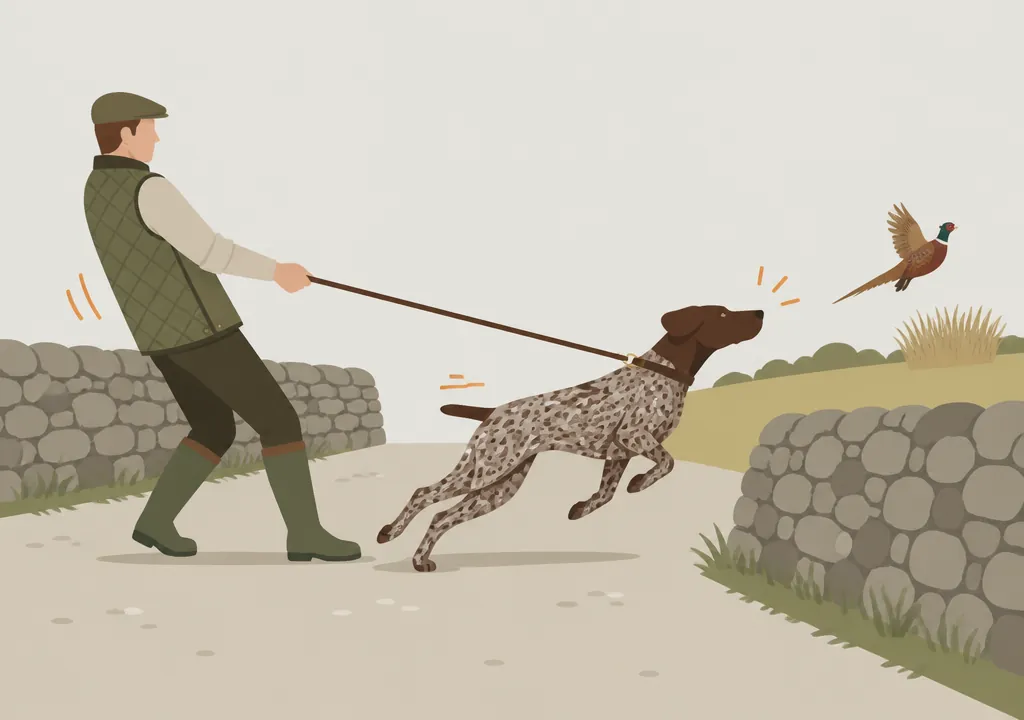
Pulling on the leash
Loose leash walks with a strong dog.
Where you step and where you deliver a reward can change a leash lesson as much as the word you use. A German Shorthaired Pointer may come back beside you, collect food in front of your knee and immediately surge ahead again. The dog has found the reward, but the next movement still sends both of you toward a tight leash.
We will work on the human half of that pattern as well as the dog's response. The exercises below separate starting, turning and pausing before joining them into a short walk. They also explain what to do when an unexpected distraction makes practice impractical. Your GSP does not need to stare at your face throughout an outing, but you both need room to move without pulling each other along.
Read the full guide: Leash Training a German Shorthaired Pointer Who Pulls
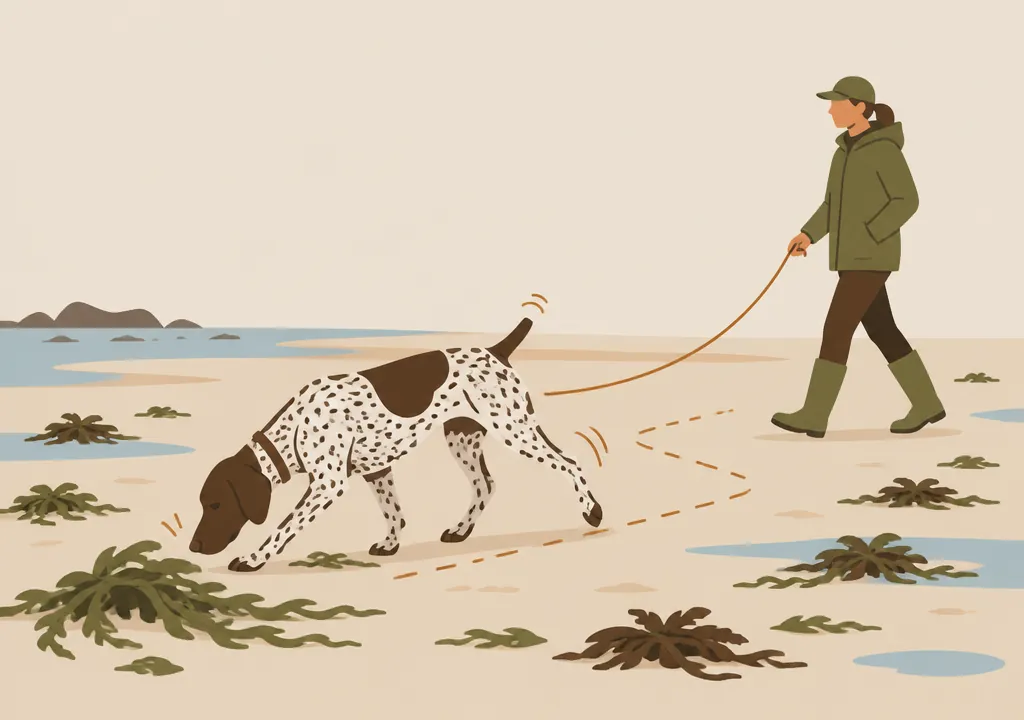
Nose down on walks
Let the nose work on your terms.
Sniffing can mean wandering through a safe patch, searching for something you arranged or earning access to an interesting spot after a few shared steps. Those activities all use a German Shorthaired Pointer's nose, but they ask different things of the dog. Confusion starts when the person offers free investigation and then requests constant attention throughout it.
Decide what kind of opportunity you are offering before choosing the cue. Your GSP can have meaningful nose time while you retain sensible boundaries around traffic, wildlife and other people.
Read the full guide: Nose-Down Walks: Giving a German Shorthaired Pointer Sniff Time
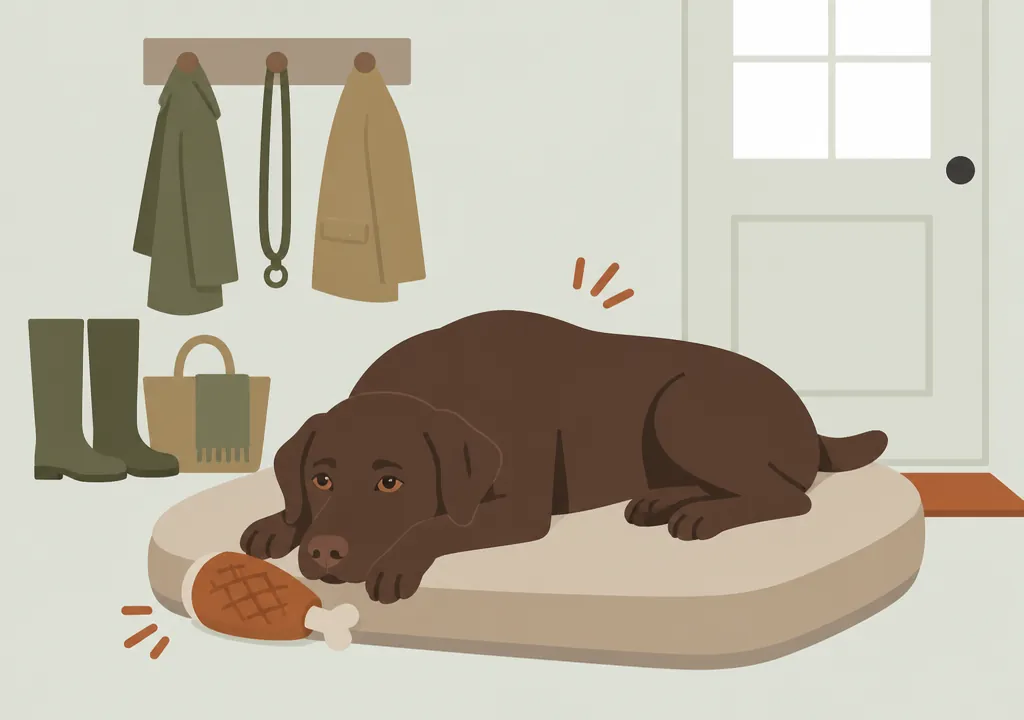
Time alone
Calm alone time for a velcro dog.
Resting peacefully in an open crate shows that your German Shorthaired Pointer can be comfortable in that space. They have not yet shown that a closed door feels ordinary or that they can rest when the house is empty. Those are separate changes, and combining them too quickly can make it difficult to understand what the dog finds hard.
This guide treats crate learning and alone time as related skills with different questions. We will use open-door games, add enclosure while a person remains nearby and then introduce manageable changes in human presence. It also explains when another resting arrangement is more suitable. Gradual preparation can support confidence, but no crate routine can guarantee that separation anxiety will never develop or replace help when a dog is distressed.
Read the full guide: Preventing Separation Anxiety in a German Shorthaired Pointer
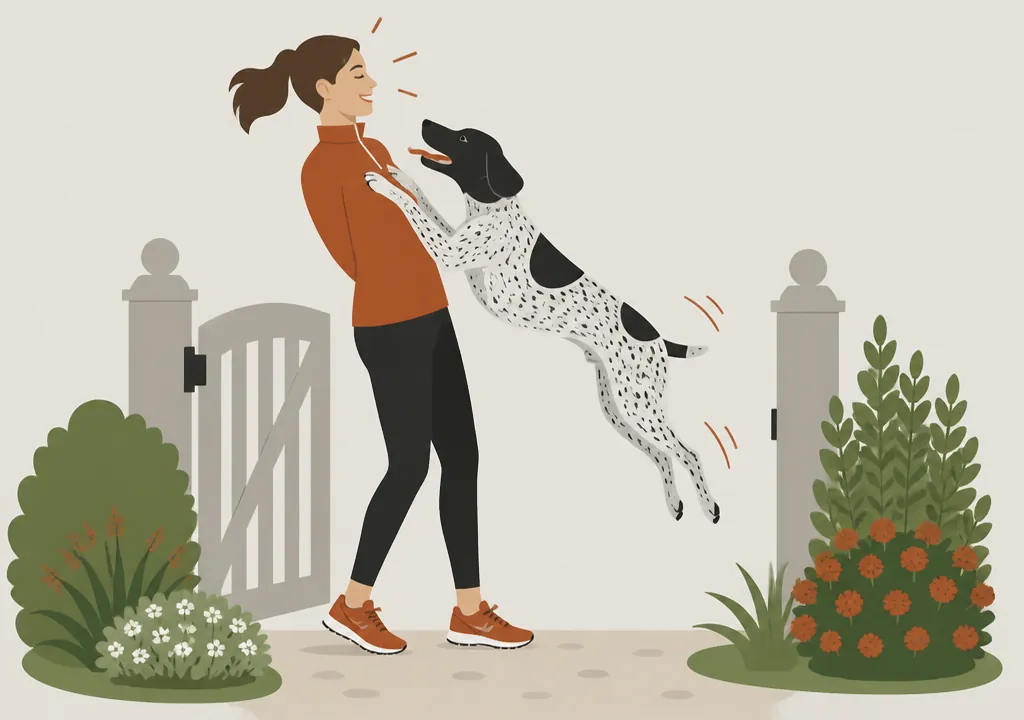
Jumping on people
Four paws down for a bouncy hello.
A sit that lasts until someone reaches toward the dog is only the beginning of a greeting lesson. Your German Shorthaired Pointer may understand the posture perfectly and still spring up as soon as contact seems available. Repeating “sit” at that moment does not explain how to move from waiting into a greeting without launching upward.
The useful skill includes a pause, permission to approach and a way to return to ordinary activity. Sitting can help organize that sequence when it is comfortable for the dog, while grounded standing remains another workable option.
Read the full guide: Four on the Floor: Teaching a German Shorthaired Pointer Not to Jump
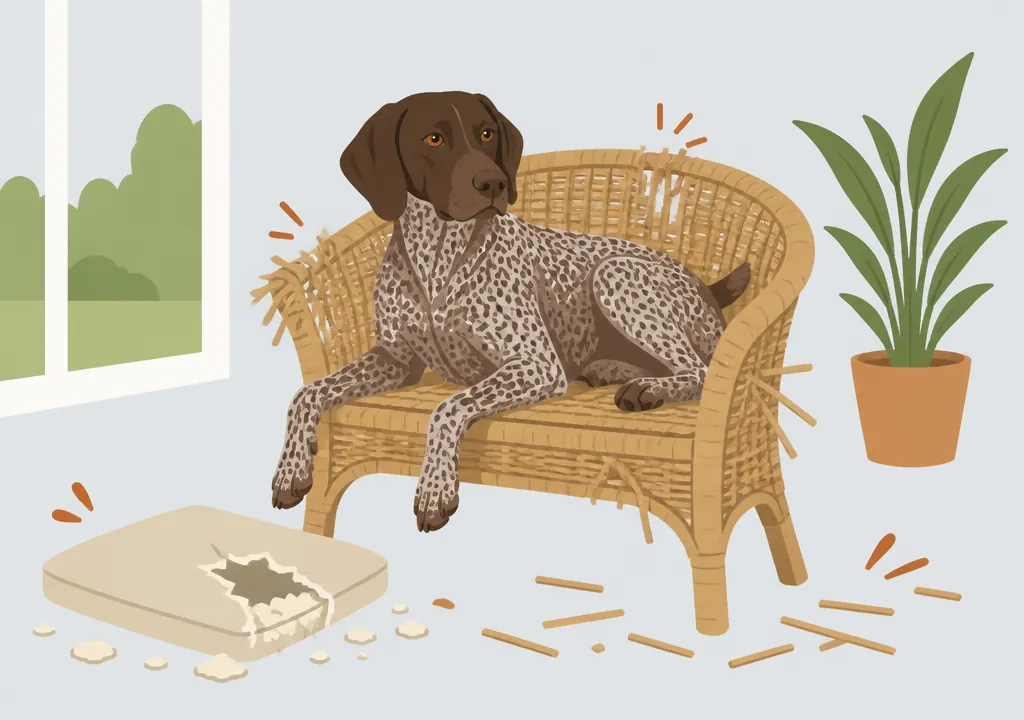
Destructive chewing
Real outlets for busy jaws.
A basket full of toys can sit untouched while a German Shorthaired Pointer follows someone folding laundry or moving between rooms. The dog may want an activity near the person, while every useful chewing option is somewhere else. A practical chewing station brings a suitable outlet into the part of the home where you can actually supervise it.
This guide builds that arrangement and then teaches the human movements around it. We will choose a location and appropriate items, reward the route to a toy and practice ordinary interruptions without repeatedly taking possessions away. The station is a supervised option, not a promise that one object will occupy every GSP for an entire evening. It should fit the dog, the household task and the attention available.
Read the full guide: Chew Toys and Chewing Manners for a German Shorthaired Pointer
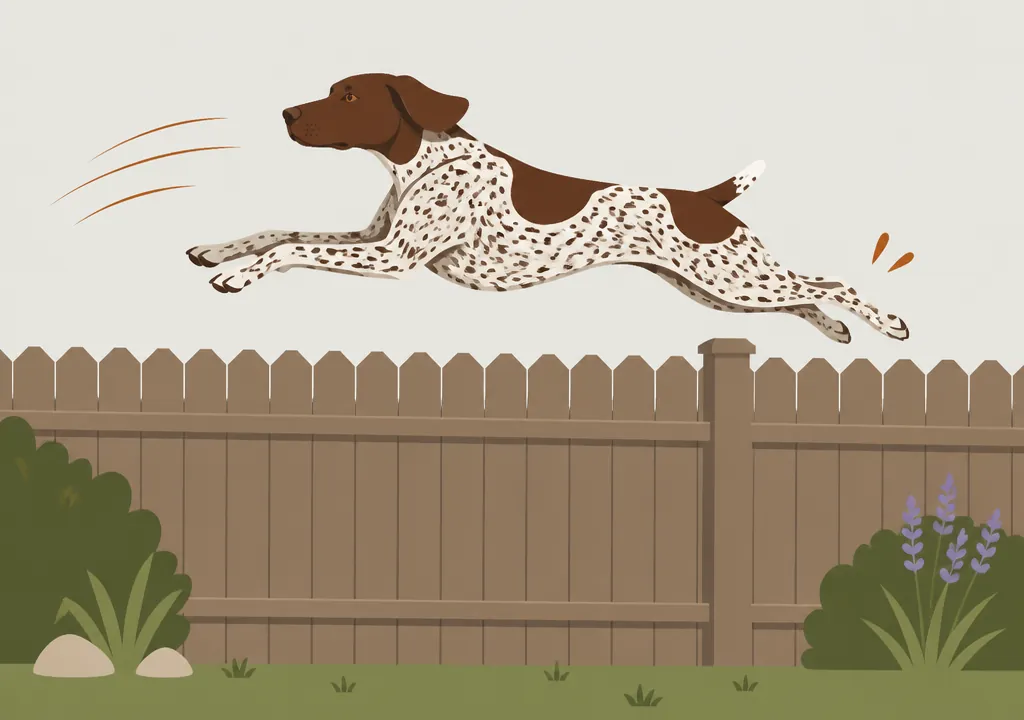
Escaping the yard
Keep an athlete happy inside the fence.
An interesting yard can still have an open escape route. A German Shorthaired Pointer may enjoy games with you and leave through a loose gate when the game ends. More activity does not repair the boundary, while a sound fence does not tell the dog what to do during the time spent inside it.
Start by treating an escape as a change in access. Until the route out is understood and repaired, use a secure leash arrangement and remain with the dog. Do not send them out again to see whether the problem repeats.
Read the full guide: Yard Escapes: Giving a German Shorthaired Pointer a Reason to Stay
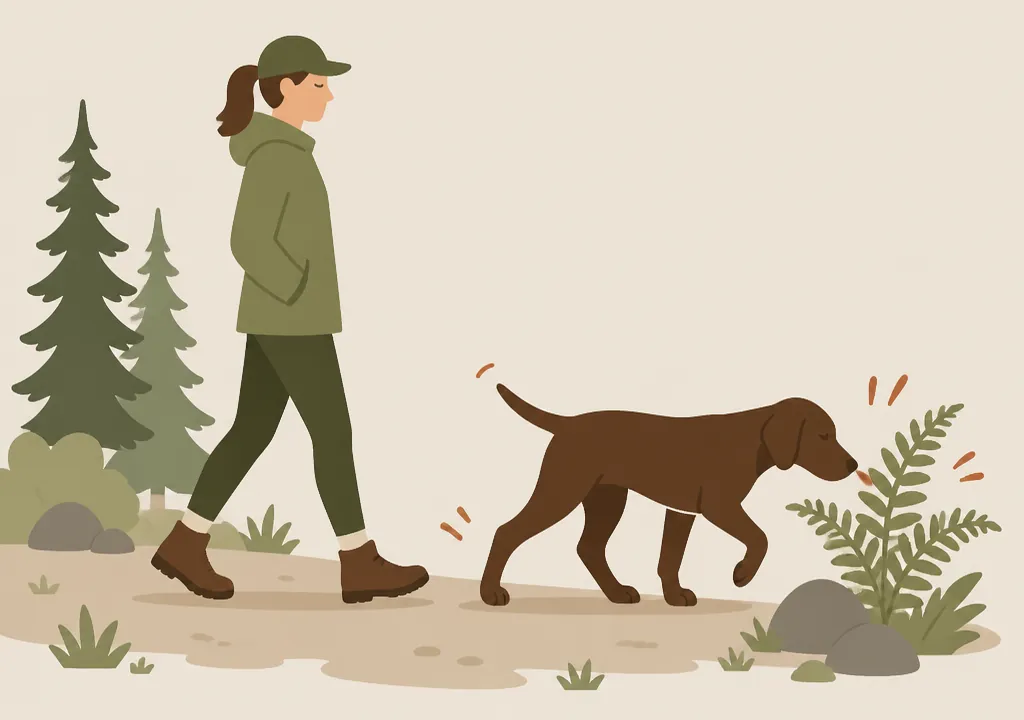
Exercise while growing
Protect young joints with the right mix.
A growing German Shorthaired Pointer can look ready for another game while still needing a carefully balanced day. Enthusiasm does not tell you how much repetitive activity suits their developing body, and a quiet afternoon does not mean they need a harder outing tomorrow. Variety gives you more options than steadily increasing distance or speed.
We will use a flexible week to balance walks, sniffing, play, learning and rest. The examples below are choices to adapt, not a fixed schedule or a minute-per-age formula. They show how different days can emphasize different activities while keeping ordinary care consistent. Your puppy's comfort, recovery and veterinary guidance determine the appropriate amount, including when an activity needs to be shortened, changed or postponed.
Read the full guide: A Growing German Shorthaired Pointer Needs Walks, Play and Rest
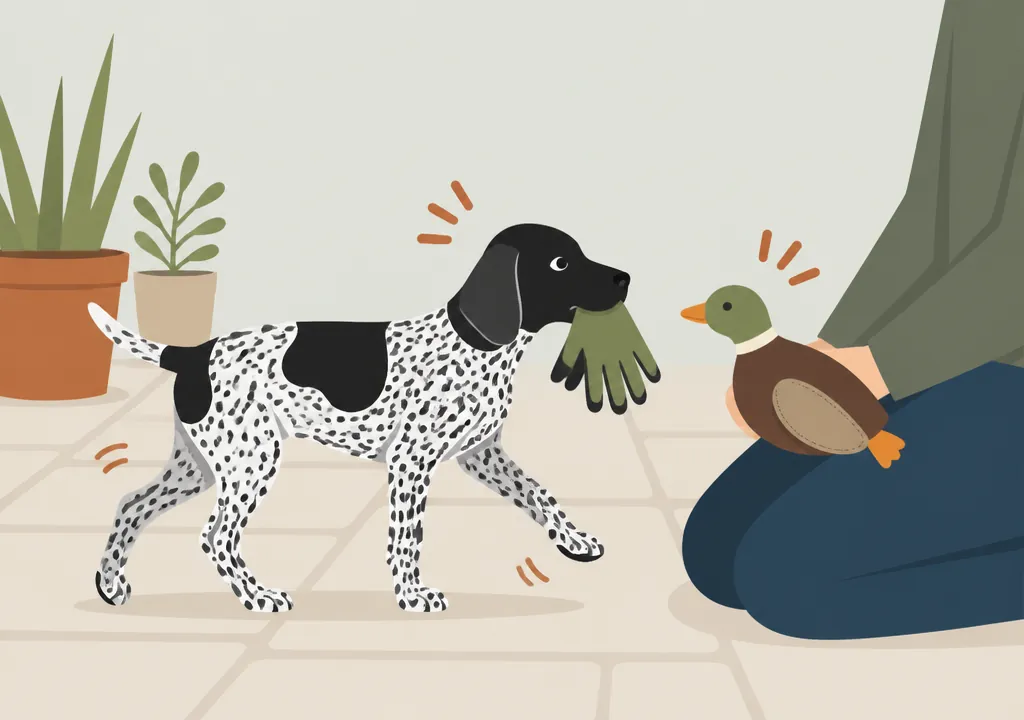
Puppy mouthing
Soft mouths for future bird dogs.
Soft mouth work begins the day a German Shorthaired Pointer puppy walks in at eight weeks. These dogs learn quickly and carry enormous energy, so early habits carry you through a teenager who forgets their name.
The full guide covers the first weeks, the socialization window, what to teach and adolescence.
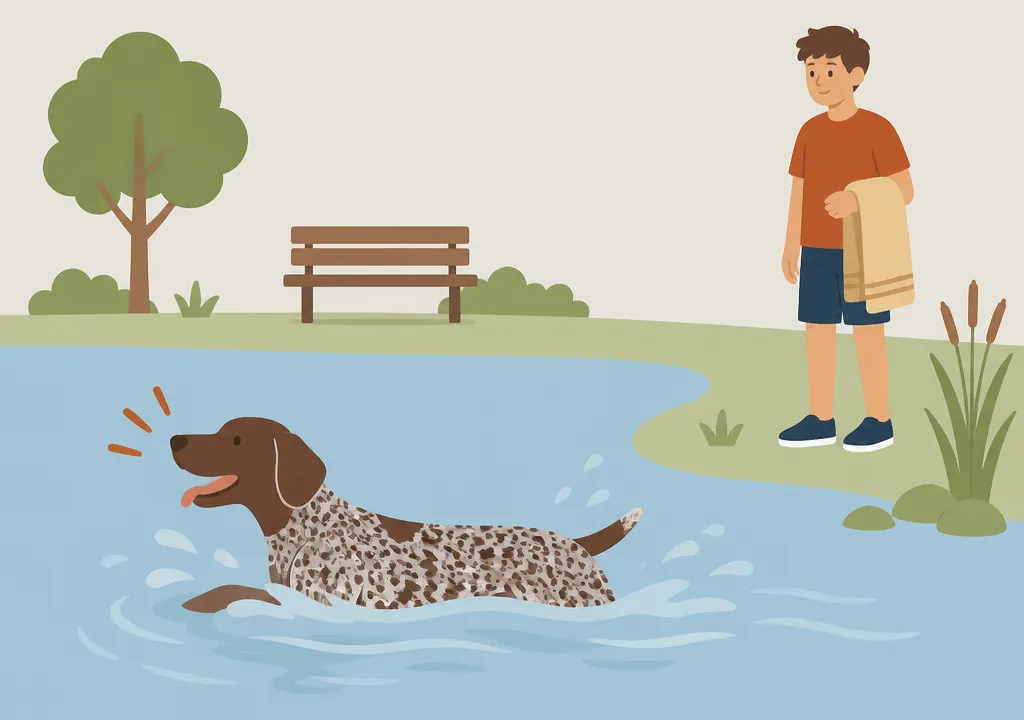
The teenage months
Stay steady while drive takes over.
Not every familiar skill needs a harder version in the same week. An adolescent German Shorthaired Pointer may be learning to walk past new distractions, settle while visitors move and return from interesting smells all at once. If each daily situation becomes the next test, the dog gets few chances to practice something they can already do well.
A more manageable plan gives different jobs to different skills. Some stay easy, one receives a small new challenge and others remain protected by sensible management until the dog is ready.
Read the full guide: Steady Training Through a German Shorthaired Pointer's Teen Months