 GSP
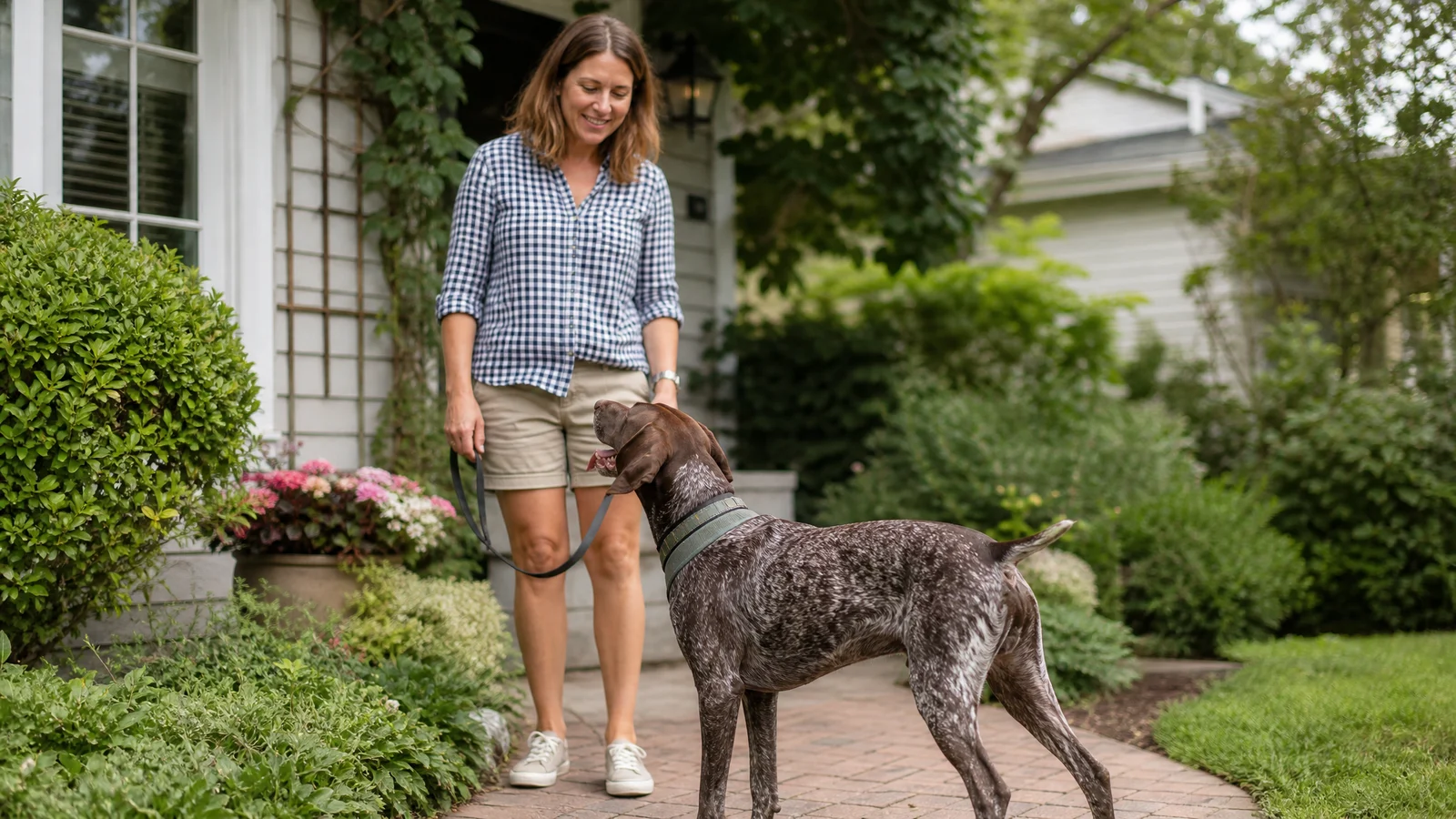
A sit that lasts until someone reaches toward the dog is only the beginning of a greeting lesson. Your German Shorthaired Pointer may understand the posture perfectly and still spring up as soon as contact seems available. Repeating “sit” at that moment does not explain how to move from waiting into a greeting without launching upward.
The useful skill includes a pause, permission to approach and a way to return to ordinary activity. Sitting can help organize that sequence when it is comfortable for the dog, while grounded standing remains another workable option.
In this guide, we teach those pieces separately before a helper changes the picture. You will also find a plan for unexpected arrivals and a shared household vocabulary. The goal is a friendly GSP who knows what makes a greeting available, with enough space for everyone to stay comfortable.
A Sit Before German Shorthaired Pointer Jumping Starts
Teach the sitting response away from arrivals first. Ask once when the dog is ready to respond, mark the completed action and reward promptly. Then use a release word and allow movement so sitting has an understandable beginning and end.
Keep the first pause brief. Sitting in familiar quiet surroundings does not establish that the dog can maintain the posture during an approach. You will add that movement later, after the basic response and release are familiar.
Choose a stable surface where the dog can move without slipping. If sitting appears uncomfortable or a previously easy posture changes, speak with your veterinarian. The greeting plan can use a relaxed stand instead of insisting on a position that does not suit the individual.
The GSP training foundations explain clear cues and rewards. Carry that same marker into greetings, rather than inventing a louder arrival version. Familiar information is easier to use when excitement increases.
- Practice the sit where no visitor is waiting to touch the dog.
- Reward the completed posture without lifting the food hand high above the head.
- Release before the dog has to guess how long the pause will last.
- Repeat only while the dog can move into and out of the posture comfortably.
Food Delivery During Jumping Practice
Place the reward where grounded paws remain useful. Offer food at a comfortable head height beside you, rather than holding it near your chest. A hand that rises as the dog approaches can invite upward following even when your spoken instruction asks for the opposite.
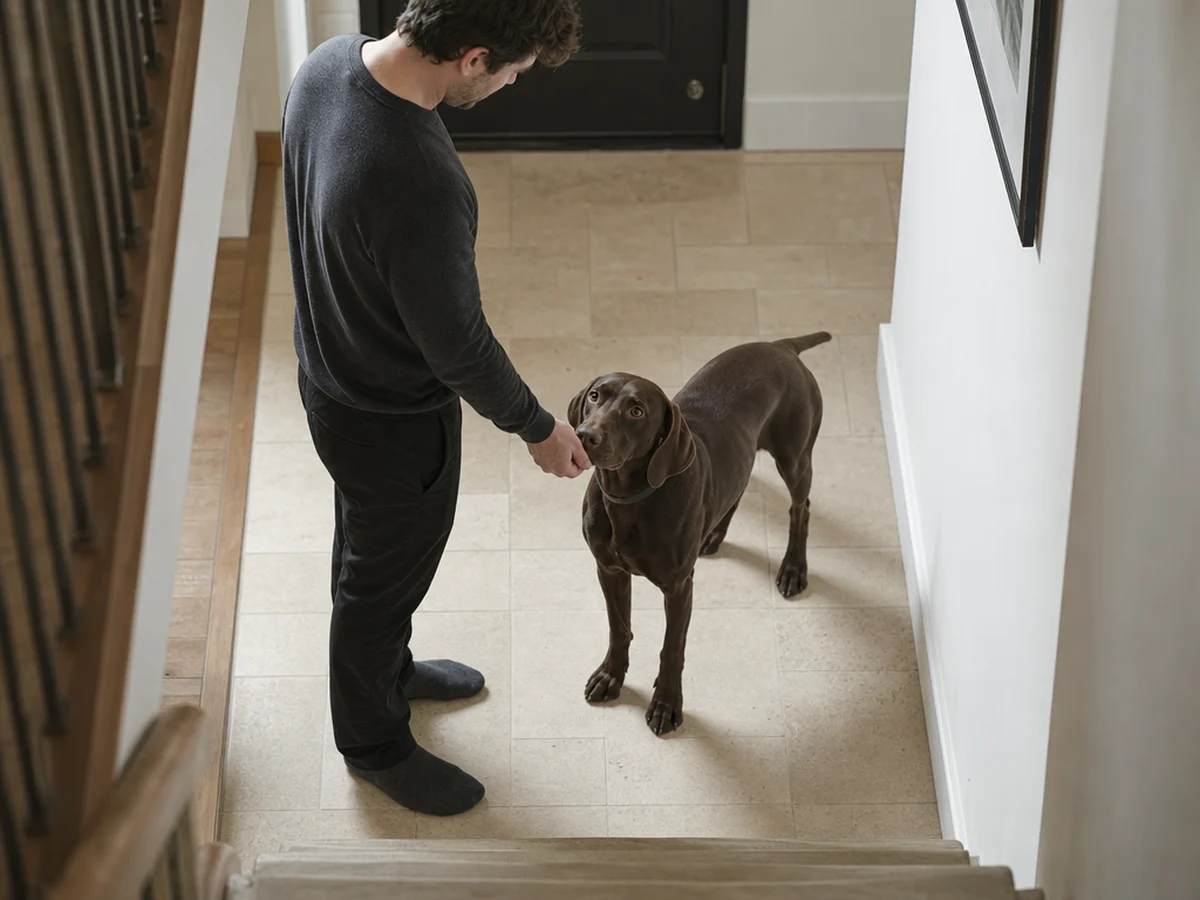
Watch what your empty hand does too. If you raise it immediately after feeding, the dog may follow that movement. Keep your hands quiet between rewards and make the next action easy to predict.
Battersea's marker training explanation helps identify the moment being rewarded. Mark the grounded pause before the leap begins. Waiting for a jump and then rewarding the return to the floor every time can make the whole up-and-down sequence the practiced routine.
You can reward ordinary grounded behavior throughout the day. Notice your GSP standing beside you while you put something down or sitting calmly when you enter a room. Those small opportunities let the dog learn without a visitor adding excitement.
Keep training food accessible to the adult supervising the exercise. Searching in a pocket after the dog has already changed position makes timing harder. Prepare before inviting the helper into the room.
The Release That Makes Jumping Unnecessary
A release tells the dog that the brief pause has ended. Teach that meaning in quiet practice, then use it to allow a short approach when a willing helper is ready. The permission should lead to a manageable interaction, not an uncontrolled rush.
Start close enough that the dog can walk rather than build speed. A helper standing far away may create a sprint even after a tidy sit. Reduce the travel distance and keep the contact brief while the transition is new.
If the dog stands before the release, simplify the waiting task. You may be asking for too much duration or introducing the helper too quickly. Reset calmly at a comfortable distance without repeatedly returning the dog to position while the person keeps approaching.
- Ask for the familiar brief pause with the helper quiet and stationary.
- Reward the grounded response while the dog's body remains comfortable.
- Give the release when the helper is ready for a short, gentle greeting.
- Invite the dog away afterward and reward moving into clear space.
Ending the contact is part of the lesson. Your dog can learn that a greeting is one activity in the visit, followed by something else worthwhile. It does not need to continue until the GSP becomes too excited to remain grounded.
A Helper Changes German Shorthaired Pointer Jumping Practice
Use one capable adult who can follow the plan and pause promptly. Keep a safe barrier or comfortable leash arrangement available when needed. The helper should never have to absorb repeated jumps to prove that ignoring them works.
A Person Standing Still
Begin with the helper at a distance where your GSP can notice them without rushing. Rehearse the familiar sit or grounded stand while the person remains quiet. Reward and release into another ordinary activity before adding contact.
This establishes that a visible person does not always mean immediate access. It also gives you a chance to judge whether the setting is easy enough. If the dog cannot respond, increase space instead of asking the helper to become more exciting.
A Person Taking One Step
Have the helper make a small movement and pause. Reward grounded paws if the dog remains comfortable. The helper can step away after that success, so the exercise does not become a continuous approach toward the dog's limit.
Introduce different movements separately. A step, a greeting voice and a hand reaching down may each change the response. Combining them at once makes the difficult part harder to identify.
Have the helper repeat the same small movement a few times across separate lessons before changing it. Consistency gives the dog a recognizable picture. If the helper keeps inventing a different approach, you may be adding novelty faster than the GSP can learn the grounded response you are rewarding.
A Person Offering Contact
When approach is manageable, allow brief contact if the dog seeks it. Let the helper touch an area the dog enjoys, then stop. Watch whether the dog remains loose and comfortable or turns away, stiffens or needs more space.
The Dogs Trust jumping advice supports rewarding four paws on the ground and preparing greeting partners. Apply that preparation to the person as well as the dog. Quiet hands and a short interaction are easier to learn around than repeated reaching and withdrawal.
A GSP who prefers to stay nearby without being touched can still greet politely. Contact is an option, not a test of friendliness.
A Person Leaving the Interaction
Practice the helper turning away while you invite the dog to move with you. Reward that movement before the dog follows the departing person's hands or clothing. The ending should be rehearsed while attention is still available.
If the dog follows, create space and make the next greeting shorter. Keep the helper's departure calm and predictable. A sudden playful exit can become an invitation to pursue even when the earlier contact was quiet.
Unexpected Greetings Need Space Before Jumping Practice
A real arrival may happen when you are carrying groceries or speaking with a delivery person. Use the prepared management arrangement instead of trying to teach with divided attention. Your GSP can wait in a comfortable safe area while you finish the immediate task.
Ask visitors to enter and put belongings down before any greeting. The doorway does not need to be the teaching location. More room inside, once the outside door is secure, may give the dog and helper a much easier interaction.
On walks, greetings remain optional. Keep moving with space when a person cannot follow instructions or your dog is already excited. Our GSP leash walking lessons provide the movement skills that help you leave without turning the encounter into a prolonged negotiation.
- Use separation when a guest is unsteady, worried or unable to participate safely.
- Let adults manage greetings around children rather than asking children to control jumping.
- Explain the simple paws-down arrangement before someone begins reaching toward the dog.
- Choose another occasion for practice when the arrival is too busy to supervise.
Keep a suitable resting option ready for the rest of the visit. Choosing separation for one arrival does not prevent you from practicing an easier greeting later.
The Response After Jumping Has Started
Stop the exciting contact and create enough space for the dog to recover. If the helper is at risk, use your safe management arrangement immediately. Standing still is not a requirement when a large dog's movement could hurt someone.
Once the situation is calm, identify the change before the leap. It may have been a longer wait, a hand moving upward or the helper becoming animated. Adjust that feature next time rather than repeating the whole difficult greeting in the hope of a different result.
The humane training position statement supports reward-based methods. Your useful work happens in the easier rehearsal: clear pauses, understandable releases and rewards before jumping. A difficult incident tells you where that rehearsal needs changing.
Seek individualized help if greetings include fear, stiffening or threatening behavior, or if you cannot safely manage the dog's strength. Those situations need assessment beyond a general paws-down exercise. Give everyone space while arranging support.
A Shared Jumping Plan for Your German Shorthaired Pointer
Agree on the pause cue, release word and way to end contact. Demonstrate them to the next adult rather than assuming the words alone explain your timing. A small shared vocabulary makes ordinary practice easier across the household.
Keep regular veterinary visits as part of the dog's care and raise changes in movement or comfort with touch. The posture you reward should remain physically easy, whether that is sitting briefly or standing with grounded paws.
Continue noticing the quiet approach before anyone asks for a formal greeting. Those voluntary moments are the behavior you want to grow. With a clear release and a pleasant ending, your GSP can learn that people become available without needing to leave the floor.
 BehaviorChew Toys and Chewing Manners for a German Shorthaired Pointer
 BehaviorYard Escapes: Giving a German Shorthaired Pointer a Reason to Stay
 Puppy trainingA Growing German Shorthaired Pointer Needs Walks, Play and Rest
