 GSP
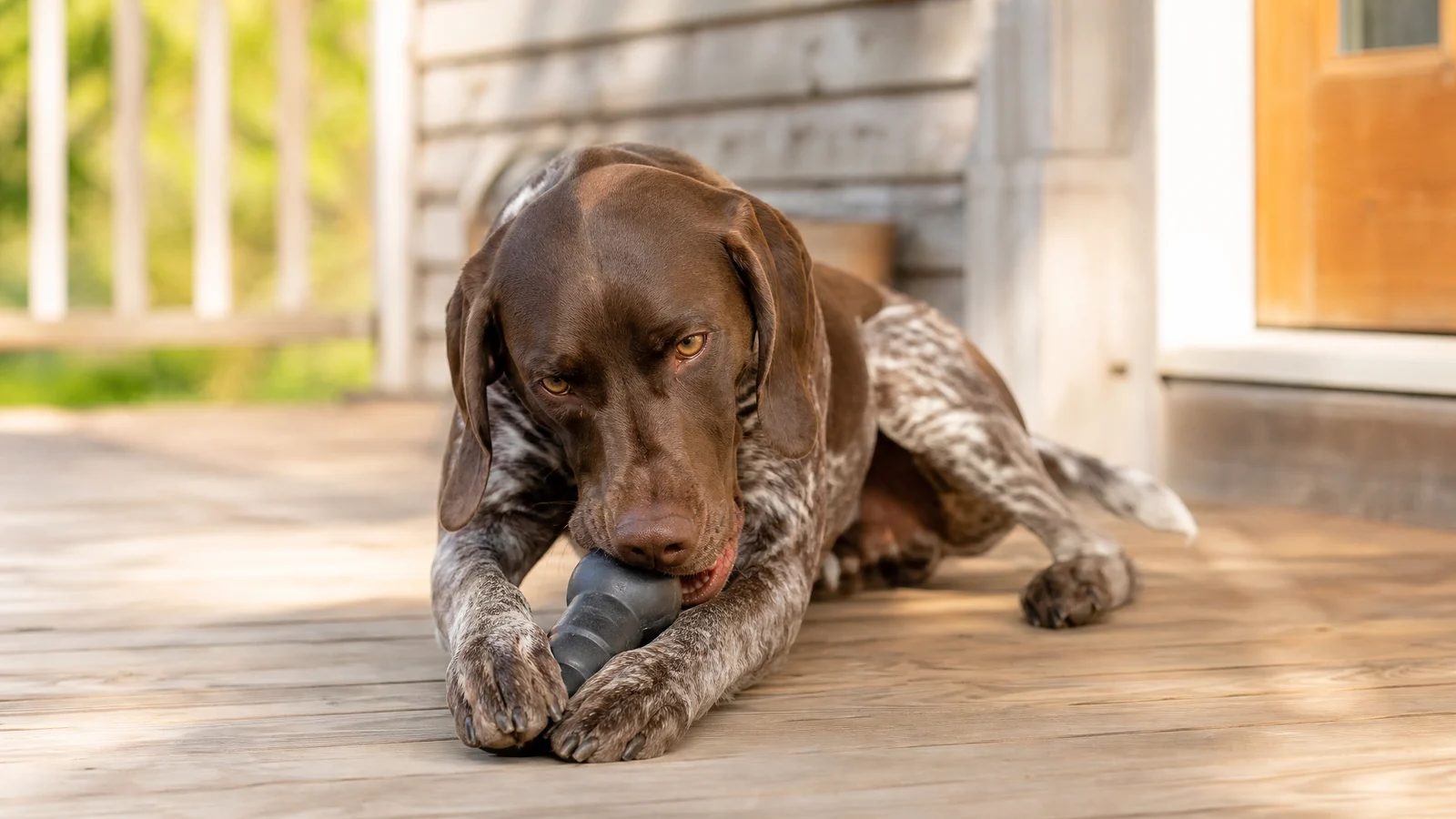
A basket full of toys can sit untouched while a German Shorthaired Pointer follows someone folding laundry or moving between rooms. The dog may want an activity near the person, while every useful chewing option is somewhere else. A practical chewing station brings a suitable outlet into the part of the home where you can actually supervise it.
This guide builds that arrangement and then teaches the human movements around it. We will choose a location and appropriate items, reward the route to a toy and practice ordinary interruptions without repeatedly taking possessions away. The station is a supervised option, not a promise that one object will occupy every GSP for an entire evening. It should fit the dog, the household task and the attention available.
A Place for German Shorthaired Pointer Chewing During Household Work
Choose a comfortable spot near ordinary activity but outside the path people need to use. A dog lying across a doorway will be interrupted even when everyone means to leave them alone. Give the GSP enough room to change position without blocking your work.
Start with a household task you can pause, such as sorting a small pile of papers at a table. Avoid introducing the arrangement while handling hot food, tools or something that demands full concentration. You need to watch how the dog uses the item, not only whether they remain quiet.
The ASPCA describes chewing as normal behavior. The aim is to provide an appropriate opportunity for that behavior while protecting belongings. A station will be more useful if it offers a suitable activity before the dog starts investigating laundry or furniture.
- Move loose belongings and unsafe objects out of the dog's available area.
- Choose a surface where the dog and toy can remain comfortably in place.
- Keep children and other pets from approaching a dog who is using a valued item.
- Begin when you can stop your own task and respond if the arrangement is unsuitable.
Use a familiar mat or bed if it helps define the location. The object should be easy to reach without requiring the dog to climb, squeeze into a corner or lie beside something they find worrying. Comfort supports the activity you are inviting.
What Belongs at a German Shorthaired Pointer Chewing Station
Choose for the way your individual dog uses an item. Carrying, steady chewing and pulling pieces apart place different demands on a toy. A product's name or description cannot replace observing the GSP who will actually have it.
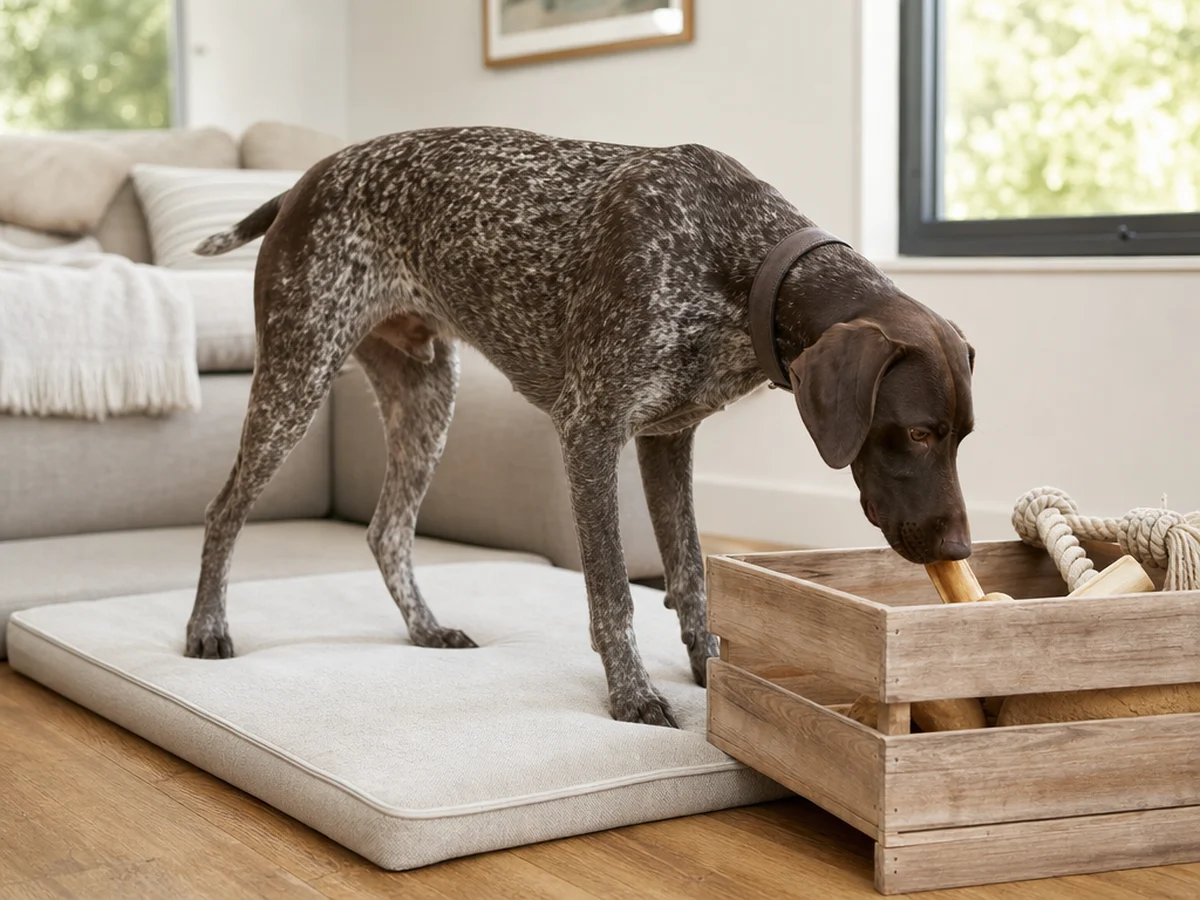
Fit for the Mouth and the Activity
Select items intended for dogs and appropriate to their size and current chewing habits. Avoid anything small enough to swallow, and check loose parts or attachments. Ask your veterinarian for guidance if you are unsure about a hard surface, an unfamiliar material or a chewing motion that concerns you.
A shared tug toy may be enjoyable without serving as a quiet chew. Recognize that difference before deciding the dog is rejecting the station. If they keep bringing the object to your hands, they may be requesting interaction rather than an independent activity.
Offer shared play separately when it fits the day. The station does not need to satisfy every reason the dog wants to use their mouth.
Condition Throughout Use
Inspect the item before offering it and continue watching for damage. Remove it safely if pieces begin separating or its size becomes unsuitable. Familiar toys need checking too, especially as a growing GSP becomes more capable of changing their shape.
Humane World for Animals recommends suitable chewing opportunities alongside management of household objects. Keep a usable alternative ready so retiring an item does not leave only furniture and belongings available. Store damaged objects separately from anything another adult might offer again.
Record why an item stopped working. If the same component repeatedly breaks down, that is useful information for your next choice and supervision plan. Buying another identical toy without considering that pattern may recreate the problem.
The Route to a Useful Chewing Toy
Introduce the station while the room is calm. Place a suitable item there and allow the dog to investigate. Reward a voluntary approach or appropriate use in a way that does not constantly draw them away from the activity.
If food is useful, deliver it near the station after a clear choice, while keeping the dog comfortable around your approach. Calm praise or uninterrupted access may be enough in other moments. Watch whether your response supports chewing or turns the session into repeated trips to your hand.
Practice before laundry or other tempting objects are present. Your GSP foundation training can supply a familiar location cue if the dog already understands one. Avoid repeating a new word while they investigate somewhere else.
- Prepare the station and one appropriate item before beginning the household task.
- Notice and reward the dog choosing the available activity.
- Start a small amount of quiet work while remaining able to supervise.
- Finish or pause the task before the dog's use of the item becomes difficult to monitor.
The first session can be short. A comfortable beginning tells you more than a long period during which you stopped watching and hoped the dog stayed occupied. Build the arrangement around attention you can honestly provide.
Human Movement Around a Chewing German Shorthaired Pointer
A dog who chews while you sit still may get up as soon as you move. Teach ordinary human activity in small pieces, while preserving the dog's ability to leave the station. This is practice around movement, not a requirement to keep chewing regardless of what happens.
Reaching for Something Nearby
Make a small reach toward your own work surface and return to a comfortable position. If the dog continues their activity, let that useful choice remain undisturbed. You can quietly acknowledge it without inserting your hand into their space.
If the reach draws the dog away, make the next movement smaller or use a less interesting object. A rustling bag of food is a much harder event than picking up a plain sheet of paper. Begin with movement that fits the dog's current attention.
Standing Up Briefly
Stand and sit again before walking away. Watch whether the dog can remain comfortable or needs to come with you. If they follow, allow it and make the next practice easier rather than repeatedly sending them back.
Some GSPs will settle near you after checking the change. That can be a useful response too. The station is an available activity, not a fixed position the dog must hold while people behave unpredictably.
Walking Through the Room
Take a short route that does not pass directly over the dog or toy. Return calmly and continue your task. Increase the amount of movement only if the dog remains relaxed and the object stays appropriate for use.
If your path repeatedly draws the dog toward a doorway, move the station or change the route. Layout can solve a problem that would otherwise require constant instructions. Keep the dog out of areas where following would be unsafe.
Another Adult Appearing
Ask another adult to enter quietly and remain at a comfortable distance. They should not immediately reach for the toy or invite a lively game. Let the dog notice them without making the station predict unwanted interruptions.
Stiffening, hovering over the object or concern about an approach calls for space and qualified help. Do not use repeated approaches to test tolerance. Comfortable possession is part of the arrangement you are trying to support.
Keep children outside this practice. Adults can manage the dog's space and explain that chewing time is not an invitation to touch the item.
Interruptions and the Return to Chewing
Sometimes the activity needs to stop because the household task ends, the toy changes condition or the dog needs something else. Teach a voluntary release separately with an easy practice toy. A known exchange is more useful than reaching into a possession unexpectedly.
Battersea's drop-it training guide explains rewarding a dog for letting go. Practice when there is no urgency, and return safe toys often enough that release does not always end enjoyment. The station itself should still include uninterrupted use between lessons.
If the dog takes a household item, manage the immediate situation calmly and use an established safe exchange when appropriate. Secure the recovered object afterward. Avoid making theft the regular opening to the only interesting interaction the dog receives.
Possible swallowing of an unsafe item needs prompt veterinary advice. Do not assume that a missing piece will pass safely because the dog looks comfortable. Keep other pets and children away while an adult handles an uncertain situation.
After an ordinary interruption, let the dog choose whether to return to the station. They may need a toilet trip, rest or social contact instead. Repeatedly offering another chew cannot answer every change in their needs.
Chewing When Nobody Can Supervise
A successful supervised session does not prove that an item is suitable during absence. Follow its intended-use guidance and your veterinarian's advice, and use a safe arrangement based on what you know about the dog. Avoid leaving an unfamiliar item as an experiment.
Look separately at destruction that occurs when people leave. Our GSP crate and alone-time guide explains why comfortable resting and coping with absence are different questions. A chewing station cannot establish that the GSP is relaxed while alone.
Use regular veterinary visits to discuss persistent or changing chewing, including any concern about mouth comfort or eating nonfood material. For distress around departures or possession, seek appropriate behavior support as well as changing access to objects.
An Honest Chewing Arrangement for Your German Shorthaired Pointer
Judge the station by what it makes possible. The dog has an appropriate activity, people can complete a manageable task and supervision remains real. If one part fails, adjust the location, object or amount of household work instead of expecting longer occupation from the same setup.
Keep the route to suitable chewing easy to find and rewarding to choose. Some days the GSP will use it briefly, and on others it may fit a longer quiet period. The useful habit is access to an activity that works for both of you, with room to stop when it no longer does.
 BehaviorYard Escapes: Giving a German Shorthaired Pointer a Reason to Stay
 Puppy trainingA Growing German Shorthaired Pointer Needs Walks, Play and Rest
 Puppy trainingSteady Training Through a German Shorthaired Pointer's Teen Months
