 GSP
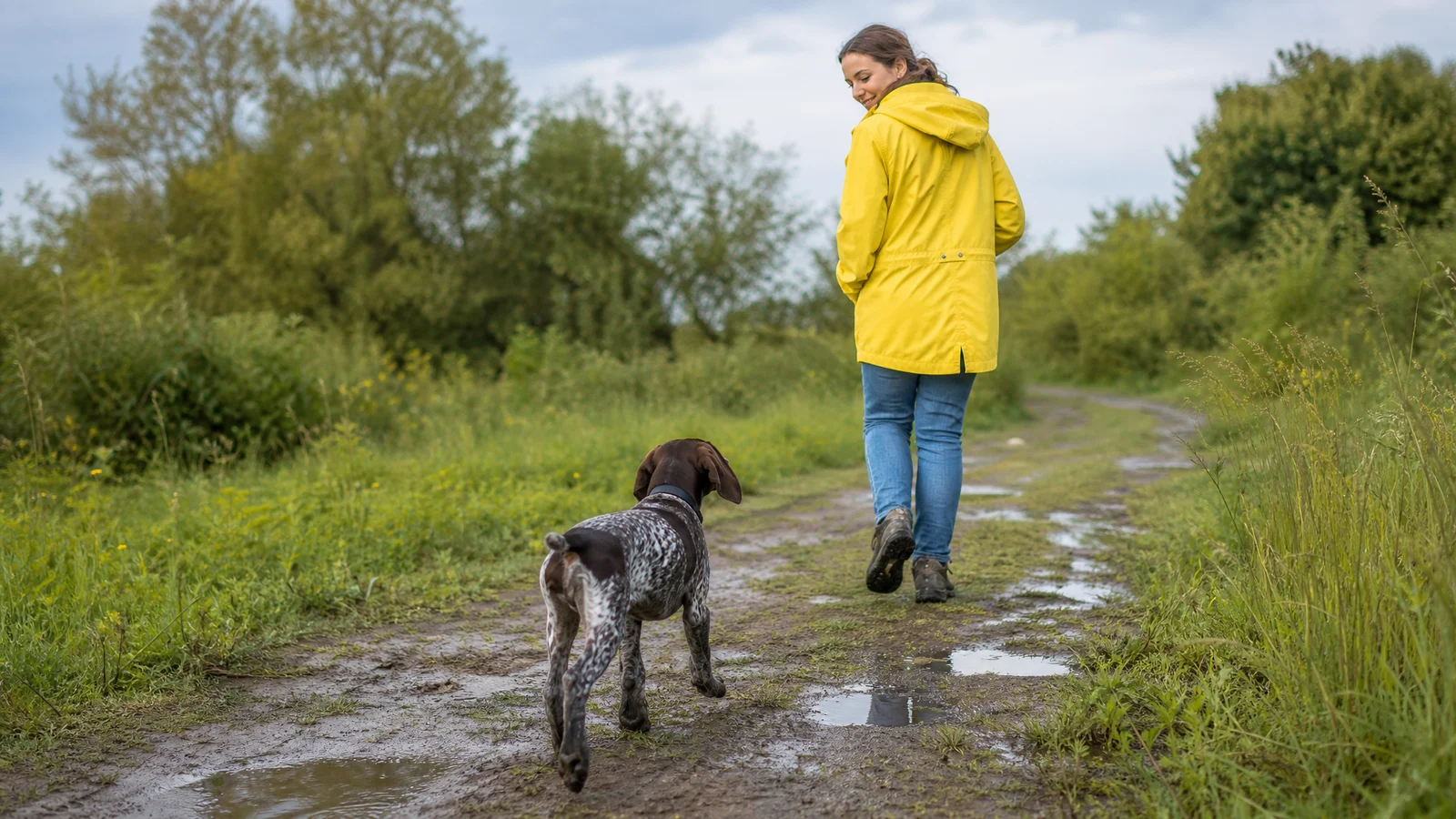
A growing German Shorthaired Pointer can look ready for another game while still needing a carefully balanced day. Enthusiasm does not tell you how much repetitive activity suits their developing body, and a quiet afternoon does not mean they need a harder outing tomorrow. Variety gives you more options than steadily increasing distance or speed.
We will use a flexible week to balance walks, sniffing, play, learning and rest. The examples below are choices to adapt, not a fixed schedule or a minute-per-age formula. They show how different days can emphasize different activities while keeping ordinary care consistent. Your puppy's comfort, recovery and veterinary guidance determine the appropriate amount, including when an activity needs to be shortened, changed or postponed.
Exercise Choices for a Growing German Shorthaired Pointer
Think about the type of effort as well as its duration. Repeated sharp turns after a thrown toy differ from a leisurely investigation of a safe patch. A busy social outing can also be demanding even when the puppy has not traveled far.
PDSA's puppy exercise guidance recommends appropriate activity while growth continues. Ask your veterinarian about the individual puppy before introducing sustained running, repeated jumping or other demanding exercise. Breed energy alone is not a reason to skip that assessment.
Choose places with easy exits, suitable footing and room for the puppy to pause. An outing becomes harder to adapt when the only way home is the same long route you have already completed. Early choices should leave you options if interest or comfort changes.
- Mix gentle movement with opportunities to investigate and learn.
- Keep shared games manageable rather than repeating one physical action until the puppy is exhausted.
- Allow comfortable rest after activity and protect it from household interruptions.
- Adjust the next outing from the puppy's response rather than a fixed increase in workload.
The broader GSP exercise guide discusses daily activity. A growing puppy needs a plan fitted to their current stage, even when the adult dog you imagine will eventually enjoy much longer adventures.
A Week of Different Exercise Emphases
Use the following examples as a menu across a week. Ordinary bathroom trips, appropriate movement, meals and social contact continue each day. The emphasis simply identifies the extra activity you choose, with enough flexibility to change it when the puppy needs something else.
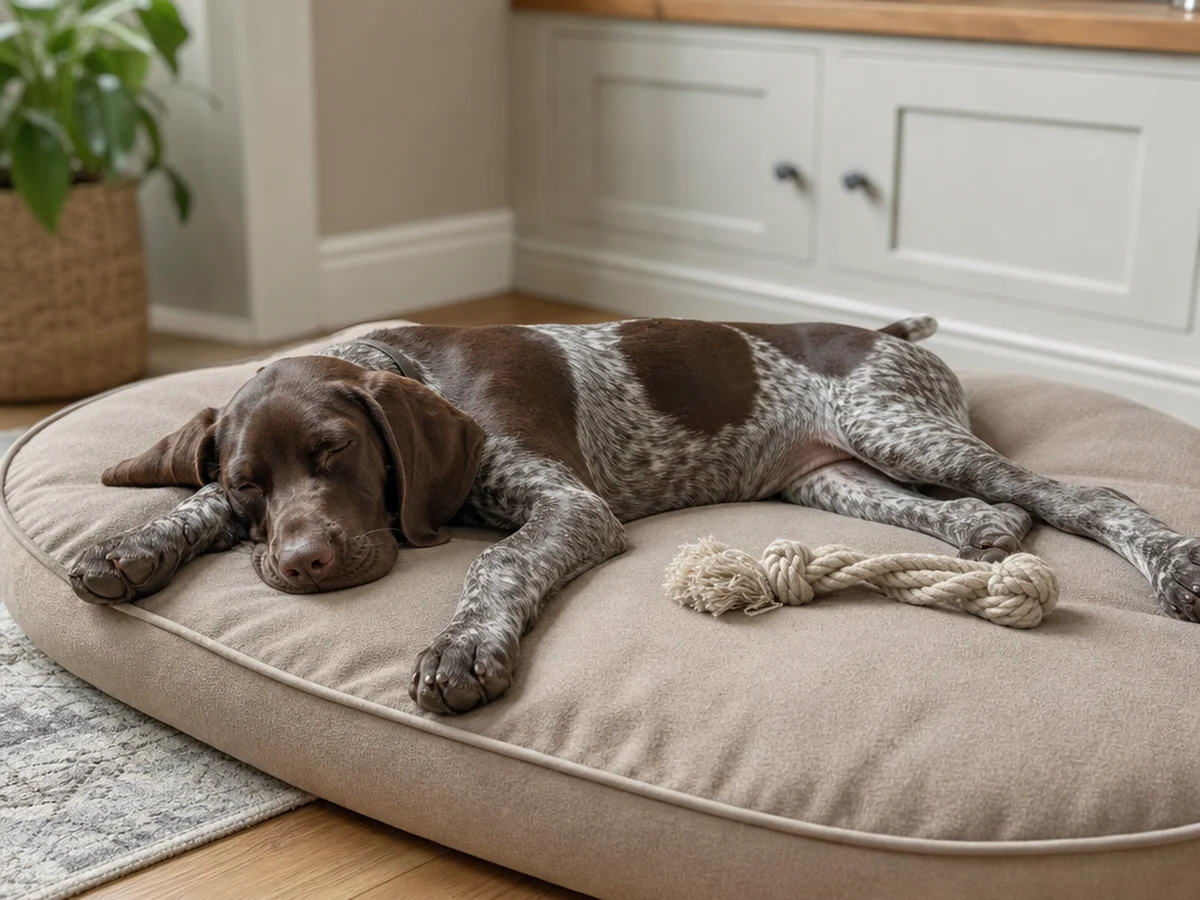
Early Week With a Familiar Walk
Begin with an easy route the puppy knows. Allow safe investigation and a few rewarded walking steps, then return before the outing becomes difficult to manage. Familiar surroundings help you notice the dog's movement and attention without adding much novelty.
Later, offer a short lesson on an ordinary household skill such as approaching a mat or responding to their name. Keep it separate from a long physical session. The puppy can use their brain without the whole day becoming a sequence of increasingly energetic games.
Record what rest looked like afterward. The useful detail is whether the puppy could settle comfortably, not whether you achieved a particular distance.
Midweek With More Nose Work
Choose a safe sniffing opportunity or a simple supervised search. Make the first find easy and keep the setup suitable for a puppy who explores with their mouth. Remove materials they might tear or swallow, and finish while the activity remains comfortable.
The ASPCA's canine enrichment ideas include ways to offer investigation and problem solving. Select an easy version that matches the puppy's present abilities. A difficult puzzle that produces frustration is not automatically better mental exercise.
You can keep the walking part modest on a day with a new search or unfamiliar environment. Novelty adds demands of its own. Our sniffing activity guide explains different ways to give nose time a clear purpose.
Repeat a successful search on another day before making it harder. Familiarity lets the puppy enjoy using the skill and gives you a clearer view of their response. You can vary where the activity fits in the day without immediately hiding rewards in more difficult places.
Later Week With Shared Play
Offer a manageable game on suitable footing with a toy appropriate to the puppy. Keep movements close and predictable, and include pauses before excitement makes stopping difficult. You can practice a simple release as a separate quiet lesson.
Notice the style of play your puppy chooses. Carrying a toy toward you, following a gentle movement and resting with an object are different forms of engagement. The game does not need to become faster every time the puppy returns.
If another dog participates, choose carefully and supervise closely. The older or larger dog should not set the pace by default. Interrupt when either dog needs space, and allow a separate rest area afterward.
The Weekend With One Modest Change
A weekend outing can include one new feature, such as a different quiet location, while the rest remains familiar. Keep the travel, walking and social demands within what the puppy can manage. A family free day does not create extra physical readiness in a growing dog.
Plan an easy way to leave. If the surroundings are busier than expected, choose another activity instead of staying to complete the original plan. A calm return home can be the useful outcome of learning that a place was unsuitable that day.
The following day can return to familiar choices. There is no need to stack another new experience onto the first simply because the weekend still has time available.
What Belongs Inside Each German Shorthaired Pointer Exercise Session
A useful weekly mix depends on the details of each activity. Look at how the session starts, what repeats and whether the puppy can pause. These features help you keep movement appropriate without treating every energetic moment as a request for more.
A Comfortable Beginning
Check equipment, the surface and the immediate environment before starting. Let the puppy move naturally and notice whether they seem comfortable. If they hesitate, investigate the setting rather than immediately encouraging more speed.
Begin with an easy version of the activity. A new location does not need a new skill at the same time. Familiar rewards and a simple first task can help you understand whether the puppy is available to participate.
Repetition With a Purpose
Repeat enough for the puppy to understand the activity, then offer a pause. In training, a few useful responses can be more valuable than continuing until attention disappears. In physical play, avoid making the same demanding movement the whole session.
The RSPCA's training advice for dogs supports short, rewarding lessons. Use that principle to preserve interest, with one clear task and a satisfying finish. Training can contribute to the day without becoming another endurance exercise.
Change only what you can observe. If you increase duration, speed and distraction together, a difficult response gives you little information about which feature mattered. A smaller change makes the next decision easier.
Keep caregivers informed about activity already completed. A puppy can receive several full play sessions when each adult assumes nobody else has exercised them. A brief shared note prevents accidental repetition and helps the next person choose a quieter contribution to the day.
A Pause the Puppy Can Use
Offer a quiet break away from active play. Keep the space comfortable and provide normal access to water. Watch whether the puppy can change pace rather than immediately restarting the game whenever they look at you.
Some puppies need help leaving an exciting area before rest becomes possible. Move to the prepared quiet place and reduce household activity around them. Repeatedly presenting another toy can keep the session going when the useful next step is to stop.
Rest That Changes the Next Exercise Choice
Protect sleep and quiet time as real parts of the routine. A puppy resting in the middle of a busy walkway may be repeatedly disturbed even if nobody deliberately wakes them. Choose a place where they can change position and remain comfortable.
Reward relaxed behavior gently when that helps, but avoid turning rest into constant attention to your hand. The puppy needs periods in which nothing is required. A familiar safe enclosure or quiet area can support that when they have learned to feel comfortable there.
- Notice whether the puppy settles after an ordinary activity or remains increasingly restless.
- Consider the whole day's novelty and social contact, not only the walk length.
- Return to familiar, gentler choices after a demanding day instead of adding another challenge.
- Ask for veterinary advice when movement or recovery changes unexpectedly.
Restlessness does not always mean too much exercise, and it does not always mean too little. The puppy may need a bathroom trip, a more comfortable location or help with a difficult experience. Use the pattern across the day rather than assigning one explanation to every busy evening.
Compare similar days when possible. An easy familiar walk followed by comfortable rest gives you a useful reference point. If a different outing produces a very different response, examine its surface, excitement and duration before repeating it unchanged.
Keep a brief, specific note that another regular caregiver can understand. “New park, busy entrance, hard to settle afterward” is more informative than “needed more exercise.” The description leaves room to choose a quieter visit rather than automatically adding more activity.
A Useful Exercise Conversation About Your German Shorthaired Pointer
Bring the puppy's actual activity pattern to regular veterinary visits. Ask which types of movement suit their growth and condition, and describe any reluctance, uneven movement or unusual recovery. Your veterinarian can help distinguish a training adjustment from a concern that needs examination.
| Bring this detail | Why it helps |
|---|---|
| Activities and surfaces | Shows the kind of physical demand |
| Changes during or after play | Identifies comfort and recovery questions |
| Rest and household routine | Places exercise within the whole day |
Use the week's variety as information, not a scorecard. A postponed outing or a shorter game can be the right decision. Keep the routine flexible enough that the puppy's response changes what happens next.
As your GSP grows, review the mix with appropriate guidance and retain the ordinary habits that help: suitable movement, interesting learning and protected rest. The purpose of the week is a comfortable growing dog, rather than a completed list of increasingly demanding activities.
 Puppy trainingSteady Training Through a German Shorthaired Pointer's Teen Months
 BehaviorHow to Stop a German Shorthaired Pointer Barking
 Puppy trainingHow to Stop German Shorthaired Pointer Puppy Biting
