 GSP
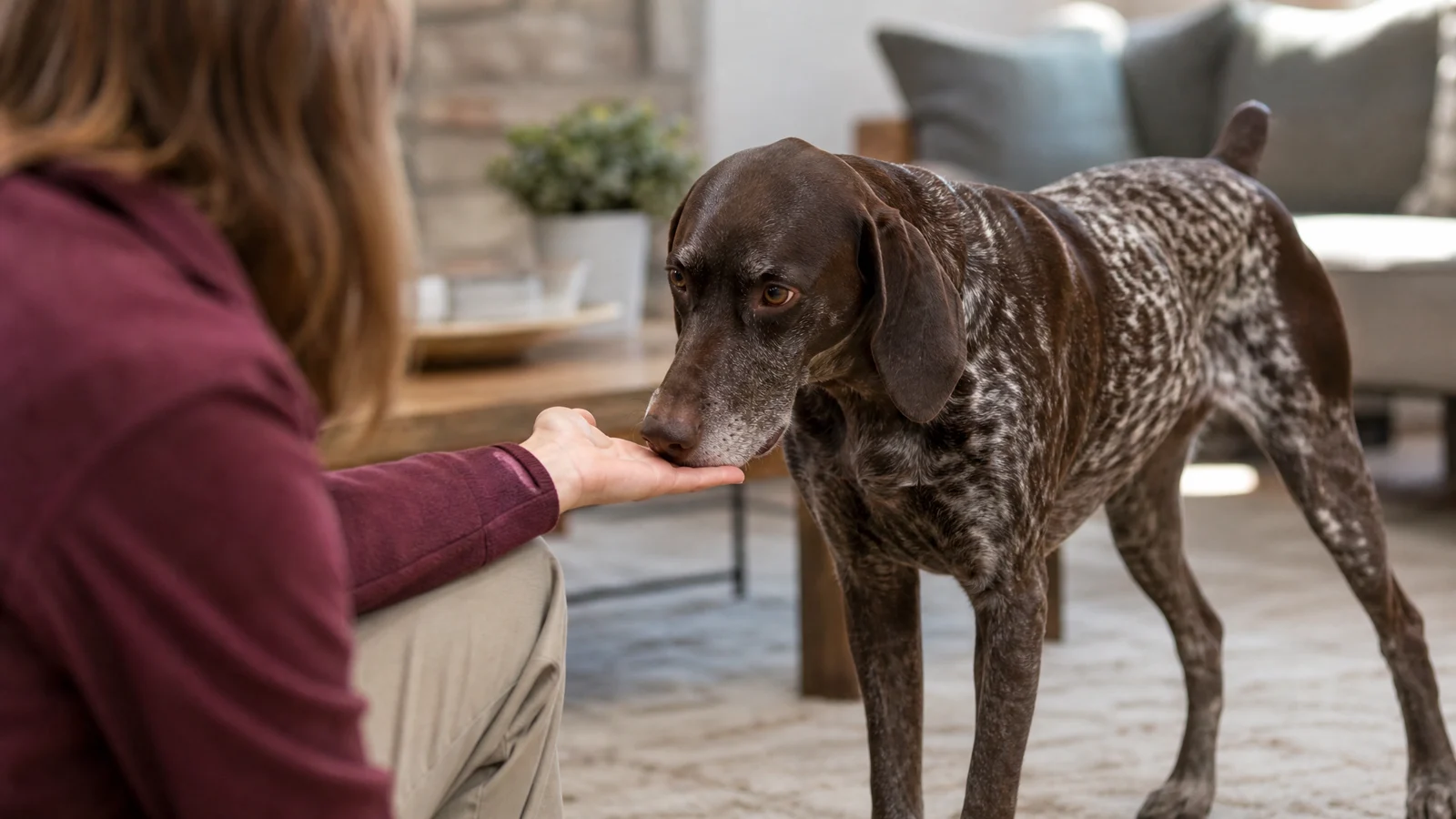
A grown German Shorthaired Pointer can learn nearly everything a puppy can, and the eager, people-loving streak that makes the breed so trainable comes along with them. What does not come along is the story of how they got to your door.
That missing story changes what you teach first. A GSP who sat on cue at the shelter may stare blankly in your kitchen, and a dog with years of habits behind them is often reacting to the move itself, not to anything you did. Treating the first weeks as a quiet exchange of information, rather than a training schedule, protects the learning that comes after.
Read on for how to settle a grown GSP, sort old habits from new-home nerves, and rebuild one skill at a time. None of it depends on knowing the dog's exact age or their past.
What You Can Predict About an Adopted German Shorthaired Pointer
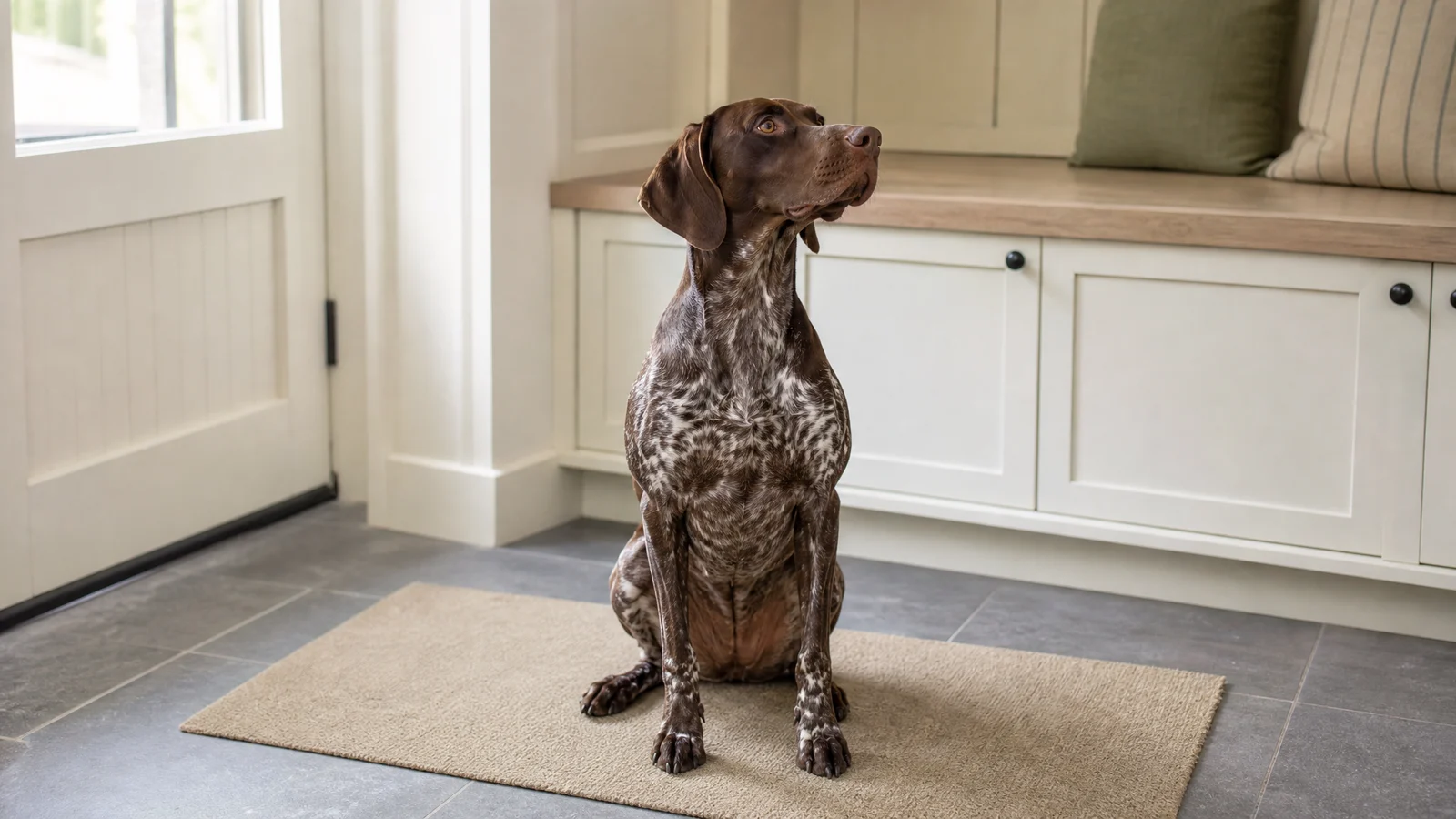
Not knowing the past does not leave you guessing about everything, because the breed is a surprisingly reliable guide to the dog in front of you. A GSP is a keen, affectionate dog with a great deal of energy and a mind that wants work, and that description holds whether they are two years old or eight. They bond firmly with their people, they learn quickly when practice is consistent, and without something useful to do they can turn destructive.
What You Cannot Predict
What you cannot predict is how much of everything else was learned. Cue words, house manners, leash habits and fears all came from somewhere, and an adopted dog's records are often thin. That is why an older or adopted GSP needs a transition plan, not a puppy calendar. The GSP puppy timeline still shows where skills usually get built, but your dog does not have to start it at week eight.
Settling an Adopted GSP Without Emptying the Day
Knowing what the breed needs is the easy half, because the move itself decides how much of it your dog can take in right now. Quiet, for a GSP, cannot mean empty. A dog with this much stamina who spends the first week with nothing to do will find something, and it is often your furniture. Keep meals, walks and play at the same times each day, save new, loud or crowded places for later, and fill the hours between outings with chews and food puzzles.
For the pacing, a useful frame is the SF SPCA's 3-3-3 guideline for rescue dogs: the first 3 days are about adjusting to new surroundings, the next 3 weeks are for building a routine and starting foundational skills through positive reinforcement, and the first 3 months are about deepening trust. Not all dogs will follow this timeline exactly, so treat it as a shape and not a deadline.
A Week-One Adoption Checklist for Your GSP
These four steps each remove one surprise from the dog's day, so they are worth settling before any lesson begins and well before the first treat leaves your pocket:
- Choose a retreat. A crate, bed or quiet room where nobody bothers the dog gives them somewhere to unwind, and it should never double as a place for punishment.
- Fix the schedule: feed, walk and let the dog out at the same times each day, because a day they can predict is one they can relax into.
- Let the dog come to you instead of passing them around, since forced cuddles and crowded greetings ask for trust the dog has not had time to build.
- Leash or Fence Outdoors: a new GSP should be on a leash anywhere that is not a fenced yard, because nobody yet knows whether an old recall survived the move.
Four small rules, but they work because the dog learns the house through repetition and not through surprise. Book a routine vet checkup early in the first weeks too, so any physical question is answered before you blame a habit on training.
Sorting Old Habits From New-Home Nerves in a Grown GSP
Once your dog eats, rests and watches you without alarm, the behaviors you see begin to mean something. Most odd behavior in the first weeks falls into one of three piles. Some of it is simply the breed: a GSP who shadows you from room to room or greets guests like old friends is behaving like a GSP. Some of it is the move, which tends to fade as the routine takes hold. The rest is learned habit, and that last pile is the only one that needs training.
A dog who cowers or seems hand-shy raises a harder question. Adopters often assume such a dog was abused, yet that is not necessarily the case, and a fearful adopted dog is more likely to have been raised with little to no socialization. If a dog like this is not making steady progress in a few days or weeks, contact your veterinarian, who may refer you to a veterinary behaviorist.
Sort the third pile by place, not by label. A cue the dog knew at the shelter can mean nothing in a new room, so a blank look tells you about the room, not about stubbornness. Ask for the same simple cue in several spots around the house and the yard, and a pattern appears. We would rather you spend a few days sorting than build a fix for what was only nerves.
What the Habit Is Doing for Your Dog
Every habit you meet in these early weeks is doing a job for your dog, and in a dog with this much energy the job is often burning it off. So before you try to stop the digging, the pacing or the counter patrol, ask what the habit gets your GSP.
A Relearning Guide for an Adopted German Shorthaired Pointer
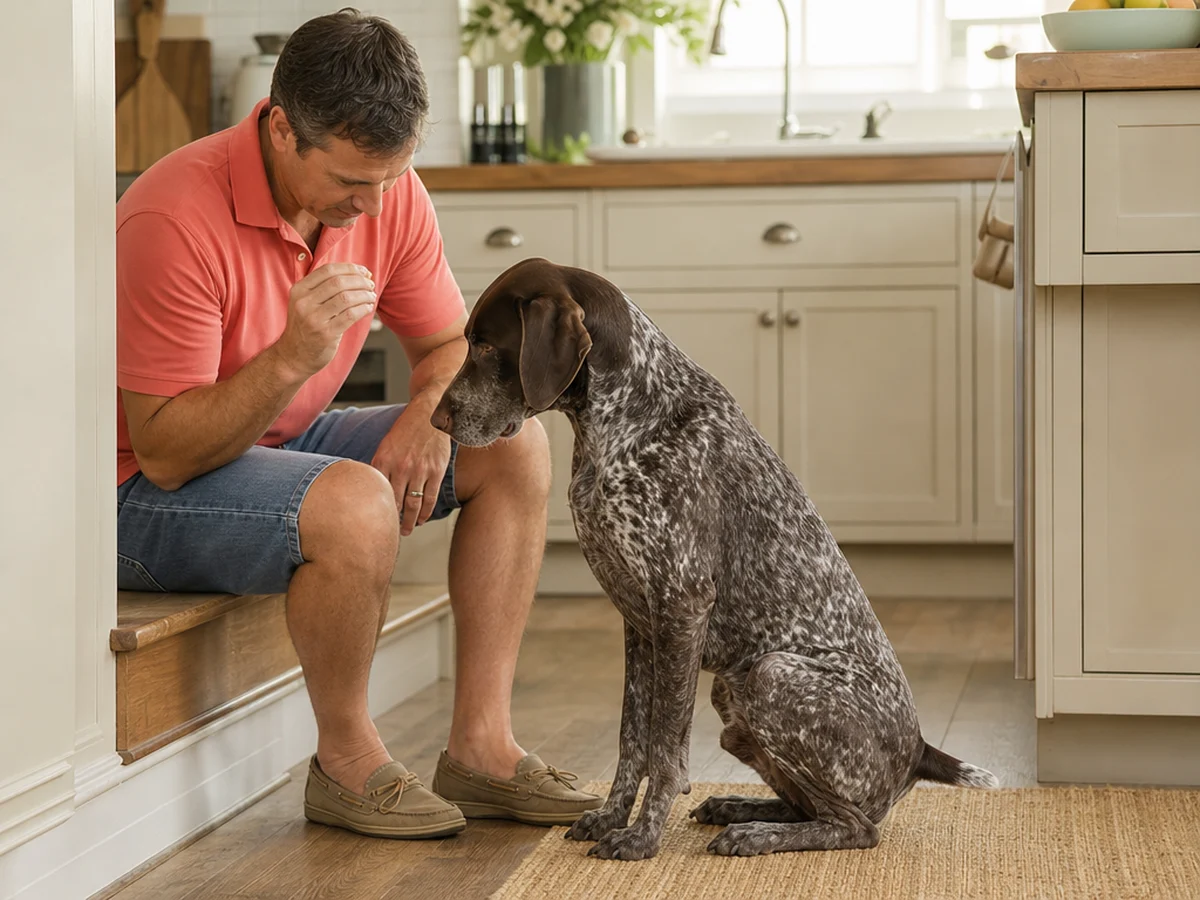
With the nerves sorted from the habits, you can choose one skill and teach it as if it were new, because in this household it is. Pick the skill your daily life needs most, such as settling on a mat, coming when called or walking on a loose leash, and leave the rest for later. One skill taught well in a quiet room shows your dog how lessons work here, and that understanding carries into every skill that follows.
Work through the steps below in order, and move on only when the dog does the current one easily, since a rushed step tends to show up as a stall two steps later:
- Start in a quiet room with a treat your dog loves. Lure the behavior, mark the instant it happens and pay right away, because a reward that arrives late teaches nothing about what earned it.
- Pay every right answer at first. Steady, predictable payment tells a dog whose old rules were different that this game is safe to play.
- Add the cue word once the behavior appears smoothly, saying it just before the lure moves so the word becomes the signal.
- Change one thing at a time: a new room, a little more distance or a mild distraction. When the dog stalls, go back to the last version they could do and pay there.
- Thin the payments slowly, paying most right answers and then some, while saving the best treats for the hardest moments.
Thinning Rewards and Handling Stalls
Slow thinning matters more than it sounds. A certified behaviorist writing about rewarding a newly adopted dog notes that if you move too fast to decrease reinforcement, the behavior will begin to decrease and problem behavior is more likely to pop up. Food usually carries this work best, since most dogs are motivated easily and reliably by tasty morsels, even early in their time with a new person.
In our experience, a stall usually means two things changed at once, so shorten the session, make the next one easier and look at what differs about the room. A dog who turns down treats mid-lesson is telling you the setting is too much, and the better answer is a quieter place, not more coaxing.
Exercise, Leash and Bonding Answers for a Grown GSP
Three decisions connect the settling plan to a dog with this much engine and this much affection: how hard to exercise them, when the leash comes off and how soon to expect real devotion.
Does week one still need long runs?
Keep the rhythm and drop the novelty. A GSP does best with regular exercise and something to think about, so the usual outings still happen, but on familiar routes at familiar times, with no crowded parks or new trails until the dog seems at ease. Sniffing along a quiet street and a food puzzle at home cover the thinking half of the day.
When can an adopted GSP go off leash?
Not until the dog comes back reliably in the exact place you plan to use, and a new dog has not yet shown you that anywhere. Until then, use a fenced yard or a long line, keep a leash on everywhere else, and build the habit with outdoor recall games. A recall that worked in the old neighborhood tells you little about yours.
Will an adult GSP bond like a puppy?
The breed is affectionate and tends to bond firmly with family, so expect real attachment, but an adult builds it on their own timetable. Trust grows from what you provide every day: predictable meals, calm company and rewards for good choices. Let the dog come to you for contact in the early weeks, and the closeness arrives without being forced.
Giving an Older GSP's Habits a Better Job
A dog with nowhere to put their keenness will invent a destination, and relearning works best when you hand that keenness a better one: a mat to settle on, a sniffing game with scattered treats, a toy to carry across the lawn. Pay for the new choice every time at first, and the old one loses its reason to exist.
Habits are one slice of what a newly settled GSP has to learn, and the e-book that registered readers of this site receive by email treats each remaining need clearly and in real depth, whatever age your dog turns out to be.
 Puppy trainingHow to House Train a German Shorthaired Pointer Puppy
 Puppy trainingHow to Socialize a German Shorthaired Pointer Puppy
 Training basicsHow to Teach a German Shorthaired Pointer to Sit
