 GSP
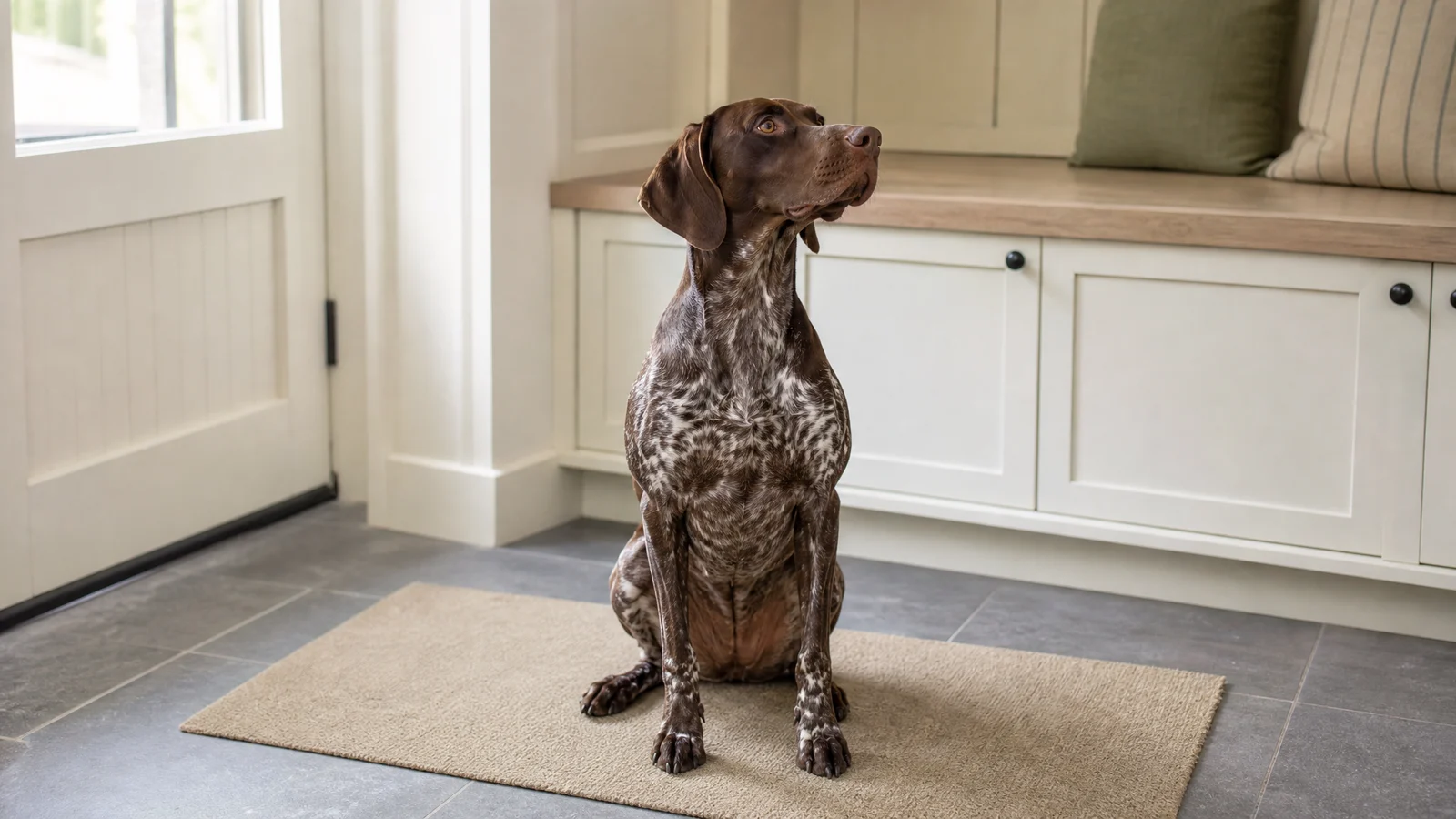
A first sit lesson mostly looks like nothing happening: a slow hand, a nose that follows it, and a treat that lands the instant a rear touches the floor. That quiet picture suits a German Shorthaired Pointer better than you might expect.
A GSP is a medium-sized, enthusiastic dog who learns quickly when sessions stay consistent and who thrives on vigorous exercise, so a lesson works best when the sit is the one thing on offer and the energy has somewhere else to go first. Below, you will find a three-stage method that starts with food and ends with a spoken word, plus fixes for sits that pop up, back away or vanish outside the kitchen.
Nothing here needs special gear, and nobody ever holds your dog in place. Your GSP finds the position by following food, which is why it sticks.
What a Sit Asks of a Dog Built for Motion
Following the food is the easy half for a GSP. Folding into a sit asks a keen dog to do the opposite of what their body wants, so the setup deserves more care than the lesson itself. Plan the session for after a walk or a run, when the first rush of energy has gone, and choose a level floor with good grip, because a dog on slick tile will not want to fold at the back. Keep the treats tiny and soft so chewing never slows the next try.
Pick Your Marker and Release Words
Pick two words before you start. A short marker such as "yes" tells your dog the instant the rear lands, and a release word such as "okay" tells them the sit is over. Without a release word, a quick learner will invent their own ending, usually by springing up.
Run the Comfort Check
One comfort check comes first. Older dogs, and dogs with hip or other chronic pain, shouldn't be required to sit, and a simple wait does the job just as well. Mention any reluctance to fold at regular vet visits. A young puppy can start this lesson too, and the puppy training timeline shows what else fits each age.
A German Shorthaired Pointer Sit Command in Three Stages
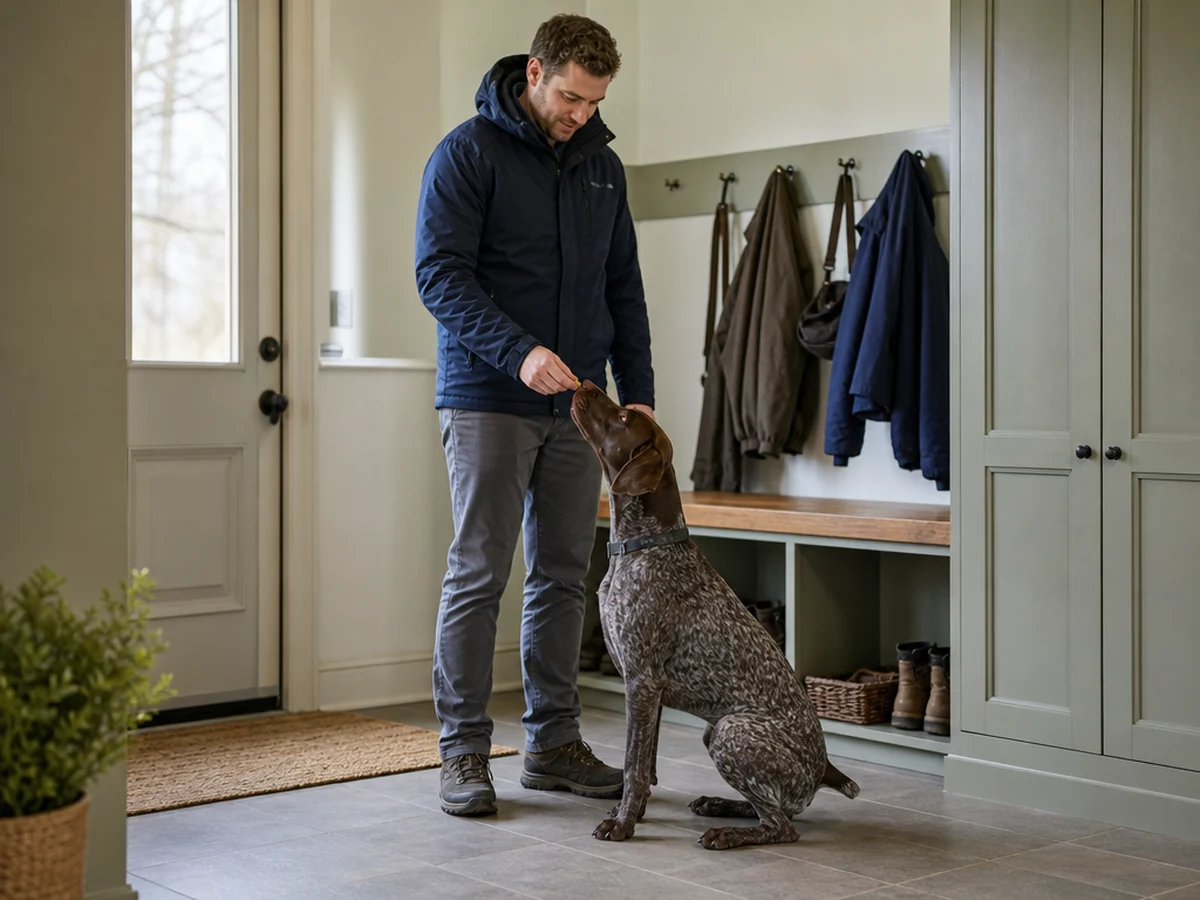
With the setup done, the sit itself comes in three stages, and each one changes only one thing so your dog always knows what pays. Move on when a stage happens smoothly several times in a row, and not before.
Lure the Rear to the Floor
Stand facing your dog with a tiny treat pinched in your fingers and all four paws on the floor, then sweep the treat back over the forehead, between the eyes. As the nose rises to follow it, the rear goes down, and that instant is the one you pay. Run the sequence the same way each time:
- Hold the treat at your dog's nose and let them sniff it without taking it.
- Draw your hand slowly back over their head, close enough that the nose can keep following.
- The moment the rear touches the floor, say your marker word.
- Deliver the treat while the rear is still down, right where your dog is sitting.
- Say the release word, then step away or toss a treat to reset and begin again.
Step four carries the lesson, because a treat that arrives after your dog has stood up pays for standing. When the rear lowers every time the hand starts to move, your dog has the idea and you can go on.
Swap the Treat for an Empty Hand
Repeat the same slow sweep with nothing in the guiding hand and the treat waiting in your other hand or a pouch. Mark the moment the rear touches down and pay from the other hand. The movement now means something without food leading the way, and your hand has become the first signal your dog reads. Expect this stage to feel slower than the first, because the hand no longer carries the answer.
If your GSP stands and stares at the empty hand, the guide has faded too fast. Put food back in the guiding hand for another round or two, then try the empty hand again.
Adding the Sit Command for German Shorthaired Pointers
Once the empty hand works every time, say the word once, just before the hand starts to move. Humane World for Animals suggests adding the word only once the behavior is consistent, using a calm voice and trying not to repeat it, which teaches a keen dog that the first request is the real one.
Over the following sessions, let the hand shrink: a smaller sweep, then a lift of the palm, then a flick of the fingers, with the word always arriving first. Pay some sits from your pocket and others with praise or a quick game, so the treat stops being the thing your dog is watching.
Fixing a Sit That Pops Up, Backs Off or Slides Down
Even a smooth lesson hits snags, and in a dog this quick they tend to look like extra movement. Match what you see to a change from this list and alter one thing before the next try.
- Springs Up Before the Treat: Mark and pay sooner, and keep the treat close to the floor so the rear has no reason to rise.
- Backs away from the hand. The sweep is probably too high or too quick, so slow it down and let the treat travel a shorter distance.
- Slides into a down when the treat drops too low, so hold it nearer the nose and pay only the sit.
Changing one thing per try means a fix that works is a fix you can name. Keep the payment quick while you experiment, so your dog never has to guess which change mattered.
Then comes the stall almost every household meets: a sit that works in the kitchen and disappears at the front door. That is not forgetting. In our experience a young sit gives out first at the busiest spot, because it has only ever been paid in one place, so ask in a new room with the lure hand back, then add a step of distance, then a little noise, one change per round. If the door is the real trouble, the lesson on jumping up on guests builds on this sit.
Questions That Follow the First Week of Sit Practice
The steps above stay the same for every GSP, but a few edge cases show up once the sit is working. These four answers cover the practical ones without adding anything new to the lesson.
When can I add a stay to the sit?
Add a wait only after the sit arrives quickly and reliably: ask for one calm breath before the release word, then stretch it a little at a time. Staying is its own lesson, so treat this sit as the place a stay starts.
Can another dog be in the room during lessons?
Treat the other dog as a distraction and add them only after the sit works in a quiet room. Start with them out of sight, then bring them in behind a gate, and pay each dog separately.
Does it matter which hand holds the treat?
Not to your dog, but choose one anyway. The guiding hand becomes the signal, so use the same hand and the same slow sweep each time, and let everyone at home copy it.
Should I teach down in the same session?
Wait until the sit is dependable, then give down its own sessions so two new positions never compete. Down grows naturally out of a good sit, because the lure simply keeps traveling toward the floor.
Letting the Day Pay for Your German Shorthaired Pointer's Sit
Once the sit is dependable, the treat has done its job as teacher, and your dog's own day can take over as the pay. A GSP already wants plenty: the door opening, the leash clipping on, the ball leaving your hand. Ask for a sit just before one of those and let the thing itself be the reward.
Pick two or three of those moments and leave the rest of the day sit-free, because a cue keeps its meaning only when what it earns is worth having. A dog who learns that sitting is how good things begin has learned something no treat pouch can teach.
A sit takes an afternoon to teach, but a GSP's education runs much longer, and our e-book maps every stage of it in orderly, plain chapters. Ask for yours through this page and an email will bring it to you.
 Training basicsHow to Teach a German Shorthaired Pointer to Stay
 Training basicsHow to Teach a German Shorthaired Pointer to Lie Down
 Training basicsHow to Teach a German Shorthaired Pointer to Heel
