 GSP
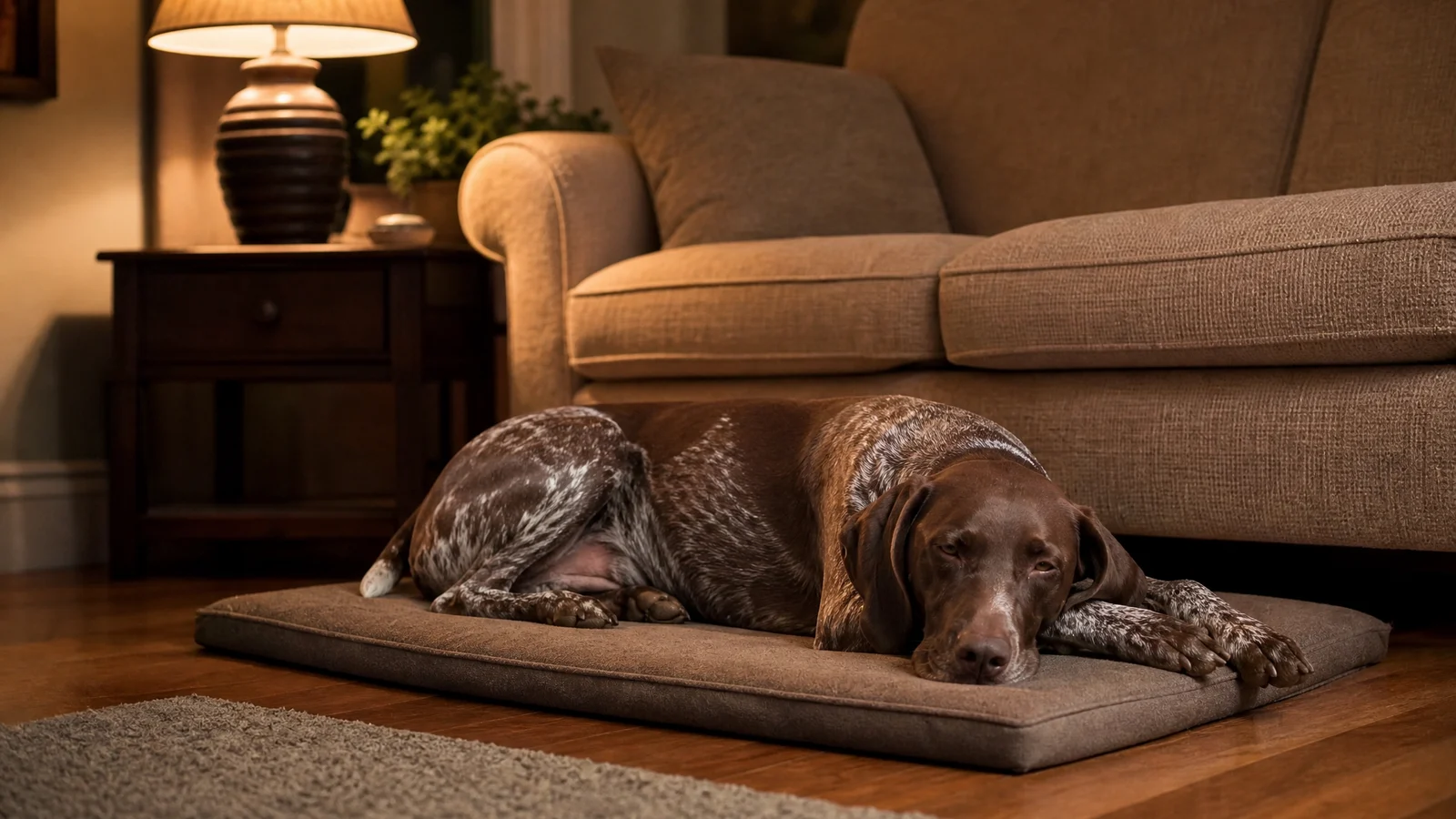
The question usually shows up at the end of a long evening: dinner is done, the walk was a good one, and your one-year-old German Shorthaired Pointer is still carrying a toy from room to room, looking for the next person willing to play or the next job to do.
Here is the honest answer. A GSP's calm arrives in stages across the second and third years, and a good share of it is something you build, not something you wait for.
Age ranges help you set expectations, but they say far less about tonight than the shape of today does. Building that shape, one ordinary day at a time, is what the sections below are about.
Where Calm Stands for a German Shorthaired Pointer at One
Before you build anything, it helps to know what you are building toward, and the general numbers are kinder than a long evening makes them feel. Most dogs reach emotional maturity between 12 and 18 months, and depending on breed, the energy that goes with a young dog could last for several more years. A GSP sits at the busy end of that spread, so we plan on the longer side. What you can count on is a pattern:
- Shorter sprints
- Quicker recovery after company
- An earlier first quiet minute each evening
Nobody can hand you a calm-down date for your particular dog, and a promised date would only be a guess. Our GSP puppy training timeline maps the longer road, and the teen months guide covers the stretch before this one.
How a Day Shapes a GSP's Calm by Evening
Since no date is coming, the lever you hold is the day itself, and for a GSP the order of the day counts as much as its length. Think in three blocks. An outlet for the body comes first, such as a long walk, a swim or a run somewhere safe.
Brain work comes second, with a short training round on cues your dog already knows, a find-it game with treats scattered in the grass or a puzzle feeder. Rest comes third, and it needs a slot on the schedule, because a dog who is never asked to rest rarely learns how.
Separating the blocks matters because each one does a different job. The outlet takes the edge off the body, the brain work gives a smart dog something to chew on, and the rest block teaches the off switch in a quiet hour instead of at the peak of the evening. A chew station can anchor that rest block, since settling with something to gnaw gives the hour a clear start. A day that looks busy can still end in a wired evening when it was all outlet and no off-ramp.
A GSP is smart, willing and happiest with plenty to do, and a dog with that much engine and no purpose tends to invent one, whether that is the couch cushions, the fence line or whoever in the house is easiest to recruit.
Paying for Calm on a Mat, in Four Steps
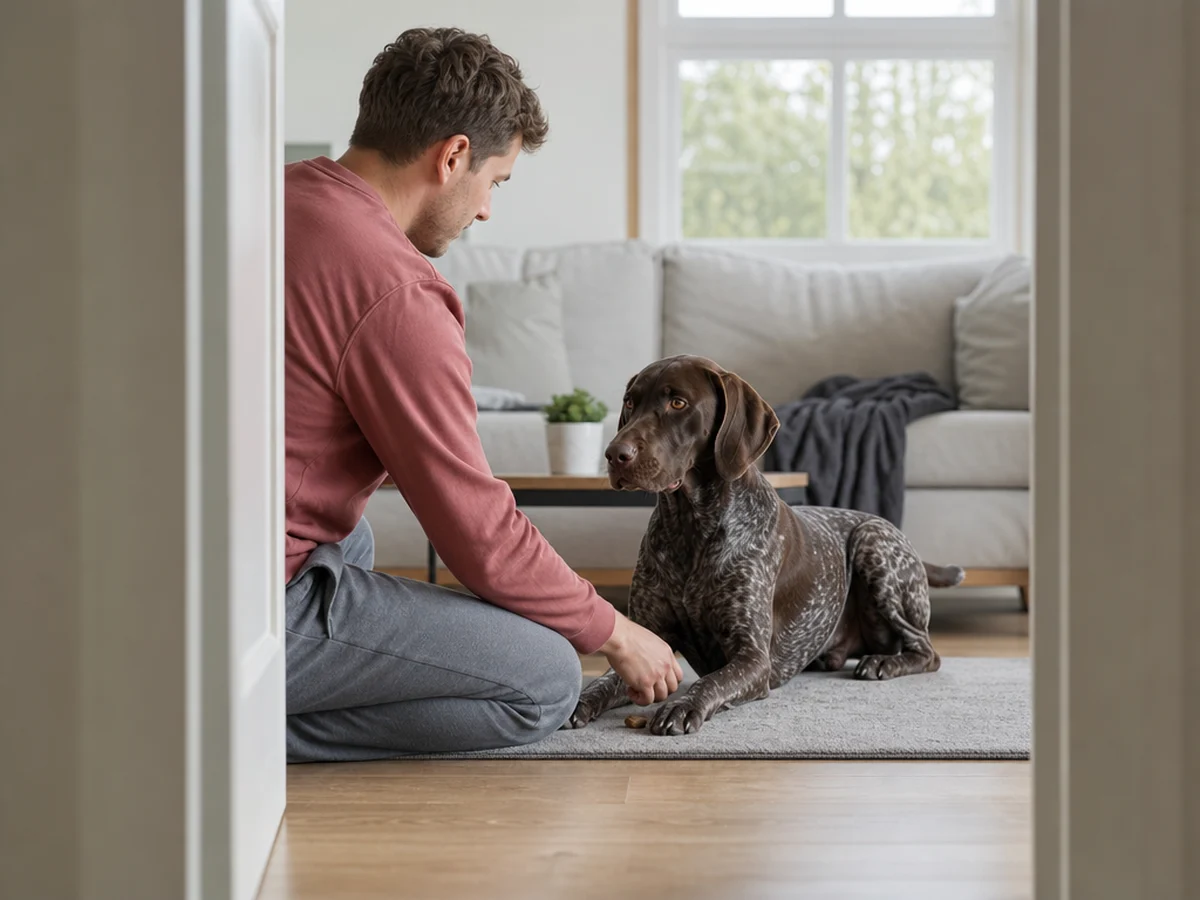
A rest block only works if your GSP knows what resting is for, and a mat gives that lesson a place to live. Choose a mat or bed, keep a few small treats within reach, and start after your dog has had their outlet, in a room with little going on. The four steps below are short on purpose, since the aim is for your dog to discover that lying down on this spot is what pays.
- Pay the Mat Itself: Toss a treat onto the mat, let your dog step on to get it, and pay again while all four paws are still on it. Repeat until they head for the mat on their own.
- Wait for the lie-down. Stand quietly and let your dog try ideas without cueing anything. Pay any bend of the elbows or drop of the hips toward the floor first, then pay again for a full lie-down that stays on the mat.
- Stretch the time lying down by delivering treats a little farther apart, always while your dog is still relaxed. Pay before the first sign of restlessness instead of after it, so the pause never has to end in a scramble.
- Add a word and some life: Once your dog drops onto the mat smoothly several times in a row, say "settle" just before they lie down. Then practice with ordinary household noise, like a radio, a family member walking past or a dropped spoon.
Knowing When to Move On
Move on only when the current step looks easy to your dog, and if they stall, go back one step and pay more often there. A GSP who gets up early is telling you the last step asked for too much time, not that the lesson has failed.
Make one change in the morning for the evening you want to be different, and let a few days of results tell you whether it was the right one. Over the second and third years those small adjustments add up, and the calm you were waiting for turns out to have been built from ordinary hours.
When a German Shorthaired Pointer's Calm Slips Around People
A mat that holds in a quiet room will still wobble when the doorbell rings, and at this age that is normal rather than a sign the lesson was lost. Young dogs can get easily over-excited around other dogs, people and new situations because their impulse control is not fully developed yet. In general, social maturity comes at about 1 to 3 years, and as that maturity arrives, a dog may play more roughly when excited.
Our trainers treat the doorbell as a lesson of its own. Clip on a leash or close a gate before the door opens, send your GSP to the mat, and pay them there while the guest comes in, so the first greeting happens from a spot they already know how to hold. If jumping is the sticking point, the guide to jumping at the door has the full method.
Play with other dogs needs the same thinking. Watch for a stiff body or a game that keeps escalating, and call your GSP out of it with a cue they know well, pay for the response, then let them return once they look loose again. A short break teaches your dog that excitement can pause and pick back up, which is the same skill the mat teaches in a quieter room.
A Sudden Change in a German Shorthaired Pointer Is Not Maturity
Everything so far assumes the restlessness belongs to a young dog, but some changes do not come from growing up at all. Maturity wobbles rise and fall with company, boredom and excitement, while a GSP who suddenly stops settling anywhere, hesitates on stairs or turns grumpy when touched in their bed deserves a closer look. Regular vet checkups belong in the adult years too, and a call to your veterinarian is the right first step for a change like that.
Hidden aches are one reason: AVSAB describes a 2018 study in which dogs with hidden joint or muscle pain were more likely to show aggression when approached while lying down or resting, and they also showed reluctance to move or exercise.
Odd Spots in a GSP's Calm Routine
Plans for calm tend to bend in the same three places: the day you cannot get out, the stretch before bedtime and the games that seem to undo everything. A few plain answers on each follow.
What if a long outing is not possible today?
A day without the big outing is not a setback. Shift the weight to the other two blocks with several short rounds of known cues, a find-it game in the house, a stuffed chew and a mat session after each. Your GSP may be livelier by evening, so pay the mat generously and expect a looser day, not a failed one.
What about the wild half hour before bed?
Treat it as a wind-down you design instead of a burst you outlast. Dim the lights, skip the exciting games, and offer a chew or a mat session at the same point each night so the sequence itself becomes the cue. If your dog is still wound up after a few evenings of that, move the last big outing earlier and keep the final stretch slow.
Should I give up fetch and tug for now?
No. Fetch and tug are good outlets for a GSP, and they give you something to pay with. What changes is how a game ends: stop it with a pause and a paid sit or mat visit, then start it again, so your dog learns that excitement has an off-ramp and that stopping is part of the fun.
A Restless Evening Gets Fixed in the Morning
It is tempting to repair a bad evening while it is happening, usually with one more round of fetch after dinner. For a GSP the repair works better upstream: if the last hour of the day is the trouble, look at the first one and ask whether your dog got an outlet before the household got busy, a brain game before lunch and a rest block they were allowed to finish.
Mornings and evenings are only two corners of your GSP's education, and our free e-book, mailed to readers who register here, covers the rest one lesson at a time.
 BehaviorGerman Shorthaired Pointers With Cats and Other Dogs
 Puppy trainingGerman Shorthaired Pointer Puppy: First Training Steps
 Puppy trainingGerman Shorthaired Pointer at 8 to 12 Weeks: First Steps
