 GSP
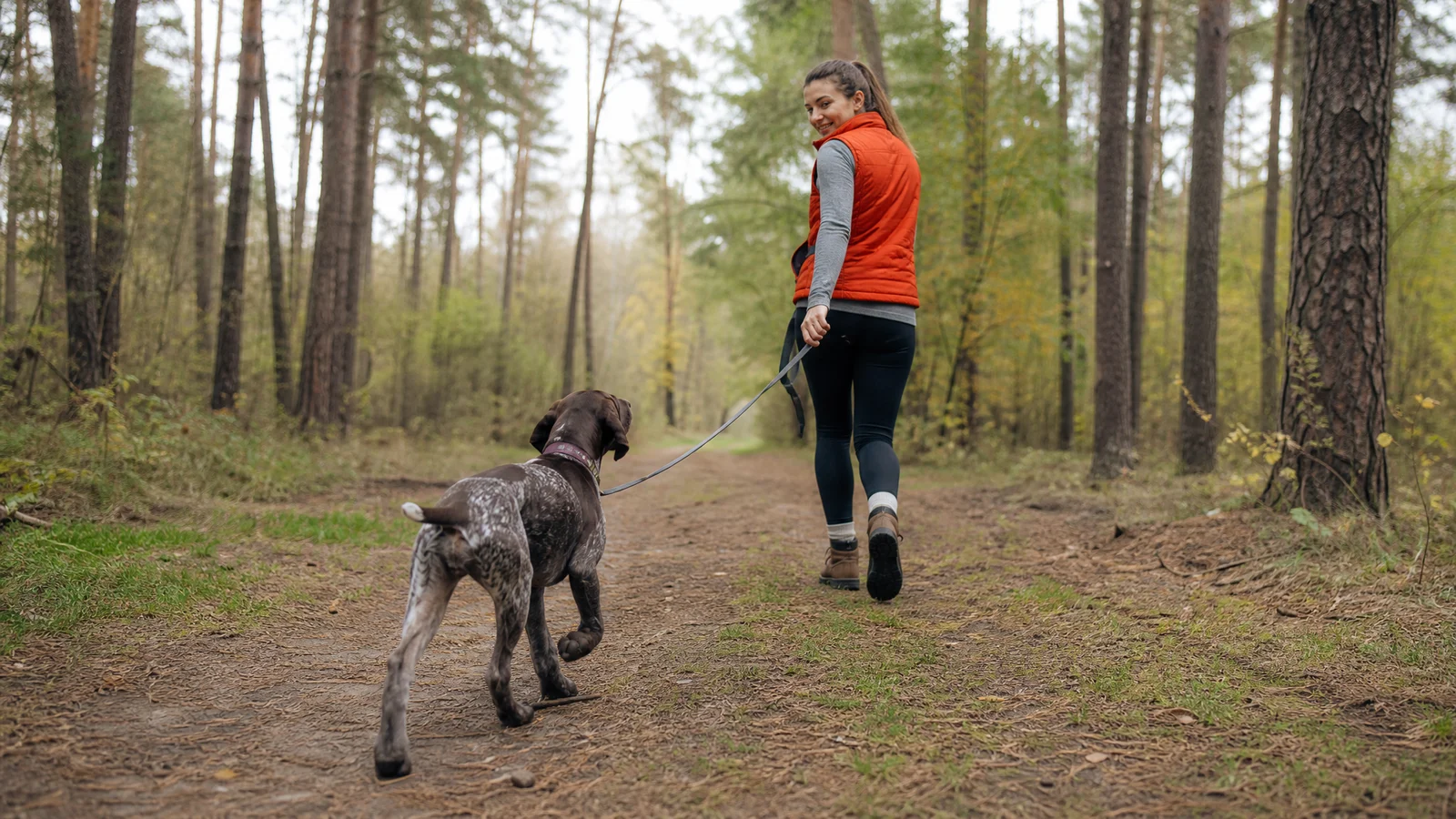
The first sign of this stage usually shows up in your arm. The leash that used to droop between you and your German Shorthaired Pointer puppy now comes up tight the moment something interesting appears, and the sit that arrived so easily a month ago shows up a beat late, or not at all.
Nothing has gone wrong. Between four and six months, a GSP puppy gains height, speed, curiosity and stamina all at once, and the habits you shape now are the ones this breed's demanding teenage years will lean on.
Below, we sort out what is really changing, how to keep known cues worth answering, how to spend a very energetic puppy's day and what can safely wait. Along the way, you will see where this page stops and the longer guides take over.
The Three Changes Behind a Bolder German Shorthaired Pointer Puppy
Behind the tight leash sit changes that most puppies share at this age, which keeps a hard week from feeling personal. The juvenile stage runs from 3 to 6 months in Texas A&M's puppy timeline, and puppies in it begin to test boundaries and learn to push limitations. Adult teeth should be fully in place by 6 to 7 months, so chewing stays busy throughout. That is a general picture and not a GSP timetable, so your puppy may reach each piece earlier or later.
A German Shorthaired Pointer puppy turns up the volume on all of it. GSPs bring very high energy, a quick mind and a real need for something to do, so each general change lands harder than it would on a calmer breed. In practice, three things move at once:
- Reach. A taller, faster puppy now gets to counters, gates, door handles and the far end of the leash that sat out of range a month ago.
- Opinions about your cues: Known cues now compete with every smell, sound and passing dog, and testing the rules is part of how a puppy this age learns which ones are real.
- More energy to spend, and more strength to spend it with, which is why a puppy who skipped the morning outing can feel like a different dog by noon.
Jumping up on visitors is the classic case of reach and opinion arriving together, and our guide to teaching a GSP not to jump holds the full plan. Everything below answers one of these three changes, and the reward-based approach that worked in the first weeks still does the work.
Why Known Cues Wobble in a GSP Puppy
The second change is the one that feels personal, because a cue your puppy knew last week now seems to need a second request. Usually the cue is fine and the competition got stronger. A bigger world pays in smells, sights and passing dogs, and a sit in the hallway cannot match that.
The standard answer in Cornell's teenage-puppy guidance is to review basic skills, since hormones and a lack of self-control may have made a young dog seem to forget, and to break new skills into small steps so the puppy can succeed. That guidance is written for adolescents, but a GSP nearing six months is close enough to borrow it.
Here is a short review that suits a keen GSP puppy. Keep each round brief and cheerful, because short rounds keep a keen puppy keen.
- Pick one cue your puppy knows well, such as sit, and ask for it in the quietest room you have.
- Pay the moment your puppy answers, with a treat or a game your puppy truly values, so the answer feels like a good deal.
- Change one thing for the next round, whether that is a new room, a few more steps of distance or a mild distraction, and never two at once.
- If the cue slips, make the next ask easier and pay generously for the answer you get.
Changing one thing at a time tells you exactly what made the cue wobble, and paying at once keeps the reward connected to the answer while it is still fresh. You will usually see the cue return in the quiet room first, then in the kitchen, then at the front door, and each new room is a small win worth paying for.
Spending a German Shorthaired Pointer Puppy's Energy Well
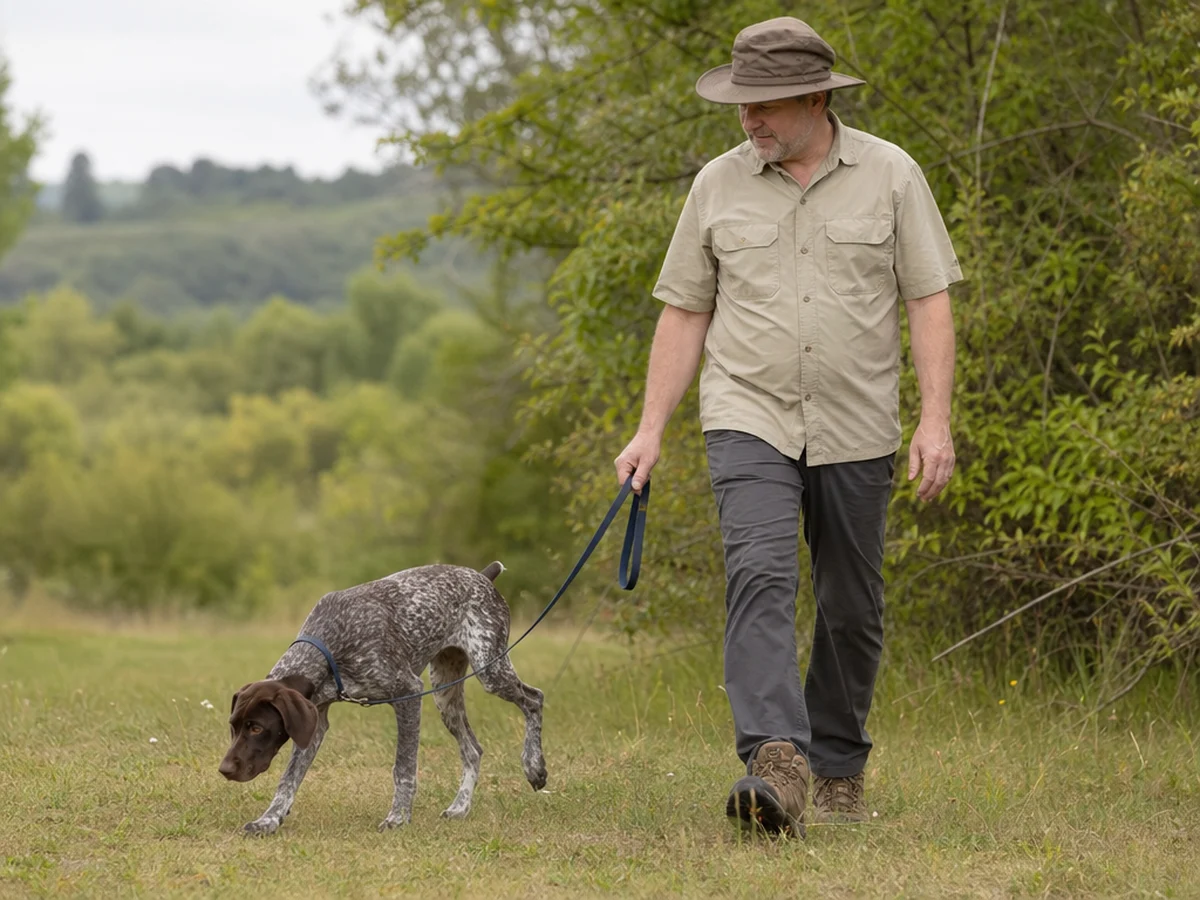
Energy is the third change, and it makes the other two harder, because a puppy with energy left over has more reach and less patience for your cues. Since puppies are constantly growing, short walks or play sessions through the day are a safer choice than one long outing, which can be too hard on a developing body. Mental work belongs beside those walks and not in place of them.
Training, puzzle games and scent games all count as brain work, and a few minutes of it often tires a keen puppy faster than another lap of the yard. GSPs need something to do, so a puppy without a job tends to invent one. Three easy games to start with:
- Scatter a handful of treats across short grass and let your puppy sniff out every one.
- Hide a favorite toy under a laundry basket in the living room and cheer when your puppy finds it.
- Shape one small trick, such as a nose touch to your palm, in a few minutes of cheerful practice.
Each game pays with your attention as well as food, and a few of them can leave a puppy more settled than another long walk would. Our GSP puppy exercise mix guide covers how walks, play and rest fit together across a whole day, and regular vet visits are the place to ask what activity suits your puppy as they grow.
What Can Wait Until a GSP Puppy Is Older
Spending energy well also means turning some things down, so every plan for this stage needs a short list of things you decide not to do yet, because a puppy's body and judgment are both still catching up. As GSP people, we would rather hold some things back on purpose than learn why they were too early. The table pairs each one with what to do in the meantime.
| Hold off on | Do this in the meantime |
|---|---|
| Long runs and hard fetch sessions | Short bursts of play and walks, with your vet's go-ahead before any steady running |
| Free roaming while you are busy | A crate, pen or baby gate whenever your puppy cannot be watched |
| Open ground without a line | A long line in a safe open space, so a burst of speed still has a limit |
| Several new cues in one week | One small step of one skill, paid well, until it holds |
Each row swaps a freedom your puppy cannot handle yet for a version they can, and none of them has to slow learning down. Open ground matters most for a breed with a strong prey drive, since a puppy who bolts after something interesting is hard to call back. For the order in which skills usually arrive, see our GSP puppy training timeline.
Why Waiting Costs Little
Every limit above hides the same shortcut, and a GSP's talent for learning makes it easy to take. A puppy who picks up a cue in an afternoon makes it tempting to add the next one tomorrow, the longer outing next weekend and the open field next month, and each of those can feel earned because the puppy seemed ready.
A fast learner gives you room to wait, because the next cue will still be there next week, and so will the open field. What the demanding teenage years ahead call for is a puppy who has spent these months being a puppy, tired from short outings, keen from small games and steady in a few well-paid habits.
Everyday Puzzles for a Five-Month-Old GSP Puppy
The limits above leave a few practical gaps, and all three questions here are about pace: how fast to build up running, how long to teach in one go and how far to let a puppy roam. They come up at the edges of the routine, where a growing body meets daily life.
Can my puppy fetch or run with me yet?
Not for steady distance or hard throwing. While a dog is growing, it is important to protect their joints by introducing exercise slowly, and the quick starts and sudden stops of fetch can strain them. Ask your vet when longer, steadier running makes sense, and spend your puppy's energy in short play bursts and sniffing walks until then.
How long should one lesson last?
Stop while your puppy is still keen, even if that is only a few minutes. Short lessons spread through the day beat one long session, because a puppy who is eager at the end of every round is eager at the start of the next. Tuck them in around meals, before walks and between other tasks.
When can my puppy roam the house?
Widen the space in small steps instead of all at once. Give your puppy one extra room while you are in sight, for a short stretch, and pay for calm settling there. If chewing or accidents show up, go back to the smaller space for a while and try again later.
A Fast Learner Is Easy to Rush
Quick minds deserve a plan to match, so we offer readers our e-book, which treats the lessons waiting beyond these months with the same patience and thoroughness, in plain words from first page to last.
 BehaviorTraining an Older or Adopted German Shorthaired Pointer
 Puppy trainingHow to House Train a German Shorthaired Pointer Puppy
 Puppy trainingHow to Socialize a German Shorthaired Pointer Puppy
