 GSP
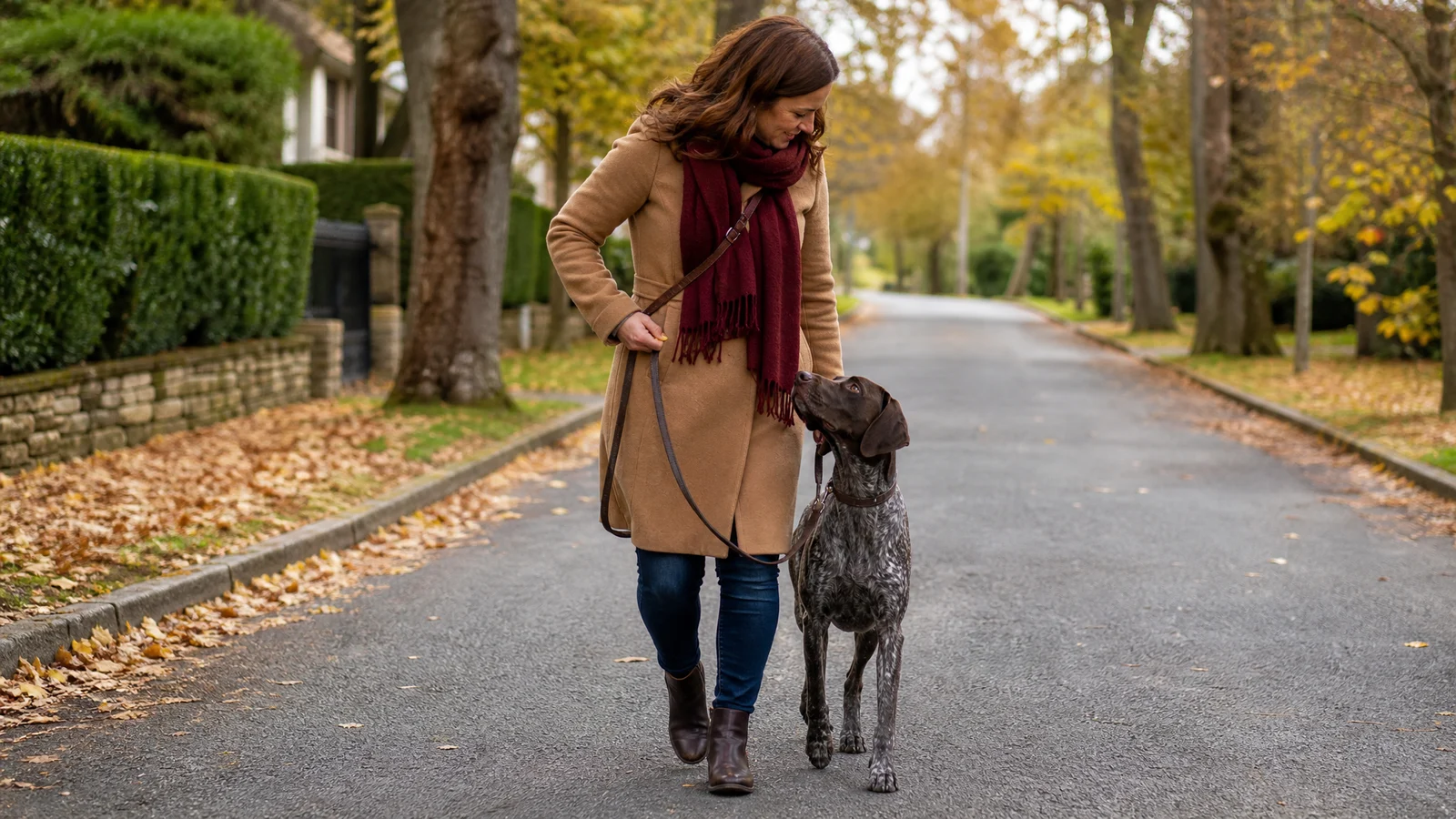
The best way to train a German Shorthaired Pointer is with brief, cheerful sessions paid in rewards the dog truly values, set inside a day that also holds hard exercise and real mental work. The breed rates 5 of 5 for trainability, but that eagerness fades fast when the work seems pointless, because a GSP without a purpose tends to invent one, and it usually involves your shoes.
Done well, you get a quick, affectionate partner who bonds firmly with the whole family, although house training and recall can move at a pace that surprises you in either direction. We'll walk you through the rewards, gear, spaces and daily rhythm that make up the toolkit, then the core cues and the detours of adolescence, finishing with a starter schedule for the opening stretch at home.
German Shorthaired Pointer Rewards
Rewards come first because every other tool in the kit leans on them, and this breed is generous about what counts as one. When a dog gets something they love right after doing a behavior, that behavior becomes likelier to repeat. This is the simple logic behind reward-based training, and several survey studies on obedience found better results this way.
How the dog feels while learning matters too. In a 2020 study of 92 dogs, the ones attending reward-based schools showed less stress, looser posture and smaller cortisol rises after training. For a breed that already runs hot, a relaxed learner is a practical goal as much as a kind one.
Food Worth Working For
Small, soft pieces that can be swallowed in a second suit most lessons, because a high-drive dog is paid best when the treat lands before their attention drifts toward a smell across the yard. Let part of the daily meal serve as the everyday reward so the waistline stays sensible, and save your best offering for the moments that count.
This ladder keeps the choices straight:
| Tier | Example | Where it fits |
|---|---|---|
| Everyday | Kibble from the daily meal | Easy cues indoors and quick check-ins |
| Upgrade | Soft, strongly scented bits | New rooms, the yard, a second lesson of the day |
| Jackpot | The treat they would cross a field for | Recall near real temptation |
| Life reward | Release to sniff, greet a friend or run | After a solid sit or a good recall |
Play and Attention
The breed is happiest with plenty of play and loving attention from their person, which makes both legitimate wages rather than extras. A short game of tug or a tossed toy straight after a good sit often outbids a treat outdoors, where the dog is already buzzing, and stopping the game while they still want more is a handy way to restart a session that has gone flat.
Attention matters most around distractions. Recall around tempting sights like game needs ongoing work on engagement and steady rewards, even when treat-based practice began very early. Paying every unprompted glance back at you on a walk is a small habit that slowly grows into a dependable recall.
Marking the Moment
Pick one bright sound, a click or a single crisp word such as "yes," and use it only to say that what the dog just did has earned a reward. Because the sound pins the moment, the treat can arrive a beat later without blurring the lesson, a real advantage with a dog who changes position as fast as a GSP. Many owners use clicker work for the basics and return to it whenever a cue goes fuzzy.
Gear for Training
The right equipment for this breed is plain, comfortable and chosen for one purpose, which is making it easy to pay your dog at exactly the right second. Most households end up with a similar short list, and each item has a reason tied to how a GSP lives and learns.
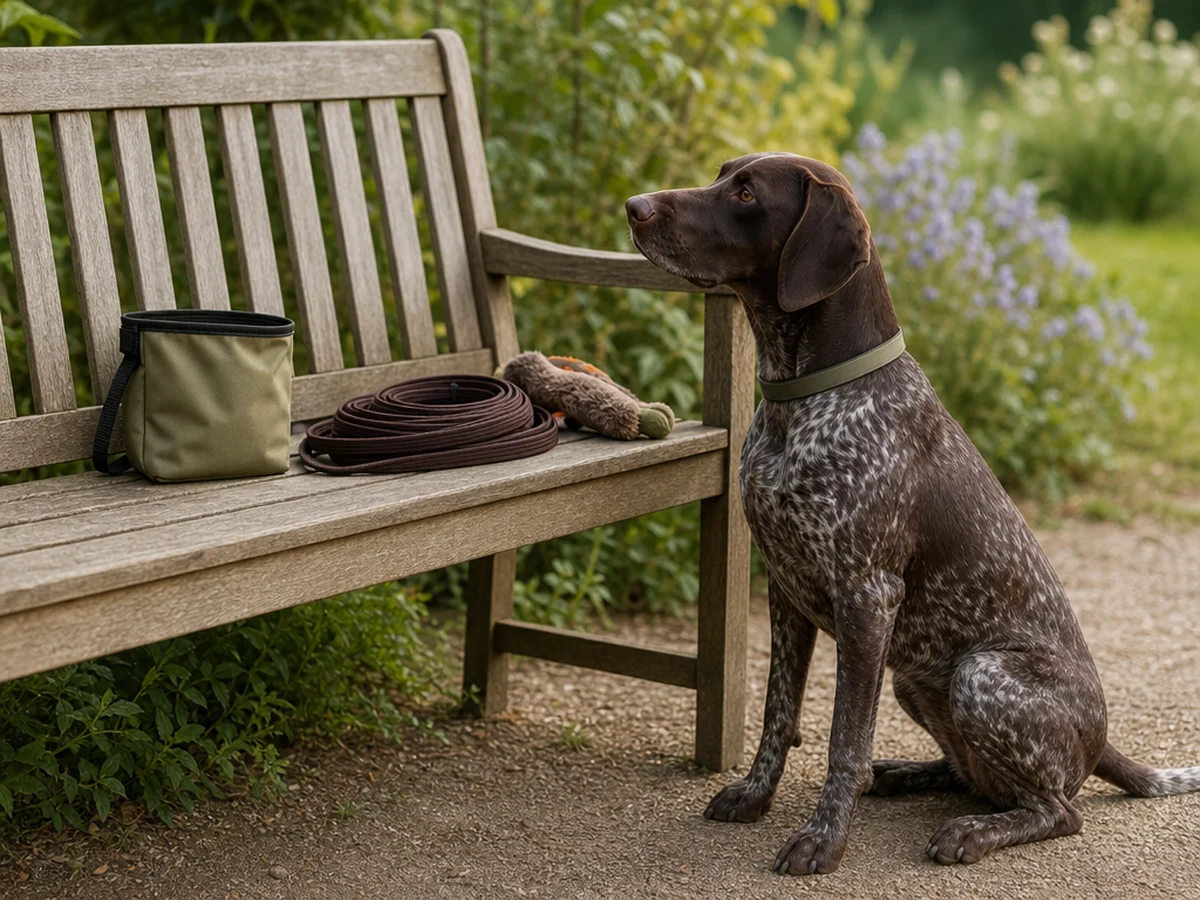
- A treat pouch at your hip keeps rewards within reach, which matters with a quick dog whose attention can swing from you to a rustle in the hedge in a single breath.
- A flat collar or well-fitted harness with a standard leash handles everyday walks, and the loose-leash work described below does the real teaching.
- A long line gives a young dog room to roam while you build recall, holding freedom and safety together during the stage when their nose outruns their manners.
- A crate sized to the puppy, ideally a smaller one with meals fed inside, supports house training and rest, and becomes somewhere they want to go.
- Puzzle feeders turn a meal into scent-driven mental work, and an indoor toy box lets some dogs take pride in fetching a named toy as a small household job.
- A doorbell or a recordable "outside" button lets the dog tell you when they need to go, and owners report that some puppies begin using one very young.
Buy less than you expect to need. A pouch, a line, a crate and a mat cover most of the work, and everything else is practice, repeated patiently until the dog understands that these few objects always mean something good is about to happen.
Training Spaces at Home
A GSP reads each space in the home as a set of expectations, so a few well-chosen spots do a surprising share of the teaching before you say a word. The trick is to give each place one meaning and keep it, so the dog learns what is asked of them there without being told twice.
The Crate
Owners lean on the crate earliest and hardest, and the ones who do best treat it as a teaching tool rather than a holding pen. Clicker or Crate Games methods, meals fed inside, and a scheduled crate nap three times daily all turn rest into something predictable instead of negotiated.
Expect an adjustment period, because some puppies cry, bark and howl when first crated, even at 8 weeks old. Short rewarded stays and patience beat giving in. Our walkthrough on GSP crate training and separation anxiety lays out the steps in order.
A Settle Spot
A bed or mat set in the busiest part of the living area teaches that being near people does not require action. The lesson lands slowly in a breed rated 5 of 5 for energy, so place it where the dog can watch the household without joining in, and reward them whenever they head there on their own.
Yard and Nose Zones
A securely fenced yard lets a GSP run and play safely, and it doubles as the first place to practice cues with mild distractions. For a dog who loves to dig, give them a sand-filled dig spot, such as a kiddie pool filled with play sand, and reward them for choosing it over the flower bed.
Give the nose a space as well. Many owners treat sniffing and rooting around as real mental stimulation, even on days when the dogs are not running hard, so a patch of long grass with scattered treats counts as a session. Formal nose work gives high-energy dogs a way to build focus, and in a home with more than one dog, giving each a separate turn at scent games keeps every dog engaged.
German Shorthaired Pointer Daily Rhythm
Routine is the quiet workhorse of the toolkit, and a GSP who knows when meals, outings, lessons and rest happen spends less energy guessing and more of it learning. That repays the effort better than any single exercise you could add, and it shows up first in the way a puppy starts to wait at the door.
House Training Pace
The pace varies enormously. Many GSP puppies pick it up within days or a few weeks, with few or no accidents afterward, while others take many months, particularly in apartments and high rises where the trip to the door is long. Plan for either outcome, and do not read a slow start as stubbornness.
Owners who describe their method took the puppy out very often at the start, as frequently as every 30 minutes, and rewarded peeing outside with praise or a treat on the spot. A meal and water schedule, with feeding inside the crate, made the timing easier to predict.
Setbacks happen, sometimes a restart months after early success. If accidents persist, or happy peeing on greeting continues well into adulthood, ask your veterinarian whether something medical is involved. Our GSP potty training guide covers the whole process.
Session Length and Timing
Short beats long. Owners who train several times a day tend to stop each session well before the dog tires of it, with some setting a firm, fairly brief cap because dogs kept past that point get bored, stressed or frustrated. You can usually see it coming when the eyes drift and the sits turn sloppy, and the better move is to end on a success, play for a minute, and come back later.
Fit sessions between meals and exercise rather than straight after either. The breed is subject to bloat, so a GSP should not be fed right after vigorous exercise, nor run for at least an hour after eating and drinking.
This is general information, not veterinary advice. Check with your veterinarian before restricting water or changing a feeding schedule, and ask what routine suits your dog's age and health.
Exercise Alongside Learning
GSPs do best with ample activity twice a day, such as brisk half-hour walks morning and evening or running and playing in a securely fenced area, and a dog who has had that is far easier to teach. Plenty of people assume more miles will cure a restless GSP, yet miles mostly build a fitter dog, and the calm you want comes from thinking work as well.
Some owners say mental work tires these dogs more reliably than distance, and others find that even a full schedule leaves a dog restless, which is a signal to add variety rather than more running. Keep up regular veterinary visits too, so a change in energy or willingness gets checked early.
German Shorthaired Pointer Training Cues
With rewards, gear, spaces and routines in place, the cues come quickly. Teach each one in a quiet room first, one at a time, and pay generously. Pairing every word with a hand signal is worth the small effort, since gestures keep working in noisy places and stay useful later in life if hearing fades.
Sit and Down
Lure the head up and back for a sit, mark the instant the hips land, and pay. For down, lure from the sit toward the floor between the paws and mark when the elbows touch. Fade the lure within a few repetitions so your hand becomes a signal rather than a bribe, and deliver the treat low and calmly, since an excited GSP tends to pop up for a high one.
Recall That Holds
Recall is the cue this breed makes you earn, so build it in steps and keep paying after it looks finished.
- Start indoors, say the name and the cue once, then mark and pay the instant the dog arrives.
- Add distance in the fenced yard, paying with the best treat or a quick game.
- Move to a long line around mild distractions, rewarding a turn toward you as much as the arrival.
- Test real temptations only on the line, and call only when you can pay off the moment.
- Keep rewarding for years, because independence around distractions returns when payment stops.
Loose-Leash Walking
Owners who solved pulling did it in two ways. Some stopped and waited for a sit before moving on, and others turned the opposite way whenever the leash tightened, rewarding the dog for catching up. Both make early walks very slow, and both are worth it, because the dog learns that a loose line is what moves the walk forward.
Settle
Settle is the cue owners most often wish they had taught sooner. Those who taught calm indoors early say it worked well, while others found a young dog fought relaxing hard once constant motion became habit. Reward lying on the mat while you read or watch television, build the time slowly, and treat rest as a skill you are teaching rather than a mood you hope for.
Training Detours in Adolescence
The breed can be extremely challenging from 6 months to 3 years old, and the first sign is usually a bright puppy who seems to forget everything they knew. The skills are still there underneath, and most of the repair comes from making the setting easier and the rewards clearer, not from doing more of the same.
- When cues fall apart, owners report that returning to clicker basics and hand-fed meals for a stretch rebuilt focus, because every bite becomes a small lesson.
- When energy spikes, add mental work before adding miles, and keep a long line on outdoors so recall can be practiced safely.
- When a lesson drags, shorten it, end on a win and come back later in the day.
- When progress stalls for weeks, a reward-based trainer can spot timing problems that are hard to see from inside the leash.
Waiting for formal classes is not a reason to wait on teaching. Some owners begin at home with family guidance and positive-training videos while a puppy's vaccinations are still in progress, and your veterinarian can say which places are safe meanwhile.
Exuberance is the other test, especially around children and other animals, and the breed's strong prey drive means management counts as much as teaching. Our article on manners around kids, dogs and cats covers greetings and supervision in detail.
Two Weeks of Training Ahead
Here is a schedule that pulls the toolkit together for your first two weeks. Take the steps in order, pace each one to your dog, and repeat any stage that still feels shaky.
- First weekend: set up the crate, settle spot and treat pouch, write down a feeding and outing schedule, and start marker work by marking and paying for a glance.
- Weekdays of week one: teach sit and down in several brief sessions a day, and add one scent game daily.
- End of week one: start loose-leash walking and recall in the fenced yard, paying every check-in and accepting slow progress.
- Weekdays of week two: take cues to new rooms, practice settle daily, and begin recall on the long line around mild distractions.
- Second weekend: note which rewards your dog loved and which cues need rebuilding, and book a veterinary visit if anything about energy or behavior seems off.
The thread through all of it is purpose. A GSP needs a job, daily exercise and real mental work, and short rewarded sessions deliver all three, so the energy goes into learning with you rather than into the chewing, digging and restlessness that fill the gap when nothing else does.
 BehaviorIs a German Shorthaired Pointer a Good Family Dog?
 Training basicsHow to Call a German Shorthaired Pointer Back When Birds Flush
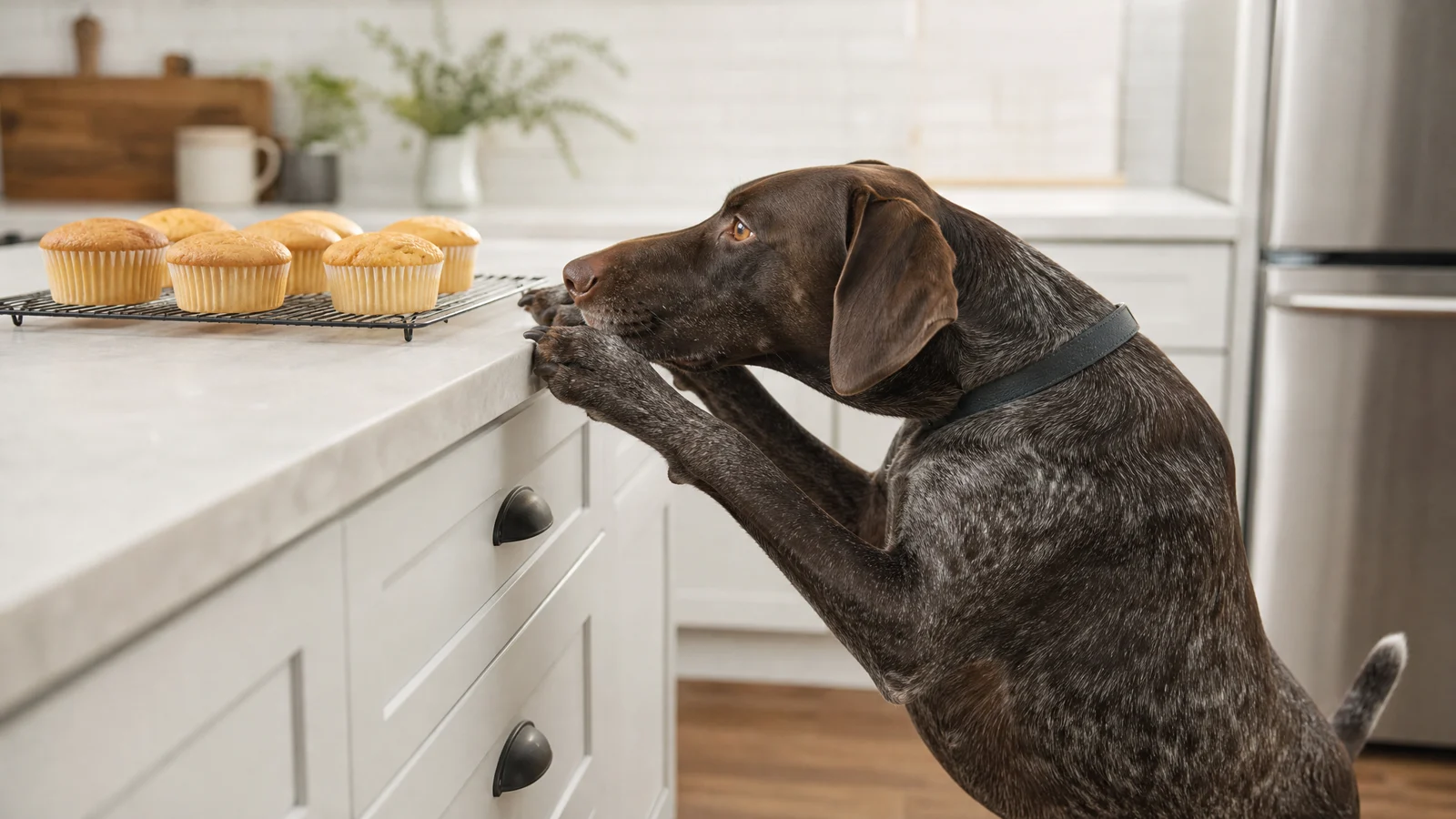 BehaviorCupcakes on the Counter: Keeping a German Shorthaired Pointer Off
