 GSP
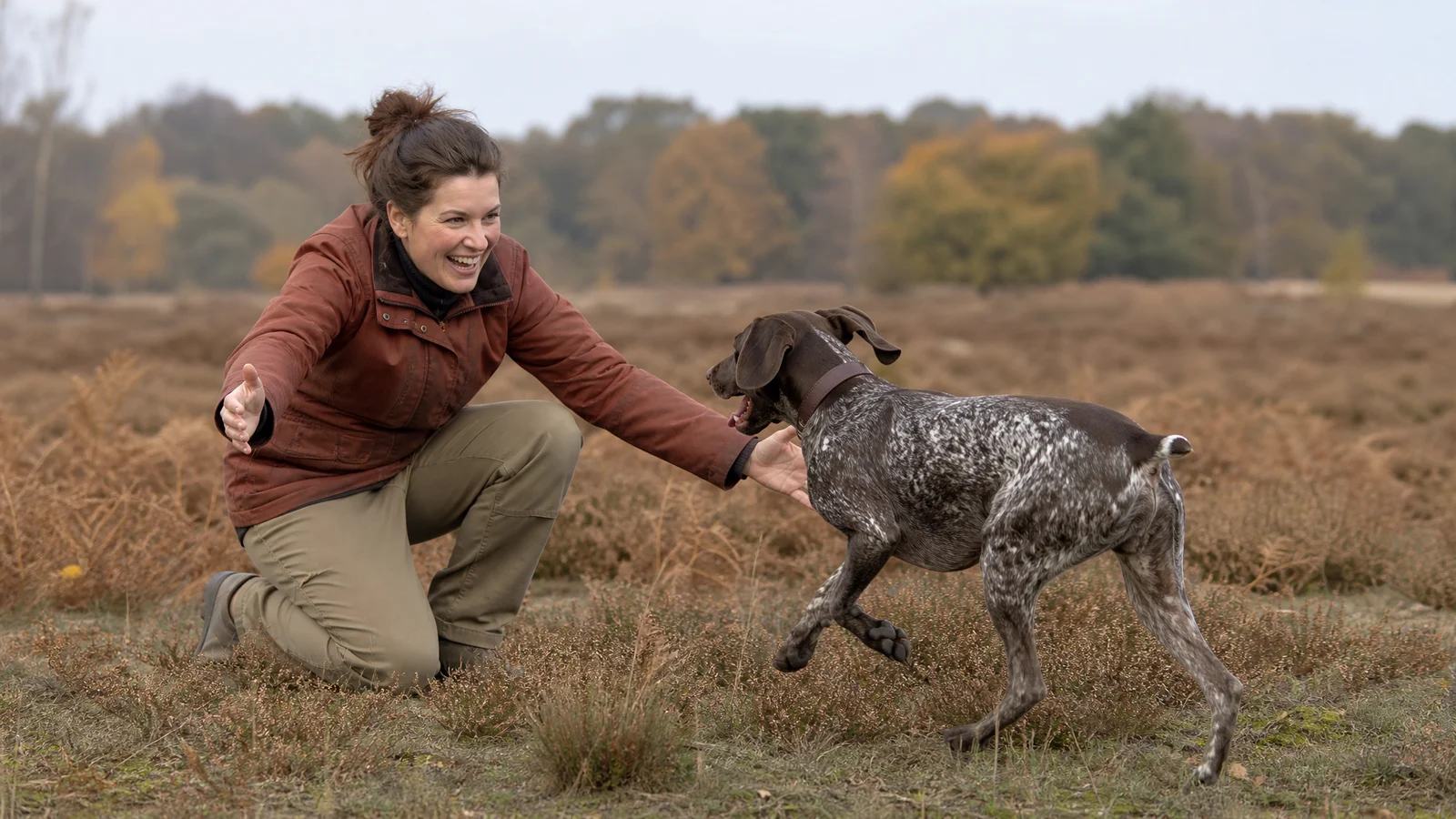
A bird lifting out of grass can change a quiet walk before you have time to finish a sentence. A German Shorthaired Pointer who returns readily beside the house may find that sudden movement much harder to leave. The immediate question is whether the dog is safely contained, not whether you can produce a more exciting recall word.
We can prepare for those encounters without arranging a chase. This guide separates the response to an unexpected flush from practice around manageable distractions. It covers choosing a place, building a worthwhile return and deciding what to do when birds are standing, flying at a distance or suddenly close. The aim is a dog you can help through an encounter while keeping wildlife undisturbed.
When Birds Flush Near a German Shorthaired Pointer
Keep hold of the leash and move away from the birds when you can do so safely. If your GSP can respond, use the familiar recall cue once and reward the return. If they are already fixated or pulling, prioritize creating space rather than repeating a word they cannot currently follow.
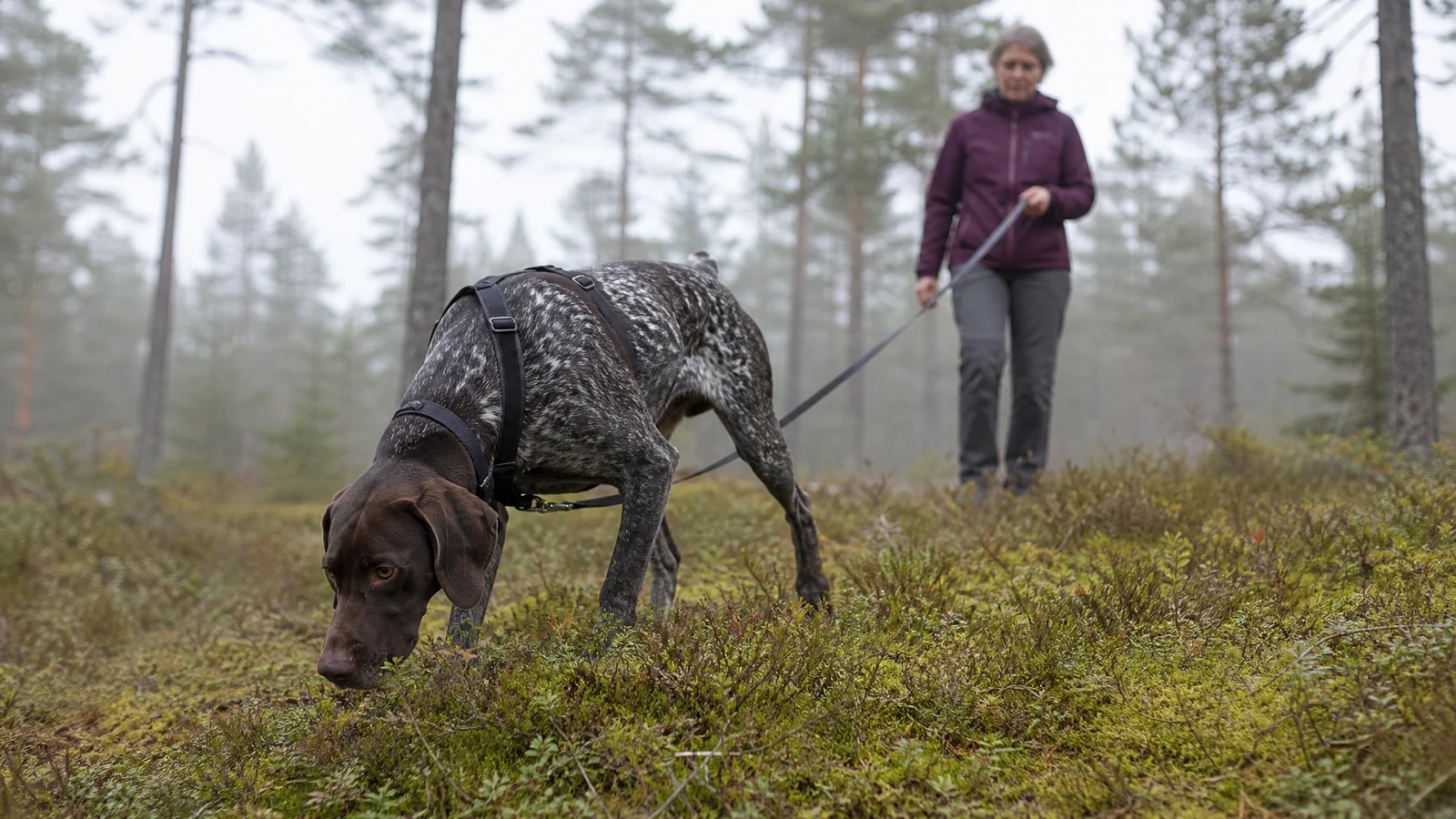
A long line needs careful handling before this happens. Attach it to a well-fitted harness, manage spare line so it cannot wrap around people or legs, and prevent the dog from building speed toward its end. Choose an ordinary shorter leash where traffic, other walkers or narrow paths make extra length unsafe.
Do not walk closer to make the bird move again. Leaving the area protects the bird and gives your dog a chance to recover.
The Dogs Trust chasing advice combines management with training because a recall does not remove every possibility of pursuit. A held line is part of the plan while the skill develops. An enclosed practice space also needs checking for wildlife before you use it.
A Place for Recall Practice With Your German Shorthaired Pointer
Choose practice locations by how much control they give you over distance and exits. A wide view and an easy retreat matter more than finding lots of birds. The best place today may contain none, especially if the dog is still learning to return through ordinary outdoor distractions.
Places Where Practice Belongs
Follow local access rules and local leash restrictions. Avoid nesting areas, livestock and places where a dog could disturb animals even while attached to a line. Permission to walk somewhere does not make every activity appropriate there.
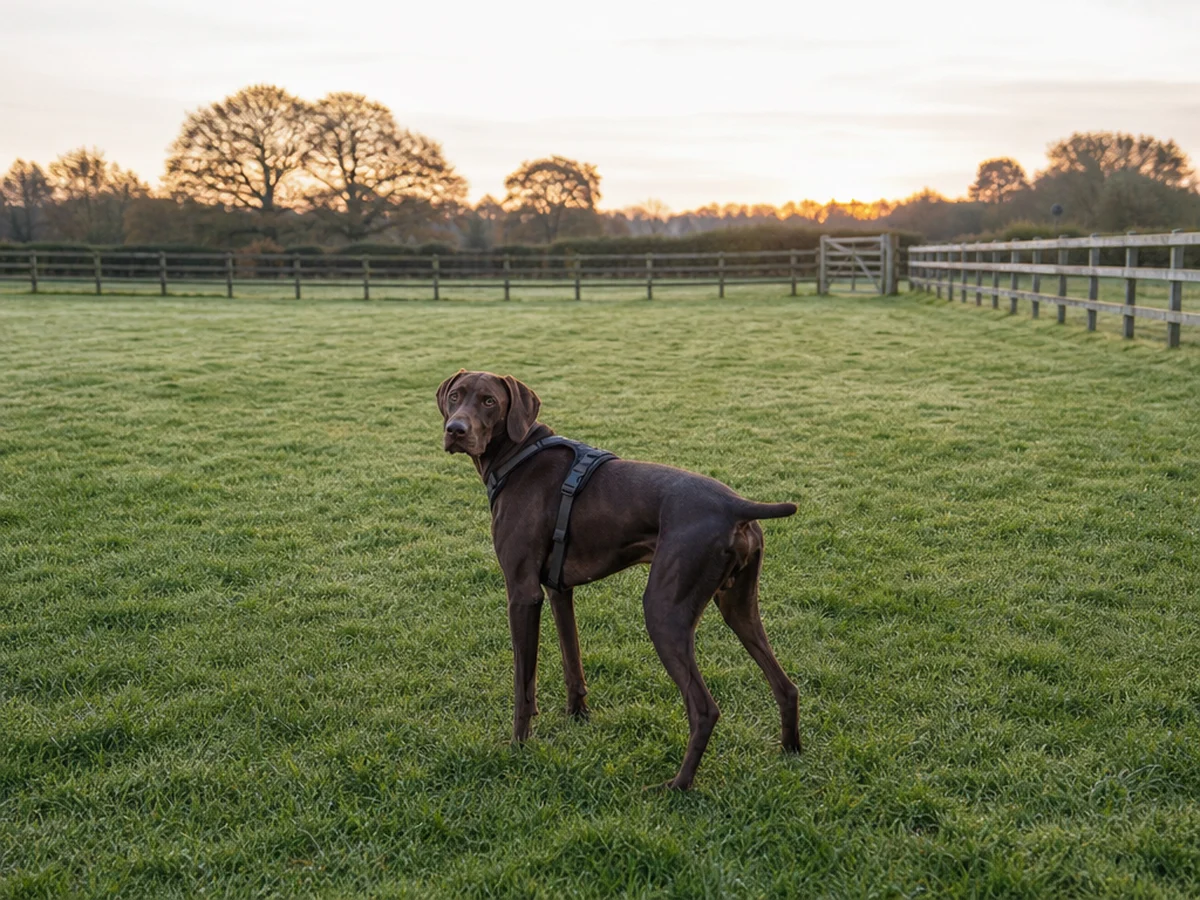
Use a secure private enclosure for the first outdoor games when possible. Check gates, fencing and the ground before starting. If another dog or an unexpected animal changes the setting, you can end the lesson without losing anything you have taught.
Sightlines and a Way Out
Look for enough room to turn away without threading through people or brush. A bird visible far across open ground gives you more options than a hidden bird beside a narrow path. You do not need to approach either one to prove that the dog noticed.
- Identify the route back to a quieter area before taking out training food or a toy.
- Keep enough space between your dog and any visible birds that you can leave without moving toward them.
- Choose footing where both of you can move steadily and the line can stay clear of obstacles.
- Return to an easier location if the surroundings change faster than you can manage them.
A Recall Reward History Built Before Birds Appear
The reward needs meaning before the difficult encounter. Find out which food or toy your dog enjoys in an ordinary, quiet place, then use it after easy returns. A special reward is useful, but no food has a guaranteed value greater than a moving bird for every GSP.
Practice a short return from safe exploration, pay close to you and let the dog resume an appropriate activity. The outdoor GSP recall foundations explain the turn, approach and arrival in detail. Here, those familiar pieces become the preparation for decisions around wildlife.
A marker can make the successful response clear. Battersea explains how a well-timed training marker connects an action to its reward. Establish that meaning away from birds so the sound does not become another unfamiliar demand during an exciting moment.
- Practice a close return indoors, with the dog already able to notice you and a reward ready.
- Move the same short exercise into a secure outdoor setting with little happening around you.
- Add an ordinary distraction at a generous distance, such as a person standing quietly, while maintaining safe containment.
- Practice in another manageable location before considering a distant, naturally occurring bird encounter.
This is a progression of conditions, not a timetable. If a return gets slower or the dog stops accepting a familiar reward, simplify the setting. The RSPCA's recall training guidance also starts with easier practice rather than asking an unprepared dog to succeed around their strongest distractions.
Three Bird Encounters Change the Recall Decision
Birds on the ground, birds passing overhead and a sudden flush create different problems. Treat them as separate situations instead of assuming that success around one predicts success around the others. Your dog's behavior and the available space determine whether to practice or simply leave.
A Bird Standing at a Distance
A stationary bird may offer a brief chance to notice what your dog can still do. Remain well away and reward an easy check-in if your GSP offers one. If they can comfortably respond to a familiar cue, one short recall may be appropriate before you move on.
Do not keep edging closer because the first response went well. The bird may move, more birds may become visible or your dog's attention may intensify. Finish with room to spare, leaving the bird where they were and taking your dog somewhere else.
Keep your body positioned for departure rather than standing squarely toward the bird. You can acknowledge a check-in and walk along your exit route before the dog becomes absorbed. That small adjustment makes the successful response useful immediately instead of leaving the dog waiting for the next difficult thing to happen.
A Bird Flying Across the View
Movement can make a previously manageable distance difficult. Watch your GSP rather than following the bird with your own eyes. A stiffening body, sustained staring or a rapid forward surge means the useful training opportunity may already have passed.
Turn toward your planned exit and reward any available connection as you move away. If the dog can answer a recall without reaching the end of the line, pay that response generously. If they cannot, the next lesson belongs in a quieter place rather than under another passing bird.
Allow time for attention to return. A dog who keeps scanning the sky may need the outing to become a simple journey home. Avoid adding a new game while they are still watching for movement overhead.
A Bird Appearing Beside the Path
A close flush gives you little preparation time. Maintain safe control, avoid line tangles and create distance from the area. You are handling an interruption, so there is no requirement to complete a formal training repetition before leaving.
When your dog turns back, reward them even if the moment was messy. Reaching you should remain worthwhile. Later, examine why the surprise was difficult to manage, such as long grass beside a tight path or too much spare line in a confined space.
Choose a more open route next time if that helps. Our GSP hiking guide covers route choices and passing situations that affect how much room you have to help your dog outdoors.
What Follows a German Shorthaired Pointer Recall
After the return, your next action matters. A reward followed by another immediate demand can leave the dog hovering between you and the bird. Give the encounter a clear ending, then decide whether the surroundings support a quieter continuation.
Paying for the Completed Return
Place the food beside your leg at the intended finish, close enough for comfortable leash handling. Keep the food or toy accessible before the walk begins. Searching through a bag while the dog watches departing birds makes it harder to reinforce the response you wanted.
Choose a reward the dog can use without making the scene more chaotic. For some GSPs that is food delivered calmly, while others enjoy a brief toy interaction once you have moved to safe space. Observe the result instead of assuming that the most energetic reward is always best.
Continuing Somewhere Appropriate
Returning does not need to end every enjoyable outing. You may be able to continue a sniffing walk in the opposite direction or move to a secure activity area. Releasing the dog toward the bird is not part of this plan.
If the dog remains unable to disengage, leave. A shorter walk with a manageable finish is more useful than staying until every movement becomes another attempt to pursue.
| Dog after recall | Next step |
|---|---|
| Takes food and moves with you. | Walk away from the birds toward quiet space. |
| Stares at the bird area again. | Move farther away or end the outing. |
| Line handling becomes unsafe. | Leave and seek help with the next lesson. |
If you are walking with someone else, agree that they will leave with you when needed. A companion who continues toward the birds can divide the dog's attention again. Walking together toward a quieter part of the route gives the GSP a simpler picture after a demanding return.
A Realistic Recall Boundary for Your German Shorthaired Pointer
Record the kind of encounter, the space available and what happened after you moved away. Those details identify a workable next outing more precisely than a simple good-or-bad score. They help you choose a safer route and a smaller next lesson without deliberately seeking another flush.
Include changes in movement, comfort and responsiveness in your regular veterinary visits. Ask a trainer who uses rewards to observe how you handle the line and help arrange practice if bird encounters exceed what you can safely manage.
Continue rewarding the returns you have, including the easy ones. Safe boundaries remain necessary even as recall improves. The practical achievement is a GSP who has a well-rehearsed way back to you and a person who knows when to use that skill, create space or leave.
 BehaviorCupcakes on the Counter: Keeping a German Shorthaired Pointer Off
 Training basicsLeash Training a German Shorthaired Pointer Who Pulls
 Exercise and jobsNose-Down Walks: Giving a German Shorthaired Pointer Sniff Time
