 GSP
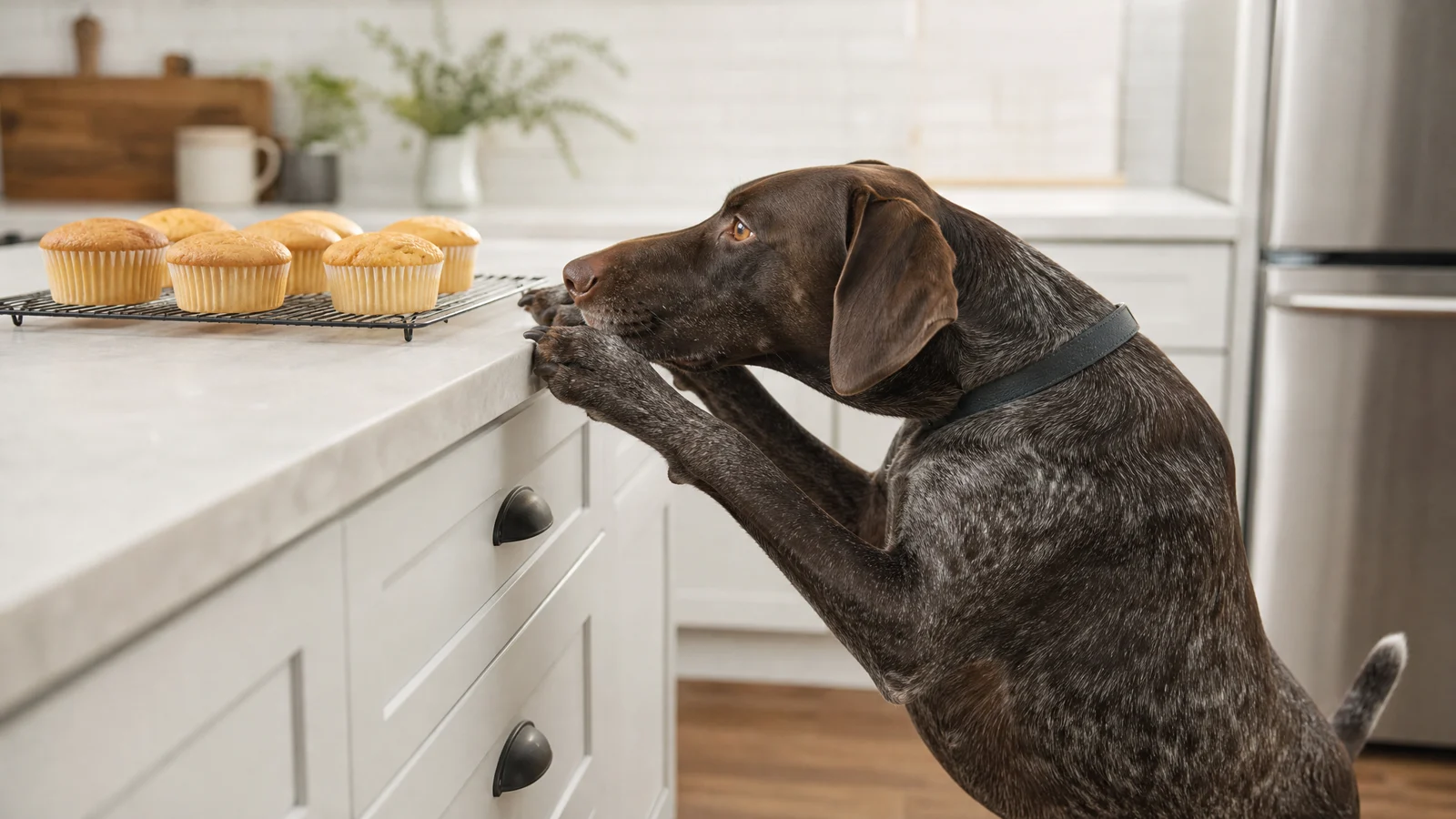
A tray of cupcakes is vulnerable while you find a container, answer the door or carry the first plate into another room. For a German Shorthaired Pointer, that unfinished household task may create the only opening needed. Moving food farther back helps only if the dog truly cannot reach it and nobody leaves the next item near the edge.
The kitchen plan therefore needs to cover the work between putting food down and putting it away. A gate, a comfortable waiting place and clear responsibility for plates can make that work much easier.
Below, we follow preparation, cooking and cleanup as separate jobs. Each phase gives your GSP a manageable arrangement while people complete theirs, with short mat practice woven into safe moments. The goal is a kitchen routine that still works when hands are full and attention is divided.
Counter Preparation Before Your German Shorthaired Pointer Enters
Prepare the room before asking the dog to behave around food. An empty surface and a closed storage place remove the immediate payoff. A suitable barrier then gives you time to teach a useful waiting routine without depending on perfect attention during every kitchen task.
A Place for Food That Is Actually Secure
Use closed cupboards, the refrigerator or another appropriate inaccessible place for food awaiting the next task. A back corner is not secure simply because your GSP has not reached it before. Their reach can include items pulled forward by a bag, towel or dangling wrapper.
Check the route food takes through the room. Grocery bags on the floor, a plate beside the sink and a cooling rack all need an arrangement. The dog's opportunity may be on a table or an open dishwasher rather than the main counter.
- Put groceries away before opening the dog's access to the kitchen.
- Keep food waste in a securely closed container and remove anything dropped during preparation.
- Move chairs or other objects that make an otherwise inaccessible surface easier to reach.
- Set up a safe place for cooling food before baking or cooking begins.
A Waiting Place Outside the Work Lane
Choose a resting surface that fits your GSP without being beside an oven door, under your feet or between you and the sink. It may need to be outside the kitchen. A mat marks a destination, but it does not replace a closed barrier while the dog is still learning.
Check comfort as well as position. The surface should stay in place, give the dog room to lie naturally and allow you to deliver a reward without leaning over hot food. Water and an appropriate resting space belong in the managed area, not beyond an obstacle the dog must cross.
Practice paying at the mat before food preparation begins. If you have to step over the dog or reach around a doorway to deliver every treat, move the station. The location also needs a clear walking route for anyone else entering the room. It must work for a person carrying out ordinary tasks, not only for someone standing still with a training pouch.
The Person Responsible for Access
Agree who closes the gate and who decides when the dog can return. If everybody assumes someone else is watching, the arrangement can fail between tasks. A short spoken handoff is useful when one person leaves the room.
The same agreement applies when children or guests are present. Make sure the person taking over has actually heard and accepted responsibility before walking away. Adults manage access and food. Children should not be responsible for stopping a large dog who has spotted something on the counter.
Keep the household rule understandable. The kitchen opens when the work area is safe and someone can supervise, not whenever the dog becomes persistent at the barrier.
Counter Manners While a German Shorthaired Pointer's Family Cooks
Cooking asks the person to divide attention among timing, equipment and food. Teach the dog's part when you can concentrate, then use management during work that cannot be interrupted safely. Mat learning is a separate household skill that gradually becomes useful during a meal.
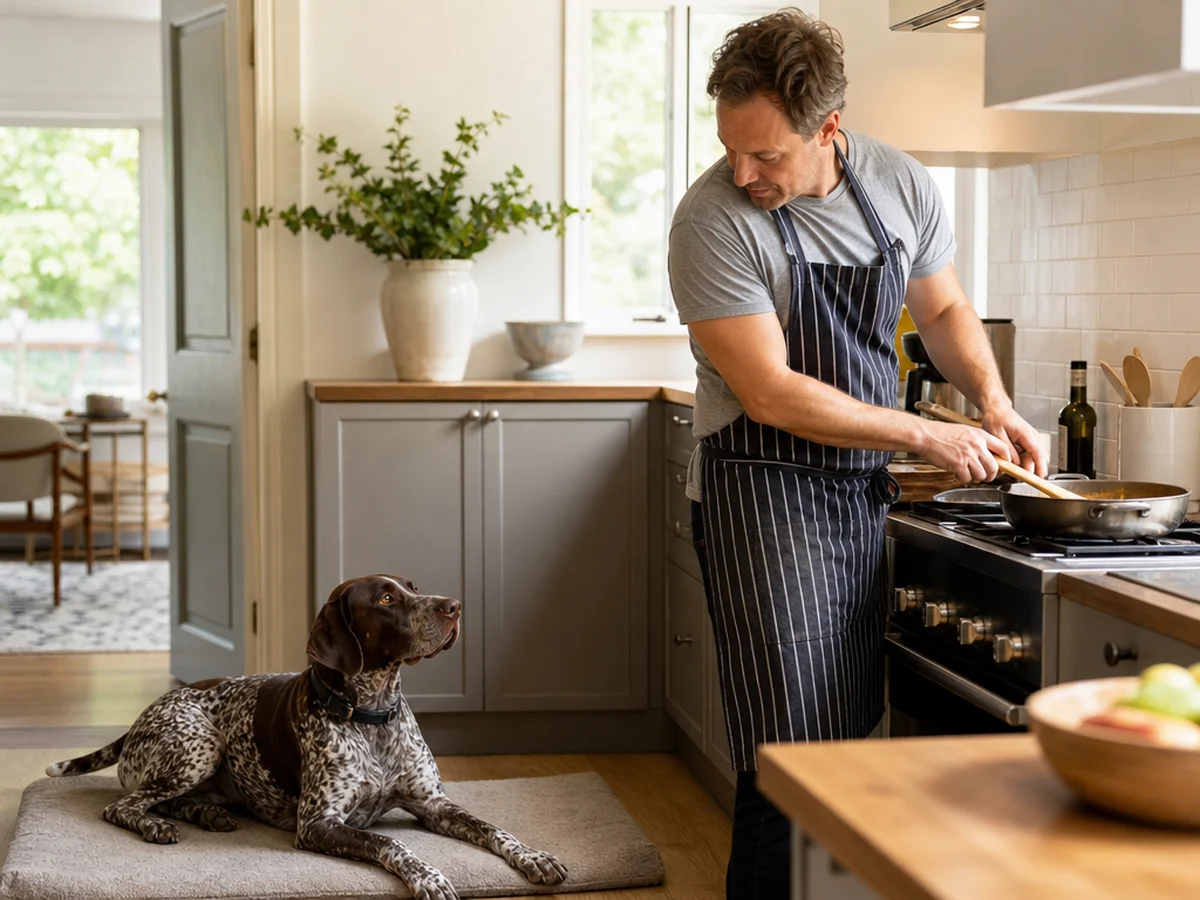
Teaching the Mat With Nothing Cooking
Start in a quiet room with the mat available and rewards ready. Mark a voluntary step onto it and deliver food there. As the dog understands where rewards arrive, reinforce standing or lying comfortably on the surface rather than repeatedly calling them away and back.
Give a release cue and let the dog leave after a brief successful stay. Build a little more relaxed time before adding your own kitchen movements. The Dogs Trust settling guide emphasizes gradual practice and easier distractions when a dog cannot relax.
Use your GSP training foundations to keep the marker and reward delivery familiar. A mat lesson should not require a new vocabulary from every family member. Shared cues help another adult reproduce the same arrangement.
Adding the Cook's Movements
Begin with harmless actions, such as touching a cupboard handle or carrying an empty bowl. Reward the dog for remaining comfortably at their place while you move. Change one action at a time so you can see which part makes them get up.
If opening a cupboard is difficult, practice a smaller version and reward sooner. Do not combine a new movement with a long wait and visible food. The dog needs a clear chance to succeed before ordinary cooking makes the scene more complicated.
Battersea's explanation of clicker training basics helps with precise reward timing. The important moment here is the useful behavior at the waiting place, not the instant after the dog leaves it to inspect the counter.
Let the dog leave the mat on the release cue between repetitions. If they immediately rush toward the work surface, keep that surface clear and reconsider the exercise. You may be asking for too much waiting before the dog understands the destination, or leaving too little space between the station and the counter.
When Cooking Needs Your Full Attention
Use the prepared barrier before handling hot pans, sharp tools or a task that takes both hands. An unfinished mat skill is not a safety system. Your GSP can rest in their comfortable area while the demanding part of cooking happens.
A suitable supervised chewing activity may help during a quiet preparation period. Our GSP chewing station guide explains how to make that arrangement usable. Choose activities you already know the dog can use appropriately, rather than introducing unfamiliar objects while distracted.
| Task and dog | Person’s job |
|---|---|
| Empty bowl practice, dog at a familiar mat | Watch the dog and simplify movement if needed. |
| Hot tray work, dog behind a secure barrier | Complete the task before considering access. |
| Leaving the room, dog in a safe food-free area | Secure surfaces and hand over supervision clearly. |
Counter Access During Serving and Clearing
The end of cooking often creates a new opening. People carry plates away, the kitchen becomes quiet and scraps remain where the dog can reach them. Treat serving and clearing as part of the same access plan instead of assuming that the hard part is over.
The Move From Kitchen to Table
Decide where the dog will be before anyone carries food. A familiar resting place outside the traffic path lets people move without stepping over a GSP. If the dog needs more help than the server can provide, another adult can supervise from safe space.
Carry food directly to its destination. Setting a plate on a low surface while opening a door creates another chance to investigate. The person carrying the plate keeps responsibility until it is somewhere the dog cannot access.
Reward grounded paws during appropriate supervised moments. Deliver the reward low and away from the food route, so the dog is not encouraged to rise toward a hand held beside the counter.
Guests, Children and Unfinished Plates
Explain the arrangement before guests start eating. Ask them to keep plates in their hands or on the agreed inaccessible surface. A person who means well may offer food from the counter and unintentionally teach the dog to stay close to that spot.
Make the rule easy to follow by providing somewhere for empty dishes. A tray beyond the dog's access or an adult collecting plates is more practical than expecting everyone to remember several different instructions. The dog can remain comfortably separated during a busy gathering.
- Assign an adult to collect plates instead of leaving them beside seats or on low tables.
- Keep the dog away from dropped food while another person clears it.
- Finish storing leftovers before opening the kitchen barrier.
- Check bags and containers used for takeout as carefully as cookware.
Check the room once people have finished eating. A wrapper tucked beside a chair or a napkin carrying food can become the next target. This final inspection is particularly useful after guests, when objects may have been placed outside the household's usual kitchen routine.
After a Grab Has Happened
Secure the rest of the food and avoid turning the incident into a chase. If the dog holds something, use a familiar voluntary exchange when it is safe to do so. If they may have swallowed an unsafe item, contact your veterinarian promptly for advice about that specific item.
Review the task that was unfinished. Perhaps the cooling place was inaccessible only while someone stood nearby, or the gate opened before the table was cleared. Repair that practical opening instead of relying on a louder instruction next time.
The RSPCA recommends reward-based dog training. In this kitchen, that means teaching what to do during manageable practice and arranging the environment when you cannot teach. A completed household task prevents another successful grab.
The Next Counter Routine for Your German Shorthaired Pointer
Before the next meal, choose one handoff to improve and one easy mat lesson to repeat. Use regular veterinary visits to discuss appetite or behavior that has changed or remains concerning. If kitchen access remains difficult to manage, a reward-based trainer can help adapt the arrangement to your room and dog.
Look for a routine people can repeat when busy. Food reaches secure storage, the dog has a comfortable place and nobody has to guess who is supervising. As the waiting skill improves, you can offer carefully supervised access while keeping the practical habits that make cooking easier.
 Training basicsLeash Training a German Shorthaired Pointer Who Pulls
 Exercise and jobsNose-Down Walks: Giving a German Shorthaired Pointer Sniff Time
 Training basicsPreventing Separation Anxiety in a German Shorthaired Pointer
