 GSP
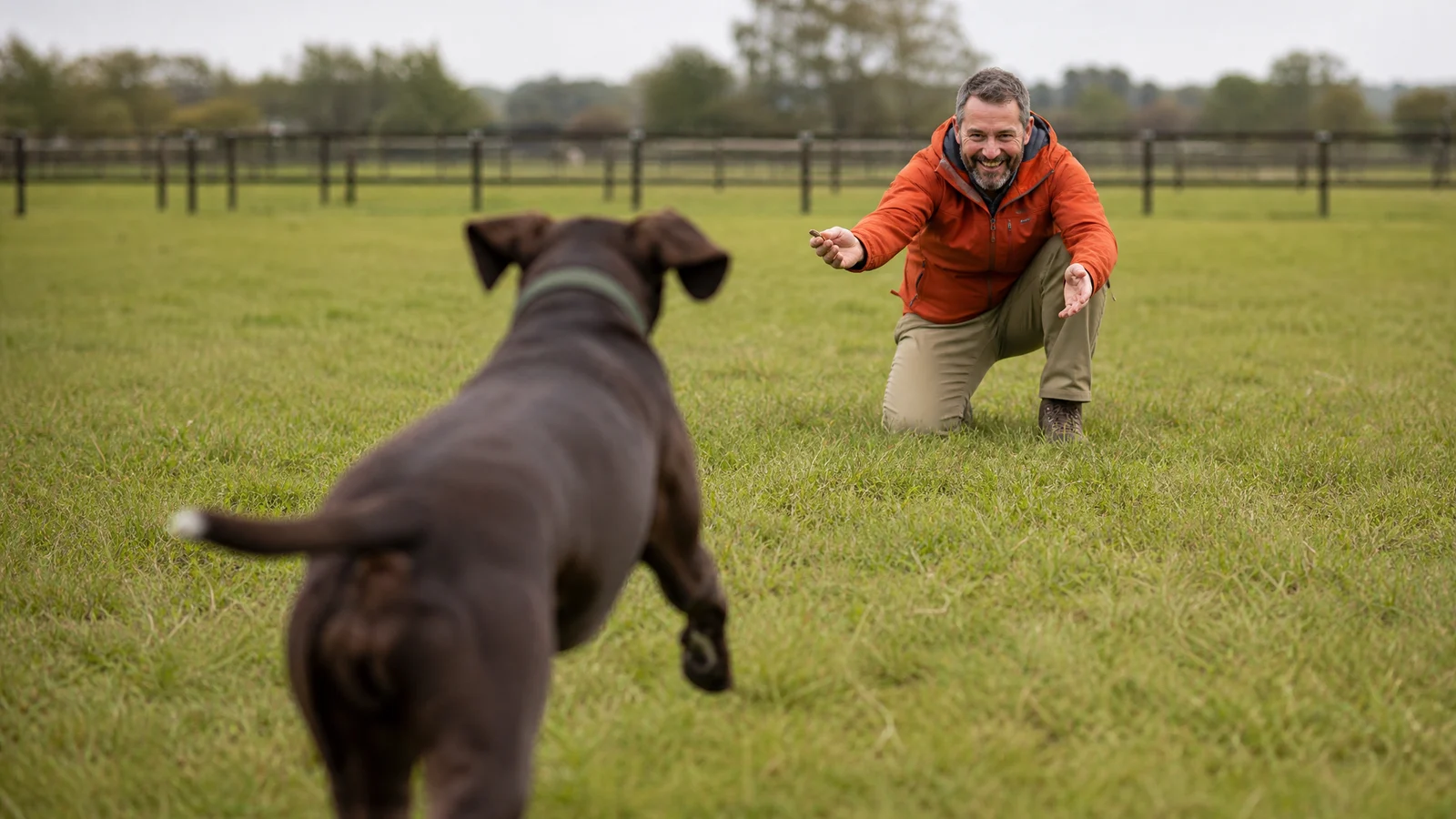
There is no birthday when a German Shorthaired Pointer suddenly owns a reliable outdoor recall. A young dog may turn quickly in the kitchen and seem ready, then fail to orient when open space, motion and scent compete with the cue. Time helps only when it contains carefully arranged practice. Reliability grows through stages that the dog's response can actually support.
We will look at recall from the first head turn through approach, arrival, distraction and long-term change. Each response gives useful information about what to train next. A long leash or secure enclosure keeps the GSP safe while those pieces develop, and high-value rewards make returning worthwhile without turning a cue into a threat.
Outdoor Recall Begins With Orientation
The first visible part of recall is not running back. It is the moment the dog interrupts what they are doing and orients toward you. If that turn does not happen, repeating the cue louder does not repair the missing response. The environment is currently stronger than the lesson.
Begin where orientation is easy. Say the cue once, mark the head turn and reward generously when the dog reaches you. Then let them return to an appropriate activity at times, so coming to you does not predict that every interesting moment ends.
Build Meaning Before Distance
Practice the recall word indoors and in a securely enclosed, quiet place before adding open-space distractions. Use a reward reserved for this skill when possible. The dog should hear the cue, turn and move toward you as one familiar sequence rather than solving a new puzzle outside.
Position matters more than dramatic distance. Start close enough that success is likely, then vary where you stand and how the dog is oriented. A response from a few easy angles is better evidence than one long run performed after repeated calling.
Reward the Check-In You Did Not Ask For
A GSP who looks back voluntarily is offering the beginning of recall. Mark and reward those check-ins during a walk. The dog learns that keeping track of you has value even before a formal cue appears.
This habit supports the broader GSP hiking training plan, where early orientation gives you options before a trail distraction takes over. Recall becomes part of shared movement instead of an emergency word used only after connection is gone.
A Delayed Turn Changes Recall Training
A delayed turn shows that the cue was heard in a harder context or that its meaning is not strong enough there. Treat the delay as information. Reduce distance from you, increase distance from the distraction and make the next repetition simpler.
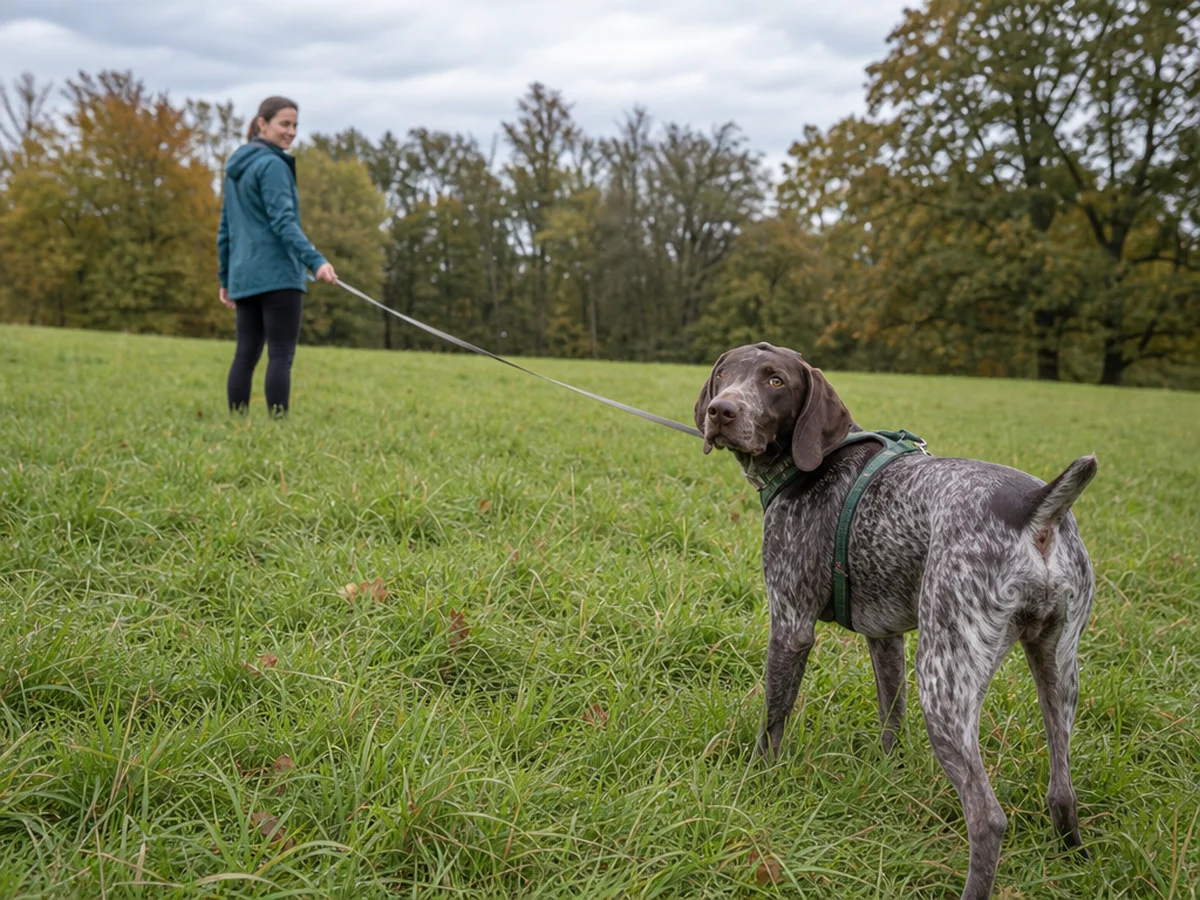
The RSPCA recommends a long training leash outdoors so a dog can practice with freedom short of complete range. Hold it as safety management, not as a way to pull the dog through the recall. Your reward should complete the choice to return.
Notice the Pause Before Movement
A dog may stop, glance toward the environment again and only then turn to you. That pause means the setup is near the edge of their current skill. Reward the completed return, then move the next repetition to a quieter position rather than demanding faster behavior immediately.
If the dog cannot take a familiar reward or perform an easy cue, the environment is giving you a clearer answer. Increase space and restore engagement. Training below the point of overwhelm preserves the meaning of the recall word.
Change One Difficulty at a Time
Distance, novelty and movement all make recall harder. Alter only one at first. A dog can practice from farther away in a quiet enclosure, or closer to you in a mildly novel place, without facing both challenges together.
This is especially useful for an active, visually alert GSP. The dog gets repeated chances to choose you while the correct response remains possible. Difficulty can grow later, after the turn is quick and the approach stays committed.
Fast Starts Can Still Produce Weak Recall
A fast first step can look convincing, but recall is not finished until the dog reaches you and remains available for the next choice. Some dogs accelerate toward the handler, curve away at the last moment or grab the reward and immediately launch back out. Those endings need their own training.
Read the full sequence instead of scoring only speed. The table turns common responses into the next manageable setup. It is a reading aid, not a promise that every dog progresses in a fixed order.
| What You See | What It Means for Practice | Next Setup |
|---|---|---|
| No head turn | The cue is not available at this difficulty. | Create distance from the distraction and practice closer. |
| Turn followed by a pause | Orientation exists, but competing interest remains strong. | Reward the return and make the next repetition easier. |
| Fast approach with a curve away | Arrival beside you needs separate value. | Reward close to your body in a secure area. |
| Arrival followed by immediate departure | The dog expects a quick exchange rather than continued contact. | Reward, pause together and sometimes release back to play. |
| Complete return and easy reset | The sequence is ready for one modest new challenge. | Change either distance or distraction, not both. |
Teach the Arrival Position
Place the reward beside the position where the return should finish. If you need a close position for leash attachment, practice that position separately with food and calm handling. Then add it after short recalls in a secure place.
Do not reach suddenly for a dog who is still uncertain about arrival. Reward near you, let the dog move away and repeat with an easier approach. Comfort at the finish keeps the cue from producing a last-second dodge.
Practice the Release
After rewarding a strong recall, sometimes release the dog back to safe exploration. This teaches that returning can reopen access rather than closing every session. At other times, clip the leash and transition calmly so the dog also learns that recall can lead into ordinary movement.
Distractions Reveal German Shorthaired Pointer Recall
Outdoor distractions do not merely test recall. They reveal which part of the sequence loses strength. A GSP may orient to you around a stationary person but fail when something moves, or return in a familiar enclosure but hesitate in a new place.
The German Shorthaired Pointer Club of America's care expectations include regular exercise in a safe area. That principle belongs at the center of recall practice. The dog does not need unrestricted space to learn an outdoor response, and safety should not depend on a cue that is still under construction.
Work Outside the Distraction Bubble
Choose enough space for the dog to register a distraction while keeping a turn toward you available. Reward easy orientation before asking for a full recall. Then move in a gentle arc or leave the area, which prevents staring from becoming the entire session.
AVSAB explains that management protects learning while behavior work proceeds at the dog's pace. The linked guidance addresses fearful dogs, but the practical conclusion here is narrower. Distance and barriers keep a recall setup workable while you train the response you want.
Use Movement Without Creating a Chase
Your own movement can make returning more inviting. After giving the cue, move away a few steps and reward the dog for following. Keep the practice inside a secure area or on an appropriate long leash, so the game never depends on catching a dog who chooses another direction.
Vary the reward after the dog succeeds. Food, a toy and permission to resume safe play can all have value. The best choice is the one this dog can accept and then recover from without becoming too aroused to continue.
Recall Games Need Safe Outdoor Boundaries
Games add repetition without making recall feel like a drill, but each game needs a boundary. Use a fenced area, a leash suited to the space or another secure setup. Match the game to the dog's current ability rather than using excitement to skip foundation work.
A strong GSP exercise routine also keeps recall from carrying the entire burden of outdoor activity. Running can happen in a securely enclosed space while recall is still developing. Freedom is not the reward for guessing that the cue will hold.
These games emphasize different pieces of the response. Rotate them according to what the symptom map showed, and stop while the GSP can still think clearly.
- Use a close-range name game to reward the first head turn before asking the dog to travel any distance.
- Trade places with another household member in a secure area, rewarding each complete arrival rather than rapid back-and-forth speed.
- Hide partly behind an obvious nearby object after the dog sees where you moved, then reward their orientation and approach.
- Call away from a low-level distraction, reward generously and release the dog back only when the setting remains safe.
- Practice arriving for a leash clip, then continue the walk so close handling does not always end outdoor access.
End Before the Cue Fades
A recall word can lose clarity when it is repeated after attention has collapsed. Finish the game after several useful responses or after one particularly good answer. More repetitions are not better when the setup is becoming progressively harder.
If a response fails, guide the dog out of the situation through the leash or environment without scolding. Rebuild at an easier level later. The cue should continue to predict a safe, rewarding route back to you.
Keep German Shorthaired Pointer Recall Current
Recall remains a maintained skill, not a certificate earned once. Practice in different safe places, continue rewarding strong responses and return to easier setups after a long break. A dog who succeeds in one enclosure has learned that context, not every outdoor space.
Behavior can also change over a lifetime. The ASPCA's older-dog guidance notes that responses to known cues and learning can change. Keep regular veterinary visits, and bring a new or persistent change in familiar behavior to your veterinarian instead of treating it as a simple training lapse.
Ask one question before increasing freedom: can this GSP orient, return, arrive and reset at the present level? If the whole sequence is dependable, add one modest challenge under safe management. If any piece weakens, train that piece directly. Outdoor recall becomes trustworthy through those honest decisions, not through age or athletic confidence alone.
 Exercise and jobsCan a German Shorthaired Pointer Be a Service Dog?
 Exercise and jobsSports and Jobs for an Athletic German Shorthaired Pointer
 Exercise and jobsWater Play and Swimming for a German Shorthaired Pointer
