 GSP
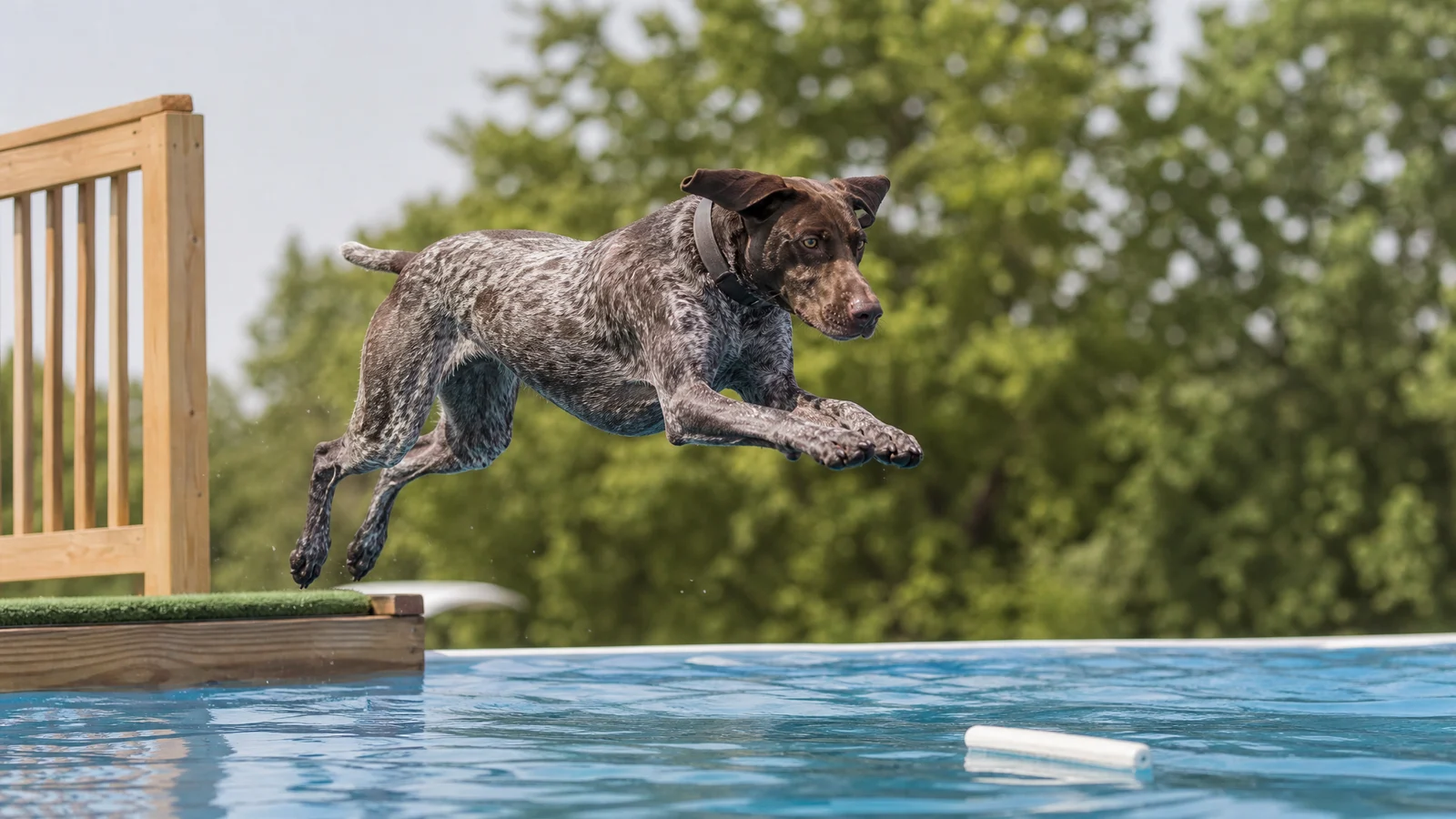
A useful job for a German Shorthaired Pointer is an organized outlet, not simply more speed. The breed is smart, athletic and associated with versatility, yet the best activity still depends on the individual dog's body, preferences and ability to recover. A sport should give energy a shape while strengthening connection, not create a dog who can only ask for harder motion.
We will look at the whole dog, then compare sport families, foundation skills, one training session and the evidence afterward. Rewards stay central throughout. The aim is to choose an activity the GSP can understand, enjoy and leave calmly, whether that becomes a formal dog sport or a structured job at home.
Start Dog Sports With the Whole Dog
Begin with observation before equipment or enrollment. Notice what the dog chooses during ordinary play, how they respond to new surfaces and whether food, toys or movement hold the most value. Then watch what happens when excitement ends, because recovery is part of sport suitability.
Working history offers background for the breed's versatility, not a present-day assignment for the individual dog. The useful context is simpler. This breed was developed for varied work, and today's dog may enjoy several kinds of learning when the setup matches who they are.
The German Shorthaired Pointer Club of America includes obedience among its competitive aims. That confirms a place for deliberate teamwork alongside athletic outlets. It does not mean every GSP wants the same event or should follow the same progression.
List Preferences, Not Ambitions
Write down what the dog repeats voluntarily. A GSP who enjoys following a scent path may prefer a different activity from one who studies body position or eagerly enters water. The observation should describe behavior, not predict a title.
Include what the dog avoids or finds difficult. Hesitation on unstable footing, discomfort around crowds or trouble settling near barking dogs changes the activity choice. A suitable sport leaves room to train foundations without flooding the dog with the hardest feature first.
Separate Fitness From Arousal
A dog can be physically capable while becoming too excited to learn. Test whether the GSP can take a reward, follow an easy cue and pause during activity. If those behaviors disappear, reduce intensity and restore a thinking pace before adding complexity.
Narrow German Shorthaired Pointer Dog Sports
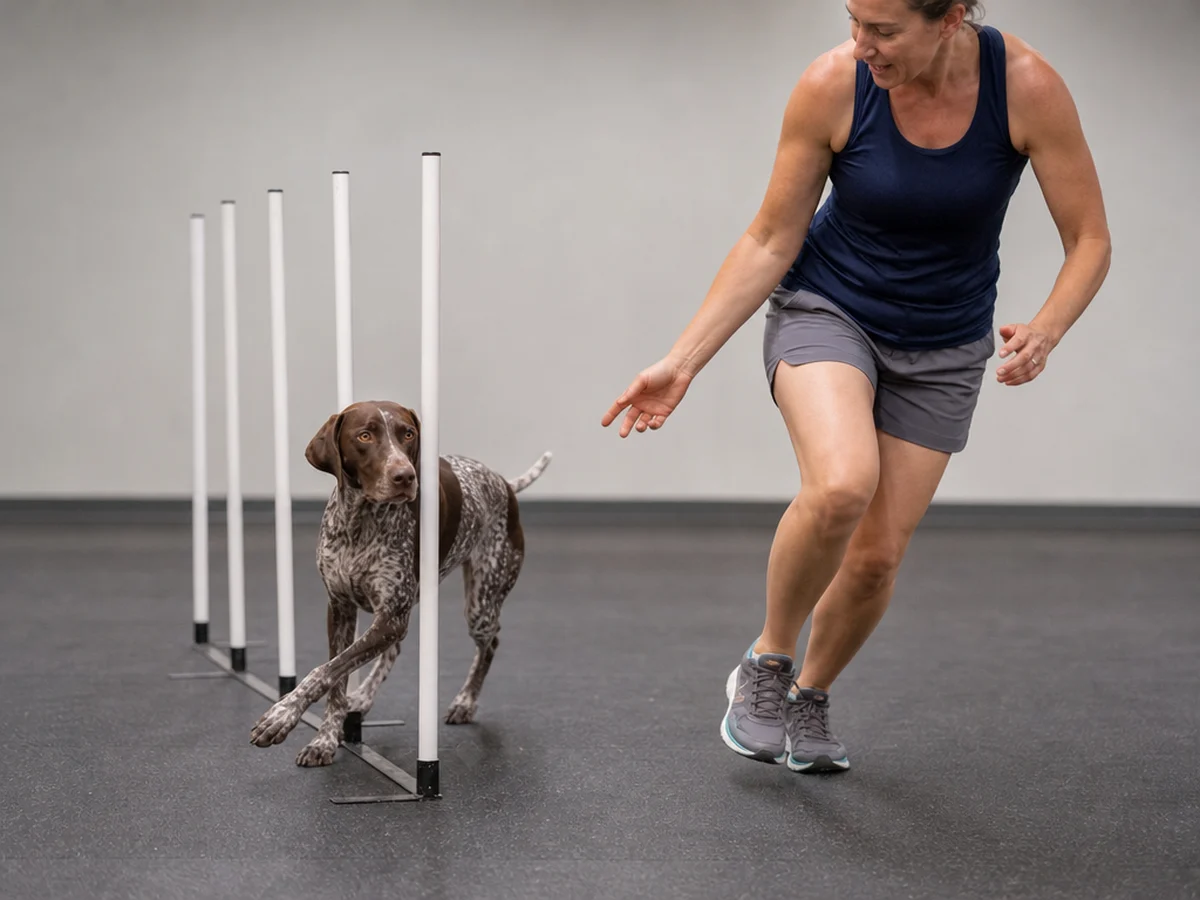
Once preferences are visible, compare broad activity families. The breed is described as excelling in agility, obedience and dock diving, but that list offers options rather than instructions. Scent games, rally-style courses and shaped home jobs can also give a smart dog purposeful work.
The matrix organizes a first conversation. It does not rank sports, and it cannot replace an instructor who can assess the dog and the activity environment.
| Dog Preference | Activity Family to Explore | Foundation to Observe |
|---|---|---|
| Following odor trails | Scent searches and beginner scent sport | Can the dog pause, restart and work without frantic motion? |
| Precise handler interaction | Obedience, rally and trick sequences | Can rewards maintain accuracy without tension? |
| Climbing and directional movement | Age-appropriate agility foundations | Can the dog respond around equipment and other teams? |
| Confident water entry | Dock-diving foundations and water games | Can the dog wait, enter by invitation and exit calmly? |
| Carrying household objects | Named-toy sorting and delivery games | Can the dog release willingly and reset for another turn? |
Test one activity category at a time. If several options arrive together, novelty can hide which work the dog actually enjoys. A clear trial gives better evidence and a calmer starting point.
For a scent-focused choice, begin with an easy search and study persistence without speed. For a precision choice, reward one known position and watch whether accuracy remains enjoyable. These small samples reveal preference before equipment, travel or a busy class complicates the answer.
Precision Choices Within Dog Sports
Precision activities ask the dog to distinguish cues, control movement and stay connected through a sequence. That can balance a GSP's appetite for action. The reward comes after a thoughtful choice, so speed is useful only when it remains attached to accuracy.
Rally-style exercises, obedience foundations and trick chains all allow the handler to adjust space and complexity. Begin with individual behaviors in a quiet place, then link them only when each piece remains comfortable. The dog should be able to finish a repetition and return to a neutral starting position.
Marker Timing Clarifies the Job
A marker word or click can identify the exact behavior earning a reward. Battersea describes the initial marker pairing as a click followed by food within three seconds. Once the marker has meaning, use it consistently rather than clicking through uncertain behavior.
Good timing matters with a quick dog. Mark the deliberate pause, the correct position or the moment the dog turns back to the handler. If you mark only the fastest motion, speed may grow while control stays thin.
Short Sequences Preserve Clarity
Build a sequence from behaviors the GSP already understands. Add one connection, reward the result and break before attention fades. A short clean chain reveals more than a long routine held together by repeated prompting.
Change the reward according to the state you want. Food can support precision, while a brief toy game may celebrate completion. After play, reward the return to calm so the lesson contains both activation and recovery.
German Shorthaired Pointer Movement Needs a Pause
Agility and dock diving can suit an athletic dog who enjoys their core features, but enthusiasm is not the only readiness test. The GSP needs comfortable foundations, the ability to wait and a way to leave the activity without conflict. Regular veterinary visits should remain part of any ongoing athletic plan.
For agility, start with body awareness, handler focus and simple movement around low-complexity objects under qualified guidance. The goal is not height or speed. It is communication around equipment while the dog remains comfortable and able to respond.
Agility Begins Away From a Course
Build value for tracking a hand target, circling an object and pausing on a stable surface. These small skills let an instructor see how the GSP uses their body and attention. Equipment can be introduced gradually when the dog's development and comfort support it.
A busy class adds noise, motion and waiting. Practice settling at a distance before expecting focused work near active teams. If the dog cannot recover between turns, a quieter format or private foundation session may be a better starting choice.
Dock Diving Begins With Water Confidence
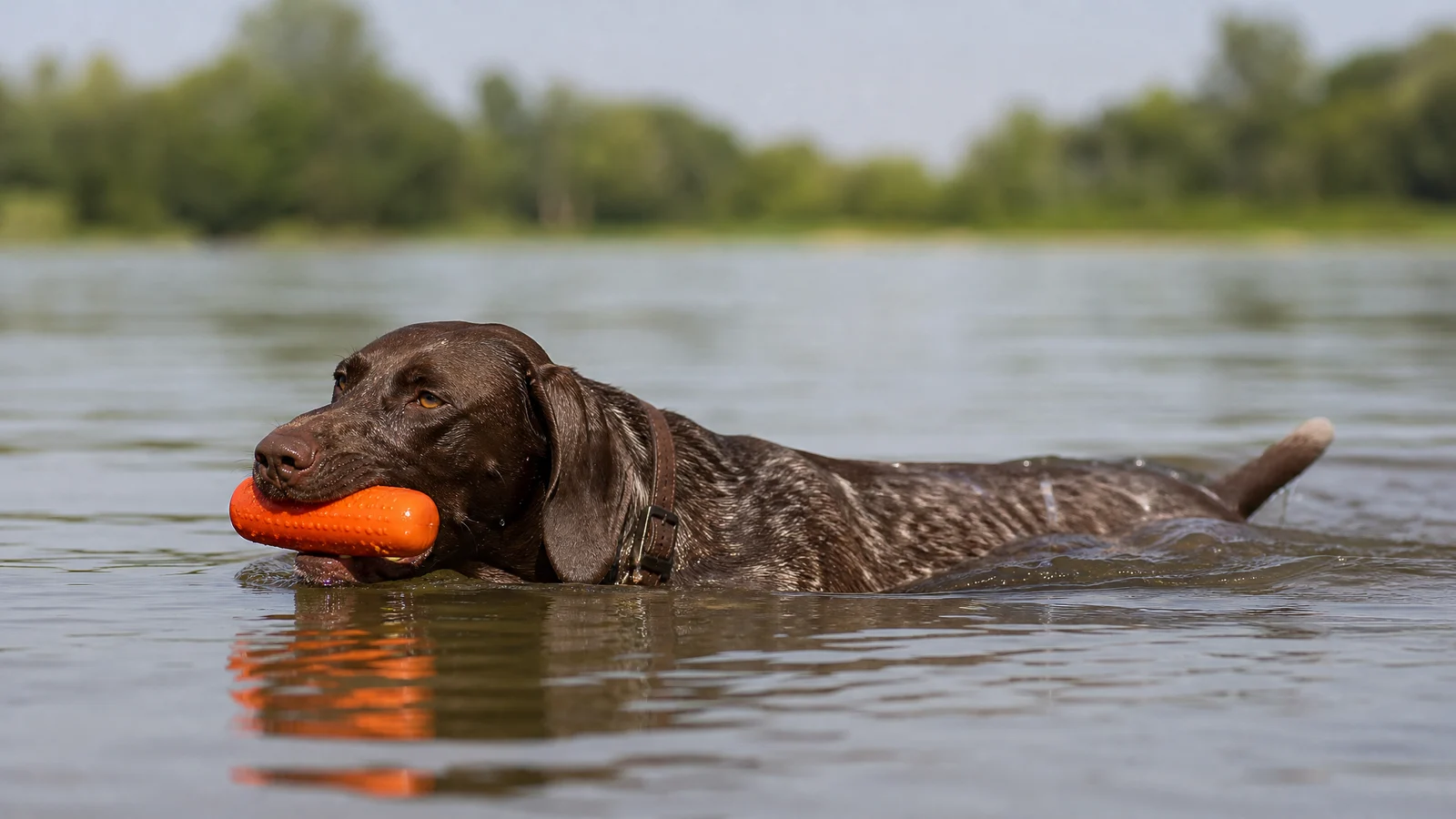
Dock diving should follow voluntary water entry and a dependable exit, not precede them. The site's GSP water play guide separates swimming ability from confidence and builds waiting before entry. Those manners make an athletic outlet easier to manage.
A dog who likes shallow water may not enjoy depth or a dock environment. Keep that preference valid. Water games near shore or another sport can provide an excellent job without turning confidence into a test.
Running Needs a Thinking Component
Pure speed may exercise the body without teaching partnership. Add rewarded starts, pauses and direction changes in a secure setting. The dog learns that access to movement comes through connection, while you gain evidence about whether arousal remains manageable.
One Training Session Tests a Dog Sport
A trial session should answer a narrow question. Can the dog engage with this activity at an easy level and recover afterward? Keep the setup simple enough that preference remains visible instead of burying it under fatigue, novelty or crowding.
Before beginning, decide what success will look like. It may be calm approach to the setup, several rewarded repetitions and an easy exit. A useful plan also names the point at which you will lower difficulty or stop.
Use this sequence for a home trial or an instructor-led introduction. Adapt the details to the activity and the individual dog.
- Begin with a familiar orientation behavior so the GSP enters the session connected to you.
- Present one easy version of the activity and reward curiosity without pressuring the dog to continue.
- Repeat only while the dog can think, accept rewards and return to a comfortable starting state.
- Pause away from the setup and observe whether breathing, movement and attention return to the dog's ordinary pattern.
- Finish with an easy known behavior, then leave before enthusiasm turns into frantic repetition.
AVSAB's reward-based position supports humane methods for training and behavior work. In sports, that means shaping voluntary participation, arranging achievable steps and treating reluctance as information rather than disobedience.
Recovery Decides Whether Dog Sports Fit
The closest view comes after the active work. A suitable session should leave the GSP able to drink, rest and return to ordinary household behavior. Their energy may be lower after practice, while ordinary settling should remain available without another round of intense activity.
Look at the next invitation as well. Does the dog approach the setup with loose, willing behavior, or avoid it and scan for an exit? Preference includes the choice to begin again. Repeated avoidance deserves a changed setup or a different activity.
Let Recovery Set the Session Length
If the dog stays engaged but settles slowly, shorten the active portion and lengthen calm transitions. If they lose focus early, simplify the task rather than increasing reward intensity. If they remain comfortable and eager, repeat the same level before adding a new challenge.
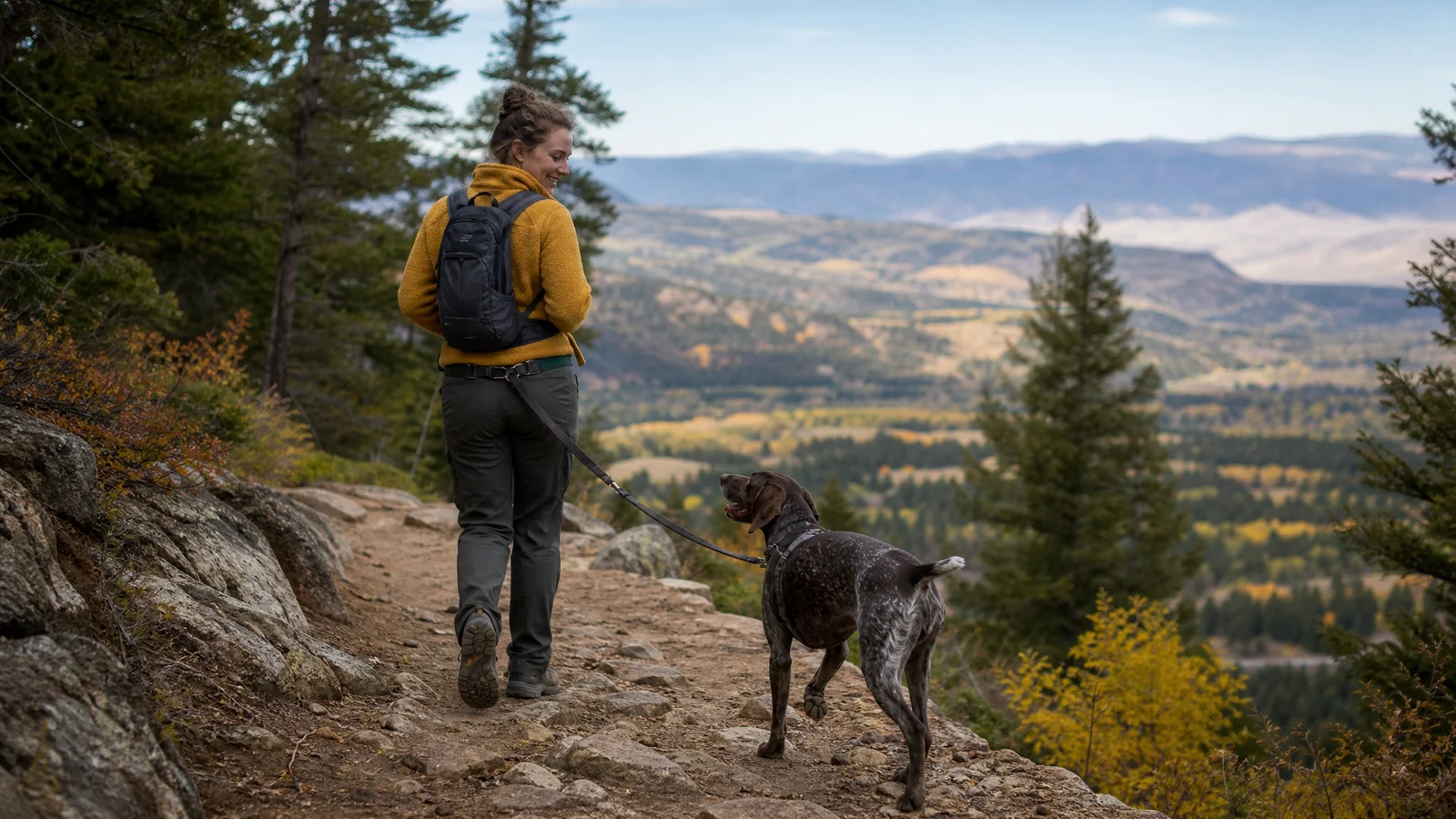
The outdoor GSP recall guide can help keep orientation and return skills separate from sport excitement. A formal activity is one part of the week, not a reason to remove ordinary walks, rest or quiet training.
Choose Tomorrow's German Shorthaired Pointer Job
Choose one small job for tomorrow, based on behavior you have actually observed. It might be a scent search in a quiet room, a short precision sequence or waiting calmly before a water toy is released. Define the starting behavior, the reward and the sign that ends the session. Repeating that modest choice provides comparable evidence before you make the job more complex.
Then watch the whole arc from invitation through recovery. A good job gives this versatile dog a clear problem, keeps the handler part of the answer and ends with enough calm for ordinary life. That evidence is more useful than choosing the most athletic sport simply because the GSP looks capable of it.
 Exercise and jobsWater Play and Swimming for a German Shorthaired Pointer
 Exercise and jobsHiking with a German Shorthaired Pointer: Trail Manners and Fitness
 Exercise and jobsGerman Shorthaired Pointer Running and Hiking Exercise Needs
