 GSP
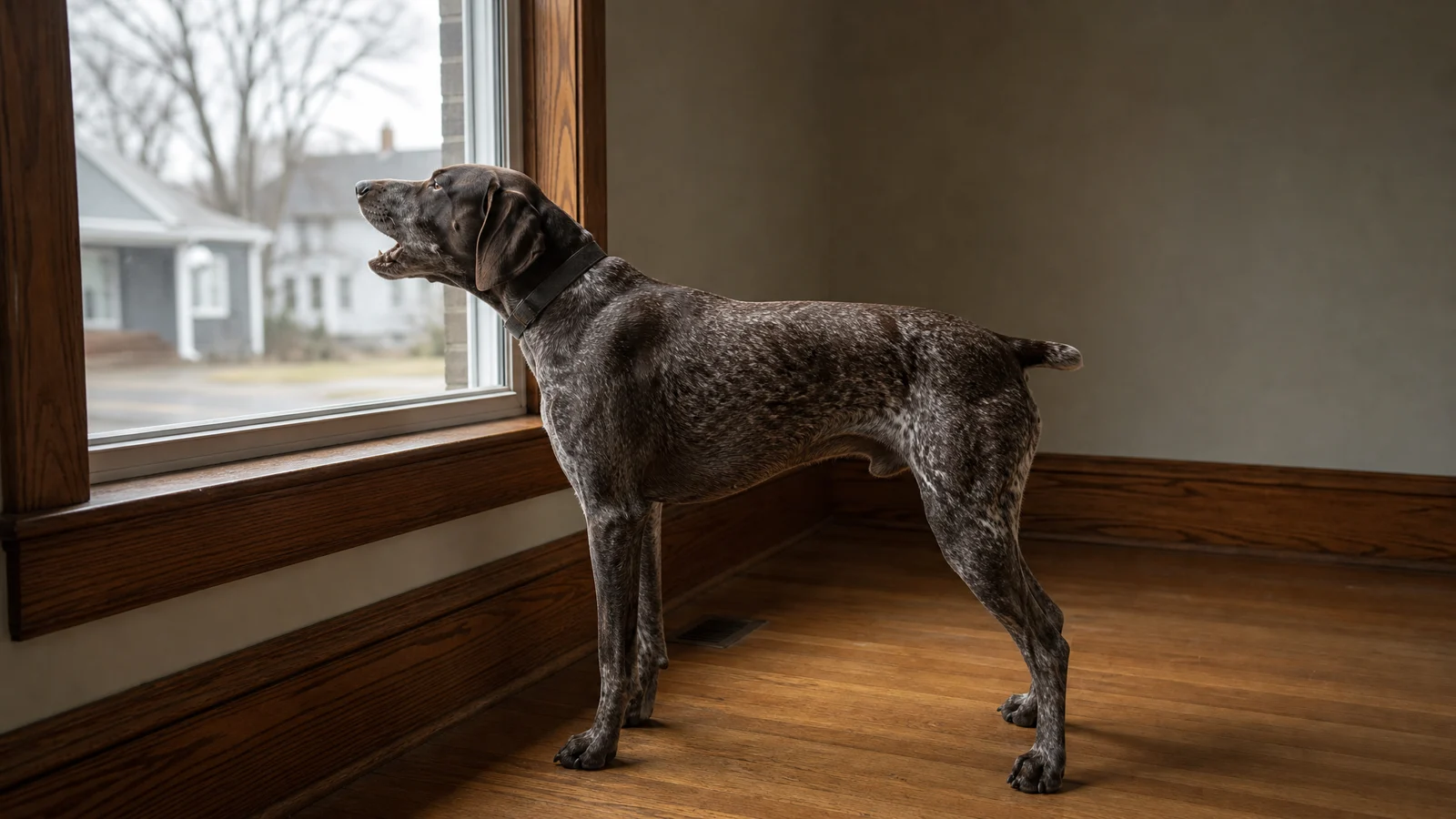
Most households can live with a German Shorthaired Pointer who announces the mail carrier. What wears people down is the announcement that never ends, or the barking that starts the moment you pick up the phone or sit down to dinner.
Both can change, and neither needs a louder voice from you. They need you to work out what each bark gets your dog, stop paying for the ones you do not want, and pay for something quieter instead.
The aim is less barking, not none, because a dog who never spoke up would also never tell you someone was at the door. Read on to sort your dog's barks by purpose, take the payoff out of the unwanted ones and teach a quiet cue in stages you can practice at home.
What Your German Shorthaired Pointer's Barking Is About
Before you change a bark, find out what it is for, because the same volume can carry very different messages. German Shorthaired Pointers are friendly, smart and willing to please, so a bark at a visitor can be joy just as easily as suspicion, and the sound alone will not tell you which one you are hearing.
The breed is not a nonstop talker on paper. The AKC's barking-level scale runs from "Only To Alert" at 1 to "Very Vocal" at 5, and the German Shorthaired Pointer sits at 3, which the AKC labels "Occasional". That makes a dog who barks all day a habit worth changing rather than a trait you have to live with.
Five Common Kinds of Barking
Dogs bark for reasons that sound alike and need different answers, so watch the body behind the sound as well as the noise itself. These five patterns cover most of what owners hear:
- Warning: a stiff body, barking at passersby or at sounds outside, and often a small hop or step forward with each bark.
- Greeting: a loose, wiggly body and a wagging tail, sometimes with a whine, aimed at people or dogs your GSP is happy to see.
- Demand: barking aimed straight at you that is meant to get something, such as food, a toy, play or the door opened.
- Frustration: barking that shows up when your dog is confined, held back on leash or kept from something they badly want.
- Repetitive: a steady, almost mechanical bark, often with pacing or running back and forth along a fence.
Many dogs mix two of these, and the last pattern needs more than a training plan, as the section on when barking points to something else explains. The first four respond well to the plan in this guide.
Notes to Take After Each Bark
The next time your dog barks, jot down where and when it happened, what set it off and what happened right after. That last answer matters most, because it is the payoff, and the next section is built around it. Notes like these also point you at the one situation to work on first instead of trying to fix every bark at once.
Stop German Shorthaired Pointer Barking by Ending the Payoff
What happened right after the bark is what keeps it coming back. Your dog repeats what works, so every stubborn pattern has something paying for it, and finding that something is most of the job. Two payoffs are worth checking first, because both are easy to miss.
When the Window Becomes a Stage
Take a dog who barks at everyone who walks past the house. A pet behavior expert at the Michigan Humane Society points out why that habit is so hard to break: the person keeps walking, and to the dog it is mission accomplished. Every pass-by seems to prove that barking works.
Because the loop gets rehearsed every time someone walks by, the fastest relief is to stop it from happening. Close the curtains, apply removable window film or move your dog's resting spot to a room without a street view. That is management, not training, so it will not teach quiet on its own. It simply stops the practice while you build the skill in the sections ahead, and you can uncover the glass once the cue is solid.
Barks That Work on You
Some barking is aimed straight at you, and almost everything you do in response can pay for it. Looking over, saying "shh", scolding, tossing a toy, opening the door to a barking dog and walking across the room to settle them all tell your dog that barking brings you running. Even the well-meant ones count.
Raising your voice does not help either, because to a barking dog it mostly sounds like more noise. Wait for the pause instead and give your attention then. A dog who gets what they want in the quiet learns that the quiet is the part that pays, which is the trade the quiet command later in this guide builds on. If the old pattern has paid for a long time, expect the change to take longer, and keep your response steady even when progress feels slow.
Barking When a Busy Dog Runs Out of Things to Do
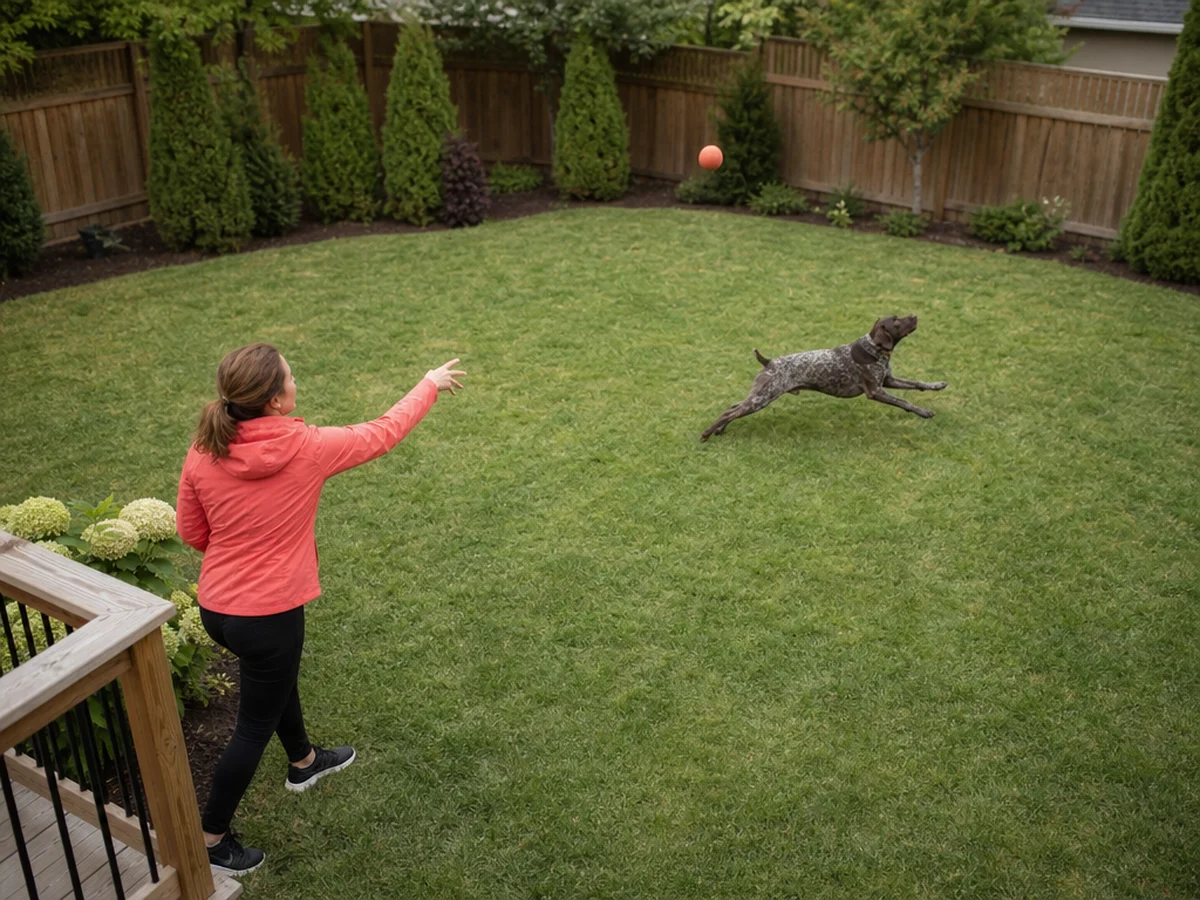
Not every payoff comes from outside the house, because some barking is simply what a dog does with a day that holds too little. German Shorthaired Pointers have very high energy and need a purpose, and without one they can turn destructive when left to their own devices. Barking is one more way a dog with energy to spare can find something to do.
Physical and mental exercise every day makes a dog less likely to bark from boredom or frustration, so look at the hours before a noisy stretch before you blame the stretch itself. The GSP exercise needs guide covers how much running and hiking this breed wants, and the GSP sniff walks guide shows how to give a keen nose real work on an ordinary walk.
A tired body is only half of it. Give the mind something to chew on as well, such as a stuffed toy or a short search game, and see the GSP chew toy ideas for choices that suit a dog who loves to work. Then use the calm that follows for training, because a dog who has had a real workout and a puzzle can learn from you in the evening instead of announcing every passing car.
Quiet Command Training for German Shorthaired Pointers
The calm after a real workout is the best time to teach what comes next, because taking payoffs away leaves a gap and an eager dog fills it with whatever worked before. Quiet is the better thing to put there, taught here in four stages that each build on the last. Keep sessions short and upbeat, use small, tasty treats, and start with the barking you can reach most easily, such as the doorbell or the window.
Pay the Pause
The first stage uses no word at all, because its only job is to teach your dog that silence is where the treats live. Work through it in this order:
- Stand close to your dog at a trigger that gets them barking, with treats in your hand, and stay calm and quiet yourself.
- Wait for any pause in the barking, even one a second long, and say a bright "yes" the instant it comes.
- Hand over a treat right away, where your dog is standing, before the barking can start again.
- Repeat with every pause until your dog starts glancing at you after a bark, which is your sign that they have linked the pause with the pay.
If the barking never pauses long enough to mark, you are too close to the trigger or the trigger is too exciting for now. Make it easier with the distance steps in the last stage, then come back to this one.
Add the Word
Once pauses come quickly, give the quiet a name. A treat at the nose is the easiest way to bring a pause on, because it is hard for a dog to sniff and bark at once. Pick one short word, such as "quiet" or "enough", and follow these steps:
- While your dog is mid-bark at the trigger, bring a very tasty treat to their nose.
- The moment the barking stops, say your word once in a calm, ordinary voice.
- Say "yes" while the mouth is still closed, then give the treat.
- When your dog begins to stop at the word, keep the treat out of sight, say the word first and pay after the pause.
The word only means something because silence follows it, so never shout it or repeat it over the noise. If your dog ignores the treat, the trigger is too strong for now, so use a better treat or more distance and try again.
Stretch the Quiet
When the word works, ask for a little more quiet before the treat arrives, and change the wait each time so your dog cannot predict it. Sometimes pay after a short pause and sometimes after a longer one, in no pattern your dog can learn. Then give the quiet somewhere to go. After the pause, send your dog to a mat or bed and pay them there. A dog who knows exactly what to do once the barking stops has far less reason to start again.
Take It to the Real Trigger
Everything so far worked because the trigger stayed easy, and real life is not. Rebuild the lesson with the trigger farther away than usual, far enough that your dog notices it without barking, and pay for quiet or for looking at you. Move the trigger a little closer between rounds. If the barking starts, you moved too soon, so increase the distance again and pay for quiet.
For a knock or a bell, ask a helper to make the sound from farther away before building closer. At the window, work from the far side of the room before you step up to the glass. Once your dog stays quiet at your word in the real spot, uncover the window and keep paying for the pause for as long as the habit needs.
When Barking Points to Something Else
A steady plan should bring some change, and when it does not, the cause may not be habit at all. Medical problems can also contribute to vocalization, especially in the older dog, so a bark that starts suddenly, sounds different or appears for the first time in an adult deserves a call to your vet before any more training. Keep regular veterinary visits on the calendar as well, and mention any change in how your dog sounds.
Some barking also belongs to a different problem with its own plan. Barking that happens only when you are gone, barking with lunging at dogs and people on walks, and a steady repetitive bark with pacing or fence running all need more than a quiet cue.
A certified professional dog trainer who uses rewards can see what is driving the sound and how to set up your home around it, and it is worth asking sooner rather than later if your dog seems frightened or stressed while barking.
Loose Ends in a GSP Barking Plan
Handing some barking to a vet or a trainer still leaves a few everyday situations that sit just outside the plan, and each one has a short answer of its own. They are the ones that tend to send owners back to square one, so it helps to know them before they happen.
Will my GSP grow out of barking?
Plan on changing it rather than waiting. A habit that keeps paying does not fade by itself, and puppies do not simply outgrow barking either. Adolescence can make any rule wobble for a while, so keep paying for quiet, and read the teen months guide for how to steady the rest of training.
Should my GSP ever bark at all?
Yes. A short warning when someone arrives is ordinary dog behavior, and most households like having one. What you are changing is the encore: a bark or two, then your word, then the pause and the treat.
What if the barking only happens when I leave?
That is a different problem with a different plan, because your dog is struggling with being alone rather than practicing a habit. Talk to your vet and a reward-based trainer before adding quiet training, since asking for silence does not touch the cause.
What about barking at dogs on walks?
Walk barking usually needs the same distance idea from the last stage, with enough space that your dog can still take treats and think. If lunging joins the barking, ask a trainer who uses rewards for help. Ordinary pulling is a leash problem rather than a barking one, and the GSP leash training guide covers it.
A Friendly Dog Can Learn a Quieter Hello
Most of those answers come back to a dog who means well. Look at the kinds of barking near the start of this page and you will see how much of it comes from an eager dog who is short of a better way to take part. Nothing here asks your German Shorthaired Pointer to care less about the doorbell, the window or the person who just walked in. It asks them to carry the same enthusiasm through a pause, a word, a mat and a treat.
That is why the plan can stay kind. A friendly dog has no reason to give up their enthusiasm, only the volume, and every pause they earn is a small win for you both. Keep paying for them, and the hello gets quieter without getting any less warm.
Barking is just one of many things an eager dog has to learn, and the free e-book we send by email after registration walks through your GSP's whole education in depth, in language that never turns hard to follow.
 Puppy trainingHow to Stop German Shorthaired Pointer Puppy Biting
 CareGerman Shorthaired Pointer Grooming and Handling Training
 BehaviorGerman Shorthaired Pointer at 1 Year and Up: When Do They Calm Down?
