 GSP
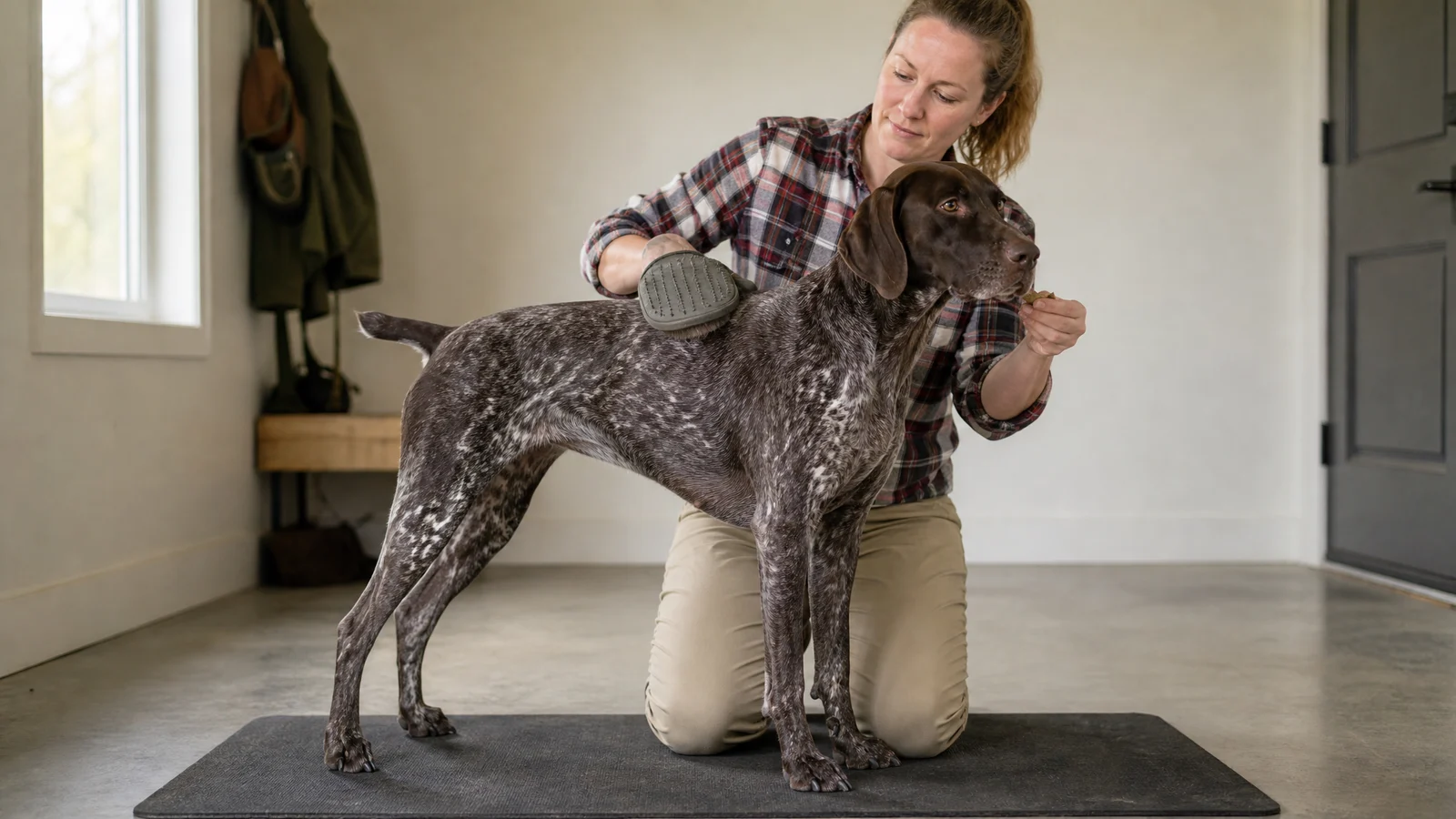
A short coat can make grooming a German Shorthaired Pointer sound like a quick chore, right up until a dog built for speed has to stand still for it. The brushing is the easy part, and everything that comes after it is what trips people up.
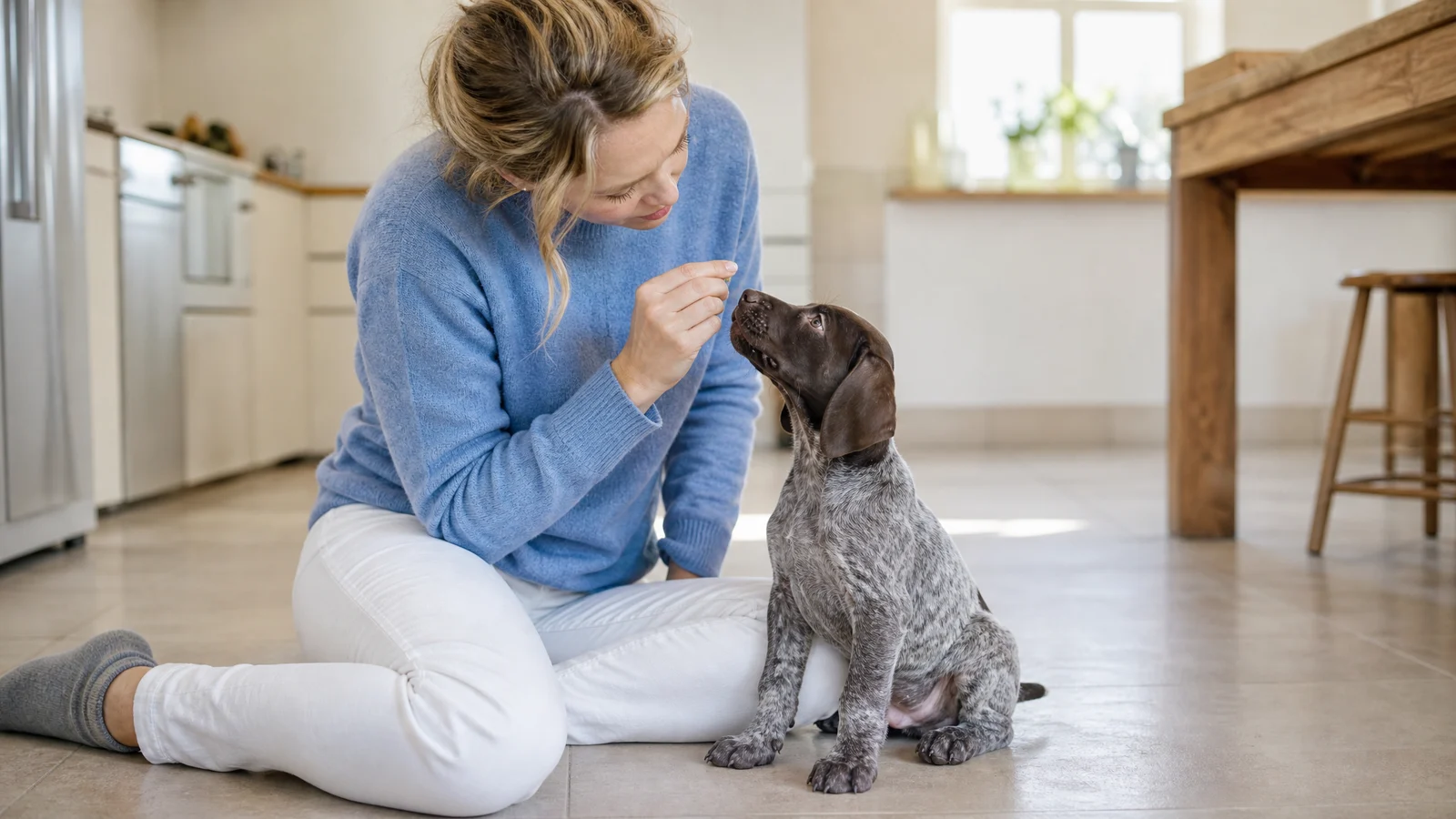
Paws, ears, nails and the full-body check at the clinic all ask for something this very high-energy dog rarely offers unprompted, which is calm stillness under someone else's hands. We teach it the way we teach everything, in small steps with a treat for each one and with your dog always free to say enough. Handled that way, being touched becomes a short, predictable and well-paid part of the day.
Below, you'll find what this coat actually needs, how to set up a grooming spot, a brush routine, ladders for paws and nails, ear and body checks, and rehearsals for the vet, plus answers to the snags that stall most routines.
A Short Coat and a Long List of Touches
The coat is the reason grooming looks simple, so it helps to see what it does and does not ask of you. On a GSP it is short and thick, feels tough to the hand, runs a little longer under the tail and along the back edges of the haunches, and turns softer, thinner and shorter on the head and ears. That last detail shapes the routine below, because the head and ears get your lightest touch and come later in the sequence.
For day-to-day care, the breed's AKC profile keeps things plain: the coat is easy to groom most of the year, requiring only a good once-over with a brush or grooming glove every few days. It still sheds, especially at certain times of the year, when more frequent brushing will be needed to remove the loose hairs. The ears should be regularly inspected and cleaned, and the nails trimmed short.
What an Easy Coat Hides
An easy coat has a catch, which is that nothing forces a weekly session, so handling skills are the first thing to slide. A dog who has never stood for a brush meets the clippers and the exam table with no practice at all. Treat the coat as free rehearsal time instead, because a few calm minutes with the glove teach the lesson every later step relies on: hands and tools arrive, treats follow and leaving is always possible.
The rest of this page builds the touches in an order a dog can absorb, from coat to feet, ears and mouth, and finally the whole-body handling a stranger will do. Starting in puppyhood makes every step easier, and the German Shorthaired Pointer puppy timeline shows where those weeks fit, though an adult can learn all of it at a slower pace.
A Grooming Spot Your German Shorthaired Pointer Can Leave
Practice begins with where it happens, because the place you choose decides how the first sessions go. Pick a corner with a non-slip surface, because a dog whose feet slide braces, and a bracing dog cannot relax into a touch. Keep it away from doorbells and household traffic, and schedule sessions after a good outing instead of before one. This breed thrives on vigorous exercise, so a dog who has had their run stands far more easily.
Then make the spot a place your dog is free to leave. If they wander off mid-stroke, let them go, stop touching and put the treats out of reach, then start again when they return and settle. A dog who knows that leaving works has less reason to wriggle or mouth the brush, and a dog who comes back is telling you the last step was manageable. Gather these before you begin:
- A Non-Slip Mat: a rubber-backed mat or folded towel that stays put when four paws push on it.
- Soft, pea-size treats. Each one is small enough to swallow in a single bite, so every touch is paid before your dog loses interest.
- A lick mat or a plate with a thin spread of something dog-safe for sessions when one treat is not enough pay for what you are asking.
- Glove or soft brush: pick one your dog has already sniffed and been rewarded around, so the tool never arrives as a surprise.
None of it is expensive, and having everything within reach means you never leave mid-session to fetch something. Set it all out before you call your dog over.
Brush and Glove Grooming, One Touch at a Time
With the spot ready, the first lesson is what the brush means, and the answer you want is that the brush predicts a treat. Because a GSP learns quickly, the early rungs go fast and it is tempting to skip ahead, which is where we see routines start to wobble. Pay after every touch, and keep each rung small enough that your dog never needs to leave.
Six Rungs From Hand to Brush
Work through these steps in order. A rung is finished when your dog stays loose through it several times in a row, so the ladder can take one session or many.
- Rest a flat hand on the shoulder or chest for a moment, treat, and lift the hand away. Repeat until your dog looks relaxed instead of tense when the hand lands.
- Slide the hand slowly along the side and over the back, treating at the end of each pass.
- Touch the glove or brush to the shoulder, treat, and set it down. At this stage the tool is a greeting, not a job.
- Make one slow stroke along the shoulder and back, then treat and stop. Strokes are the unit of progress, not minutes.
- Build to two strokes, then three, then a longer pass, paying between each and stretching the gap only while your dog stays loose.
- Move toward the chest, the back edges of the haunches and the underside of the tail, keeping strokes on the head and ears soft and short.
Loose means a soft face, a relaxed tail and a body that stays put or leans in. A rung that still looks tense after several tries has not failed, it simply needs cutting into smaller pieces, such as a shorter stroke or a lighter touch.
When Your Dog Walks Away Mid-Brush
If your dog stands up and leaves at the third stroke, that is information and not defiance. Drop back to the stroke count they handled easily, pay generously, and try again later in the day. Pushing through a rung teaches a dog to tense at the next one, which costs more time than an extra repetition ever would. The same brushing earns its keep after a long outing too, since a short brush-down after hiking with your GSP doubles as practice.
German Shorthaired Pointer Paws and Nails, Rung by Rung
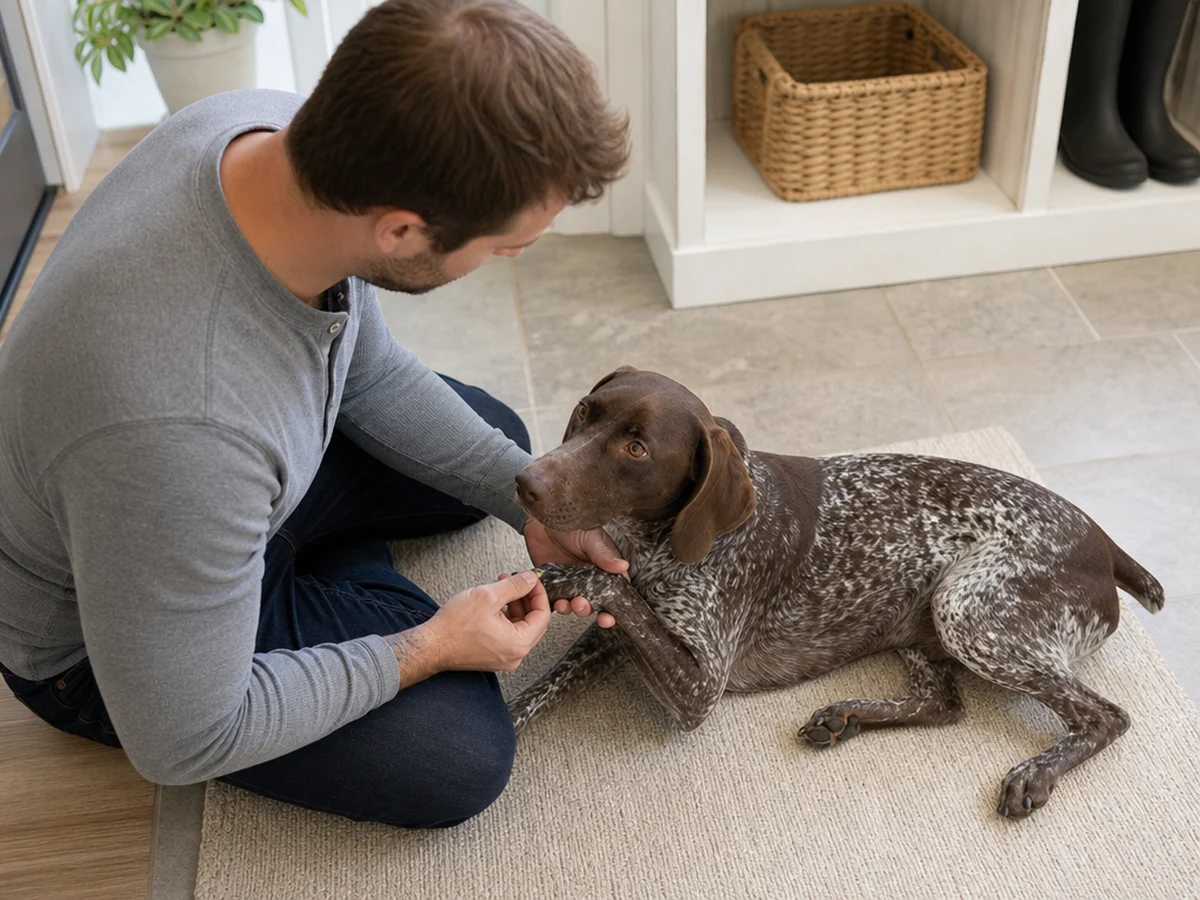
Brushing taught your dog that a hand and a tool mean a treat, and feet test that lesson hardest. The skin over the toes has a higher concentration of nerve endings than the shoulders or hips, a point made in VCA's nail-trim guide, and its advice is to take nails in many small steps, each paired with a treat, in sessions of just a minute or two a few days a week, moving up only when your dog looks comfortable. The ladder below follows that pattern.
A Paw-Touch Ladder From Shoulder to Toe
Set your dog on the mat from earlier and pay after every rung, using the same loose-body test before you climb. Stop for the day the moment your dog looks unsure, since a short, fully paid session leaves them keen for the next one.
- Touch the shoulder and treat, then glide the hand down to the elbow and treat.
- Glide on to the wrist, then all the way to the paw, treating at each stop.
- Support the paw and one toe in your hand, hold for a moment and treat.
- Pick up the clippers in your other hand and repeat the steps above without using them.
- Bring the clippers toward a nail in small moves until they rest against the tip, then tap the nail lightly and treat.
- Squeeze the clippers once in the air near the paw so your dog hears the sound, then treat.
- Trim just the very tip of a single nail, treat and stop for the day.
Some dogs glide through this ladder, while a dog who already dislikes the clippers may need much longer. The rungs stay the same either way, and only their size changes.
Clippers, Grinders and a Nail Rhythm
Most dogs will need a nail trim every three to four weeks, a rhythm laid out in Humane World's home grooming guide, along with the advice to trim before the nails touch the ground. Most dogs will need some time to accept either a sharp clipper made for dogs or a grinder. Trimming, or even just pretending to trim, one nail a day and following it with a treat and praise is a measured but effective way to work up to regular, fuss-free trims.
A dog who freezes, pulls away or growls at any rung is asking for a smaller step. Fear that does not ease with slow, rewarded practice is a job for your veterinarian or a reward-based trainer, and more pushing will not solve it.
Ears, Lips and a Head-to-Tail Check
Once a paw can be held, ears and lips are the next places a stranger will want to touch. A GSP's ears are broad and hang close to the head, so the flap lifts easily and gives you a simple skill to teach. Rest a hand at the base of the ear and treat, then lift the flap for a second, treat, and let it fall. You are teaching lift, look and release, and cleaning inside the ear is a job to have your veterinarian show you.
Lips follow the same pattern. Slide a thumb along the side of the muzzle, lift one side of the lip for a moment to show a few teeth, treat and release. Expect to spend more rungs here than at the shoulder, because most dogs object to face handling at first, and a slow start saves you from teaching them to dodge your hands.
A Fixed Order for the Whole Body
Once each spot is easy on its own, string them into the same order every time: head, ears, lips, shoulders, ribs, hips, legs, feet and tail. In our experience a long routine falls apart when you attempt all of it at once, so cover only a few spots per session and let the fixed order do the work over the week. A dog who can predict what comes next tends to relax sooner, and the order turns a long list of touches into one routine.
After a swim or a muddy run the same check does double duty. Towel off first, then run through the sequence while your dog is pleasantly tired and the coat is easy to see, which is a simple way to fold practice into water play and swimming.
Rehearsing Vet and Groomer Visits at Home
Everything so far has happened on your terms, and a clinic will not be. The practice-run idea in Michigan Humane's vet-visit tips fits well: check with your veterinarian to see whether it is OK to stop in from time to time, then sit in the waiting room, give some tasty treats and leave. Rewarding calm while you gently hold and touch your dog the way an exam will teaches the same lesson at home, and if your dog pulls away or is uncomfortable, go back a step.
A Table of Home Rehearsals
The table below turns the head-to-tail check into exam practice. Each row pairs a handling skill with the appointment moment it prepares for, so you can see why a small touch today is worth the trouble.
| Practice at home | What it prepares for |
|---|---|
| Lifting an ear flap and looking in for a moment | The ear check at an exam |
| Spreading the toes and holding a paw | Nail trims and paw checks |
| Lifting one side of the lip | A look at teeth and gums |
| Standing while hands pass over ribs, hips and legs | The hands-on exam on the table |
| Waiting on a mat among new sounds and smells | The clinic waiting room |
Regular veterinary visits are the natural time to ask your clinic which touches your dog's exam includes, so you can rehearse those exact ones. Do the same before a groomer appointment by explaining which rungs your dog has climbed and asking for the next step to be short. Practice often gets harder during the adolescent stretch, and steady teen-month training shows how to keep easy wins in the mix.
Odd Moments in German Shorthaired Pointer Grooming
A few snags only show up once the mat and the treats are working. Each one below has a short answer, and none of them needs new equipment.
Is an adult GSP too old to learn this?
No. An adult climbs the same ladder as a puppy, only with more history to work around. Begin at the shoulder, make each rung smaller than seems necessary, and let your dog's body language set the pace. A dog who has had hands forced on them may need more rungs and more time, which is a reason to slow down and not a reason to stop.
What if my GSP mouths the brush?
Give the mouth a better job. Offer a lick mat or hold a treat in your other hand so the mouth is busy while the brush makes one slow pass, then stop and pay. Practice after a walk instead of before one, and keep passes short until the brush has become boring.
Can we groom right after a hard run?
Wait a few minutes. A dog who has just finished hard exercise is often still wound up, and a wound-up dog treats the mat like a launch pad. Let their breathing settle, offer water, and begin once they lie down or stand loosely. Mud is the exception, so a quick towel-off right away is fine and the careful practice can wait.
Should someone hold my GSP still?
No. Holding turns practice into a struggle, and a struggle teaches the wrong lesson about hands. A helper is far more useful as the person who delivers treats while you handle, which keeps your dog free to leave and keeps every touch paid for.
Standing Still Is a Grooming Skill Too
Behind every answer above sits a skill that most of a German Shorthaired Pointer's training never asks for. Most of what they learn with you is about doing something, whether that is coming back faster, turning sharper or clearing a bigger jump, while grooming asks for the opposite. It is the lesson where a dog with a very high energy level practices doing nothing on purpose as hands move over them.
That stillness is worth teaching deliberately, because a dog with this much energy seldom finds it without help, and it is exactly what a stranger's hands in an exam room or on a grooming table will ask for. Practiced in small, paid steps, it becomes something your dog knows how to do, the way they know how to sit or turn, and the mat is simply where they learned it.
Calm hands, a quiet mat and a paid pause are only the start of a GSP's schooling, and our free e-book gives the remaining needs the same careful, readable attention after you register an email address on this page.
 BehaviorGerman Shorthaired Pointer at 1 Year and Up: When Do They Calm Down?
 BehaviorGerman Shorthaired Pointers With Cats and Other Dogs
 Puppy trainingGerman Shorthaired Pointer Puppy: First Training Steps
