 GSP
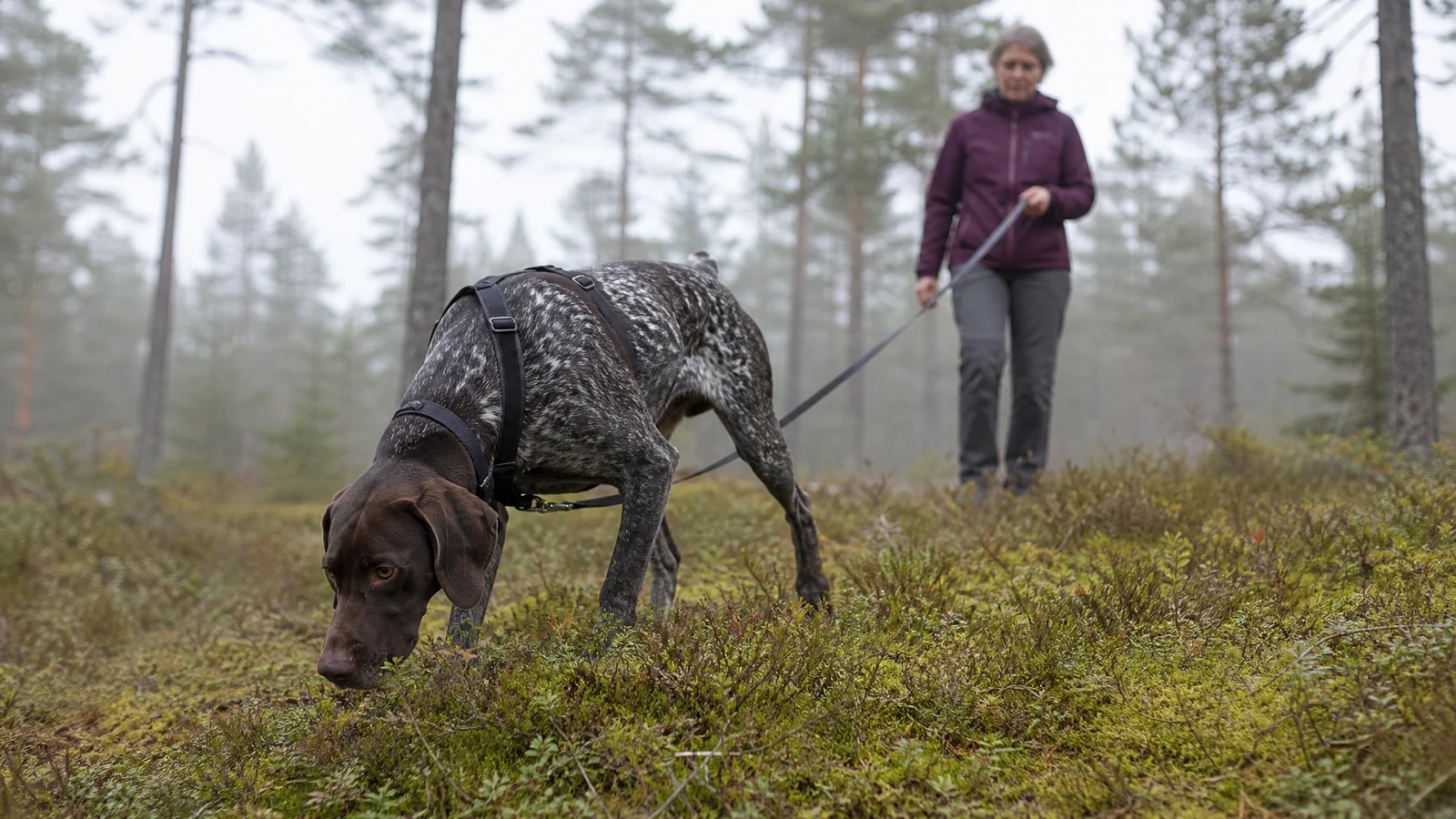
Sniffing can mean wandering through a safe patch, searching for something you arranged or earning access to an interesting spot after a few shared steps. Those activities all use a German Shorthaired Pointer's nose, but they ask different things of the dog. Confusion starts when the person offers free investigation and then requests constant attention throughout it.
Decide what kind of opportunity you are offering before choosing the cue. Your GSP can have meaningful nose time while you retain sensible boundaries around traffic, wildlife and other people.
Below, we separate three uses of sniffing and the communication each needs. The guide then builds a release, a brief check-in and a movement signal before considering crowded routes and short outings. The aim is a walk with genuine investigation and manageable transitions, not a dog pulled away from every interesting smell.
What the German Shorthaired Pointer's Sniffing Time Is For
Some parts of a walk can belong mainly to exploration. In a suitable area, the dog chooses which patch to investigate and how to move within the available space. You supervise the surroundings without trying to turn every pause into an attention exercise.
Other moments are deliberate lessons. You might reward a few comfortable steps by opening access to a safe smell, or arrange a simple search in a quiet place. Naming the purpose helps you judge whether the dog is doing what the activity actually invites.
A sniffing walk does not need to cover a particular distance to be worthwhile. It still needs comfortable equipment, safe footing and a route you can manage. Our GSP leash movement guide explains the starts and turns that support travel between activities.
Keep your expectations modest. Nose work can provide useful engagement, but it does not replace every other physical, social or rest need. The dog may enjoy investigation and still need a quieter environment afterward.
Three Kinds of Sniffing Opportunity for a German Shorthaired Pointer
Choose the activity that fits the place and the dog's current attention. Free investigation, an arranged search and sniffing as a reward can all belong in the same week. They do not need to appear in a fixed order on every walk.
Open Exploration Within Safe Space
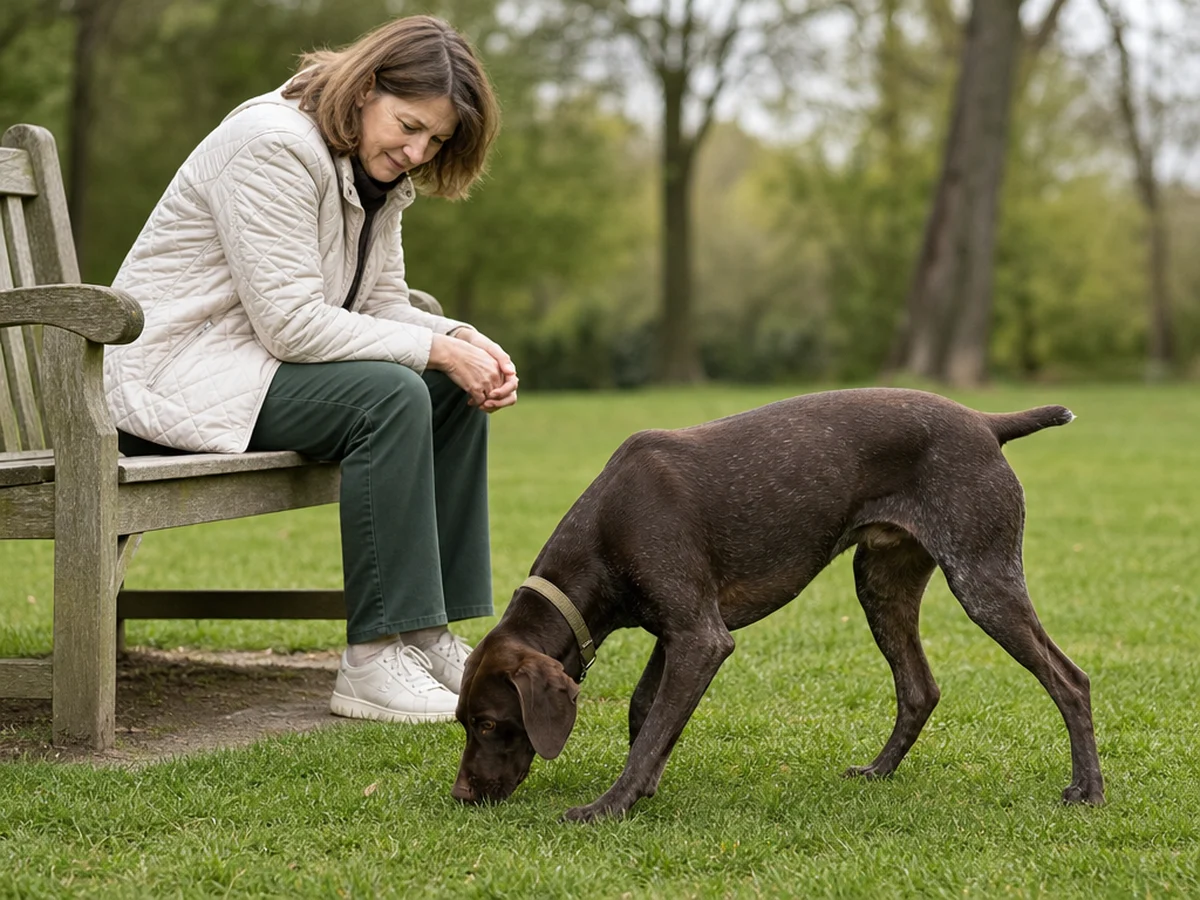
Offer a clear invitation, such as “go sniff,” as you allow access to a suitable area. Move enough to give the dog usable room while keeping the leash safely managed. The invitation should lead to an area they can actually reach without straining against you.
Watch the ground and the surroundings while the dog investigates. Avoid discarded food, sharp debris, unknown substances and places where wildlife could be disturbed. If the area is unsuitable, choose somewhere else rather than trying to make a risky patch safe through a cue.
Let the dog's head be down. Occasional communication is useful, but free exploration loses its purpose if you interrupt every few steps.
Keep the line clear as the dog changes direction within the patch. Move your own feet when needed rather than keeping a fixed position that gradually wraps the leash around vegetation.
A Small Search You Arrange
A simple scent activity can provide a more defined task in a controlled setting. Use a safe, familiar search area and materials the dog can use appropriately. Begin with an easy find so the dog understands that investigation leads to a clear result.
Best Friends describes introductory nose-work activities as accessible ways to engage a dog's sense of smell. Keep a new search separate from a busy walk at first. Learning the activity and coping with unfamiliar surroundings are different demands.
A home search is also an option when outdoor space is limited. Supervise the setup and remove anything the dog may damage or swallow. Do not hide rewards in places you later need them to leave alone, such as laundry piles or kitchen storage.
Sniffing as a Reward for Shared Steps
Choose a safe patch your GSP can notice without reaching the end of the leash. Ask for a small amount of familiar walking, then invite exploration while the leash remains loose. Access becomes a reward for the useful movement that came before it.
Start with a patch close enough that the walking requirement is achievable. Asking for a long stretch beside you while the dog watches the destination can create frustration. Increase the amount of shared movement only when the current version is easy.
The PDSA advice on walking without pulling supports rewarding the behavior you want. In this exercise, the reward can include an appropriate environmental opportunity. If pulling begins, reconsider the distance and timing instead of allowing tension to become the route to the smell.
Watch whether the promised patch remains appealing. A reward has little value if you chose it only because it was convenient for the walking plan. Your dog may prefer a different safe area, so notice their interest before asking for shared steps in exchange for access.
Communication Tools for Sniffing Walks
Keep the words few and their consequences understandable. An invitation to investigate, a brief acknowledgment of you and a request to move serve different purposes. Teach them in easy conditions so they do not first appear when your dog is absorbed in an exceptional scent.
The Release That Opens Access
Say the sniffing invitation as you open a safe route to the patch. Avoid announcing permission while continuing to hold the dog too far away. Your movement and the available leash space should agree with the word.
At first, use the invitation where the dog already wants to investigate. You are naming a familiar opportunity, not trying to create interest in an empty patch. Afterward, let the activity continue long enough to be meaningful rather than calling the dog back immediately for another repetition.
| Signal | What it should predict |
|---|---|
| Sniff invitation | Access to an appropriate area for investigation |
| Brief check-in | A useful response from you, often with sniffing continuing |
| Movement cue | A clear direction and a reward for joining you |
A Check-In That Does Not Always End Sniffing
Notice a voluntary glance or turn toward you during an easy investigation. Mark it and offer a reward in a position the dog can reach comfortably. Then allow them to continue exploring when the setting remains safe.
Battersea explains how a marker identifies rewarded behavior. Use that precision to acknowledge the moment of connection. You do not need to extend a glance into a long stare before it counts as useful communication.
If every check-in ends the interesting activity, the dog may become less willing to offer it. Sometimes your response can simply confirm that exploration remains available. Reserve a separate movement signal for the times you actually need to leave.
A Movement Cue Practiced Away From Strong Scents
Teach a small turn toward you in a quiet place. Say the chosen word, make your direction easy to follow and reward a few shared steps. Practice before adding a mild sniffing distraction, then keep the first departure short and well rewarded.
- Begin with a familiar turn where the dog can respond without leaving anything highly interesting.
- Reward the turn and a little movement toward clear ground.
- Try the same cue after a brief investigation of a mild, safe patch.
- Offer another appropriate activity rather than repeating departures until the dog becomes frustrated.
Use the signal when an easy response is available. If attention remains elsewhere, manage the departure safely and reduce the next lesson’s difficulty. Repeating the word over a tight leash does not explain which movement you wanted.
Constraints That Change the Sniffing Mix
Not every route allows every activity. Choose the mix around real space, time and safety rather than trying to reproduce a training plan regardless of conditions. A walk can contain a short supervised sniffing area and a straightforward journey home without becoming a failed lesson.
A Crowded Route
Keep exploration away from the main flow of people and dogs. Move to a wider area before giving more leash room, and gather spare line before rejoining a narrow path. Other walkers should not have to step across your equipment to pass.
If an animal appears, safe distance takes priority over a planned sniffing period. The bird encounter guide covers a particular challenge for GSPs. Permission to sniff never includes permission to pursue wildlife or investigate another dog without a suitable arrangement.
- Skip a patch that would place the dog beside traffic or across someone else's path.
- Use a quieter route when repeated interruptions prevent comfortable exploration.
- Move away from discarded objects before the dog has time to investigate them.
- Allow more space after a startling event instead of immediately resuming difficult cue practice.
When walking with another person, explain which part is free investigation and which part is movement practice. A companion calling the dog forward during nose time creates a competing request. Agree on the next safe meeting point so the dog is not repeatedly pulled between two people’s different expectations.
A Day With Less Time
Choose one accessible sniffing opportunity rather than rushing through several. Give the dog a clear period to investigate, then use a familiar departure and a manageable route home. You can offer a separate supervised search later if that fits their needs.
Do not compensate for a short outing by making the next one exceptionally intense. Look at the whole day, including rest, ordinary movement and time with people. A useful routine can vary without making every missed activity a debt to repay.
For a growing dog, keep the physical demands appropriate to the individual. Our GSP puppy activity guide discusses how investigation fits alongside play, learning and recovery rather than carrying the entire exercise plan.
Genuine Sniffing Remains Part of the Walk
Review walking comfort during regular veterinary visits, and seek advice if enthusiasm for movement or investigation changes unexpectedly. Keep a simple note of which kind of nose activity your dog enjoyed and which transitions remained difficult. That helps you choose a better mix next time.
Protect some investigation from constant instruction. Your GSP can learn useful signals while still having room to follow an interesting scent within safe boundaries. A clear purpose for each activity makes it easier to reward connection without turning the whole walk into a demand for attention.
 Training basicsPreventing Separation Anxiety in a German Shorthaired Pointer
 Training basicsFour on the Floor: Teaching a German Shorthaired Pointer Not to Jump
 BehaviorChew Toys and Chewing Manners for a German Shorthaired Pointer
