 GSP
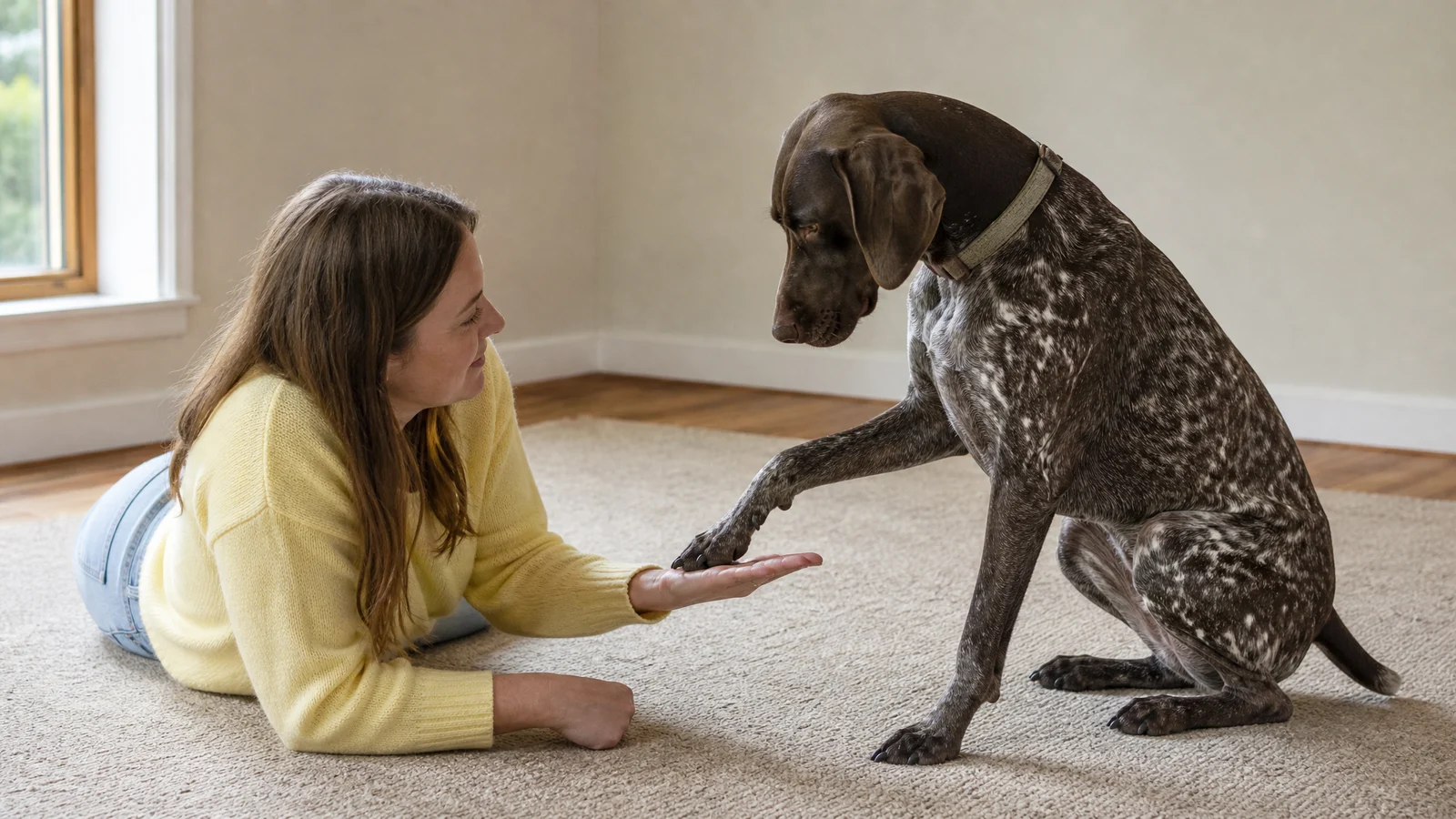
Putting a paw into your hand is one of the friendliest things a German Shorthaired Pointer can learn, and the hard part is not the paw, it is the waiting. A dog this keen and this full of energy tends to rush the whole exchange, so we teach shake in small stages that make slowing down the way to win.
Those same stages carry you straight to a high five, because the second trick is the first one with your palm turned upright. Below you will find a quick test for where to start, four stages for the paw itself, the word and a gentle way to thin out treats, the palm turn, and the snags that show up once visitors and a young dog join in.
Finding Your German Shorthaired Pointer's Starting Point for Shake
Before the first treat comes out, find out what your dog already does with their front paws, because that decides which stage you open with. Hold a closed hand with a tiny treat inside low and still in front of your GSP, and wait. A dog who paws at the hand can skip ahead to Stage Two, while a dog who only licks, sniffs or noses at the fist starts at Stage One, and neither start is better.
Good setup does a lot of the teaching for a quick, eager breed, and it costs almost nothing to get right. Gather four things first:
- A nonslip floor with room to shift weight, because a paw cannot lift while the other three feet are skating.
- Tiny, soft treats your GSP can swallow in one bite, so each reward is over quickly and the next attempt starts at once.
- A marker, either a clicker or one short, bright word such as "yes", used the instant the paw does what you want.
- A dog who has already taken the edge off, for example on a sniff walk, since a fizzing GSP finds a still hand hard to care about.
Keep the setup the same for the first few sessions, so the only new thing your GSP has to work out is the paw. Changing rooms comes later, once the paw is reliable.
Building the German Shorthaired Pointer Shake Hands Trick in Stages
With the fist test done and your four things ready, you can open at the right stage. Each one asks for a single new thing, names what you should see before moving on, and says what to do when your dog stalls. Move on when your GSP does the current stage smoothly several times in a row.
Stage One, Getting the Paw Off the Floor
Hold the closed fist low in front of your dog's chest with a treat inside. Stay quiet and still while they lick and sniff, because those attempts earn nothing, and the instant a paw leaves the floor, even slightly, mark it and pay from your other hand. You are looking for a dog who tries the paw on purpose because the licking stopped working.
If nothing lifts, slide the fist a little to one side and just above their nose so their weight shifts and the opposite paw frees up, then pay any lift at all. If one paw never seems to lift whatever you try, ask about it at a regular vet visit and work with the other paw in the meantime.
Still stuck? Break the job into smaller pieces. With shaping the behavior, you may initially reward a paw that only comes off the ground, then a higher lift, then a touch to your hand, so every ask is only slightly bigger than the last.
Stage Two, Paying for the Touch
Once lifts come easily, wait a beat longer before you mark, until the paw touches your fist. Repeat until reaching for your hand is the first thing your GSP tries, which tells you the licking habit has faded and the paw has taken its place.
A GSP who claws or hammers at the fist should get the same calm reward as a gentle touch at first, since you are paying for the idea. Once the idea is solid, pay the softer touches and let the loudest ones go unmarked, so a lighter paw becomes the one that works.
Stage Three, Opening the Hand
Swap the fist for an open hand held low and sideways, as if you were offering a handshake, and keep the treat in your other hand. The paw now lands on a level palm, so mark the instant it touches and pay from the other hand. If your dog stares at the open hand and does nothing, bring the treat hand briefly next to it, then move it away as the paw starts to come. What you want to see is a paw that travels to the palm without any food nearby.
Stage Four, Letting the Paw Rest
Now ask for a little more. Wait until the paw rests on your palm before you mark, starting with a rest of just a second or two and then building how long the paw stays slowly as your dog gains understanding.
A GSP wants to be up and doing, so this is the stage where we slow a keen dog down, and short, easy rests beat one ambitious one. If the paw snatches away before you can mark, shorten the rest you ask for and pay sooner, then lengthen it again in small steps. When the paw lands, rests and waits for the reward several times in a row, the shake itself is done.
Putting a Word on the Paw and Easing Off Treats
A paw that lands, rests and waits for its reward is ready to be named, and then to stop depending on a treat in your fingers. As GSP people, we like to say the word just before the palm appears, because a quick learner soon connects the order of things. Work through these in sequence:
- Say "shake" once, then show the open hand low, wait for the paw, and mark and pay. Any short word works, such as "hello", as long as you use the same one every time.
- When the paw arrives promptly on the word, keep the treat in a pouch or pocket instead of your fingers and pay from there after the paw rests, so the palm becomes a signal and not a lure.
- Ask for the shake in a new spot, such as the hallway, and go back to the open palm alone if your GSP hesitates.
Changing places is where a shake that looked solid tends to wobble, so the rewards need to rise with the surroundings. A plain treat can carry a lesson in your living room, but the yard and the walk outside call for higher value rewards because the distractions are bigger.
Tilting Your Palm Into a German Shorthaired Pointer High Five Trick
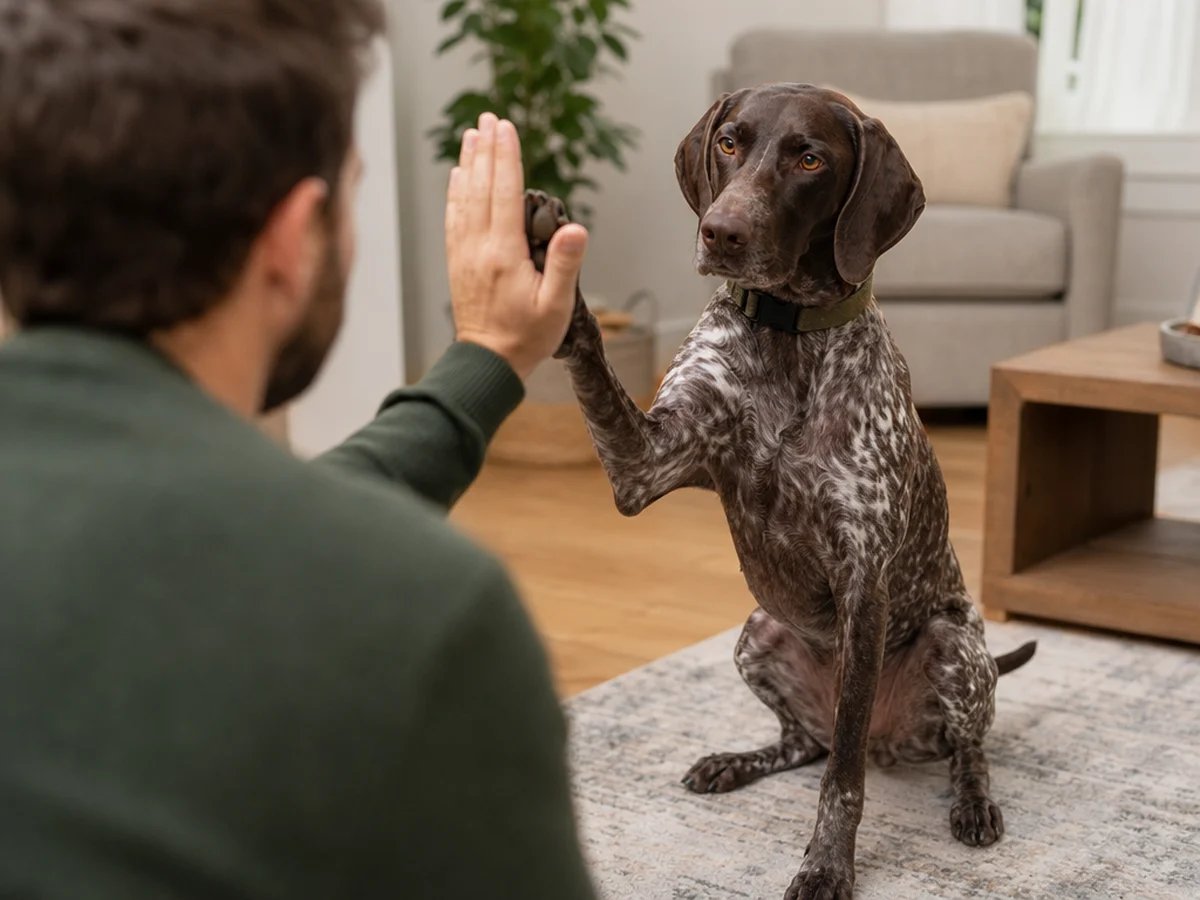
Nothing about the paw changes for a high five, only the picture your hand makes, so the work is a slow turn of the palm. Keep the word "shake" for the sideways hand and give the new picture its own word at the end. Here are the four moves:
- Ask for a shake as usual, but tilt your palm a little before the paw lands, and pay the paw that finds the tilted hand.
- Tilt a little more each time your GSP succeeds, until your palm faces them and stands upright, and pay a clean tap onto it.
- Keep the upright palm at about chest height or lower, so your dog can reach it with all four feet on the floor.
- Once the tap arrives every time, say "high five" just before you show the upright palm, so each hand picture has its own name.
Pay for clean taps on the palm. If your dog slides back to the sideways paw, show the upright palm a little lower and wait for the tap, because a quick learner usually finds the new picture fast once the target is easy to reach.
Where Shake Meets Guests, Jumping and Puppies
A shake that works in your living room soon meets people, bouncing and ages the lesson did not plan for. These three situations are worth thinking through before they arrive.
Can guests ask my GSP to shake?
Yes, once the shake is dependable with you. Show the guest the low sideways palm and the word, hand over a few tiny treats, and ask them to wait for the paw instead of reaching for it. A friendly GSP gets a way to say hello that keeps all four feet on the floor, and the guest gets a trick that works the way it does for you.
Will a high five teach my GSP to jump?
Not if the target stays low. A palm held above chest height asks a dog to leave the floor with the front feet, which is a jump with a name, so keep the upright hand where all four feet can stay down. If your GSP already jumps up at greetings, our jumping plan deals with that on its own, and the high five can wait until it holds.
Is shake fine for a GSP puppy?
Yes, as a short, easy game with tiny treats. A puppy may stall at Stage Four, so accept a very brief rest and stop there while it is still fun. The puppy training timeline shows where a trick like this sits among the bigger jobs of the first months.
The Still Half Second Behind a Shake
Whichever situation brings you back to this page, the trick asks of your dog something a run or a game of fetch never does. A GSP's day is mostly motion, and shake needs a half second in which a paw rests on a palm and nothing else moves.
That pause is the part worth paying for, and it is the part a dog this energetic finds hardest. The word, the palm and the high five are decoration on top of it. The same unhurried patience will serve your GSP in every other lesson, and joining our list brings you an e-book that goes through those lessons one need at a time, with explanations a tired owner can still follow.
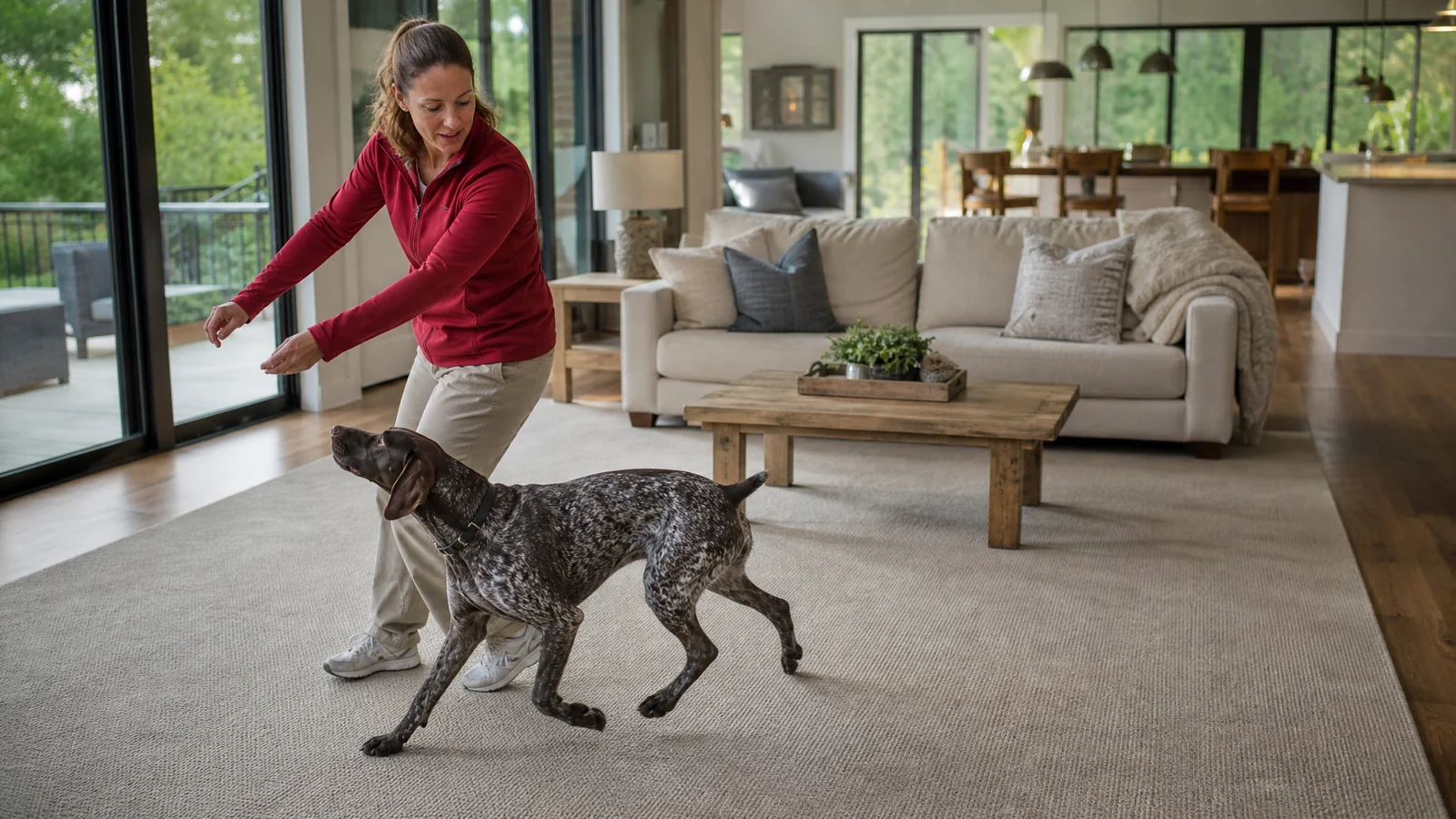 Exercise and jobsHow to Teach a German Shorthaired Pointer to Spin
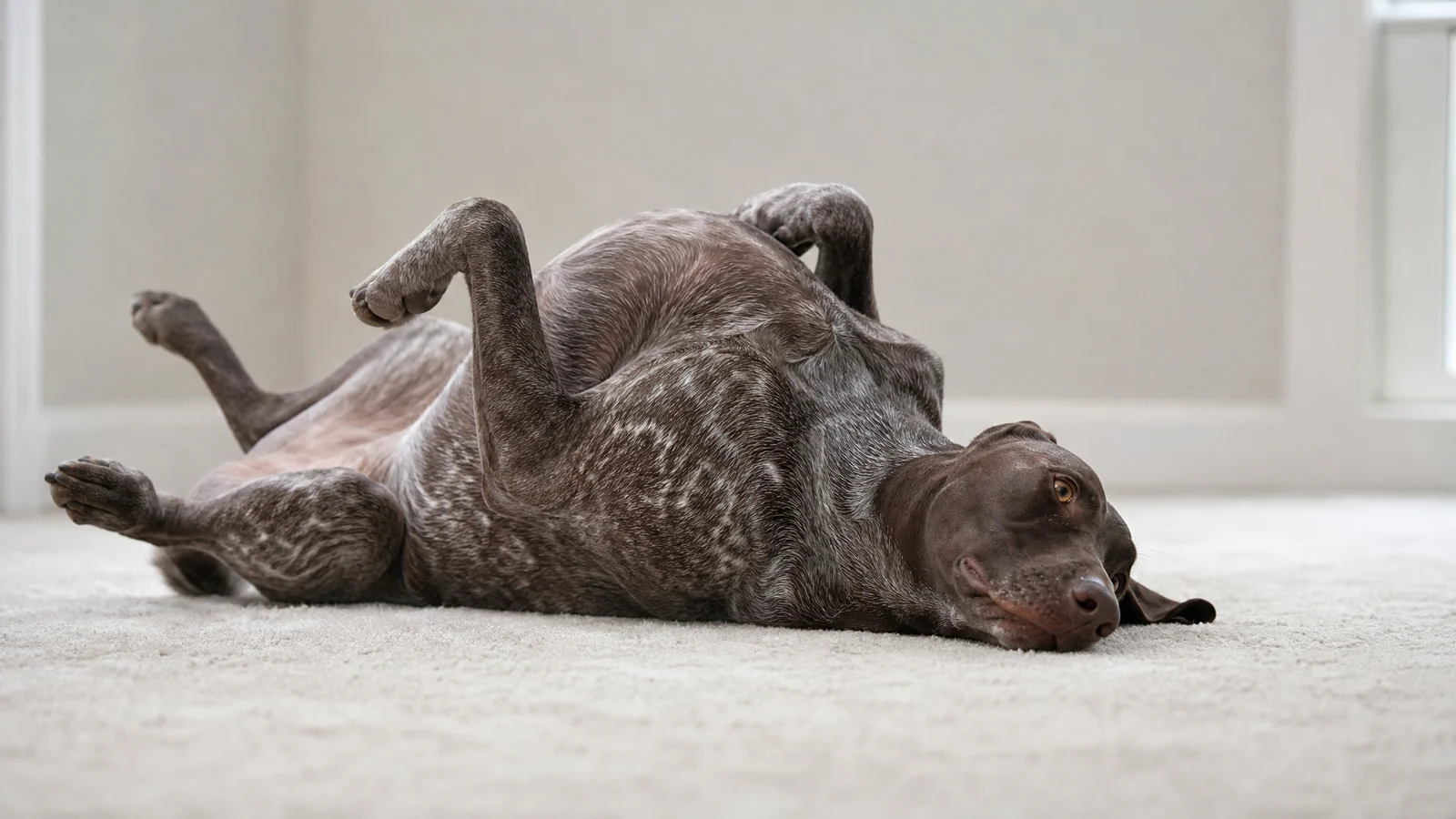 Exercise and jobsHow to Teach a German Shorthaired Pointer to Roll Over
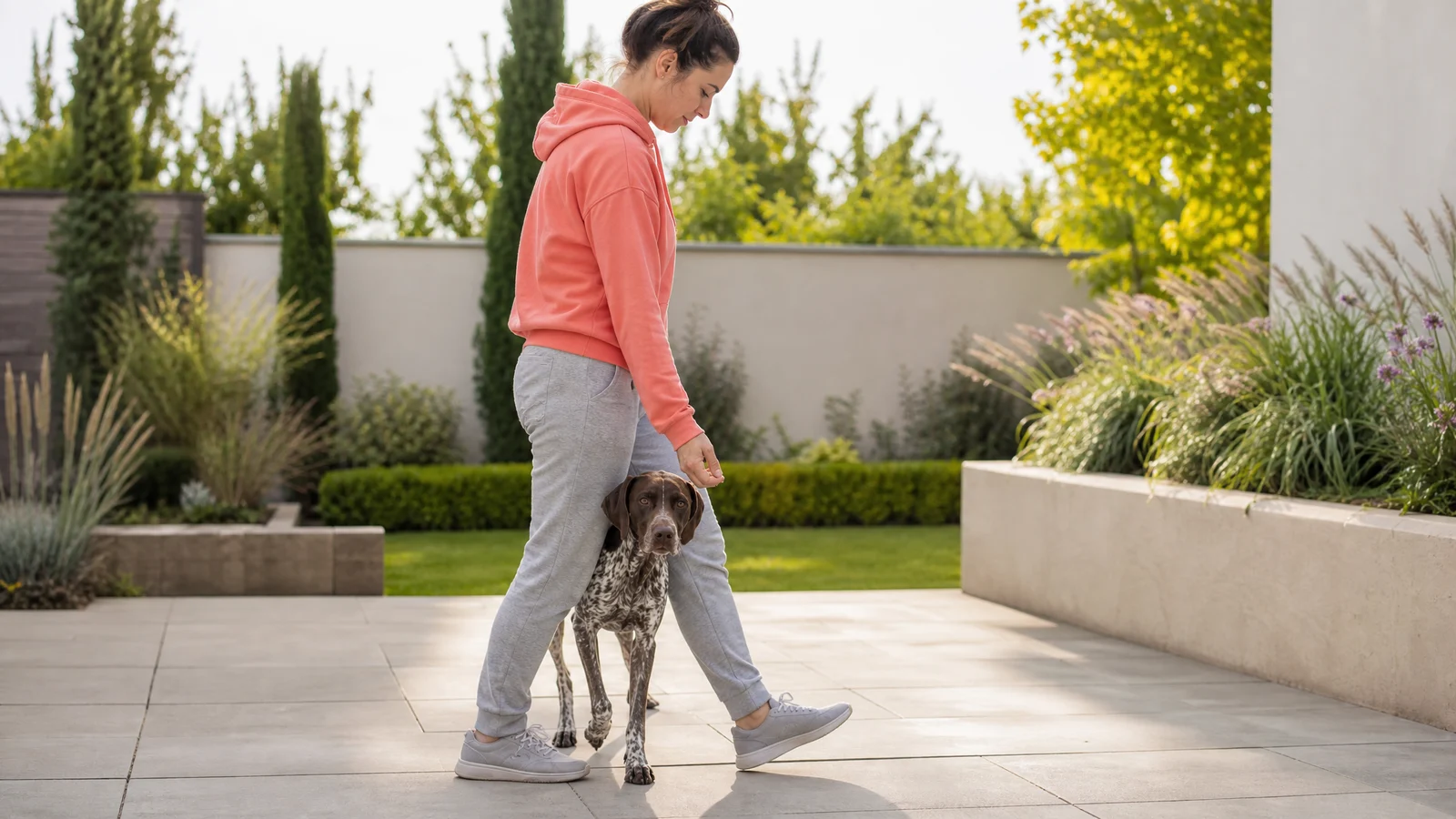 Exercise and jobsHow to Teach a German Shorthaired Pointer to Weave Through Your Legs
