 GSP
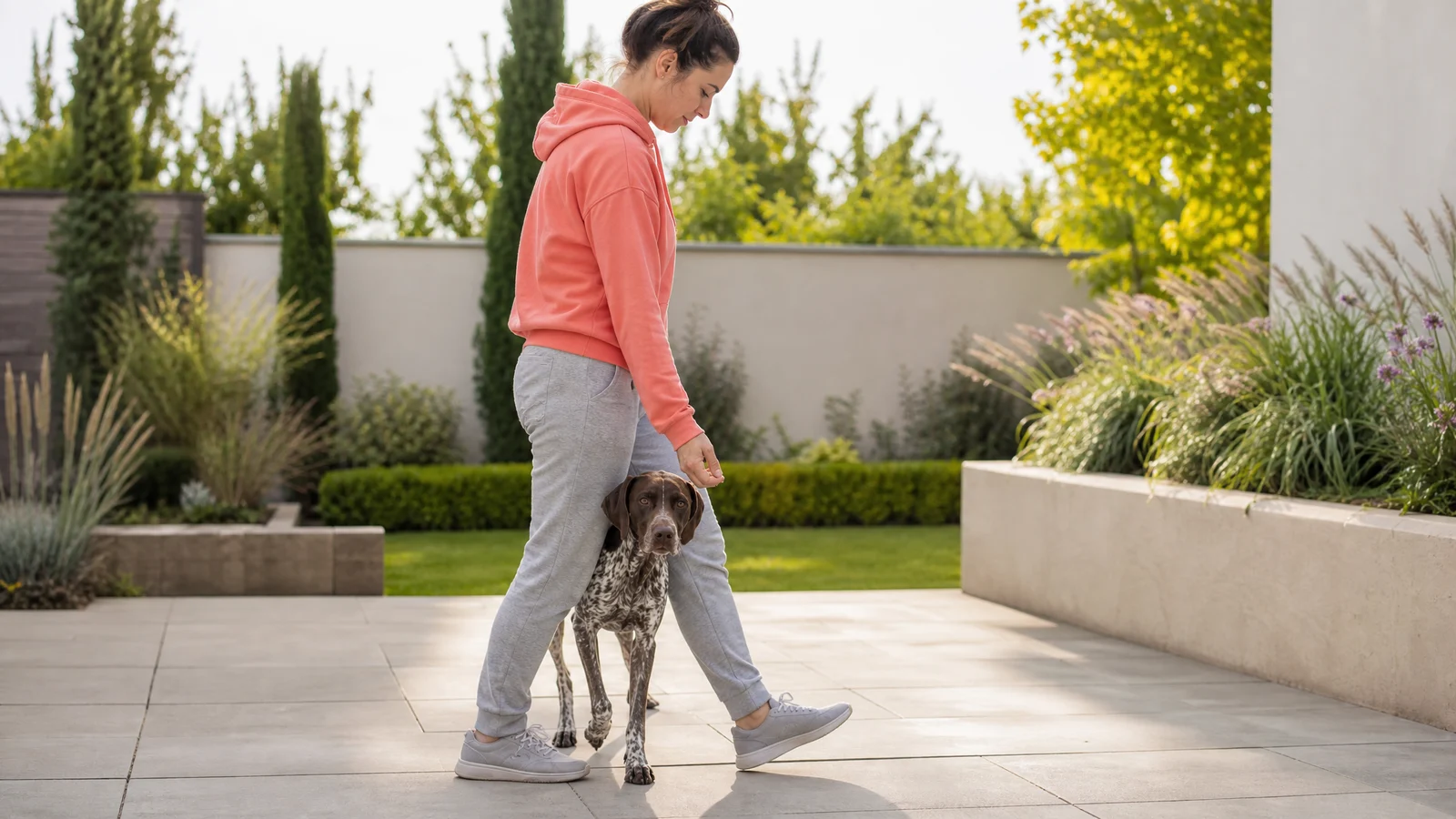
A German Shorthaired Pointer with energy to spare can spend some of it, body and brain together, on a living-room floor with nothing but a handful of treats and your own two legs. The leg weave is that kind of trick, and it is easier to teach than it looks.
The finished move is a figure 8: your dog passes between your legs, circles one leg, returns to the front, then circles the other. You'll find every stage here, from the very first step through the gap to the spoken cue and the first walking version, plus what to do when your dog stalls along the way. It needs no equipment, no leash and no fenced yard.
What a Leg Weave Asks of Your German Shorthaired Pointer
The easy part belongs to your dog, since a GSP already follows food wherever you carry it. The work is on your side, so set up before the first treat comes out. Pick the quietest room, because you'll probably want to start training your dog indoors and move outdoors once they've mastered the tricks. Choose a floor with good grip, such as a rug over a smooth surface, and clear the furniture from both sides. Leave the leash off so it cannot loop around an ankle.
Then find your stance. Stand with your feet wider than feels natural and your knees soft enough to bend.
A GSP is a medium-sized dog with long legs, and a narrow gap makes them duck or shove through, which turns the whole trick into a crowded squeeze. If your dog brushes your legs on the way through, widen your stance before you change anything else. Keep a small pile of tiny, soft treats within reach, and decide on one marker, either a clicker or a short word like "Yes."
Teaching the Weave Trick in Four Small Stages
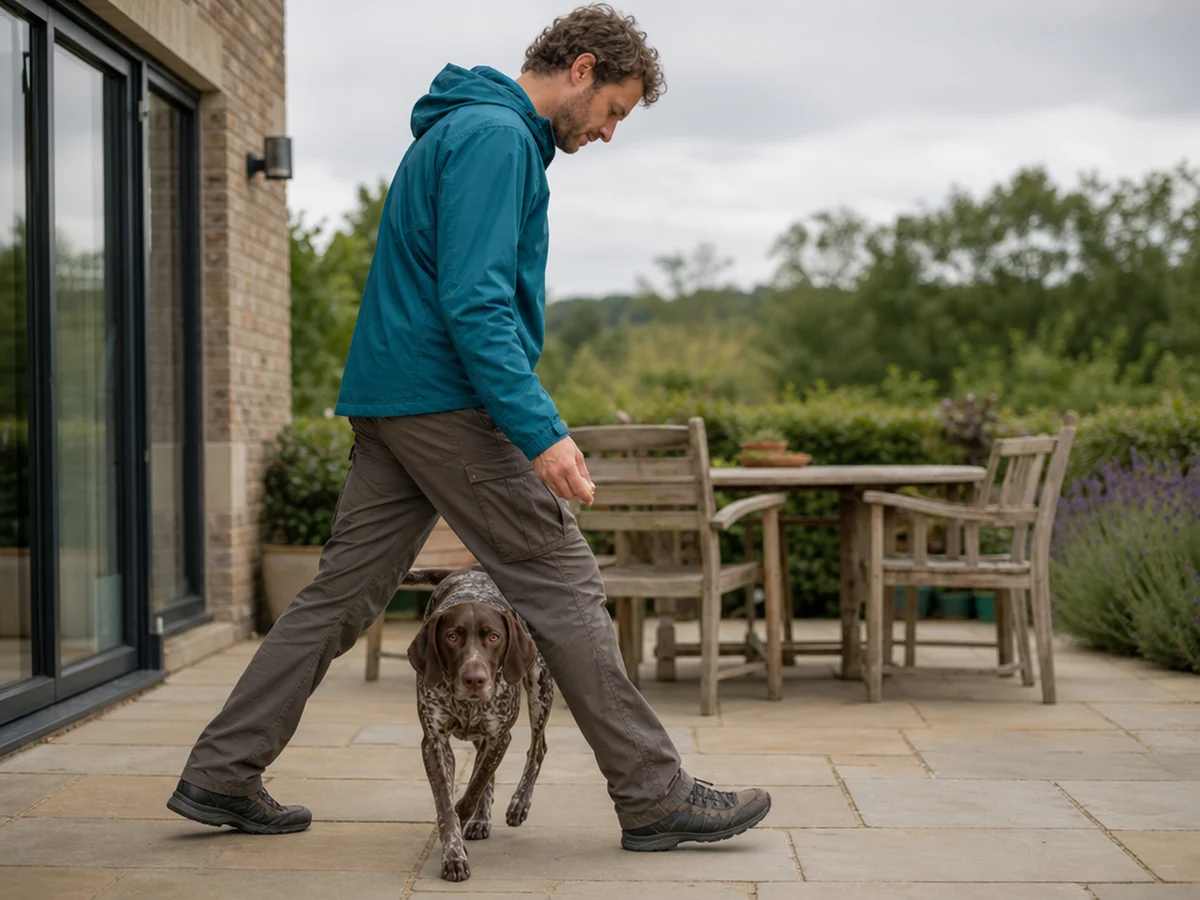
With the room ready, the weave comes together in four short stages, each one a small step from the last. Move on only when your dog does the current stage smoothly several times in a row, because a shaky stage becomes a stall at the next one.
Reward at the Gap
The first stage teaches one thing: the space between your legs is a good place to be. Work through it like this.
- Stand with your legs wide and your dog in front of you, facing you, with a treat in your right hand held behind your legs.
- Bend your knees a little and drop your treat hand down into the space between your legs, so your dog's nose follows it from behind rather than from the front.
- The moment your dog has walked through, mark and let them nibble the treat from your hand.
- Let your dog step back out to the front and start again.
Pay only for getting through the gap, nothing more. If your GSP stops at the edge, mark and pay for a step toward the gap, then a step into it, and ask for the full pass later. Move on when your dog walks through willingly and without a pause.
One Full Circle on the Right
Now the treat hand asks for a little more, and the payment moves further along the route. Each pass should still feel like an easy win to your dog before you ask for more.
- Lure your dog through the gap as before, but keep the treat moving and bring your hand around the outside of your right leg to the front of your body.
- Let your dog nibble as they follow, then mark and pay once they are standing in front of you again.
- Each time, lure a little further around before you mark, until you pay only when your dog has gone all the way around your right leg and stopped in front of you.
If your dog cuts back through the gap instead of circling, your hand is probably too close to your body or moving too fast. Slow it down and keep it near the outside of your leg so there is a clear path to follow.
Mirroring It on the Left
The left side is the same lesson with the other hand, and it usually goes faster than the right because your dog already knows the idea. Hold the treat in your left hand, lure through the gap and around your left leg, and pay when your dog arrives in front of you.
Expect a moment of confusion, since your dog may drift to the right out of habit. Go back to a simple pass through the gap on this side, then rebuild the circle in small steps. Move on when both sides look easy.
Figure 8 Around Both Legs
Both sides work, so you can now ask for the whole pattern with the treat doing the steering. This is the stage that looks like a trick, so keep your stance wide and your hands slow.
- Lure your dog through the gap and around your right leg using your right hand, but do not mark yet.
- As your dog comes back to the front, switch to your left hand and send them through the gap and around your left leg.
- Mark and pay when your dog is standing in front of you, having completed both loops.
At first, pay after each loop as the hands switch, then wait until the second loop is finished. Your dog is now weaving, but only because food is leading the way, and the next stage takes care of that.
Fading the Treat and Putting a Word on the Weave
A figure 8 that only works with food in your hand is not finished, because the treat is still doing the steering. Start by leading with an empty hand and paying from your other hand once your dog completes the loop. Keep the same hand paths, so the only thing that changes is what is in the leading hand.
When your dog follows your empty hands around both legs, add the word. Say "weave" once, just before you start to move, and guide the pattern as before.
Repeating the word while your dog hesitates only teaches them to wait for it, so say it once and give them time. Over many sessions, make your hand movements smaller, until your bent knees and open legs are the whole signal. Our sports and jobs for a GSP guide shows where a trick like this can lead if you want more.
Once the standing weave holds, try a walking version. Take large, slow steps as you cue the weave, and bring the treat lure back for a few passes, since adding movement makes the trick new again. As your dog gains confidence, phase the lure out and let your steps get smaller and quicker.
When Your German Shorthaired Pointer Stalls on the Weave
Even a willing dog hits a snag somewhere in these stages, and the snag usually tells you which stage needs another visit. These are the four we see most often, with the fix for each.
- Hesitating at the gap: Widen your stance, then return to the first stage and pay for any step toward the opening.
- Takes the treat and leaves. Hold the treat in your hand until your dog has finished the route, and pay while they are in position, not as they wander off.
- Jumping at your hand usually means it is too high or too fast, so keep it low and slow near the floor.
- Skipping One Leg: Go back to teaching that side alone, and try exaggerating your knee bend on the weaker side.
In our experience, a stall almost always traces back to the stage before it, so go back one step instead of pushing on. Skipping ahead only builds the next stage on top of a shaky one.
Weaving also asks a dog to bend and turn in a tight space, and Battersea's weave guide points owners of dogs with joint pain, or any medical issues which might make this type of weaving movement uncomfortable, toward other tricks. Regular vet visits are the place to raise it if your GSP seems stiff or reluctant to turn, and the weave can wait until you have an answer.
Quick Answers on Weave Footwork and Timing
Three practical details remain once the stages are working: which foot leads the walking version, whether a nose touch can do the luring and when to pay. Each answer below is short, because each one only adjusts a stage you already know.
Which foot do I step with first?
Start the walking weave with your right foot. Because your dog likely heels on your left side, a left step is a cue to heel beside you, so always beginning with the right keeps the two signals apart, just as in AKC's leg weave lesson.
Can a nose touch do the luring?
Yes, if your GSP already knows to touch your hand with their nose. Hold your open hand where the treat would be and mark the touch as your dog passes through. Use it for the first stage if your dog feels unsure about walking between your legs, then build the circles one at a time as before.
Do I pay after every loop?
Early on, yes, because each loop is new. As the pattern becomes familiar, wait until the full figure 8 is finished before you mark and pay. Never make your dog wait so long that they drift away, and if they do, shorten the gap between payments again.
Why the Weave Rewards a Slow Pace
A leg weave rewards going slowly, which is worth noticing in a dog with this much energy. Everything that made yours work was unhurried: a hand that moved at a walking pace, a gap that stayed open and a payment that waited for the loop to finish.
On a day when a long run is not possible, try a few loops alongside a few nose-down sniff walks. The dog who bounces through the front door learns to thread past your ankles on purpose, and that deliberate pace is the real lesson.
Our e-book is yours to keep after a quick sign-up. It carries your GSP's training well beyond the weave, one clear lesson at a time.
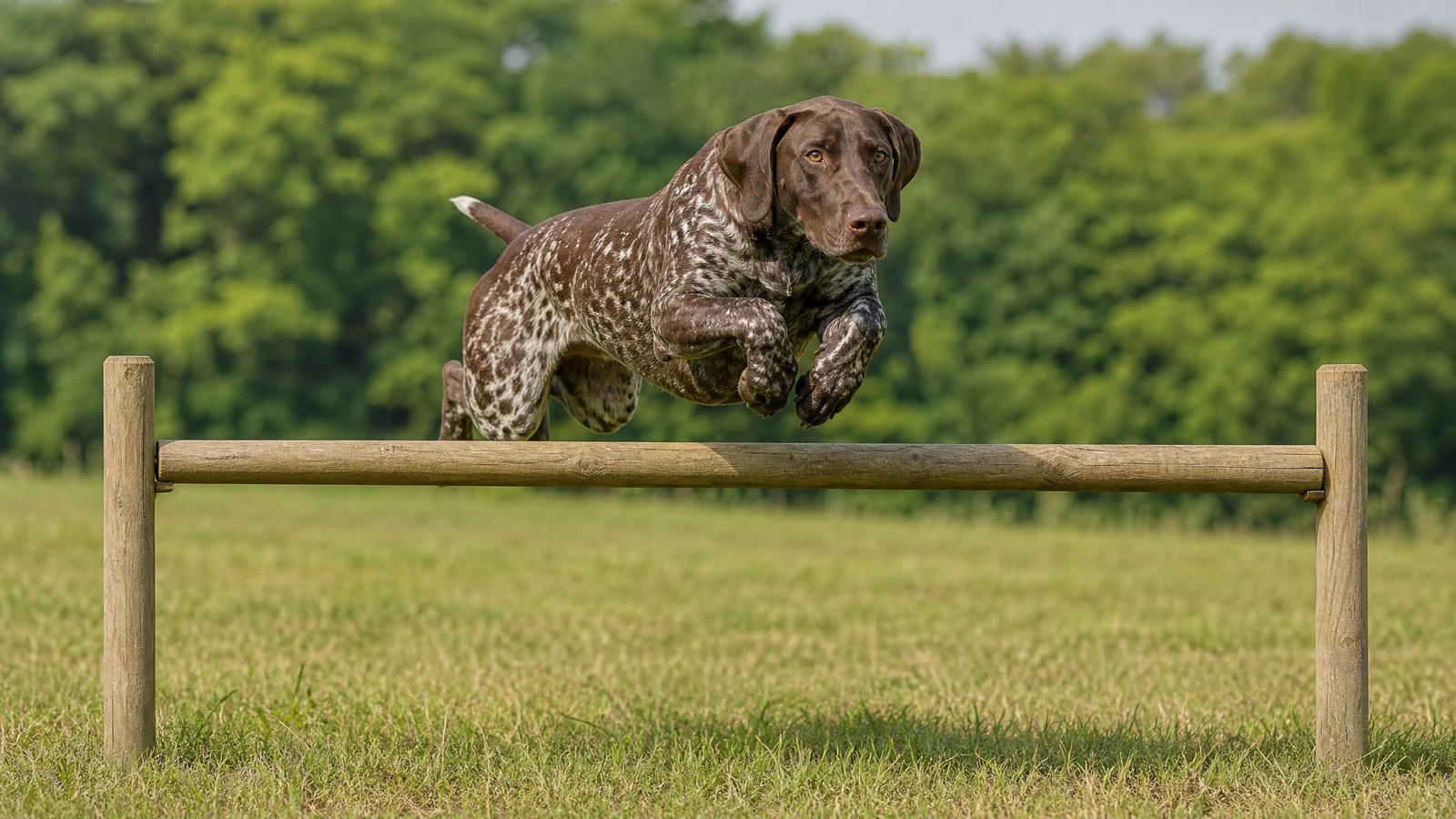 Exercise and jobsHow to Teach a German Shorthaired Pointer to Jump Over Obstacles
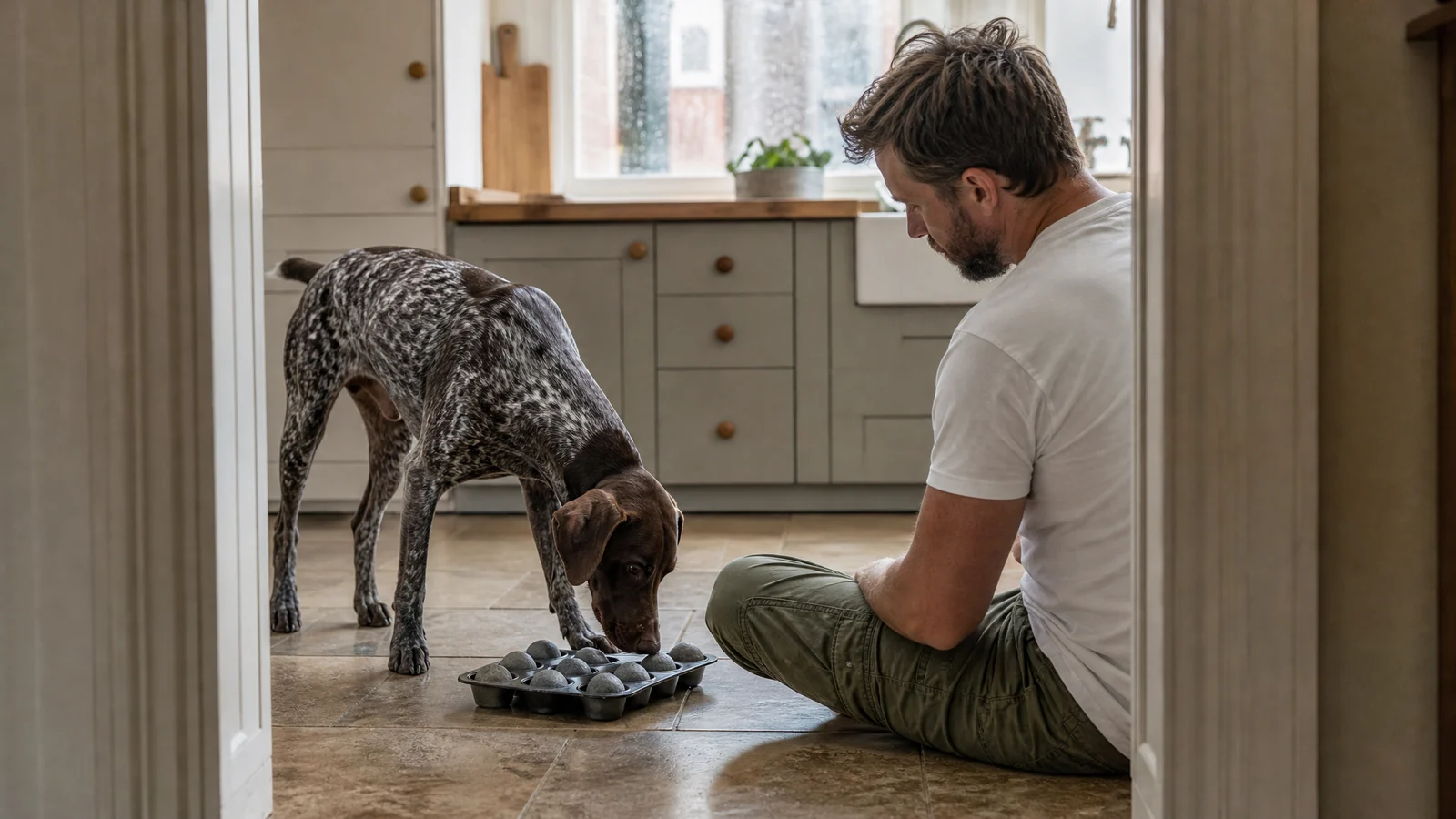 Exercise and jobsIndoor Activities and Brain Games for a German Shorthaired Pointer
 Training basicsAre German Shorthaired Pointers Easy to Train? Smart or Stubborn
