 GSP
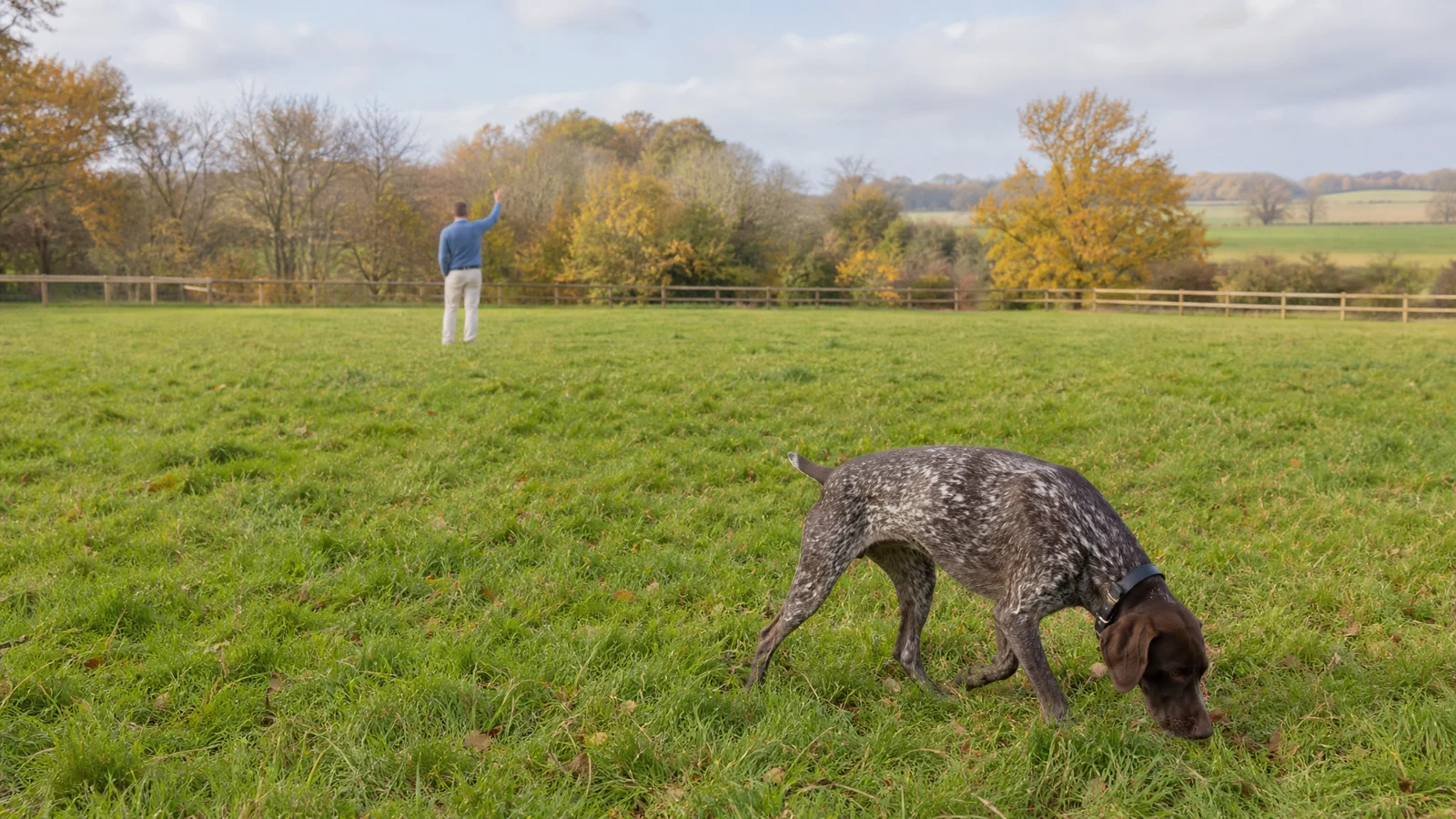
Nobody calls a German Shorthaired Pointer lazy. The complaint, when it comes, is that all that effort seems aimed at everything except you, and tired owners reach for the word stubborn.
Our answer is more useful than a label. A GSP is a quick, eager learner who is easy to teach and not always easy to keep listening, because so much of the world competes for a mind and body this energetic. This page sorts out what easy really means for the breed, where keenness pulls away from you, how to make a learned cue hold and what pays well enough to win.
None of that calls for a tougher approach. It calls for better aim, from the way you pay to the places you practice.
How Trainable a German Shorthaired Pointer Really Is
Start with what easy can mean, because the word covers three different things and a GSP scores differently on each. People who call their dog stubborn are often judging the second or third and expecting the first to cover it. The table below pulls them apart.
| What easy can mean | How a GSP tends to do | What it asks of you |
|---|---|---|
| Quick to teach | Very quick, especially when sessions are consistent and the pay is good. | Short, regular sessions with clear rewards. |
| Steady to rely on | Depends on the setting: solid where little competes, shakier where the world is loud. | Practice that widens one change at a time. |
| Easy to live with while teaching | Needs a lot of exercise and plenty to think about every day. | Daily outlets, so lessons are not fighting spare energy. |
Read down the middle column and the pattern shows. A GSP rarely fails at the first row, and the trouble lives in rows two and three, which are the rows people tend to call stubborn. That is good news, since both are things you can change without changing the dog.
Why Defiant Rarely Fits the Breed
To our eye, the word defiant is the wrong tool for this breed. Certain breeds are not more defiant than others; what they often have instead is different needs, skills, intelligence and activity levels. The GSP’s energy and quick mind both sit toward the high end, so your dog does not refuse so much as get busy with something else.
Smart needs defining too. A quick mind is good at learning what pays, which means a GSP learns fast from you and just as fast from everything else in the day.
Intelligence is the engine, and what it learns depends on what gets rewarded. The upside deserves saying too. A GSP bonds firmly to their family, and a dog who wants to be with you has a built-in reason to work with you. Quick learning plus that bond is a strong start, and the rest of this page is about not wasting it.
So the plain answer is yes, a GSP is easy to train, and smart in a way that cuts both ways. What decides how easy it feels is how much of the day you have thought through, not only the short session with a treat pouch in your hand. Decide what the ordinary moments should pay, and the quick mind that looked stubborn goes to work on your side.
When a Keen GSP Drifts Instead of Digging In
The middle row of that table is where most of the frustration lives, and it takes two shapes. A truly stubborn dog digs in, planting or stalling or turning away from the work itself. A keen GSP rarely does that, and what we see instead is drift or overshoot.
Drifting Toward Everything Else
Drift is attention leaving without any argument. The head turns toward a scent, a jogger or a bird overhead, and your cue goes unanswered because your dog has been captured by something else.
A GSP carries very high energy and a strong prey drive, so movement and smell win attention quickly, especially outdoors. A couple of owners report a GSP who is independent around distractions such as wildlife and needs ongoing work on engagement and recall. That fits drift from the outside: your dog is not rejecting you, and the job is to become more interesting than the distraction. Leash work for a puller follows the same logic in a different lesson.
A useful clue is what your dog does next. A dog who has drifted often comes back to you once the pull of the scent or movement eases, while a dog who is truly digging in keeps declining even in a quiet room with a good reward on offer. If you see the first pattern, change the setting or the pay, and if you see the second, make the lesson itself clearer and easier.
Overshooting the Cue
Overshoot is the opposite problem, and it is easy to mistake for naughtiness. A keen GSP who hears a cue often answers with everything they have: a leap before the sit, a bounce into the reward, a mouth on your hand or an extra trick nobody asked for. That is effort without aim, not refusal.
The fix starts with how you pay. Deliver the reward low and calm, quickly enough that it lands while your dog is still in position, and wait for a settled answer before the next ask. When an eager dog’s best guess keeps getting paid, the guess becomes the habit, which is why teaching a GSP not to jump spends so much time on what gets rewarded.
Training a Quick Learner So the Cue Holds
Drift and overshoot say the same thing in different accents: the cue was learned in one place and has not yet been made to hold in others. Making it hold is slow, plain work, and a quick learner tempts you to skip it because the first results arrive so fast.
Treat each of these steps as its own small win before you move to the next, since each one is a chance for your GSP to be right. When one step falls apart, make it smaller and let your dog win again before you ask for more.
- Teach the cue where little else is happening, and pay for the first clean answer so your GSP learns what the word means before anything competes with it.
- Change one thing at a time, a new room, then a new person, then a little more distance, so that when a step goes wrong you know which change caused it.
- Keep early sessions short and end while your GSP is still eager, so the lesson stays something they want more of.
- Add the real world last: a quiet street before a busy one, a friend standing still before a friend arriving, an empty field before a field with other dogs.
- Keep paying the easy answers too, because a cue that stops earning anything is the first one a clever dog stops bothering with.
Every step changes one thing and keeps the rest easy. That is why a quick learner can move through the early steps fast and still need far longer on the last one, and why skipping ahead is the most common way a smart dog ends up labeled stubborn.
Why Teen Months Look Like Forgetting
A young GSP who answered every cue may start ignoring the same cues in the teenage months, and it is tempting to read that as attitude. Adolescent puppies in general are often more impulsive than adults and may overreact to situations, and their hormones and limited self-control may make well-known skills seem to “forget.”
The skill has not gone anywhere, so ask for it where it is easy, pay well and widen the setting again a little at a time. Our guide to steady teen-month training covers that stretch in full. A regular vet visit is also worth keeping on the calendar, so a sudden change in how your GSP answers cues can be mentioned to someone who can check on it.
What Rewards Keep a Smart GSP Learning
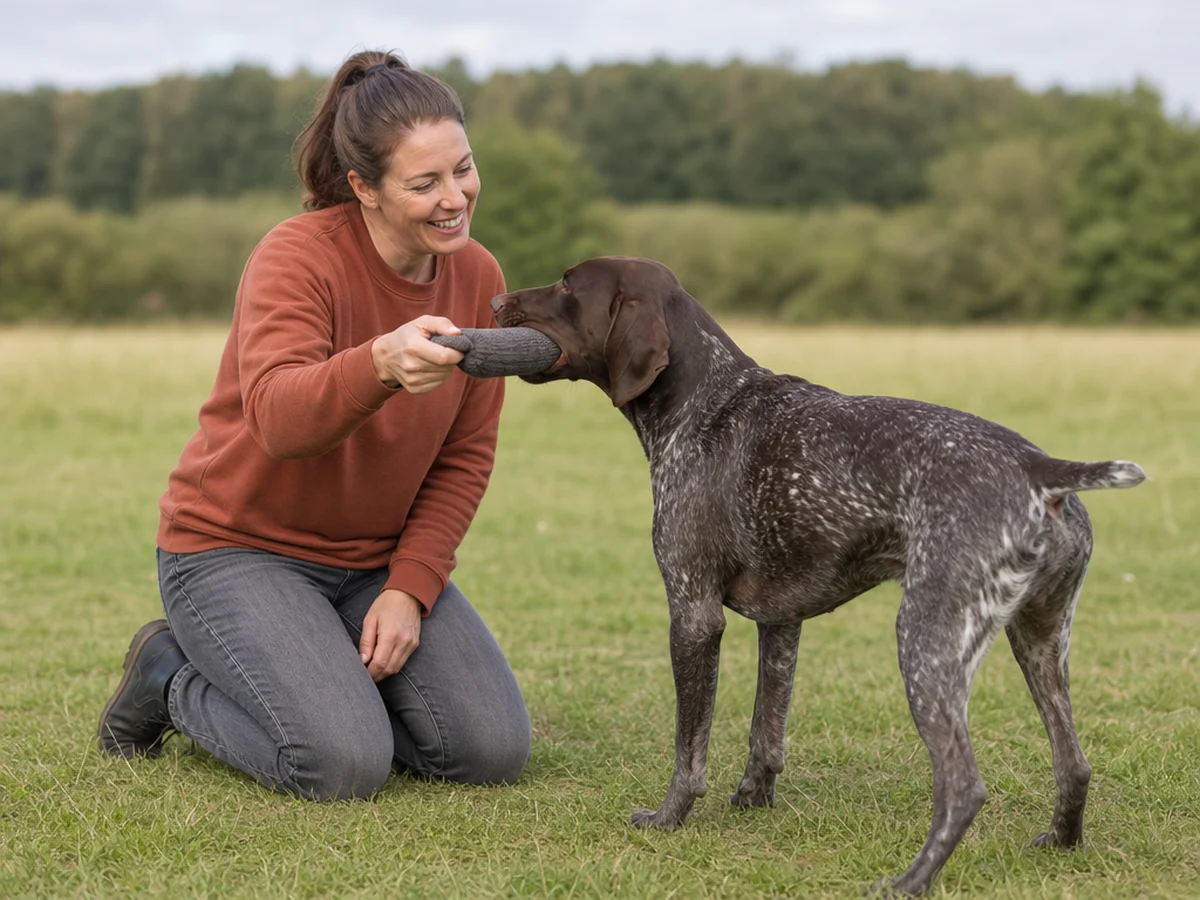
Everything in that list leans on the pay, and a quick learner is a fair judge of whether your offer is worth the trouble. Reward value is not fixed, either: the same piece of food that holds your dog in the hallway can lose to a scent trail in the park. Motivation has a daily-supply side as well. A dog with this much energy and this quick a mind needs regular things to do, and a GSP whose day holds little to work at will treat your cue as one more interruption.
The Animal Humane Society’s training tips suggest lower-value rewards for low-distraction places such as inside your home and high-value rewards for high-distraction places such as walks outside. So the pay climbs with the noise level, and that is a decision to make before you leave the house, not after your dog has drifted.
A Menu Instead of One Treat
Food is the obvious currency, and a GSP has plenty of others. Because the breed is so physical and so people-minded, the best pay often comes from things your dog already wants during the day:
- A release to move, such as permission to bound ahead after a calm stretch of leash walking or a chase after a thrown toy, can outbid a biscuit for a keyed-up dog.
- A turn at sniffing after the cue turns the very thing that distracts your dog into the thing they earn by listening.
- A short game of fetch or play with you suits a dog who is happiest with plenty of play time and loving attention from their owner.
- Small, soft treats keep sessions moving and are best saved for the places where the competition is toughest.
- Praise is a welcome extra and works best added to the others, rather than asked to outbid a loud setting alone.
Rotate a few of these so no single reward goes stale, and keep the best for the cue you care about most. Sports and jobs for a GSP give the same idea a bigger stage once your cues hold.
Training Puzzles in a Bright Dog’s Week
A quick learner makes small habits matter more, because whatever happens a few times starts to look like a rule. These three questions all grow from that, and each one is about reading what your GSP has already worked out.
Why does training swing from day to day?
A GSP’s answers move with energy, setting and what came before the session, so a good Tuesday and a poor Wednesday usually say more about the day than about what your dog knows. Check the exercise and rest beforehand, how loud the setting was and how good the pay was, then shrink the ask to something easy to finish well. If a dip lasts or arrives with other changes, mention it at your next vet visit.
Can I teach more than one cue at once?
Yes, in separate short sessions, and a quick learner can usually handle that. What trips people up is mixing two brand-new cues inside one session, because an eager dog starts guessing between them and the guessing gets paid by accident. End one cue on a clean answer, take a break and start the next.
Why does my GSP know words I never taught?
Dogs link events that keep happening together, and a quick dog files away whatever reliably comes before something that matters, like the word walk before the leash comes down. A couple of owners describe GSPs who pick up words nobody meant to teach, which is the same skill that makes them quick in lessons. Use it on purpose by saying the word you mean right before the thing happens, every time.
A German Shorthaired Pointer Studies Every Day
That is the part of the smart-or-stubborn question that tends to get left out. A quick mind does not clock out between lessons, so your GSP is learning from the walk that ends early when they pull, the greeting that earns attention when they jump and the whine that brings a snack. None of it was planned, and all of it counts as practice.
Spotting the small lessons is most of the work with a bright dog, and our e-book, free to anyone who asks for it here, covers all of your GSP's training in detail while keeping every explanation simple.
 Training basicsAre German Shorthaired Pointers Good With Kids?
 Training basicsHow to Choose a German Shorthaired Pointer Trainer
 Training basicsGerman Shorthaired Pointer Temperament and Trainability
