 GSP
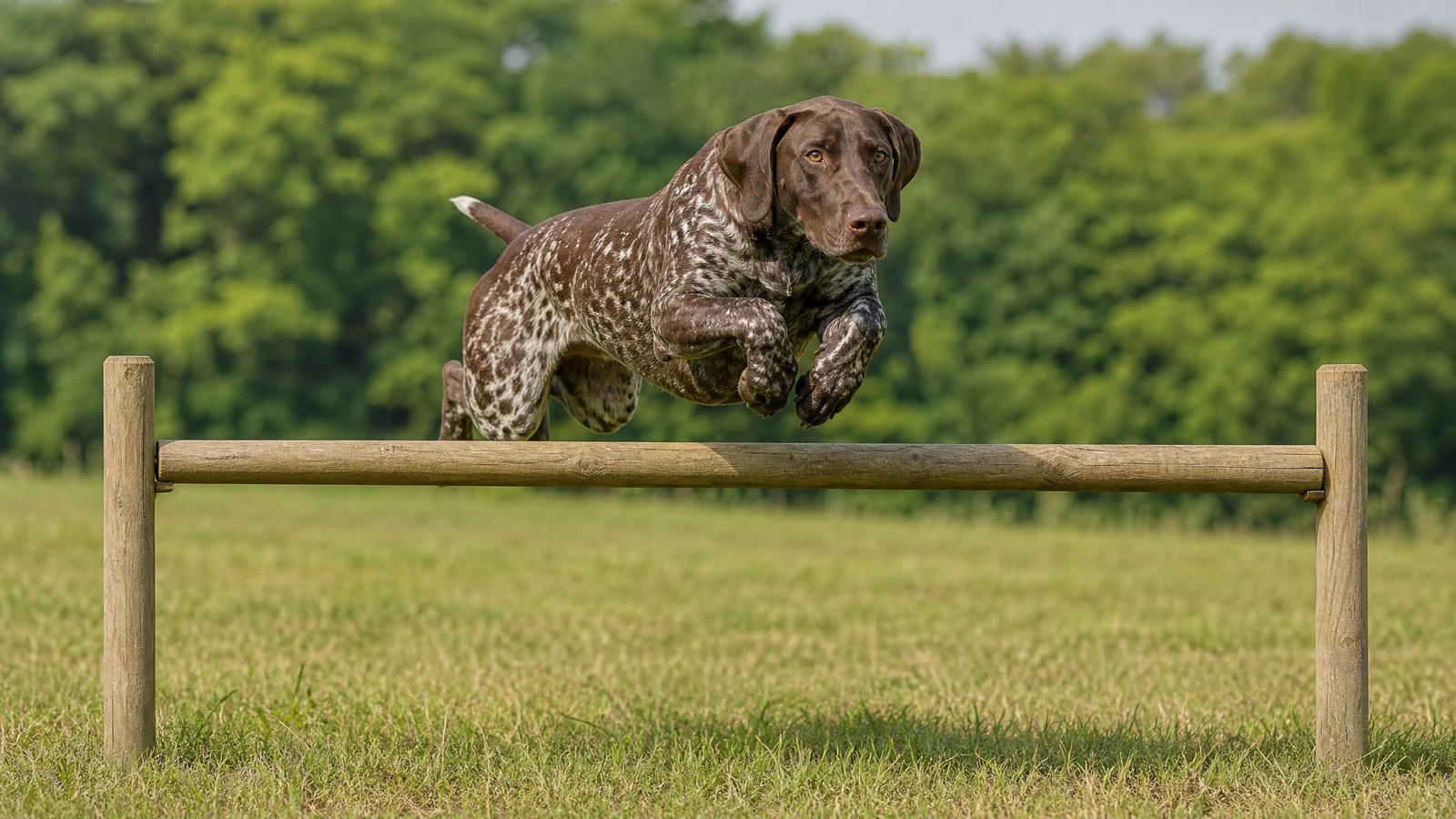
Your German Shorthaired Pointer probably does not need help finding the spring to jump. What they need from you is a version that is low, calm and paid for, so all that push goes into a lesson instead of onto whatever is nearby.
That version is a step or a hop over a pole set barely off the floor, with a treat waiting on the far side and, later, a word that starts the whole thing. It is not a height contest. GSPs learn quickly and love a job, so the real risk is moving faster than their bodies are ready for, not slower than their minds.
Some dogs should wait on the raised stages altogether, and the first section says which ones. Read on for a setup that forgives mistakes and a method that moves in five small stages.
A Jump Your German Shorthaired Pointer Can Land Safely
Who should wait comes first, and the finished skill decides it. In this lesson, a jump means your dog crosses a low pole on a word, lands without a scramble and walks on to a treat, so everything about the pole, the footing and the order of the stages protects that landing.
Why Agility Jump Heights Do Not Apply
A GSP is athletic enough that it is tempting to find out how high they can go, and that is exactly the wrong question for a training lesson. There is no height to aim for here. The lesson is finished when your dog crosses a low pole on a word and walks on calmly, however much more they could clear.
Taking height out of the goal removes most of the risk, though not all of it. What is left depends on your dog's age and body, and that is the next thing to check.
Dogs Who Should Skip the Raised Stages
A GSP who is still growing should stay on the floor stages. The PDSA recommends that dogs don't jump until fully grown, usually around a year to eighteen months, and suggests discussing any medical concerns with a vet before starting any training.
Regular vet visits are the right place to ask whether your dog's age and build suit the raised stages. A dog who seems sore or reluctant to jump skips the pole until your vet says otherwise, and a puppy or teenager can still enjoy the floor stages while the rest of training stays steady, as our teen-months training guide explains.
Building a Jump Pole That Forgives Mistakes
A dog who is ready for this lesson still needs a setup that forgives a clumsy first week. The simplest is a broomstick or similar pole balanced between two low objects, like stacks of books or flower pots, so it falls if your dog clips it. Keep the surface from being slippery and the height low, at a walking level for growing puppies, because what a dog can clear and what they should clear are different questions.
Four Checks Before the First Treat
Before the first treat comes out, check the room against the list below, because a setup that suits you at a glance is also one your dog can read without confusion. Each item removes one way for a keen dog to get hurt or confused.
- Clear landing space. Leave several feet past the pole with nothing on the floor, so your dog can land and walk on without swerving around a chair leg.
- Footing That Grips: A rug pinned flat or a mat beats polished wood or tile, and your own shoes should grip well enough that you never skid mid-lure.
- A pole that gives way by falling off its supports teaches your dog that touching it costs nothing, so there is nothing to fear and nothing to avoid.
- Small, soft treats: Pieces your dog can swallow in a moment keep the session moving, and a marker word you have agreed on, such as yes, tells your dog exactly when the treat is coming.
If any of these is missing, fix it before your dog arrives, because retraining around a slip or a clatter takes far longer than setting up properly. A pole that rolls or a floor that skids can cost a keen dog their confidence in the whole game, so keep sessions short and stop while your dog still wants more.
How to Teach a German Shorthaired Pointer to Jump on Command
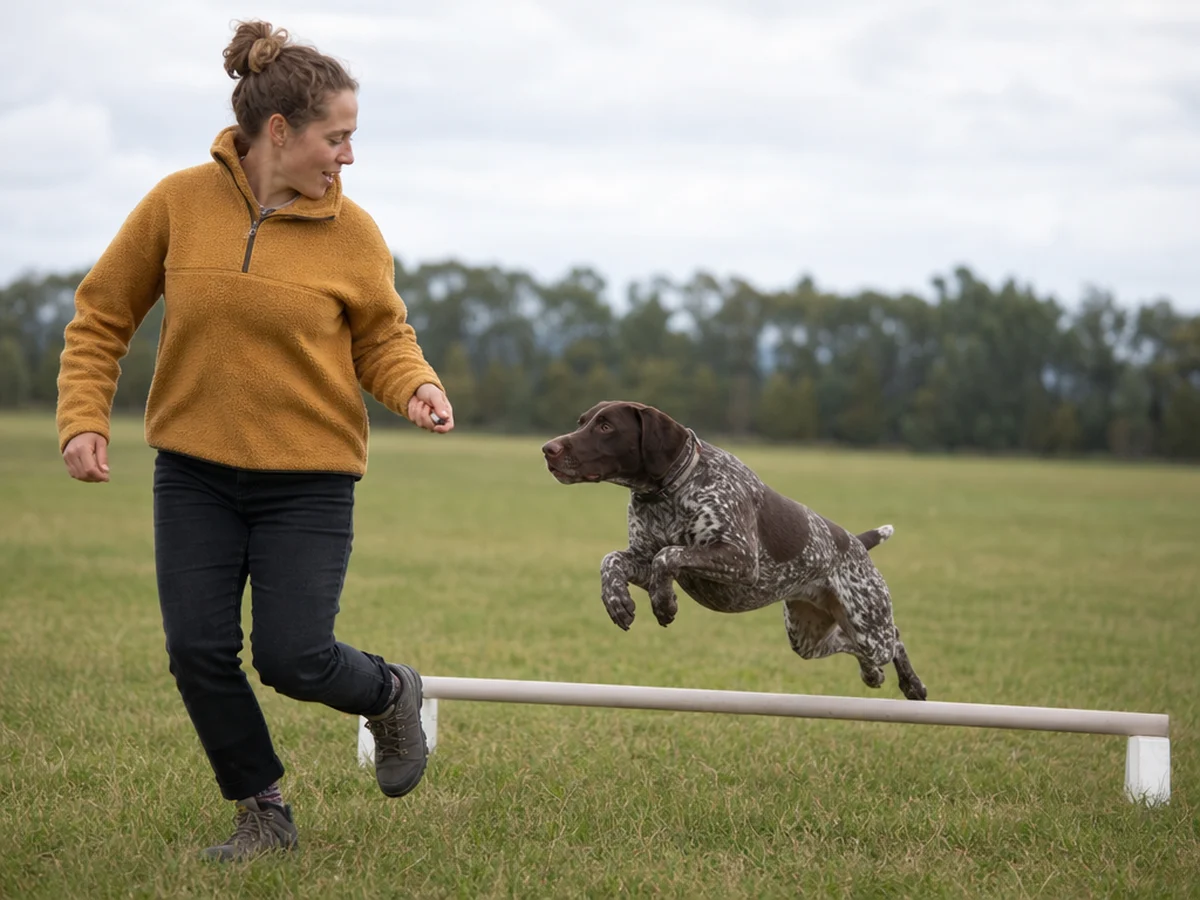
With the pole and the room ready, the lesson itself moves in five stages, and each one ends with a plain test so you know when to go on. Start in a quiet space, keep treats small and say your marker word the instant your dog's feet land beyond the pole, then hand over the treat right there.
Walking Over a Pole on the Floor
Stage one has no jump in it at all. The pole lies flat and your dog simply steps over it to reach a treat, which keeps the first reps easy and makes the pole a boring, harmless thing. Work through the steps below in a quiet room.
- Lay the pole flat across a hallway or between two pieces of heavy furniture, so walking around it is not an option.
- Stand at one end with a treat at your dog's nose, say nothing, and slowly draw the treat along a line over the pole so your dog follows it with their nose.
- The moment all four feet are beyond the pole, say your marker word and give the treat there, on the far side.
- Move on when your dog crosses smoothly several times in a row without stopping to sniff or inspect the pole.
If your dog does stop to inspect the pole, pause, let them look and then draw the treat along again, a little slower this time. GSPs are keen, so move your hand slowly enough that their nose stays on the treat the whole way.
Moving the Treat to the Far Side
Once the crossing is smooth, stop leading your dog's nose. Show the treat on the far side of the pole, or place it there, and let your dog choose the route over, then mark as the feet land and pay right where the treat waits.
That small shift matters because a dog who only follows your hand has learned to follow a hand, while a dog who heads for the far side has learned that the pole is the way there. If your dog stalls and stares at your empty hand, go back to a luring rep or two and then show the treat a little sooner. Move on when your dog heads over the pole on their own, several times in a row.
Lifting the Pole Off the Floor
Only a dog who is fully grown and cleared by your vet should go on to this stage. Everyone else can keep enjoying stage two, which is a real lesson in its own right, and the steps below wait until your dog is ready.
- Rest the pole on its two low supports so it sits just off the floor, low enough that your dog could simply walk over it.
- Use the same path as before, with the treat visible beyond the pole, and mark the moment your dog's feet land past it.
- If the pole falls, say nothing, set it back and carry on, because a calm reset shows your dog the fall was no big deal.
- Stay at this one height until the crossing looks steady and relaxed, and do not raise it, since height adds nothing to what your dog is learning.
If your dog stops short of the pole or goes around it, lower it to the floor again for a few easy reps, because a dog who stalls here is telling you the step up was too big, not that they are stubborn.
Putting a Word on the Crossing
Add the word only once your dog crosses the raised pole without hesitating. Choose one short word that cannot be mistaken for what you say when a dog leaps at a person, since our four-on-the-floor greeting lesson deals with that habit separately and the two should never blur.
Say the word just before you start the same path as before, then mark and reward the crossing. Over many sessions, use less of the hand that leads and let the word do more, until an empty hand pointing toward the far side is all you need. If your dog does not move on the word, you said it too early, so drop it for a few reps and say it only when you are sure they are about to cross.
Taking the Jump to New Places
A skill built in one room belongs only to that room until you move it. The order that works for any new skill applies here: a quiet space first, then small distractions such as toys, other pets and people, then your yard or driveway, and finally public places. Carry the same low setup each time, keep the footing safe and give your dog a moment to take in the new smells before the first rep.
If your dog falters somewhere new, you moved too far at once. Go back one place, rebuild the easy crossing there, and only then try again where it went wrong.
Questions That Follow a First Clean Jump
A clean crossing makes it tempting to change everything at once: a higher pole, a faster approach, a bigger audience. The answers below say which changes are worth making and which can wait.
Can We Raise the Pole Once It Feels Easy?
For this lesson, no. A pole just off the floor already teaches the whole skill, and extra height asks more of your dog's body without teaching the cue anything new. If you are curious about more demanding obstacles, wait until your dog is fully grown, ask your vet first and look for an instructor who trains with rewards and can watch your dog land.
What If My GSP Rushes and Leaps?
Slow down everything you control. Walk toward the pole yourself, hold the treat low and close to your dog's nose, and reward the calm, steady crossing instead of the burst. If the leaps keep coming, drop back to the floor pole for a few reps, because a dog who launches at the pole is showing enthusiasm and needs a smaller ask.
Does a Low Jump Lead to Agility Classes?
A low pole covers only a sliver of what agility asks, so treat it as a taste rather than preparation for a course. Our guide to sports and jobs for GSPs looks at what suits an athletic dog, and any instructor worth hiring will use rewards and can tell you whether your dog's build suits the equipment.
Giving Your GSP's Jump an Aim
Whatever your dog does with those answers, the lesson comes down to one thing. A GSP never needed help finding spring, and what this lesson adds is aim: a place to begin, a line to follow and a treat on the far side that tells your dog where the effort ends. The next time that spring shows up in the hallway, you have somewhere to send it.
That is why we teach the crossing in stages instead of asking for the whole leap at once, since each stage hands your dog one more piece of aim. Any other lesson on your GSP's list can be cut into stages this small, and our e-book does the same across everything else they need to learn, with a copy sent to you when you register and no payment asked.
 Exercise and jobsIndoor Activities and Brain Games for a German Shorthaired Pointer
 Training basicsAre German Shorthaired Pointers Easy to Train? Smart or Stubborn
 Training basicsAre German Shorthaired Pointers Good With Kids?
