 GSP
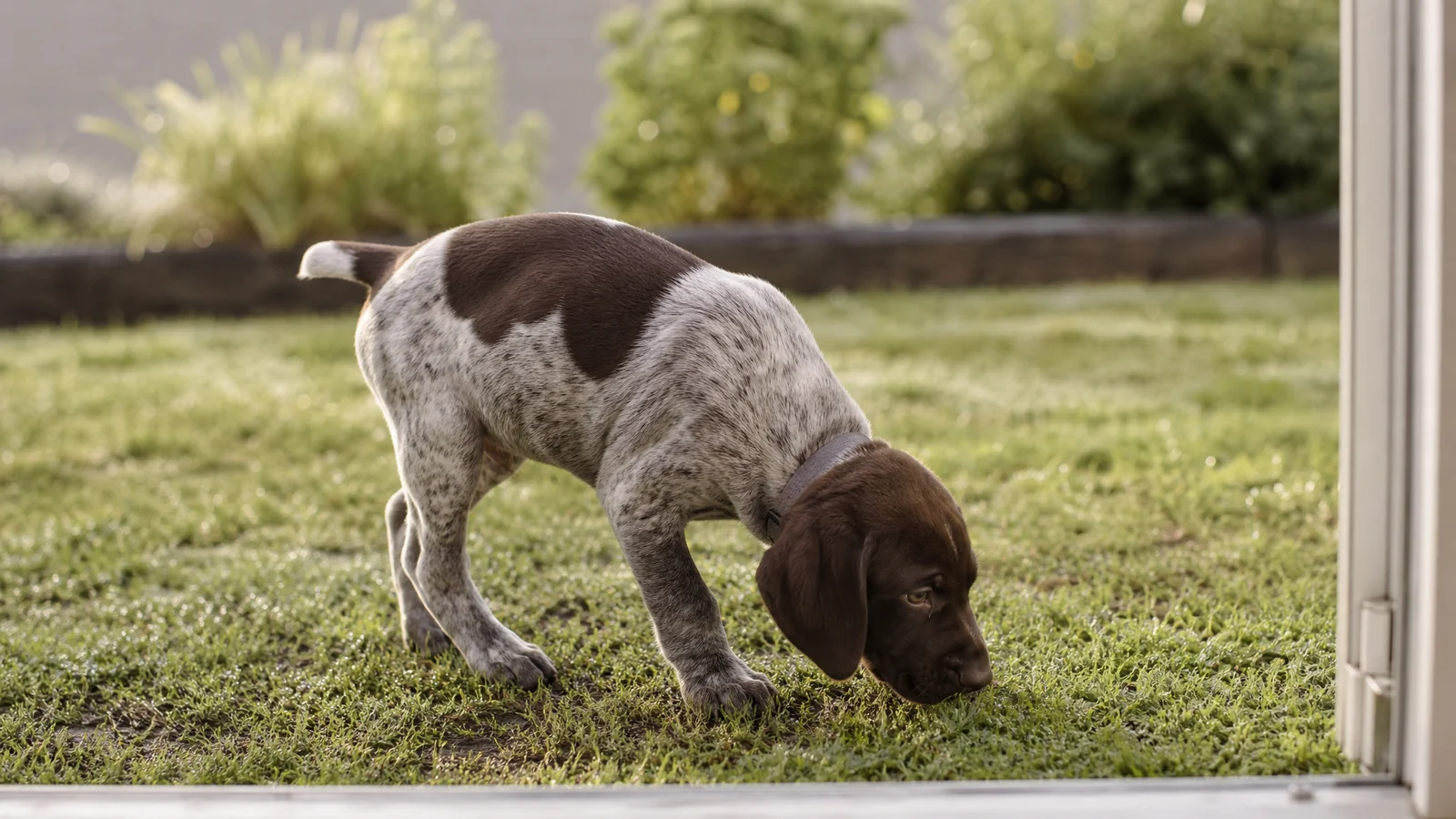
Every trip outside that ends in a treat teaches a German Shorthaired Pointer puppy something an accident on the rug never can. Housetraining comes down to getting your puppy to the right spot before the need arrives, then paying for the moment it is done.
A GSP puppy is smart and eager to please, so the habit can come together quickly once the routine is steady. But a young puppy also has a small bladder, a great deal of energy and no idea where your house ends and the yard begins. That is why the work is yours at first: the trips, the watching and the clean floor are the lessons, and your puppy mostly collects treats while the habit forms around them.
The rest of this page is the routine itself. Each stage ends with a plain test, so you know when to move on and when to stay put.
How to Housetrain a German Shorthaired Pointer Who Learns From Rewards
Before the routine makes sense, it helps to know what your puppy brings to it, and the honest answer is very little. Nothing in a young dog's head says the yard is for toileting and the kitchen is not, so they learn it the way they learn sit: from what pays, and from how often they get an easy chance to repeat it.
What This Breed Brings to It
That is good news with this breed. Two traits shape the first weeks:
- A GSP is smart, willing to please and quick to learn from anything you repeat the same way each time, which means the pattern you set in the first weeks tends to stick, for better or worse.
- The same very high energy that makes them fun also gives you a puppy who is racing around one minute and squatting the next, so trips have to follow the action and not only the clock.
What Decides the Pace
What decides the pace is less the puppy than the odds. Every trip that ends with a reward at the right spot adds a point to the right side of the ledger, and every unnoticed puddle adds one to the wrong side. Owner reports on GSPs run from a couple of days to almost a year, and the slower stories lean toward apartments and high rises, where getting outside simply takes longer. The plan below is built to tilt your odds.
A Potty Spot, a Leash and Treats Ready by the Door
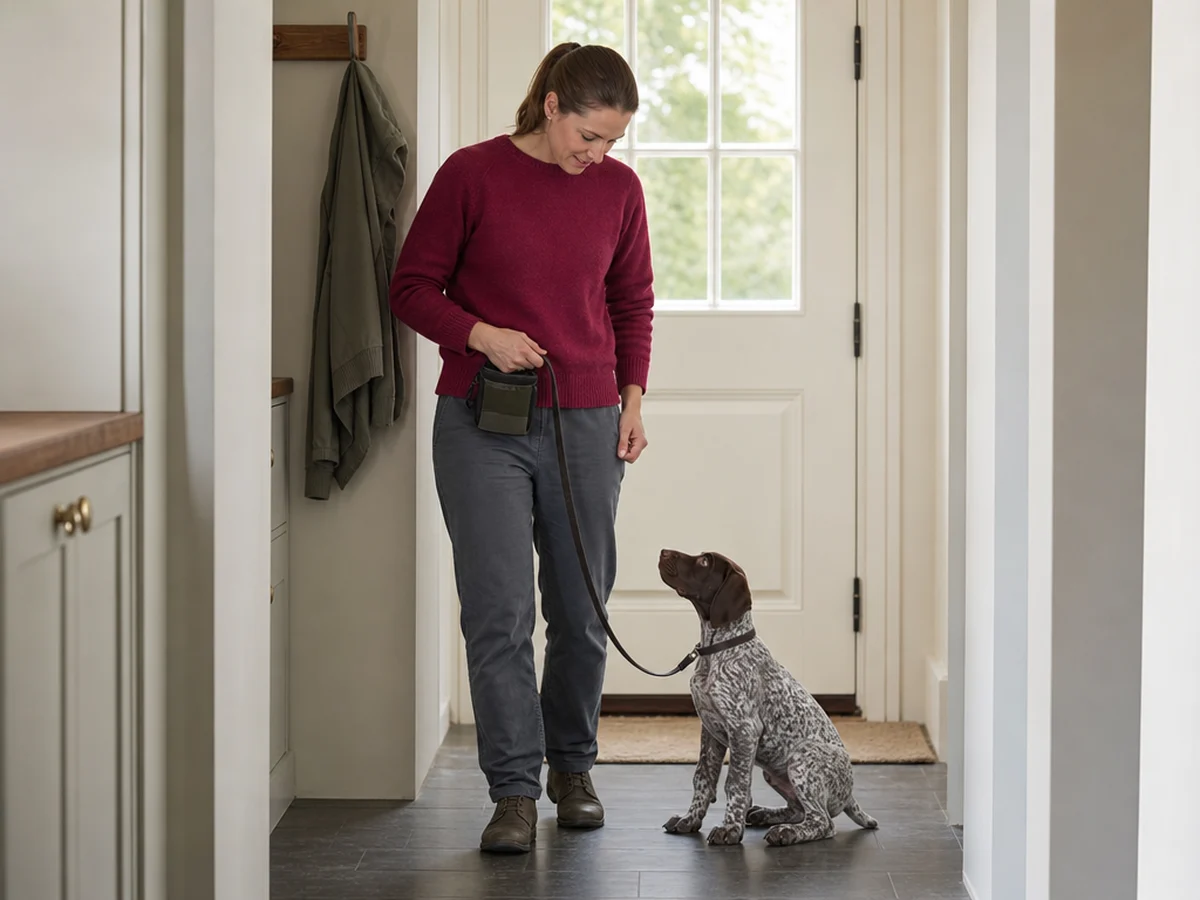
Everything in the trip depends on being ready before your puppy needs to go, so start by setting up the spot and the gear. Pick one patch of ground close to the door, easy to reach in a hurry and not the place where the big games happen, so that going there means one thing to your puppy. Keep these four things within reach of the door, so a trip never starts with a search:
- A leash by the door. Your puppy goes to the spot on a leash every time, which keeps the trip about the toilet and not about exploring the yard.
- Treats kept for this job: small, soft ones in a jar or pouch next to the leash. Because your puppy earns them nowhere else, they are worth far more at the spot.
- An enzymatic cleaner made for pet urine, because a puppy is drawn back to any place that still smells like a toilet, and ordinary household cleaners leave that smell behind.
- A gate, a pen or a crate for the hours you cannot watch, set up and ready before the first trip, so the puppy never has the run of the house by default.
Meals belong in this setup too. Feed on a schedule and not from a bowl that is always full, because a puppy who eats all day toilets all day, while set mealtimes create predictable windows you can plan trips around. Ask your veterinarian how much and how often to feed, then keep those times the same from one day to the next.
Potty Training a German Shorthaired Pointer, One Trip at a Time
With the kit by the door, one lesson matters more than any other, and it runs in the same order every time. Here is the trip from the moment your puppy needs to go until the business is done:
- Clip on the leash as soon as you spot the signs or the schedule says it is time, and carry a very young puppy if the walk to the spot is long enough for an accident on the way.
- Walk straight to the spot without detours or greetings, then stand still or shuffle in slow circles so the patch never turns into a play area.
- Stay quiet and boring. Talking, toys and eye contact all compete with the job, and a keen puppy will happily take your attention over the toilet.
- Say the cue word once, softly, as the puppy starts to go. A phrase like "go potty" becomes attached to the act and can later be used to prompt it.
- Reward the instant they finish, right there on the spot, with calm praise and several small treats handed over quickly.
- Then give the fun part. A short walk, a game or free time in the yard follows the business, never comes before it.
- If nothing happens after a few minutes, take the puppy back inside on the leash or into the gated space and try again soon, so a failed trip does not turn into playtime.
Why the Reward Lands at the Spot
Steps five and six carry most of the weight. Stay out with your puppy for the whole trip, because letting them out and closing the door is not enough: someone has to be there to hand over the reward. Once your puppy finishes, praise warmly, deliver several treats quickly and then play, which for a breed that is happiest with lots of play time and attention makes the game afterward a second reward worth waiting for.
When Your Puppy Would Rather Run Than Go
A keen, high-energy puppy often treats the trip as the start of the game, sprinting to the end of the leash instead of sniffing the spot. In our experience the fix is boring, not clever: keep the leash short, stay in the same small patch, say nothing and wait. The moment the business is done the walk or the game arrives, so your puppy learns that the fastest route to fun runs through the toilet.
When to Move On From Single Trips
Stay at this stage until trips reliably end at the spot with the business done, and your puppy heads that way with you instead of being steered there. A run of clean days is a fair sign the stage is working, while one lucky day is not. Puddles that still turn up almost always come from the hours between trips, which is where the next section picks up.
Planning Your German Shorthaired Pointer's Day Around Potty Trips
A good trip fixes only the minutes you spend outside, so the rest of the day depends on knowing when the next one is due. As a general rule, a puppy can control their bladder one hour for every month of age, so a 3-month-old can hold it for up to 3 hours. Add a trip when the puppy wakes, 10 to 20 minutes after a meal or a long drink of water, and 10 to 20 minutes into an indoor play session.
For a dog with this much energy, that last trigger is the one people miss. A GSP puppy can go from wrestling a toy to squatting in a few seconds, so pause the game for a trip partway through and not only at the end, then let the game resume afterward as the reward.
Keeping Your Puppy in View
Between trips, your puppy should be where you can see them, because you cannot reward or redirect what you did not notice. Clip the leash to your belt loop, put a baby gate across the doorway or work in a room with the door closed, and watch for the signs that a trip is due: sniffing the floor, circling, pacing or suddenly leaving the game. When you see one, clip on the leash and go straight to the spot.
Watching also pays you back. A puppy whose sniff-and-circle routine reliably gets a quick trip has every reason to keep showing you the signs, and those signs are the first draft of the signal you will teach a little later.
A Snug Space for Unwatched Hours
When you cannot watch, confinement does the watching for you. A pen, a gated corner or a crate works best when it is just big enough to stand, lie down and turn around in, because most dogs avoid soiling where they rest and a roomy space invites one corner to become a toilet. Leave a safe chew inside, and head straight from the door of the space to the potty spot when you open it, before any greeting or play.
A crate is the usual choice, and our guide to crate training shows how to make it a place your puppy likes. For the stretches when a keen mouth needs something to do inside, the right chew toys give your puppy a legal job.
Stretching Time Between Trips, Then Opening the House
Once trips end at the spot and the floor has stayed clean for several days, your puppy is ready for a little more waiting and a little more of the house. Change only one of those at a time, and move in small steps: add a few minutes to the gap between trips, never past what your puppy's age allows, then hold the new gap until a run of clean days comes round again.
If a puddle appears, read it as a sign the step was too big. Go back to the last gap that worked, watch more closely and let the puppy have fewer open rooms for a few days before trying again. A short retreat costs far less than letting your puppy practice the wrong spot.
Teaching a Bell or Button
Some GSP owners teach a signal, either a bell hung at the door or a recorded outside button, and they report puppies using it from around two months old. We find a signal works best as an add-on to a routine that already runs well, because your puppy has to learn what it predicts: the door opens, the spot follows and the treat comes after.
Touch the bell yourself, or guide your puppy's nose to it, just before you open the door on every trip, then walk to the spot and pay there as usual. After many trips your puppy starts reaching for it first. Pay that trip generously, and keep taking your puppy out each time it rings, even when the ring turns out to be a game, until the meaning is clear.
Answer quickly, and answer every time for a good while, even when the ask turns out to be a game. A signal that gets ignored fades, while one that always opens the door gets stronger, and a smart, eager GSP will keep using the one that works. Keep the treat at the spot, the leash by the door and the same patch of ground, and let the habit run on from there.
Opening One Room at a Time
Freedom in the house grows the same way. Start with the room where you spend most of your time, let your puppy have it under supervision straight after a trip, and add the next room only once that one has stayed clean for a stretch of days.
A GSP puppy with the run of the house and energy to burn has a lot of chances to be wrong, so a tired, well-exercised puppy is easier to keep right. Our guide to walks, play and rest shows how to balance the day, and a wide-open house can wait until the plan holds without you watching every minute.
When Housetraining Slips Back or Stalls
Even a well-run plan produces puddles, often right after freedom grows, and what you do in the next minute decides whether they teach your puppy anything. If you catch the act, stay calm, say the outside word, scoop up the puppy or clip on the leash, and finish the trip at the spot, with a treat if they finish there.
If you find a puddle later, clean it quietly and say nothing. Your puppy cannot link anything you say now to something they did earlier, and scolding mostly teaches them to go where you cannot see. When puddles keep coming, look for the cause before you change the plan, because it is usually one of these:
- The gaps are too long. A puppy who cannot hold it that long will go wherever they happen to be, so shorten the interval and add a trip.
- The reward is late, whether the treat waits until you are back indoors or the praise comes after your puppy has already wandered off the spot.
- Freedom came too soon, which gives your puppy more unwatched floor than their record supports.
- The spot is too exciting: other dogs, a busy sidewalk or an open gate can pull your puppy's attention away from the job.
Fix the one that fits and change nothing else for a few days, so you can see what helped. If the plan looks right and puddles continue, or a reliable puppy suddenly starts having accidents, call your veterinarian.
When Puddles Are Not About Training
House soiling can often be caused by physical problems, such as a urinary tract infection or a parasite infection. Some dogs, especially young ones, also temporarily lose control of their bladders when they become excited or feel threatened, usually during greetings or intense play.
Regular vet visits are also the right place to mention any change in how often your puppy needs to go, since a routine that stops working for no clear reason deserves a second opinion before you tighten the plan again.
Small Housetraining Puzzles Once the Routine Runs
A few details sit at the edges of the routine and matter most once the basics are working: the small hours, the building you live in, the treats and the weather. Each has a short answer here.
Does my puppy need a trip at night?
A young puppy usually cannot last a whole night yet, because a small bladder is the limit and not stubbornness. Plan a trip late in the evening and expect to get up once or more, and keep each night trip dull: leash on, straight to the spot, one quiet treat, straight back to bed. The nights stretch on their own as your puppy grows.
Does an apartment change the plan?
The method stays the same, but the logistics need more planning because every trip includes a hallway, stairs or an elevator. Keep the leash and treats at the door, carry a small puppy when the route is long, and lean on the gated space so fewer trips go wrong on the way.
When can I stop handing out treats?
Later than you think. Keep the treat at the spot long after accidents stop, because it costs little and keeps going outside worth the trip. When you do start fading it, pay on some trips and not on others, so your puppy keeps offering the behavior without knowing which trip will pay.
What if my puppy balks at the rain?
Make the trip shorter and the reward better. Use the spot nearest the door, or one with some cover, keep the usual word and pay as soon as your puppy goes. Skipping the trip in bad weather usually just moves the accident indoors.
When Your GSP Puppy Starts Asking for the Potty Spot
Every part of this routine points toward one moment: your puppy walks to the door on their own, looks back at you or touches the bell, and the roles quietly reverse. Until then every trip was your question to them. From now on the question is theirs, and your whole job is to answer.
A bell at the door is one lesson among dozens, and the free e-book we offer works through the others for your GSP in a thorough but readable way. Registering on this page is all it takes to have it arrive by email.
 Puppy trainingHow to Socialize a German Shorthaired Pointer Puppy
 Training basicsHow to Teach a German Shorthaired Pointer to Sit
 Training basicsHow to Teach a German Shorthaired Pointer to Stay
