 GSP
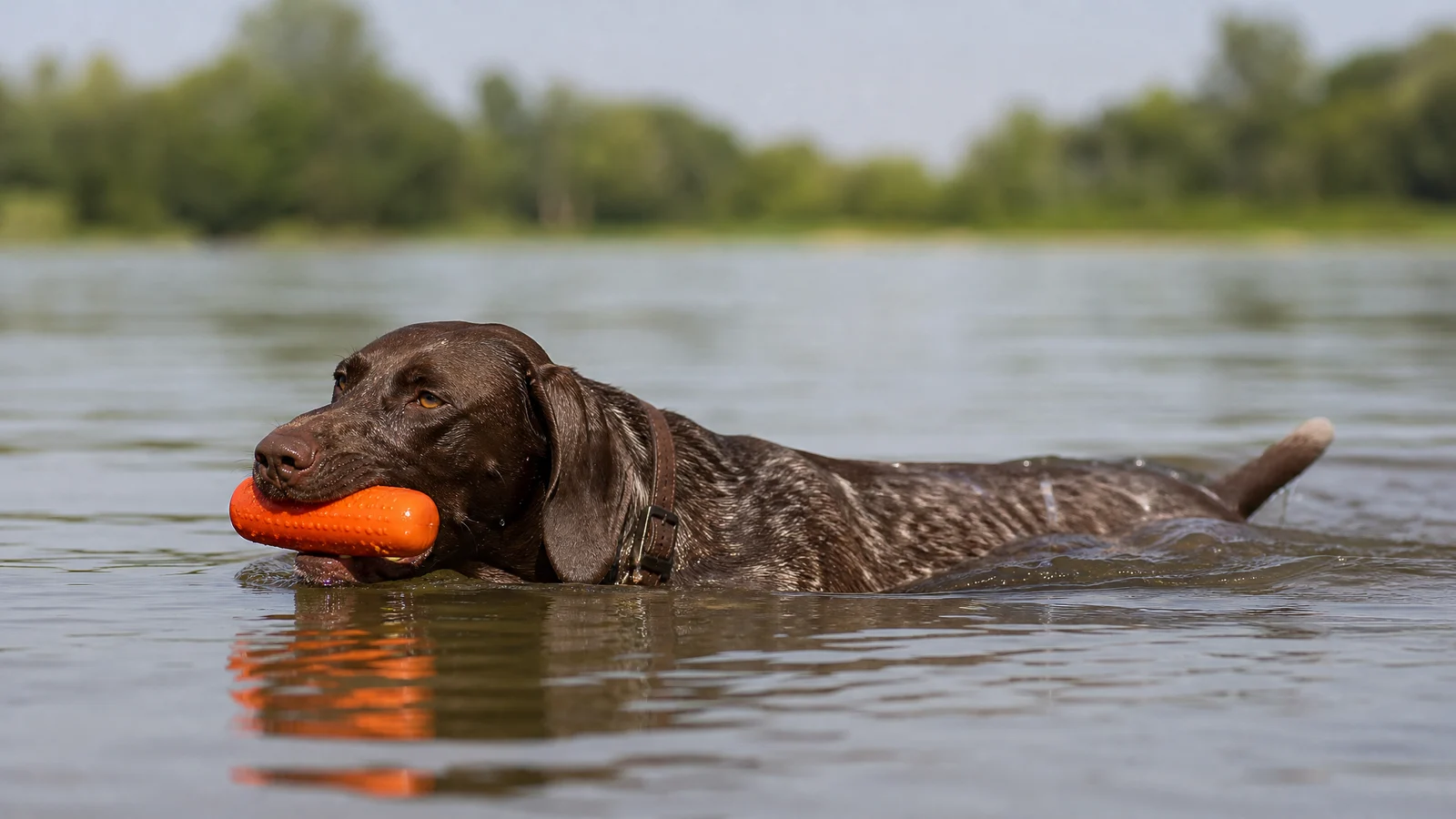
Do German Shorthaired Pointers like swimming? The breed has a strong water reputation, and dock diving appears among activities associated with them, but that does not guarantee confidence in every dog or every setting. A GSP may step into a familiar shallow edge and hesitate at depth, waves, reflections or an unfamiliar exit. Swimming skill and water comfort are related, not identical.
We will look at shallow and deep water, then cover voluntary entry, exit training, play and recovery. Rewards give the dog a reason to explore while choice keeps their behavior readable. The goal is a dog who can enter when invited, return when called and leave the water calmly, not a dog who proves a breed stereotype.
German Shorthaired Pointer Water Confidence
Water confidence begins with how the individual responds at the edge. Notice whether the dog approaches with loose movement, takes rewards and can turn back toward you. A frozen posture, repeated retreat or refusal of familiar food says the setting is currently too difficult.
The official breed standard places water ability in the breed's working description. That history provides context for the modern reputation. It does not tell you how this dog feels about a particular pool, shoreline or entry surface today.
Confidence Is Specific to the Setting
A dog who wades at one shore may pause at another. Surface texture, sound, moving water and the visibility of the bottom all change the picture. Return to the easiest known setup when confidence drops instead of assuming the dog has forgotten how to swim.
Treat each new water environment as a fresh introduction. Begin at a distance where the GSP can observe and respond, then reward a voluntary step closer. The dog remains free to retreat, which lets you distinguish curiosity from compliance.
Athletic Drive Can Hide Uncertainty
A highly excited dog may chase a toy into water before they have learned a calm way out. Speed at entry does not prove confidence. Watch the body at the edge, the quality of the turn in water and the dog's behavior immediately after exiting.
Our preference is to build deliberate entry before exciting play. A dog who can pause and choose the water gives the handler more information and preserves a training path when the environment changes.
Shallow-Water Training for a German Shorthaired Pointer
Shallow water separates exploration from the physical demand of swimming. The dog can feel the surface, move away and return without immediately losing contact with the bottom. That makes it a useful place to reward curiosity and handler orientation.
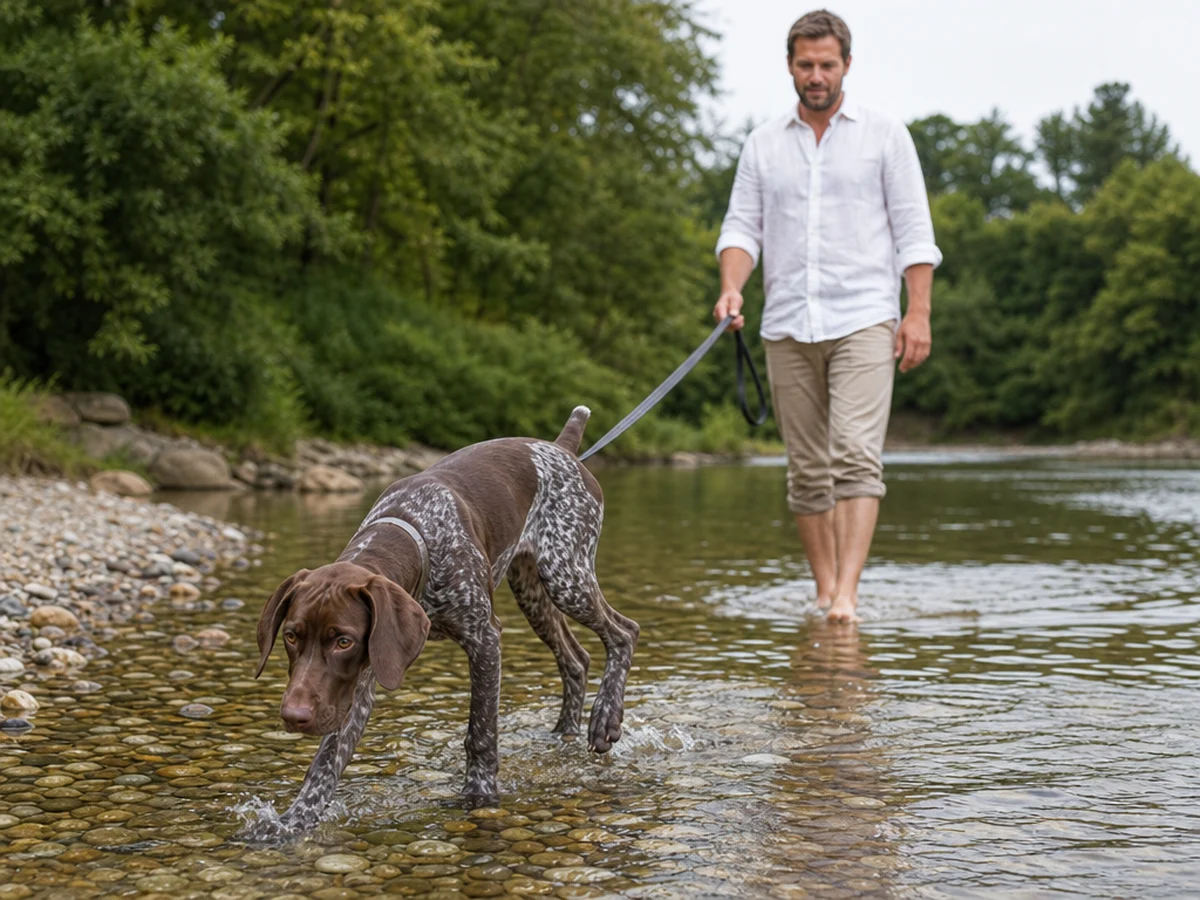
Prepare the session so the route in and out is obvious. Use the leash according to local rules and the site's layout, keeping it managed so it does not create a tangle. Bring rewards the dog values, and choose a quiet setting that allows distance from other activity.
A simple setup list keeps the first lesson focused. It avoids turning water introduction into a test of courage.
- Choose a gradual edge with clear footing and an exit the dog can identify from the water.
- Begin far enough back that the GSP can look at the water and still respond to an easy cue.
- Keep rewards available at the shore so returning to you remains valuable throughout the session.
- Use a familiar toy only when the dog can stay thoughtful around it, and keep the game close to the edge.
- Plan a calm route away from the water before excitement makes leaving more difficult.
Reward Investigation in Small Pieces
Mark a glance at the water, a step toward the edge or a paw placed into the shallows. The next reward can be delivered slightly closer only if the dog remains comfortable. Progress comes from the dog's willing choices, not from a fixed number of steps.
After a successful approach, invite the GSP back onto dry ground and reward there too. Moving away should remain easy. This prevents the water from becoming a one-way challenge in which every choice is expected to move deeper.
Let Wading Remain a Complete Activity
Some dogs enjoy walking and splashing without choosing full swimming. Wading can still provide enrichment and foundation manners. The lesson succeeds when the dog remains comfortable and responsive, even if depth never becomes part of that day.
Repeat the familiar level before adding a new feature. Confidence built through predictable success is more useful than one dramatic entry followed by reluctance on the next visit.
Voluntary Entry Shapes Swimming Training
Invitation and pressure can produce the same location with very different learning. A dog who follows a reward or toy into water has chosen the route. A dog who is physically placed beyond their comfort point has lost the ability to show whether the step was manageable.
Keep the invitation clear and optional. Cue a known approach, reward at the edge and allow the GSP to investigate. If they turn away, follow them back to easier ground and rebuild rather than blocking the retreat.
Follow the Dog's Confident Depth
Work where the dog's movement stays loose and their response to you remains available. That boundary may shift within a session as novelty rises or fatigue appears. A smaller step is still progress when it preserves the dog's ability to choose.
Best Friends recommends approaching a difficult stimulus only while the dog notices without reacting, then moving away and rewarding. Its distance-based setup concerns leash reactions, but the training principle fits this narrower decision. Work where the dog can notice, respond and recover.
Add Depth Through an Easy Route
When the dog repeatedly enters the shallows with confidence, use the same gradual route and invite one modest change. Reward return to you as strongly as forward movement. The dog should never need to continue deeper to make the handler happy.
If paddling begins, stay close to the known exit and keep the first experience simple. Do not combine new depth with a crowded setting, intense toy play and a distant return. One changed feature gives clearer evidence about the dog's comfort.
Entry Training Needs Exit Training
Water manners are incomplete when a dog can enter but cannot leave on cue. Exciting entry practice often receives all the attention, while the exit becomes an improvised chase along the edge. Train the two directions as equal parts of one safe routine.
Before play begins, walk the dry exit route and reward the dog for coming with you. Then practice returning from shallow water, pausing on land and moving away from the edge. A clear exit cue should lead to a valuable reward and a calm next action.
Build a Wait Before Entry
Ask for a familiar pause at a comfortable distance from the water. Reward the pause, then use a release word that permits approach. The wait is not a test of duration. It gives the dog and handler a shared moment before movement begins.
If the GSP breaks the pause repeatedly, increase distance from the water and lower excitement. Reward an easier version, then decide whether the environment is suitable for continuing. Access should follow connection rather than frantic pulling.
Make Leaving Worthwhile
Call the dog from the shallows, reward on dry ground and sometimes release them back to the water. That return teaches that exiting does not always end the fun. At the final exit, follow the reward with a predictable calm transition away from the edge.
Battersea says a dog needs reliable recall before off-leash access in public, and its recall guidance emphasizes special rewards. Water does not relax that standard. Keep a secure setup while the response is still developing.
The site's outdoor GSP recall plan breaks the response into orientation, approach and arrival. Practice those pieces away from water before asking excitement at the shoreline to test them.
Water Play Needs Recovery Training
Water play can provide movement, problem solving and shared fun, but arousal can rise quickly. The useful contrast is not play versus strict control. It is play that still contains pauses and exits versus play that removes every path back to thoughtful behavior.
Use a floating toy as a game only after voluntary entry and exit are established. Keep throws close to the known route at first. Ask for a brief pause before release, then reward the dog for returning to shore and giving up the toy willingly.
Fetch Stays a Cooperative Game
The toy should support connection rather than pull the dog repeatedly away. Alternate a short water retrieve with a reward on shore, and sometimes carry the toy yourself while the dog walks beside you. This keeps the handler inside the activity.
If the GSP starts grabbing, vocalizing or ignoring the exit, reduce the game's intensity. Move farther from the water, reward simple orientation and finish with an easy behavior. More throws are not the answer when the dog has lost the ability to reset.
Pauses Show Whether Play Still Fits
During a pause, look for the dog's ordinary ability to take food, respond and move with you. A dog who immediately dives back toward the edge may need greater distance before calm can return. Build that transition as deliberately as the entry.
The GSP sports guide uses recovery as part of activity selection. Apply the same test here. A suitable game should end with the GSP able to rejoin daily life, not searching urgently for another launch.
These signs support another similar session. They do not prove readiness for every water setting, so repeat success before adding novelty.
- The dog approaches the water willingly and can also turn away with the handler.
- The dog waits for an invitation often enough that entry remains a shared decision.
- The dog returns to the known exit and can accept a reward on dry ground.
- The dog releases a toy willingly and responds to a familiar cue between play turns.
- The dog leaves the area without a prolonged struggle to regain ordinary attention.
German Shorthaired Pointer Swimming for the Long View
Water confidence can expand, remain limited to wading or change with the setting. Keep the individual dog's answer valid. Repeat voluntary entry, a clear wait, an easy exit and calm recovery instead of chasing a picture of what an athletic breed should enjoy.
Maintain regular veterinary visits and ask your veterinarian about a meaningful change in comfort or activity. On training days, let the GSP's behavior choose the next step. A dog who can approach, return and settle has learned a durable water routine, while a dog who hesitates has given you a useful reason to make the next experience easier.
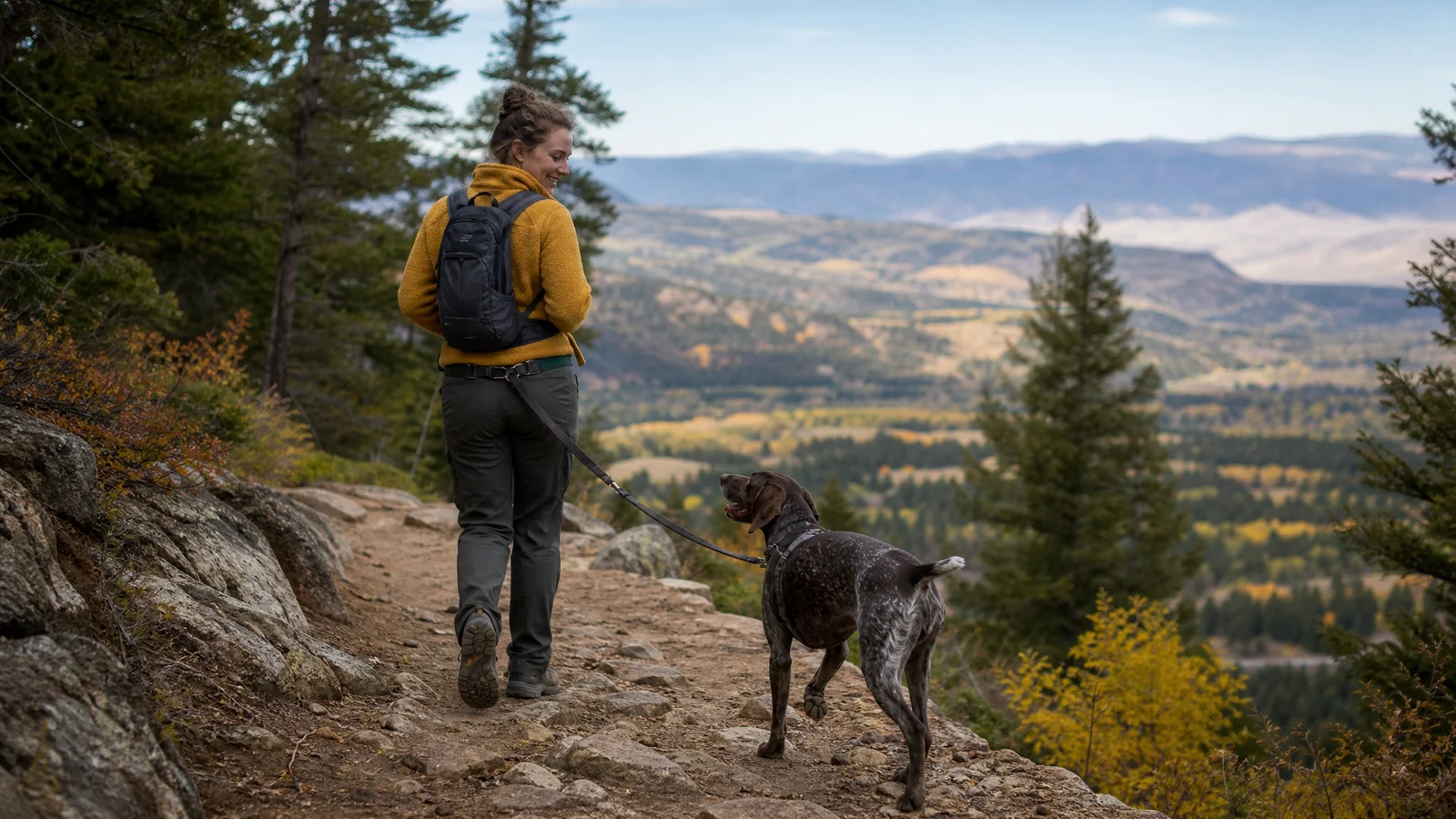 Exercise and jobsHiking with a German Shorthaired Pointer: Trail Manners and Fitness
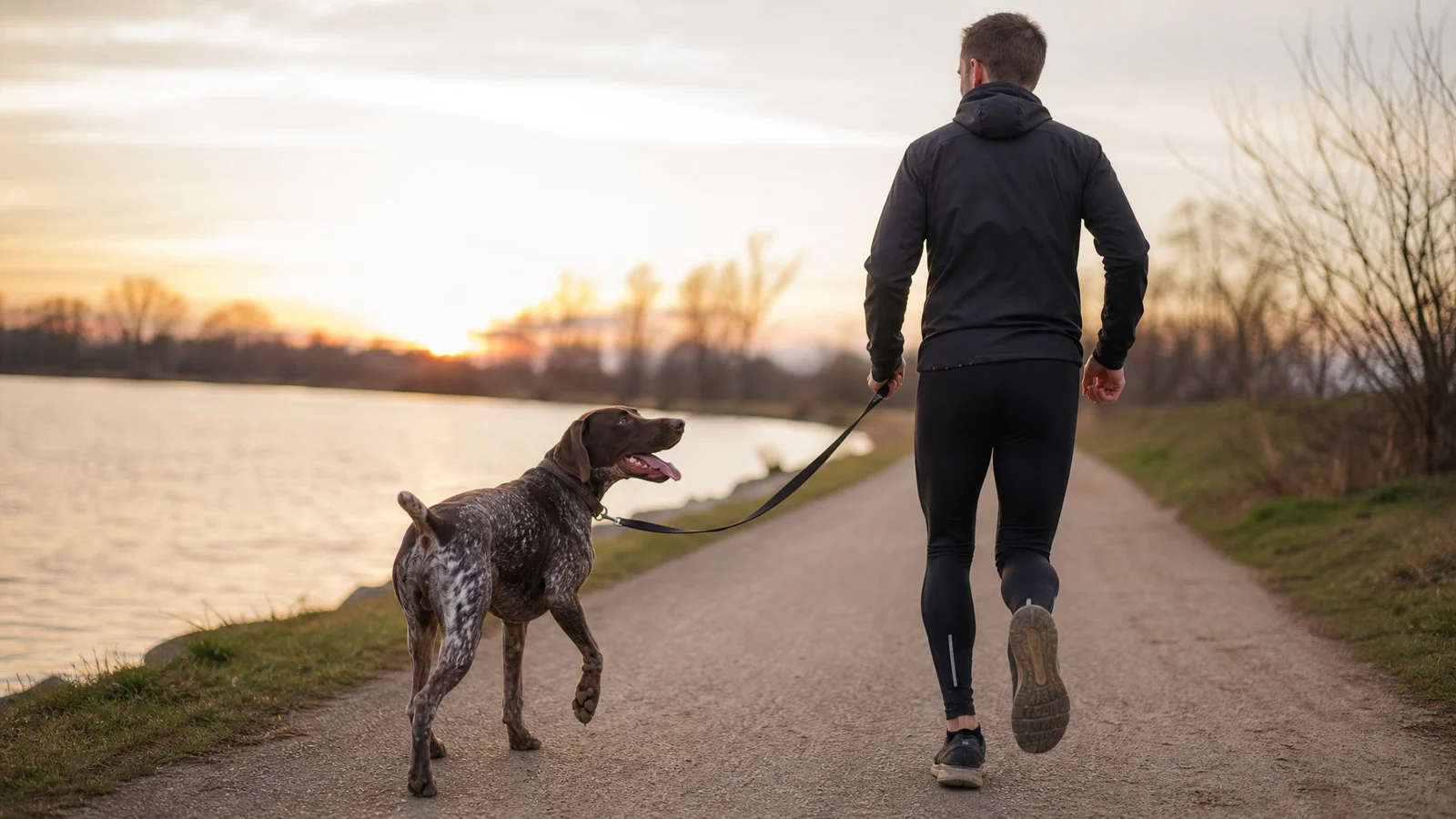 Exercise and jobsGerman Shorthaired Pointer Running and Hiking Exercise Needs
 Training basicsHow to Train a German Shorthaired Pointer with Rewards
