 GSP
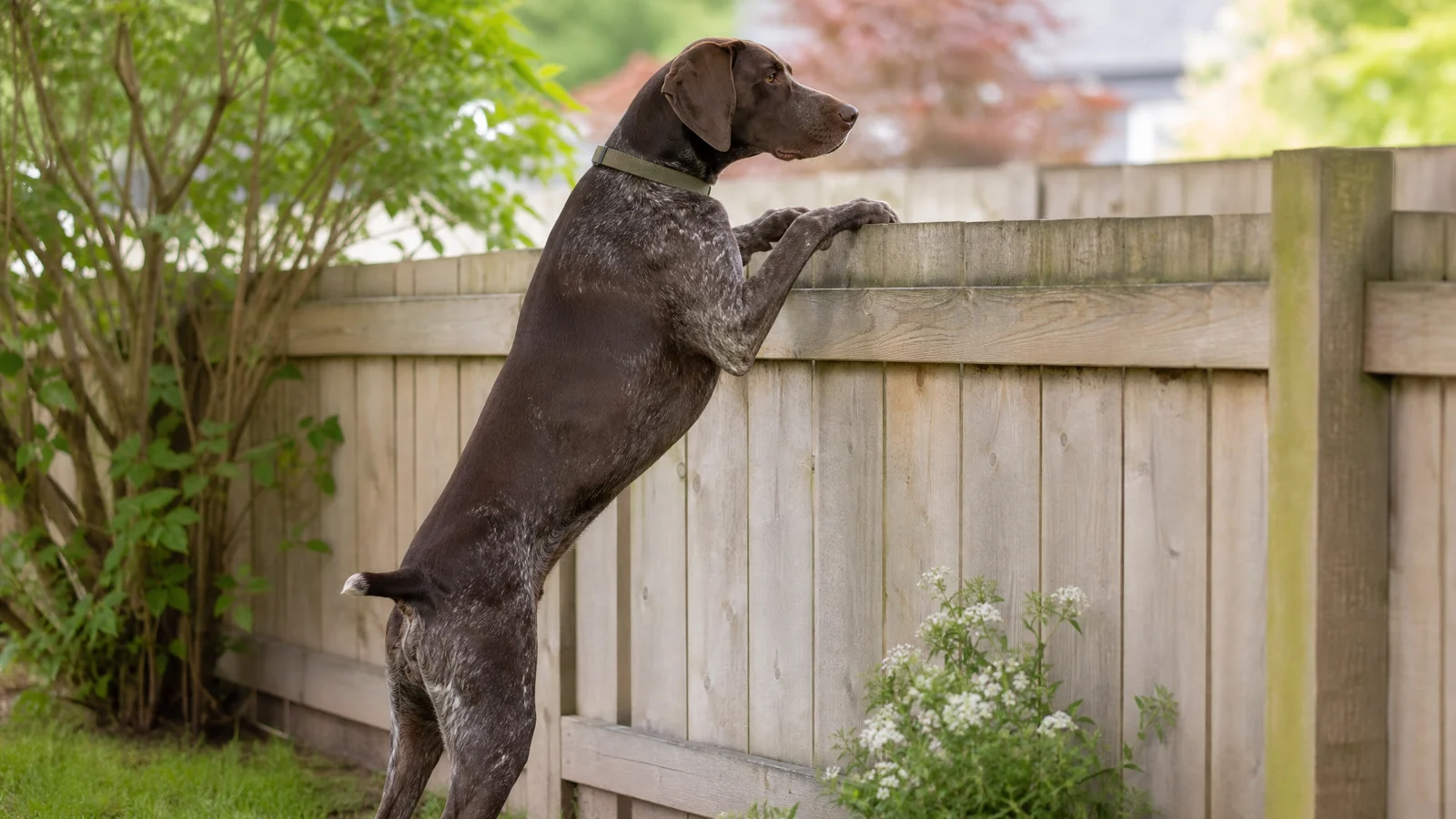
An interesting yard can still have an open escape route. A German Shorthaired Pointer may enjoy games with you and leave through a loose gate when the game ends. More activity does not repair the boundary, while a sound fence does not tell the dog what to do during the time spent inside it.
Start by treating an escape as a change in access. Until the route out is understood and repaired, use a secure leash arrangement and remain with the dog. Do not send them out again to see whether the problem repeats.
Below, we examine the perimeter, human gate traffic and activities away from the boundary. The guide also covers returning indoors and reviewing the whole yard visit. Safety comes from a workable physical setup alongside supervised, rewarding use of the space, not from assuming that an athletic GSP will choose to stay.
An Escape Changes German Shorthaired Pointer Yard Access
After an escape, bring the dog safely under control and inspect the yard without them loose in it. Look for the actual route where possible, including damage, moved objects or a gate that did not latch. Avoid blaming a single low panel if another opening remains unexplained.
Use supervised leash outings while repairs are arranged. Check that the equipment fits and that the person holding it can manage the dog safely. A line left attached without supervision introduces different risks and is not a substitute for an adult being present.
Update identification and make sure household contact information is current. Those preparations help if a dog becomes lost, but they do not replace preventing the next escape. Everyone who lets the GSP outside needs to know that the access arrangement has changed.
- Pause unsupervised yard access after a known or suspected escape.
- Inspect the whole boundary while the dog remains safely elsewhere.
- Arrange suitable repairs rather than relying on a temporary obstacle the dog can move.
- Tell every caregiver which doors and gates must stay closed.
Seek professional help with the physical setup if you are unsure whether it can contain your dog. No universal fence height guarantees safety for every GSP or every yard. The weakest usable route matters more than the appearance of the strongest section.
Yard Routes Above, Below and Through the Boundary
Inspect different kinds of escape route separately. A dog may climb with help from nearby objects, squeeze through a damaged section or use a gap at ground level. Repairs should remove the opportunity without leaving sharp edges, unstable materials or new catching points.
Objects That Create Height
Move furniture, stored equipment and other potential footholds away from the boundary. Consider how the arrangement changes when someone stacks boxes, moves a bin or leaves a chair outside. An object that was harmless in the middle of the yard may become useful beside a fence.
Look at trees and structures near the perimeter too. Do not test your dog's ability by encouraging them to jump or climb. Evaluate the setup conservatively and obtain appropriate advice when the structure itself needs alteration.
Revisit this check after seasonal storage changes. A folded table, garden container or pile of materials may appear only briefly, yet create an opportunity while it is there. Ask other household members to keep temporary storage away from the boundary and explain why the usual convenient corner is no longer suitable for those objects. Check the new storage position before the dog returns outside.
Gaps Near the Ground
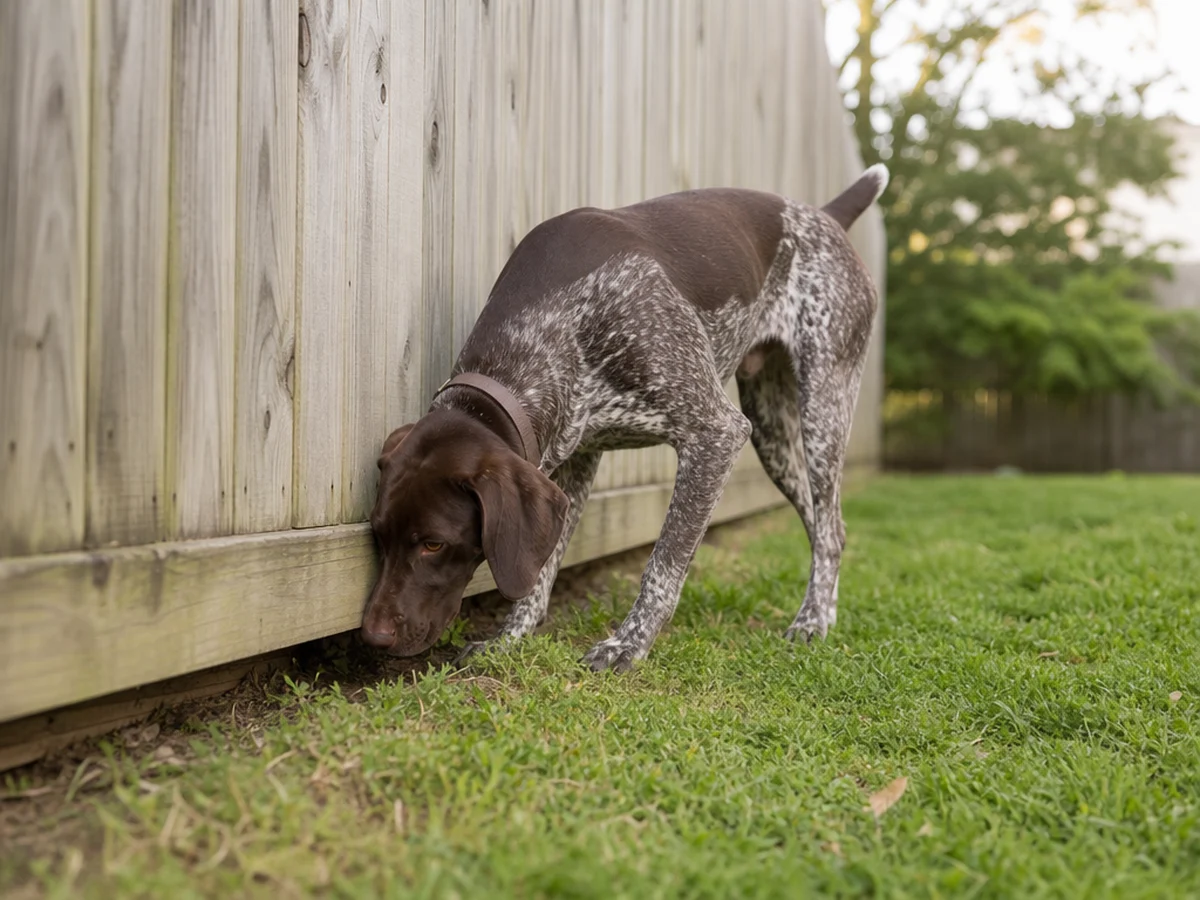
Check uneven ground, erosion and areas where digging has changed the space beneath the boundary. A gap can grow gradually and remain hidden by vegetation. Inspect again after weather or yard work changes the ground.
Choose repairs that suit the site and remain safe for paws and people. Simply placing a loose object over a hole may leave a movable barrier. Keep supervised access in place until the repair is dependable.
Watch for a new route after one is closed. Repairing a single spot does not establish that the rest of the perimeter is suitable.
Panels, Openings and Hidden Damage
Check boards, mesh, hinges and connections rather than only the visible center of each panel. Look behind shrubs and stored items. Pressure at a loose edge can create an opening that is not obvious from the house.
Dogs Trust's guidance on chasing behavior emphasizes management around animals and other moving distractions. In a yard, that means the physical boundary still matters when something exciting appears outside. A familiar recall is useful, but it should not be the only thing between the dog and the street.
Gate Traffic Through a German Shorthaired Pointer Yard
A secure fence can be defeated by an ordinary human task. Deliveries, maintenance and carrying large objects may leave a gate open longer than expected. Plan the dog's location before that work starts instead of relying on someone noticing a fast approach.
People Entering With Their Hands Full
Keep the dog in a separate secure area before opening the gate for equipment or visitors. Agree who is responsible for that separation and who checks the gate afterward. Do not ask a person carrying a heavy item to manage the dog at the same time.
If workers need repeated access, use a clear arrangement that does not depend on remembering to close the gate between every trip. The GSP can remain indoors with appropriate care while the task is completed. A sign may support communication, but it cannot physically contain a dog.
Check the latch yourself once work is finished. A gate that looks closed may not have engaged fully, particularly if ground movement or a shifted hinge changes its alignment.
Agree on a response if someone arrives unexpectedly. The person nearest the dog can secure them indoors while another adult handles the gate. If you are alone, keep the dog safely separated before attending to the visitor, rather than trying to hold both the gate and an excited GSP.
A Waiting Place Away From the Gate
Teach a comfortable waiting location separately while the gate stays securely closed. Reward your dog for moving there and remaining briefly. Then release into another safe activity inside the yard, so the lesson does not depend on approaching the exit.
Use small human movements as practice, such as walking partway toward the closed gate. If the dog follows, reduce the distance or duration. Do not open the gate to test a new wait, because a training error should not become an escape.
The RSPCA's reward-based training guidance supports making useful responses worthwhile. Here, the useful response is staying available in a safe part of the yard while an adult manages access. Physical separation remains the protection during real gate traffic.
Yard Activities Away From the Boundary
Give supervised yard time a purpose in the usable interior space. The activity should suit the dog's age, comfort and interests, with enough distance from the fence that outside movement does not dominate every moment. A smaller area used well can be more useful than the whole yard opened without a plan.
A Manageable Scent Search
Arrange an easy search in a safe area, using appropriate materials under supervision. Keep it away from gaps, gates and places where rewards could become inaccessible. Begin with a find the dog can make readily rather than hiding everything at the edge of their ability.
Best Friends' nose-work introduction offers ideas for simple scent activities. Use the yard as one possible setting after the dog understands the game. You can move the activity indoors when outside distractions make it difficult.
Short Shared Games
Choose a game that keeps movement within the safe area and gives you a clear way to stop. Avoid throwing toys toward the fence or encouraging repeated high-speed approaches to the boundary. A close shared game may fit the space better than long retrieves.
Match physical demands to the individual GSP. A growing puppy and a fit adult do not need the same session. Our GSP puppy exercise mix explains how play belongs alongside varied activity and real rest.
Put equipment away when the game ends so it does not become another climbing aid or object to dismantle. A clear interior area also makes it easier to notice a new hole, damaged panel or unexpected visitor during the next supervised outing.
Quiet Time With a Person
Some yard visits can include resting near you in a comfortable, shaded place when conditions are suitable. Reward relaxed behavior without constantly calling for another action. The yard does not have to mean continuous movement.
If the dog remains fixed on the perimeter, move to a quieter area or go indoors. Repeatedly asking for a down beside an overwhelming distraction will not make the setting comfortable. Change the conditions before trying to extend the quiet period.
The Yard Return Indoors
Practice coming inside during easy moments, before the dog becomes absorbed at the boundary. Use a familiar cue and offer a worthwhile outcome indoors. Returning can lead to water, rest, food within the normal routine or another suitable activity.
Do not make every approach to you predict the immediate end of outdoor time. Sometimes reward and continue an appropriate yard activity. At other times, finish clearly and help the dog transition indoors without chasing them around the space.
- Prepare the indoor destination before calling the dog from a safe activity.
- Reward the return while it is still easy to complete.
- Close the outside door or secure the access point before relaxing supervision.
- Review any difficult moment before the next yard visit.
Our GSP bird recall guide covers encounters where animal movement changes the task. A yard recall remains a maintained skill, and a sudden distraction should still meet a secure boundary.
| Part of the visit | What to review |
|---|---|
| Before access | Repairs, latch and the dog's safe route outside |
| During activity | Supervision and interest away from the boundary |
| Returning indoors | A clear cue, useful reward and secured access point |
Reviewing the Whole German Shorthaired Pointer Yard Visit
Discuss new restlessness and behavior changes at regular veterinary visits, especially if escape attempts accompany distress. Recheck the physical setup as weather, work and household routines change. A useful yard plan accounts for the route out, the people opening access and the dog's supervised experience inside, with each part supporting the others.
 Puppy trainingA Growing German Shorthaired Pointer Needs Walks, Play and Rest
 Puppy trainingSteady Training Through a German Shorthaired Pointer's Teen Months
 BehaviorHow to Stop a German Shorthaired Pointer Barking
