 GSP
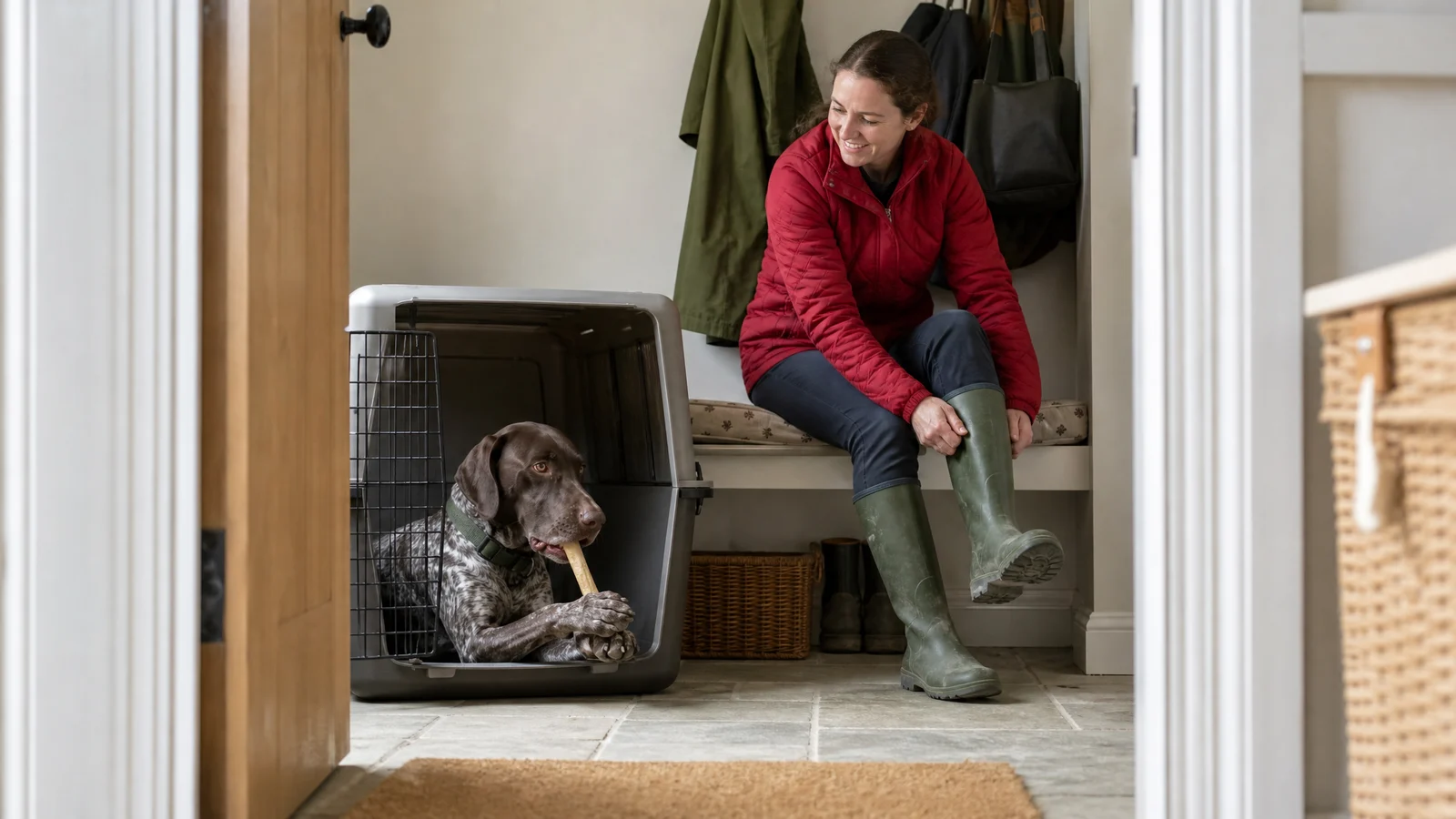
Resting peacefully in an open crate shows that your German Shorthaired Pointer can be comfortable in that space. They have not yet shown that a closed door feels ordinary or that they can rest when the house is empty. Those are separate changes, and combining them too quickly can make it difficult to understand what the dog finds hard.
This guide treats crate learning and alone time as related skills with different questions. We will use open-door games, add enclosure while a person remains nearby and then introduce manageable changes in human presence. It also explains when another resting arrangement is more suitable. Gradual preparation can support confidence, but no crate routine can guarantee that separation anxiety will never develop or replace help when a dog is distressed.
What German Shorthaired Pointer Crate Comfort Can Show
Look at the conditions surrounding a relaxed stay. Is the door open, is someone seated beside the crate and has the dog chosen to enter? Those details matter because changing one can change the experience. Comfortable confinement and comfortable absence should each be assessed directly.
Choose an enclosure with room for natural standing, turning and lying down. Keep the space ventilated, away from heat and household traffic, and remove snag hazards. Check the fit as a puppy grows rather than assuming a crate label describes the dog in front of you.
The RSPCA describes a crate as a comfortable resting space. Let that purpose guide your use of it. A crate does not replace bathroom breaks, movement, social contact, water or appropriate daily activity.
Keep the setting familiar while learning. New bedding, a new room and a new door routine introduced together make it harder to interpret an uneasy response. Start with the simplest arrangement the dog willingly uses.
Open-Door Crate Games for a German Shorthaired Pointer
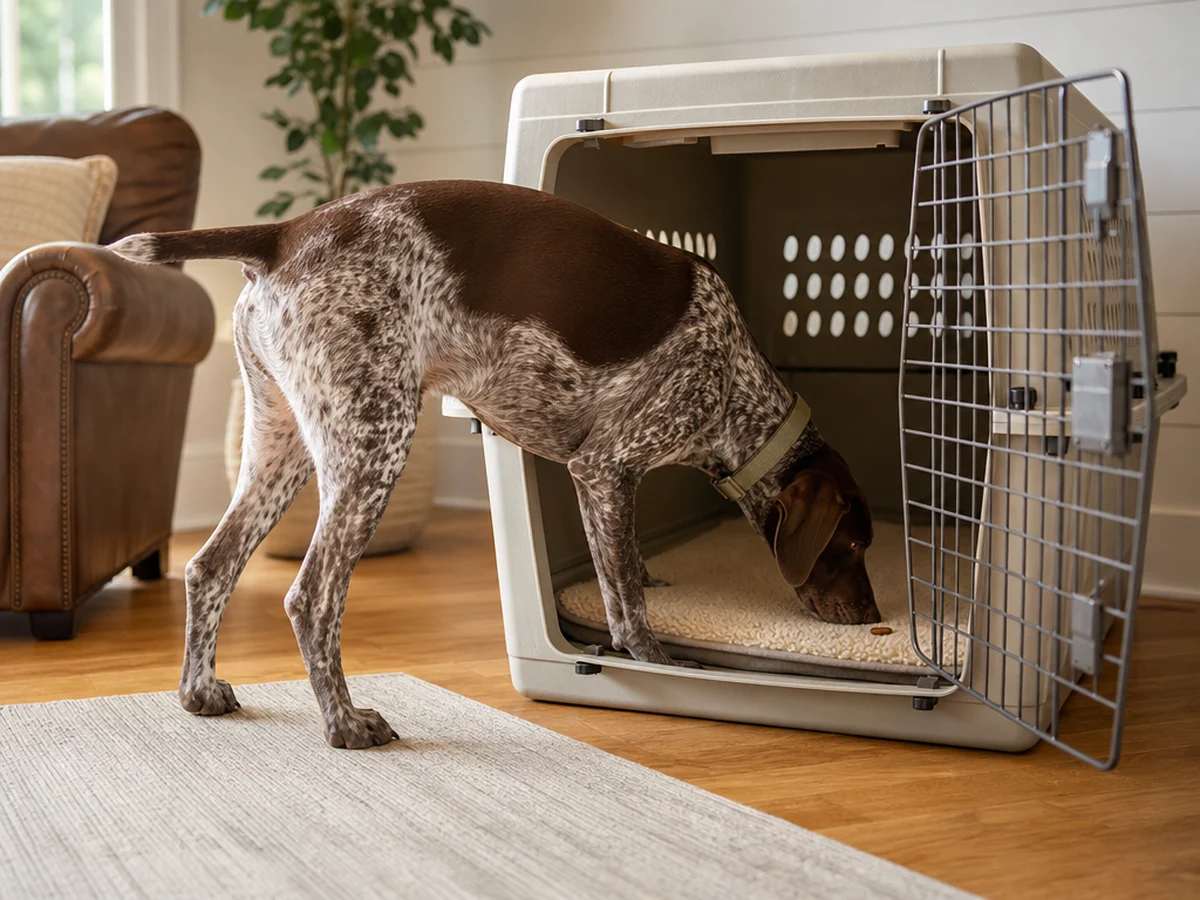
Secure the door so it cannot swing unexpectedly and allow the dog to investigate at their own pace. These games teach a location, not confinement. The GSP should be able to leave without squeezing past your body or waiting for permission.
Approach and Return
Reward a comfortable look or step toward the crate, then allow the dog to move away. Repeat only while they remain interested. You can place food near the entrance without requiring them to reach deeper than they are ready to go.
Watch the return to the area after each pause. A dog who chooses to approach again gives you different information from one who stretches forward for food and immediately retreats. Keep the easier distance if the whole body does not look comfortable.
Entry With an Open Exit
As investigation becomes easy, reward steps inside. Place food where the dog can collect it without twisting or feeling trapped. Leave the doorway unobstructed and keep your hands away from the latch during these early repetitions.
Let the dog come out and begin another ordinary activity. Entry should not always predict a long stay. A quick voluntary visit can be a complete success while the location is still becoming familiar.
The PDSA crate training guidance emphasizes gradual introduction. Use your dog's willingness to return as a reason to continue at a manageable level, rather than as permission to close the door immediately.
Settling Without a Visible Food Trail
Offer the familiar space at a quiet time when the dog has had suitable activity and a bathroom opportunity. Reward relaxed behavior inside without repeatedly calling them out for another entry. Some GSPs will first choose a nearby bed instead, which can still be a useful resting option.
Notice whether the dog can shift position, pause between rewards and remain comfortable when your hand is empty. Those ordinary behaviors matter more than how quickly they followed a food trail. Avoid turning a resting lesson into rapid trips in and out of the doorway.
Our growing puppy activity guide explains the wider balance of movement and rest. Arriving at the crate exhausted is not the same as learning to feel secure there.
Keep entry practice compatible with the household's ordinary reward routines. A familiar marker can identify a voluntary step without adding pressure at the doorway. Have another adult watch the sequence before trying it, so their hands and position do not create a different lesson.
The Crate Door While a Person Stays
Keep your own position familiar while introducing the door. Touch it, make a small movement and reward comfortable behavior. Progress toward a brief closure only when those earlier movements do not cause concern.
Open again before the dog becomes uneasy. You are teaching that a door can move and reopen while the person remains available. There is no need to make the first closed moment last until the dog asks to leave.
- Practice a small door movement with the dog free to leave the open space.
- Reward comfortable behavior while you remain in the same nearby position.
- Try a brief closure only after the movement has become ordinary.
- Reopen calmly and allow a choice about remaining inside.
If the dog becomes rigid, scratches at the exit or cannot settle, reduce the demand. A quiet dog may still be worried, so observe posture and movement as well as sound. Do not wait through escalating distress to complete a planned duration.
A change in the person's posture can be a separate lesson. Standing up may matter even before you walk away, particularly if it usually predicts leaving the room. Keep the door task easy while you examine that response.
A Person Moves While the Crate Setting Stays Familiar
Once the dog is comfortable with your nearby movements, practice a small change in distance. Stand, take a step and return while the GSP remains relaxed. Keep the absence of contact brief enough that you can observe the whole response.
You can also teach resting in a safe area with the crate open. That helps separate comfort in the location from the physical restriction of a door. The dog may be more at ease behind a suitable room barrier than inside a closed enclosure.
Change distance before adding much time. If stepping across the room is new, return promptly rather than combining it with a long wait. You can increase one feature after the current version is ordinary and repeat easier versions between harder attempts.
Use a familiar marker only when it helps identify a useful action. Battersea explains how markers support learning, but resting does not need a constant stream of excited clicks. Calm delivery and comfortable pauses may fit this particular skill better.
Do not assume that a favorite food toy proves the dog is comfortable. Look at what happens before they begin using it and after they finish. A dog who eats while tense or becomes distressed as soon as food ends needs a smaller change.
Small Departures Beyond the German Shorthaired Pointer Crate Lesson
Leaving the home adds a different event. Keys, shoes and an outside door may predict more than walking across the room. Start from the level the dog can manage, which might mean practicing a departure action without actually going outside.
Choosing the Resting Arrangement
Use the place where your dog has shown comfort, not the enclosure you hoped would work. Check temperature, water, bathroom needs and the safety of anything left within reach. A quiet familiar room may be more appropriate than a closed crate for one individual.
Keep the other conditions easy while learning about absence. Do not introduce a new chew, unfamiliar room and first departure together. If the dog is already concerned by separation inside the home, seek guidance before attempting a longer outing.
Watching the Departure Rather Than Guessing
A camera can help you see the response when you step out of sight. Observe live when possible so you can return before concern escalates. Start with a very small departure and end it while the dog is comfortable, rather than waiting for a fixed amount of time.
Advice on checking separation-related behavior explains that signs may be missed when people are present. Record what the dog actually does, including pacing, fixed attention at the exit or an inability to settle. Silence alone does not establish relaxation.
- Arrange company for necessary absences that exceed the dog's current comfort.
- Keep practice departures separate from errands that force you to stay away longer.
- Return to an easier step if the dog becomes uneasy before you reach the outside door.
- Discuss persistent distress with your veterinarian and an appropriate behavior professional.
When a Closed Crate Is the Wrong Setting
A crate can make distress worse for a dog who struggles with confinement. Attempts to escape, panic or risk of injury need prompt help and a safer arrangement. Do not interpret the enclosure's physical strength as evidence that the dog can cope inside it.
The ASPCA's separation anxiety information notes that crating is not suitable for every affected dog. Tell your veterinarian what happens both with and without enclosure, while avoiding deliberate tests that expose the dog to distress.
| Observed difference | Question for the next plan |
|---|---|
| Open crate is comfortable, closed door is not. | Does enclosure need easier work or a different space? |
| Nearby person is comfortable, departure is not. | Does absence need separate support? |
| Food occupies the dog, then distress starts. | What can the dog manage after the activity ends? |
Bring these distinctions to professional help. They are observations, not a diagnosis. A tailored plan can address the actual difficulty while daily care prevents repeated overwhelming absences.
This is general information about learning and observation, not an individual treatment plan for separation anxiety. Consult your veterinarian about persistent distress or injury risk. Follow their advice and seek suitable behavior support rather than extending confinement to see whether the dog eventually stops reacting.
Keeping German Shorthaired Pointer Crate Skills Available
Maintain easy opportunities to use the familiar space, including times when nobody is leaving. Discuss confinement and alone-time comfort at regular veterinary visits. Changes in household routines, health or living arrangements may require a return to simpler practice.
Let the evidence determine the next step. Voluntary entry, comfortable enclosure and a relaxed departure are different achievements that can develop at different rates. Supporting each separately gives your GSP a clearer lesson and helps you recognize when the plan needs a different setting or more help.
 Training basicsFour on the Floor: Teaching a German Shorthaired Pointer Not to Jump
 BehaviorChew Toys and Chewing Manners for a German Shorthaired Pointer
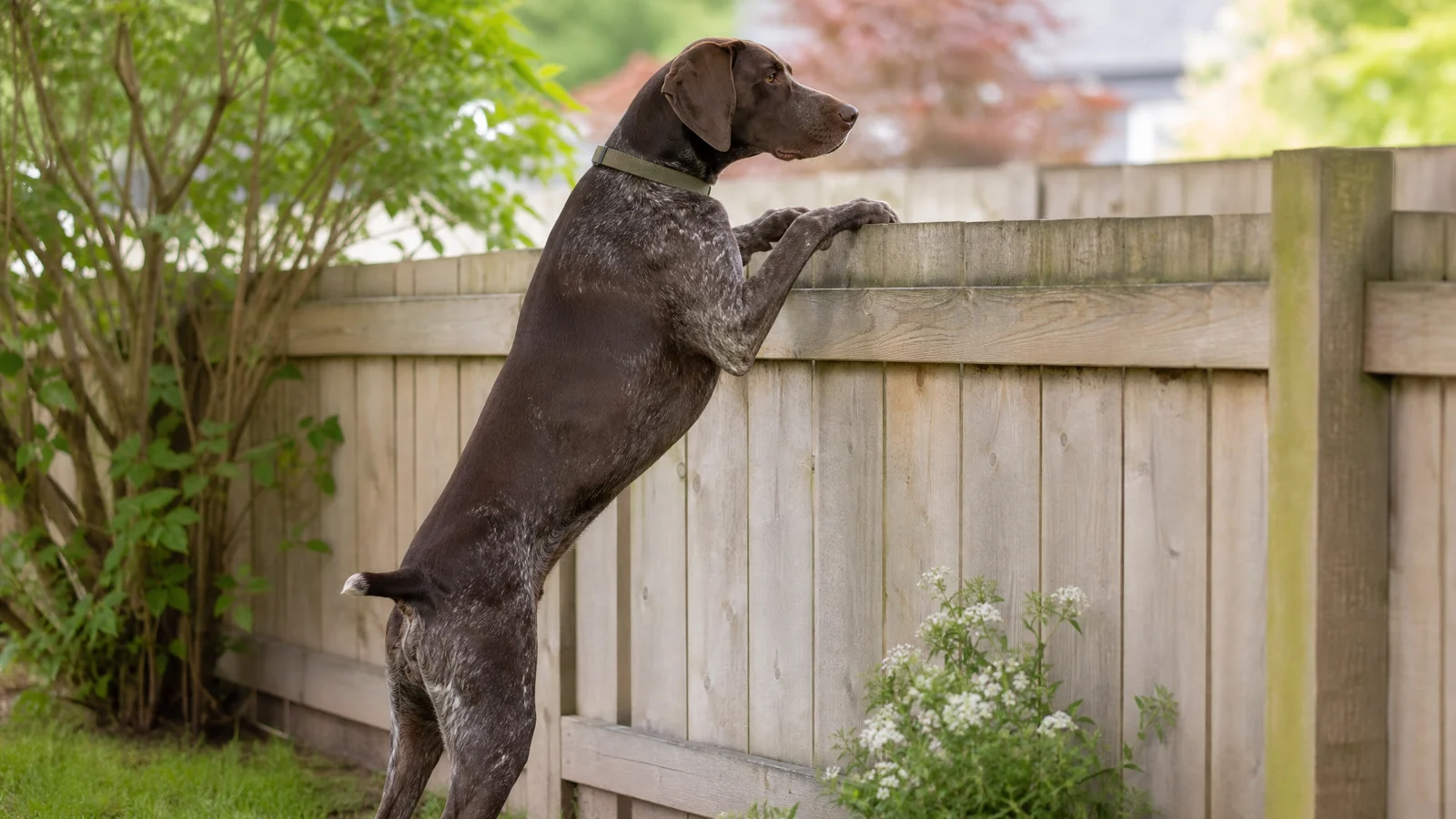 BehaviorYard Escapes: Giving a German Shorthaired Pointer a Reason to Stay
