 GSP
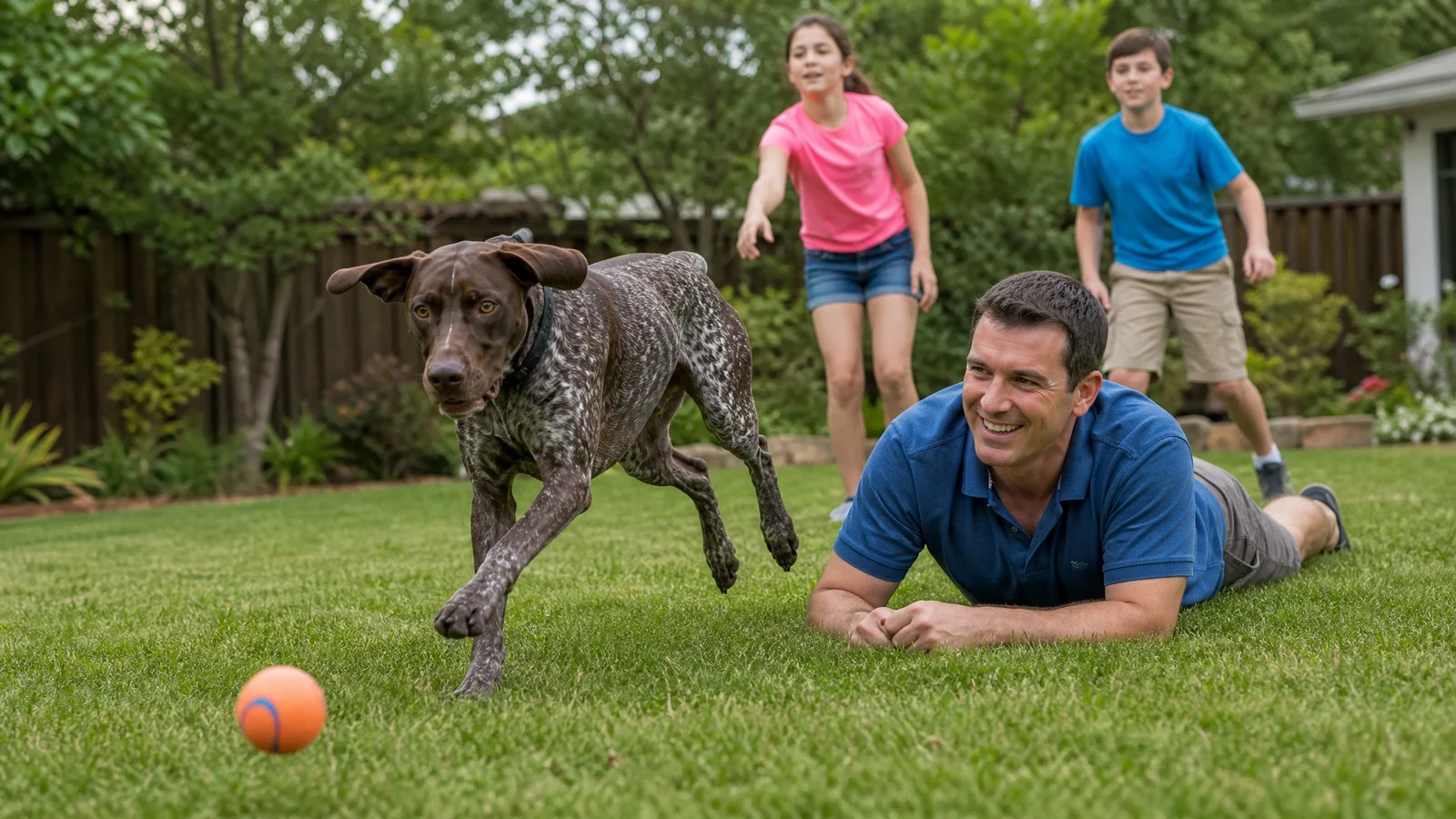
Some German Shorthaired Pointers meet a toddler with a wiggle and a gentle lean against the knees. Others bowl the child over, then fixate on the cat for the rest of the afternoon. Both dogs are friendly, and both are normal for the breed. The difference is usually how much exercise they got and how much calm behavior anyone taught them on purpose.
The AKC gives the GSP top marks, 5 of 5, for affection with family and for getting along with young children, and 4 of 5 for other dogs and strangers. The same page also flags very high energy and a strong prey drive. Friendliness is the starting point, not the finished manners.
This article looks at socializing a GSP in real households: a city apartment, a family with toddlers, a home with two dogs and a cat, and an owner who is away all day. By the end you will be able to run calm greetings, set up safe introductions and fit enough exercise around your own schedule.
Socializing in a City Apartment With Hallway Traffic
An apartment hands a German Shorthaired Pointer a steady stream of strangers they never chose: neighbors in the hallway, people sharing the elevator, a courier at the door. With a rating of 4 of 5 for openness to strangers, most GSPs want to greet every one of them. So the work is not building confidence. It is turning a full-body rush into a sit and a glance up at you.
Start with energy, because hallway manners fall apart on a dog who has not run. Aim for two real sessions a day. Many owners give one to two hours a day, often off-leash, and report their dogs rest well afterward. On days you can't get out, owners fill the gap indoors with zoomies in a clear room, tug, wrestling and short sprints. Dogs who miss out tend to get wound up and can't settle at night.
Once the edge is off, work through the building in this order:
- Practice at your own front door first. Ask for a sit, reward it, and wait at the threshold until you give a release word.
- Walk the hallway at a quiet hour. Reward a loose leash and every glance up at you.
- Rehearse the elevator with no one in it. Step in on cue, sit facing the doors, and treat while they open and close.
- Recruit one friendly neighbor. They stand still, ignore the dog, and say hello once every paw is on the floor.
- Add the noise of carts, strollers and slamming doors from a distance, paying for calm each time.
If your dog hauls toward a neighbor, stop and wait for a sit, or turn the other way and reward when the leash loosens. Walks will be slow at first, and that patience pays off later.
Hallway barking is usually excitement, and it is covered in our guide to common GSP behavior problems, including the instinct behind each. If your dog leaks a little pee when thrilled, keep greetings low-key and mention it at your regular vet visit if it continues.
A German Shorthaired Pointer Among Toddlers
The breed's top ratings for affection with family and for young children are earned. GSPs bond firmly with their people, kids especially. But the same dog is medium-sized, strong and very high energy, and the stretch from 6 months to 3 years is the hardest. A loving dog moving fast is exactly what flattens a toddler, and no malice is needed for that to happen.
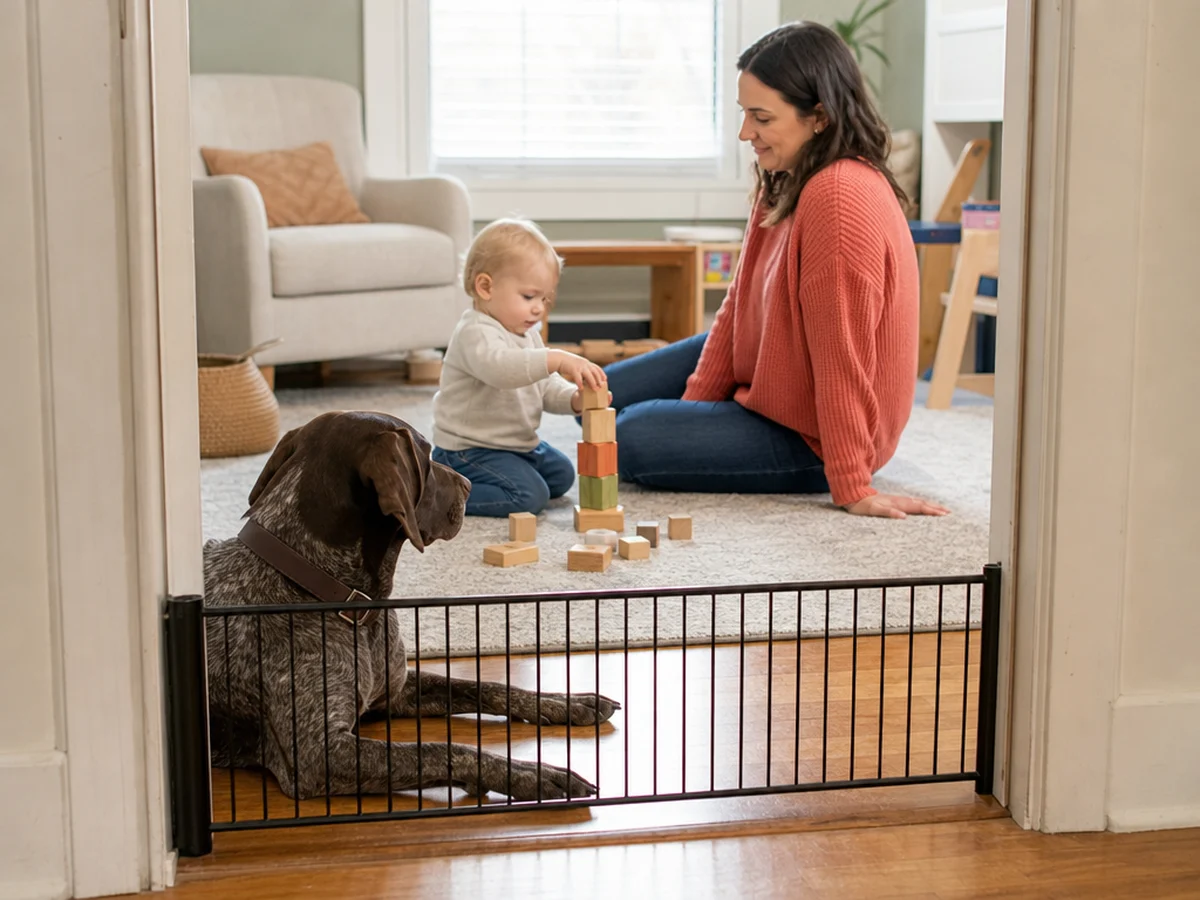
Supervision is the foundation. Young children are more likely to be bitten than any other group, and people are far more likely to be bitten by their own family's dog than by a stranger's. These rules apply even to the sweetest dog:
- An adult watches and can step in every time a toddler and the dog share space, with no exceptions for a quick minute.
- When no one can watch, the dog goes behind a gate or into a crate with a chew, and that spot is off-limits to children.
- Exercise comes before child time, so the dog arrives at the toddler already pleasantly tired.
- Food, chews and toys stay out of reach of small hands, and no one reaches for them while the dog is eating.
- Sessions end while the dog is still calm, not after the first sign of overexcitement.
Knock-Overs, Jumping and Mouthing
Teach the opposite of a bounce. Reward four paws on the floor, and keep the leash on during early meetings so you can guide the dog away from a wobbling toddler. Seat the child on the floor and let them toss treats near the dog's paws, which keeps the dog's head down and attention on the ground.
Calm indoors rarely arrives by itself. Owners who taught a settle cue deliberately, on a mat with a chew, did well, and others wished they had started sooner with a young dog who found relaxing hard. Puppy mouthing gets a toy in the mouth instead, and if teeth land on skin, play stops for a moment and the person stands up and turns away. In adolescence, some owners go back to basics with clicker work and hand-fed meals.
Teaching the Kids Their Part
Children need rules as much as the dog does. Show them to pet the shoulder or chest, never to grab ears, tails or the face, and to let the dog walk away without following. Running and squealing invite a young GSP to chase and jump, so make calm voices and slow feet the house style. For how these skills build across the months, see the puppy training timeline for GSPs.
Socializing a Two-Dog House With a Cat
This household is where the strong prey drive matters most. The GSP was bred as a versatile gundog, and a cat that bolts across the room can look like something to follow. That is instinct, not cruelty. Add a second dog, who can either calm the GSP or wind them up, and the plan needs an order. We have trained this breed for many years, and slow, separate steps are what work.
Work through it in this sequence:
- Introduce the dogs first, on neutral ground, walking in parallel on leash at a distance. Reward your GSP for glancing at the other dog and back at you, then close the gap over several walks.
- Set out a separate bowl, bed and chew for each dog, and put away anything highly prized before play begins.
- Keep the dog newly joining the home and the cat completely separate for at least two to three weeks before careful introductions. Swap bedding so each smells the other.
- Start the first sightings through a baby gate. Treat your GSP for looking at the cat and then turning back to you.
- Move to a leashed meeting in a room where the cat has high perches and an exit the dogs can't reach.
Watch for fixation. A hard stare, stiff body or frozen posture means you are too close, so call the dog's name, add distance and reward the turn away. A calm interrupt followed by a short break is plenty. Keep building engagement and recall around distractions rather than assuming one good session is the end of it.
The cat should always be able to leave, and chasing should never become a rehearsed game. Until your GSP has stayed relaxed around the cat across many weeks, keep them apart whenever no one is watching. With two dogs, schedule wrestling and fetch away from the cat's space, since playful dogs can turn a living room into a racetrack.
Socializing Around an Owner's Long Workday
If you are out most of the day, the breed's needs don't shrink. They get squeezed into the hours you have. GSPs need a purpose and a job, and without one they can turn destructive. The parent club's code of ethics asks members to provide social experience and regular exercise, and that is a fair standard for any owner with a busy schedule.
The trick is sequence. A tired dog can think, so exercise always comes before social practice. A weekday that works for many owners looks like this:
- Before you leave, a real session of brisk walking, running or fetch, followed by a calm rest on a mat or in the crate with a chew.
- At midday, a walker, daycare or park play. Some owners use this even for non-hunting companion GSPs, who can still run a lot.
- In the evening, a second session with off-leash time if you have a safe, fenced place, then a short greeting and settle practice with treats.
- At night, a settle on the mat while the household winds down, so evening energy has somewhere to go.
Weekends are for variety, not volume alone. Swimming, beach days, trails and farms tire GSPs well and add new sights and smells. Add only one new thing per outing, and pay generously for calm behavior around it. Piling on a crowded market, a party and a dog park in one afternoon can overwhelm even a social dog.
Adjust with the seasons and your dog's condition. Heat, injury or a hard work week sometimes means less running, and owners say their dogs cope when they swap in scent games, a flirt pole or indoor tug. Adult GSPs stay energetic well into their later years, so plan for this to be a lifetime schedule rather than a puppy phase.
Tonight's One Step for Your German Shorthaired Pointer
Pick the household above that is closest to yours and do one small thing tonight. After the evening walk or run, spend a short stretch on a calm greeting with a treat. In a building, practice the sit at your front door. With toddlers, have the child sit on the floor and toss one treat while you hold the leash. With a cat, reward a calm look at the baby gate. If you are home late, ask for a settle on the mat.
That is the whole job in miniature. A GSP's loving nature gives you the head start, and daily outlets plus deliberate lessons in calm behavior give the manners. Keep up regular vet visits as your dog grows, and let your dog's behavior set the pace.
 Training basicsHow to Call a German Shorthaired Pointer Back When Birds Flush
 BehaviorCupcakes on the Counter: Keeping a German Shorthaired Pointer Off
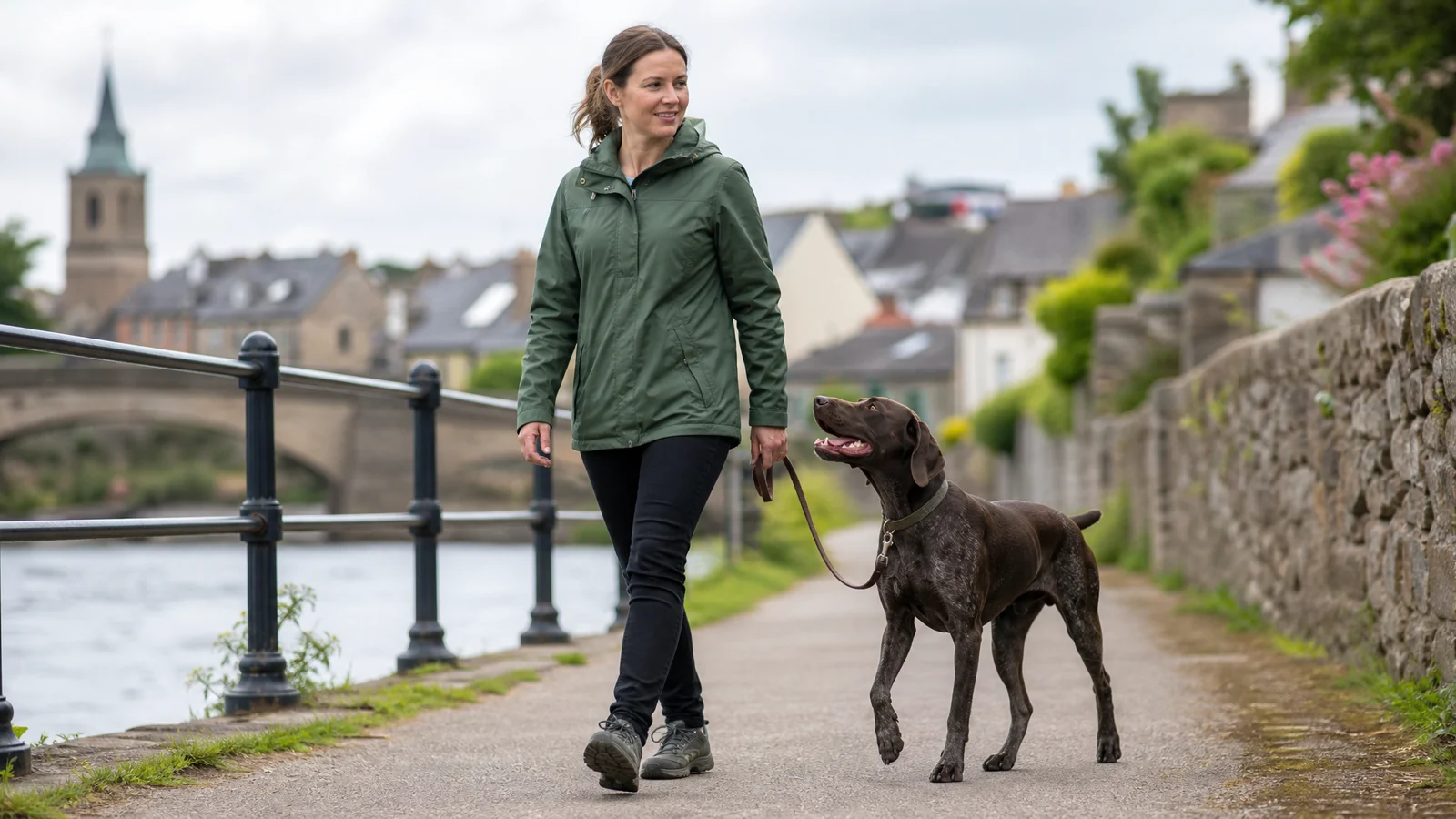 Training basicsLeash Training a German Shorthaired Pointer Who Pulls
