 GSP
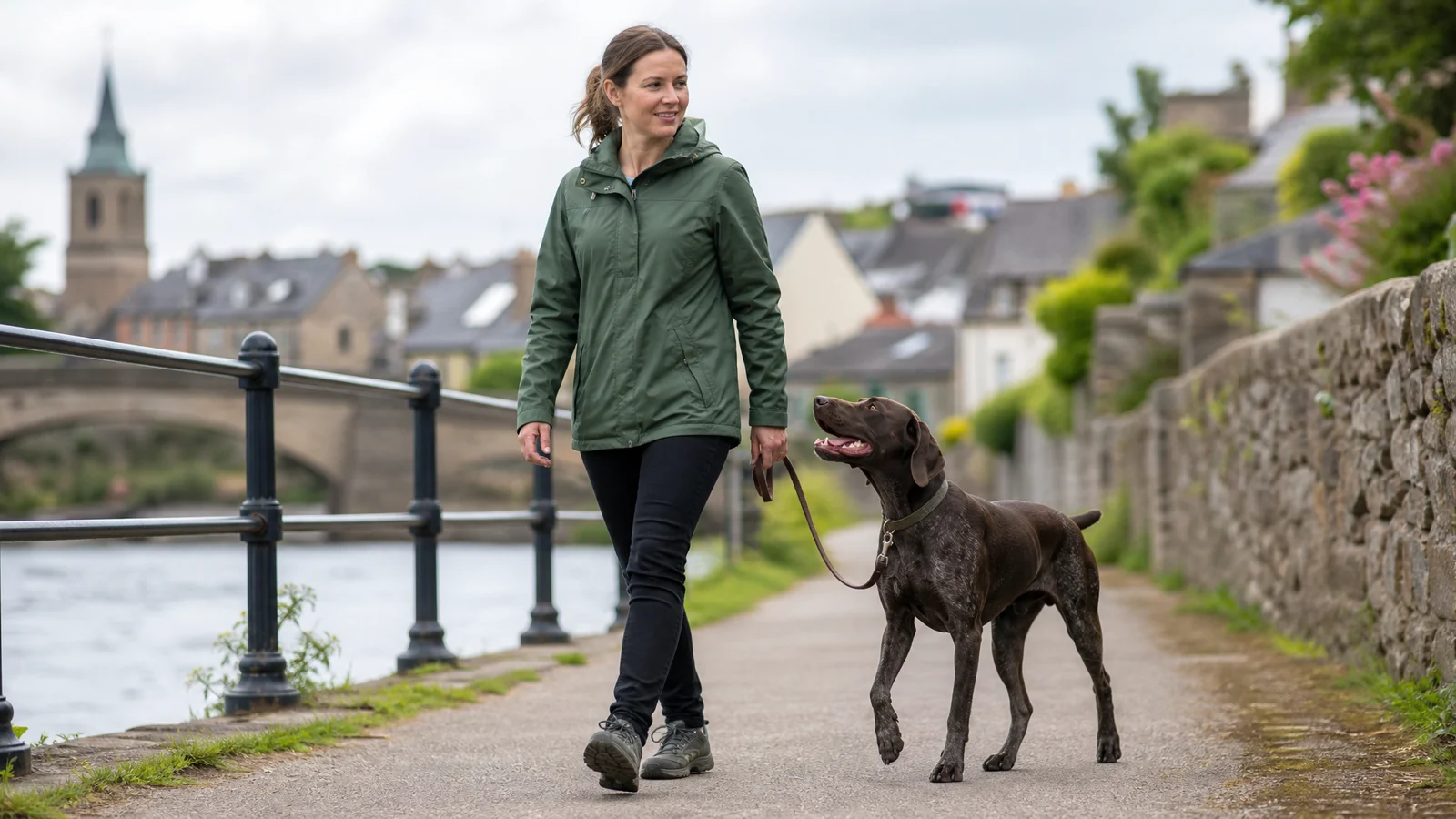
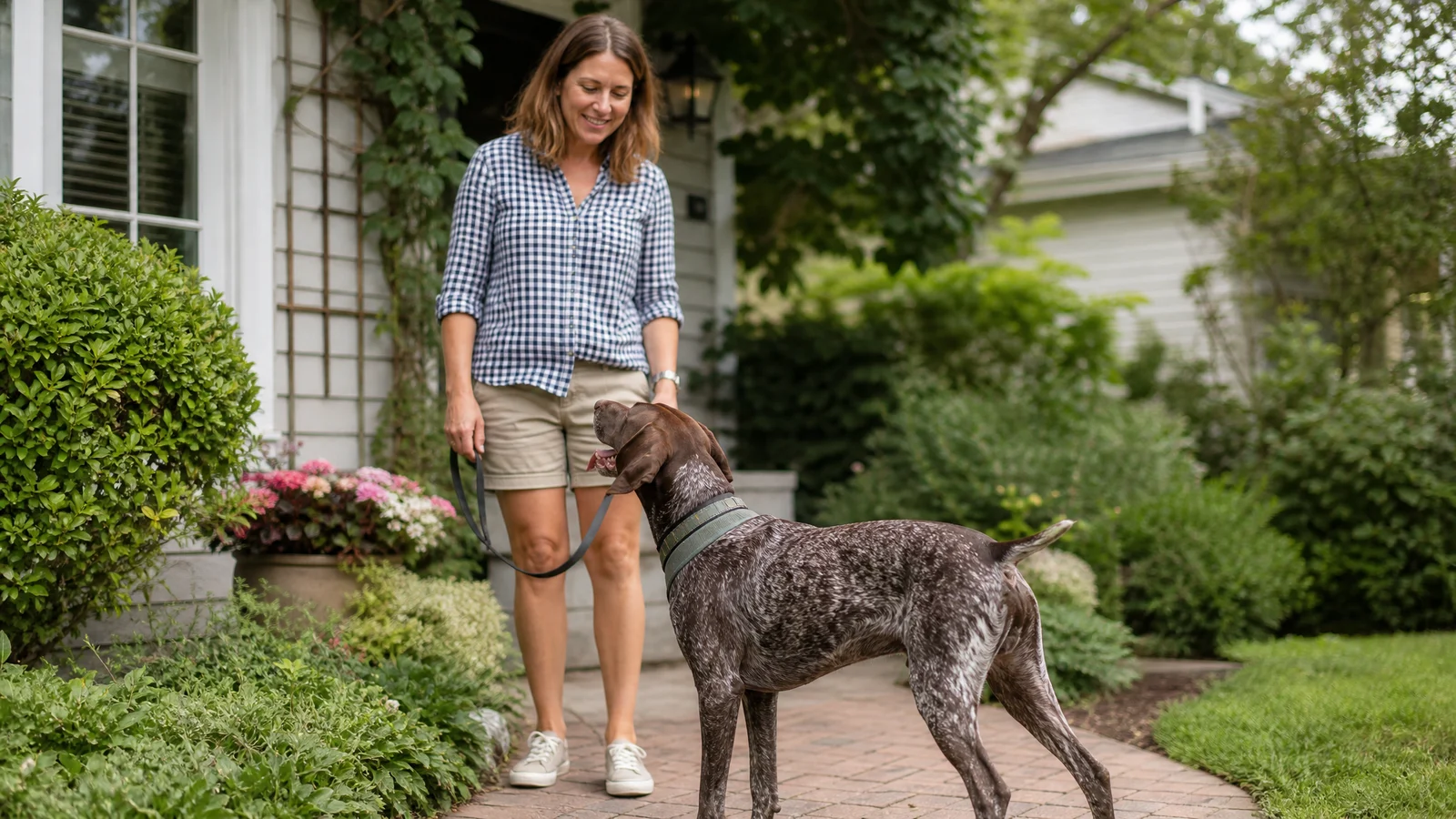
Where you step and where you deliver a reward can change a leash lesson as much as the word you use. A German Shorthaired Pointer may come back beside you, collect food in front of your knee and immediately surge ahead again. The dog has found the reward, but the next movement still sends both of you toward a tight leash.
We will work on the human half of that pattern as well as the dog's response. The exercises below separate starting, turning and pausing before joining them into a short walk. They also explain what to do when an unexpected distraction makes practice impractical. Your GSP does not need to stare at your face throughout an outing, but you both need room to move without pulling each other along.
Comfortable Leash Space for a German Shorthaired Pointer
Use well-fitted walking equipment that allows natural movement and gives you secure control. Check straps, fastenings and the way the harness sits as your dog walks. Equipment that twists or rubs can make a simple lesson uncomfortable before the first cue is given.
Choose leash length for the space. In an open practice area, enough room for a small curve of slack lets you see whether the dog is moving with you. Near roads or other people, manage the available length so they cannot step into danger. Extra length is not automatically extra freedom in every setting.
- Carry rewards where you can reach them without stopping to search through a bag.
- Choose a side for the first exercise so your hands and feet have a predictable job.
- Keep spare leash from dragging where either of you could step into a loop.
- Start on steady footing with enough clear ground for a few easy steps and a turn.
Begin without a destination to reach. A trip to an appointment or a busy trail entrance gives you less freedom to pause. A short practice area lets you learn the movement before the rest of the walk demands your attention.
The PDSA guide to reducing leash pulling supports rewarding useful walking behavior. Here, make that behavior visible by noticing slack, position and the direction of the next step. Those details tell you whether the exercise is helping the pair of you move together.
The First Steps of German Shorthaired Pointer Leash Training
Standing near you and starting with you are related but different actions. Teach the first steps before expecting a whole stretch of sidewalk. A dog can understand where a reward arrives while still needing practice leaving that position without accelerating past you.
A Reward Beside the Leg
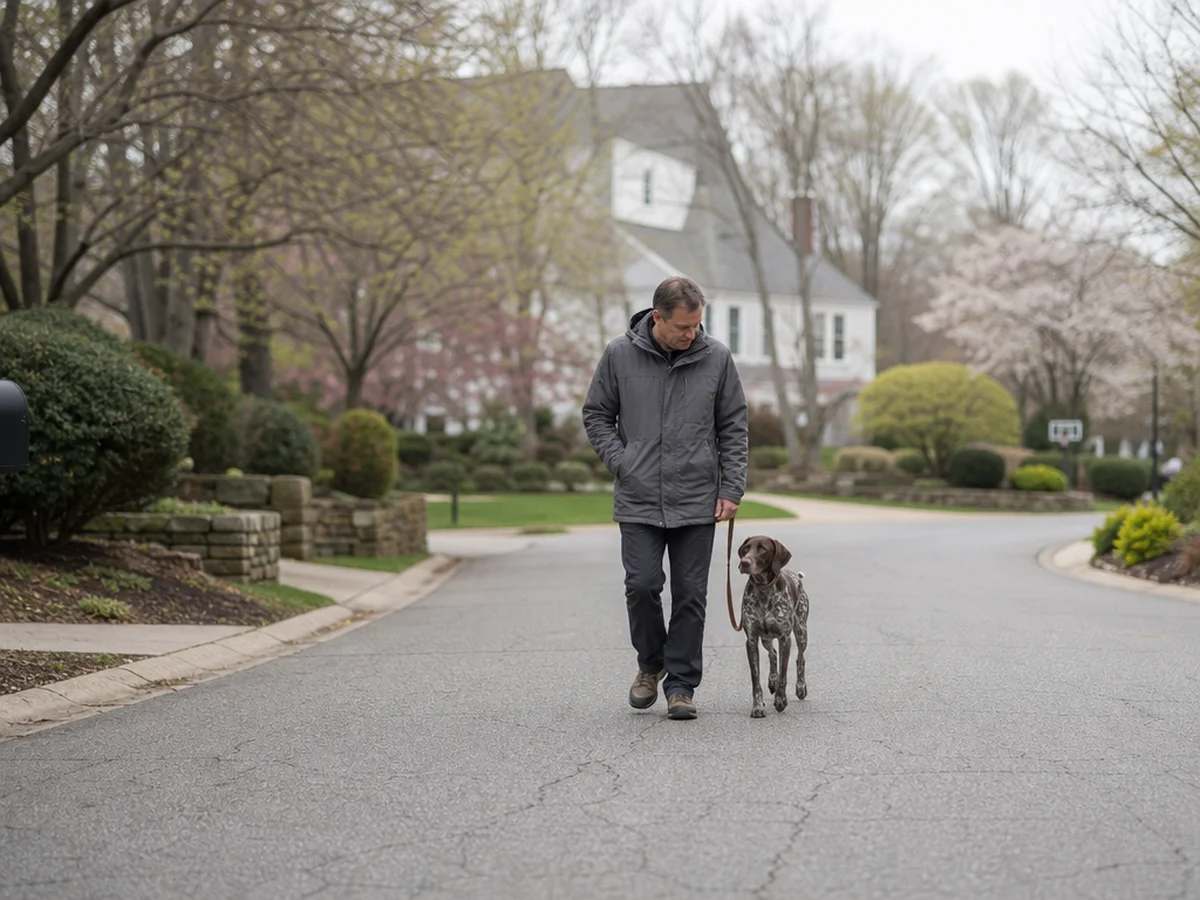
With your GSP comfortably near your chosen side, mark a useful standing position and feed beside that leg. Keep your hand low enough for a natural head position. Reaching across your body or holding food ahead of the dog can encourage crossing or surging.
You do not need an exact competition position. Look for a place where the dog can walk naturally and you can deliver food without tangling the leash. Leave enough lateral room that their shoulder is not constantly brushing your knee.
Practice the hand movement without asking for several steps. If delivery is awkward while you stand still, it will be harder once both of you are moving.
A Shared Start
Take one easy step when the dog is available to move with you. Mark the loose-leash movement and reward beside your leg again. Pause, reset comfortably and repeat before adding another step.
If the dog leaps forward as you begin, shorten the exercise and reward earlier. You may be moving faster than the dog can follow thoughtfully, or waiting until they have already passed the useful position. Change the human timing before assuming the dog needs a stronger cue.
The GSP foundation lessons explain familiar cues and rewards. Use that existing vocabulary rather than adding a different command for every foot movement. The leash lesson becomes easier when the marker already predicts something the dog values.
Leash Turns Without Pulling a German Shorthaired Pointer Around
A turn should give the dog information about a new direction. It is easier to teach while the leash is loose and the path is clear. Begin with a gentle change, leaving room for the dog's body to follow instead of pivoting sharply across their front feet.
A Wide Change of Direction
Invite attention with a familiar sound or cue, then move through a broad curve. Reward when the dog follows and the line stays comfortable. Your shoulders and feet should point toward the path you actually intend to take.
Do not call the dog toward one side while stepping toward the other. That mismatch can produce crossing even when they are trying to respond. Practice slowly enough to notice where your own body sends them.
Best Friends' loose-leash walking advice includes changing direction without yanking. The turn is a taught movement, not a surprise delivered through the leash. Arrange enough space that the dog has time to see and follow you.
Try the movement in both directions during separate easy repetitions. Turning toward the dog's side requires room for you to avoid stepping into them, while turning away asks them to travel farther around the curve. Reward the version you are actually teaching instead of assuming both directions feel identical.
A Turn Away From Something Interesting
Add a mild distraction only after an ordinary turn is familiar. Choose a distance where noticing you remains easy for your dog. Invite the turn before they reach the limit of the leash, then reward the movement into clear space.
The first practice distraction should be easy to leave. A bird lifting beside the path is a different problem, covered in our GSP recall around birds guide. Do not use wildlife as a prop for testing a new walking turn.
Give the turn a destination, such as a quiet patch where you can pause. Repeatedly circling the same tempting object can keep attention fixed on it. Moving somewhere else often makes the next useful response easier.
Pauses During Leash Training
When pulling begins in a safe, quiet place, pause forward progress toward the thing your dog wants. Keep your arms comfortable and avoid a contest of strength. Wait for an available moment of slack or invite an easy movement they already understand.
A pause should not become a prolonged standoff beside a frightening or overwhelming event. Safety and distance come first. You can help the dog leave and teach the quieter version elsewhere.
- Notice tension early enough that you can stop on stable footing.
- Keep the destination unavailable while giving the dog room to make a small useful movement.
- Mark slack or a willing return toward your side and reward in a practical position.
- Resume with fewer steps or a different direction before the same surge repeats.
Watch for a loop in which the dog pulls, returns for food and immediately pulls again. Reward more frequently during the good steps before tension appears. The goal is to make traveling on a loose leash worthwhile, rather than turning each return to position into the entire lesson.
Use ordinary pauses too. Stopping to check the route or let another person pass can become familiar through easy practice. The dog does not need to sit every time you stop unless that is a comfortable, useful choice for the situation.
Unexpected Distractions Change the Leash Lesson
A suddenly approaching dog, fast bicycle or noisy vehicle can exceed the practice level you planned. Create space where possible and take the safer route. The moment does not have to produce an elegant training repetition to be handled well.
If your GSP can follow a familiar turn, use it and reward once you have moved away. If they cannot respond, manage the leash carefully and leave without repeatedly calling for attention. Afterward, choose a location with more room or an easier time of day.
Keep the other participant out of the lesson. A passing dog should not have to wait nearby while you try several cues. Moving aside early protects both dogs and gives your own dog a simpler task.
The RSPCA's general training guidance favors short, rewarding lessons. Apply that by returning to an easy start or turn after the interruption, only if your dog is ready. Ending practice and walking home by a quiet route is also reasonable.
Frequent lunging or an inability to handle the leash safely deserves individualized help. A professional using reward-based methods can observe the trigger, the available space and the human movements together. You should not have to solve a repeated safety problem through trial and error alone.
A Short Leash Practice Walk
Join the movements on a route that contains easy exits and suitable sniffing space. Start with a small amount of shared walking, make one gentle turn and pause before the dog becomes absorbed. Then allow an appropriate exploration break.
Separate focused practice from the whole outing. Your dog still needs opportunities to investigate the environment, and you need moments when precise reward timing is not the main task. A sniffing invitation can make the change of activity clearer.
- Begin in the quietest available area and reward the first useful steps.
- Practice one turn where both bodies have enough room to move naturally.
- Use a brief pause that ends before impatience or distraction takes over.
- Offer safe sniffing, then repeat an easier version if the dog remains comfortable.
Finish while you can still recognize good movement. Extending the route because the first part went well can turn a short useful lesson into a difficult return journey. Choose the distance home with the dog's remaining attention in mind.
If another adult walks the dog, demonstrate your reward position and turn before handing over. Small differences in pace or hand placement can change the response. Let that person begin with the easy area too, even if the dog has already completed the route comfortably with you.
A Leash Record That Helps Your German Shorthaired Pointer
Note whether starts, turns or pauses were hardest and what your hands and feet did at that moment. Bring changes in gait or willingness to walk to regular veterinary visits. For the next practice, choose one human movement to make clearer and reward the dog's useful response before the leash tightens.
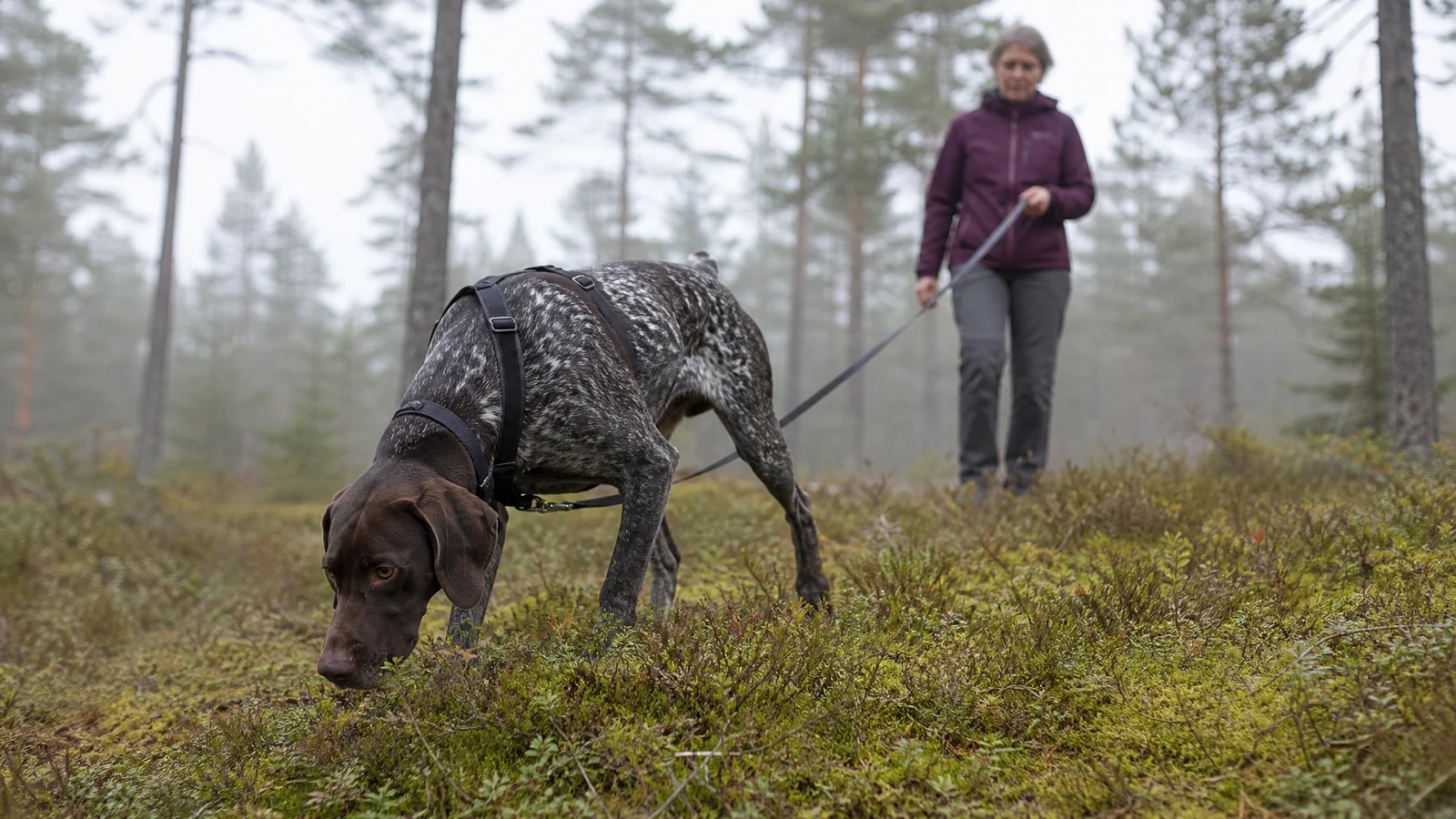 Exercise and jobsNose-Down Walks: Giving a German Shorthaired Pointer Sniff Time
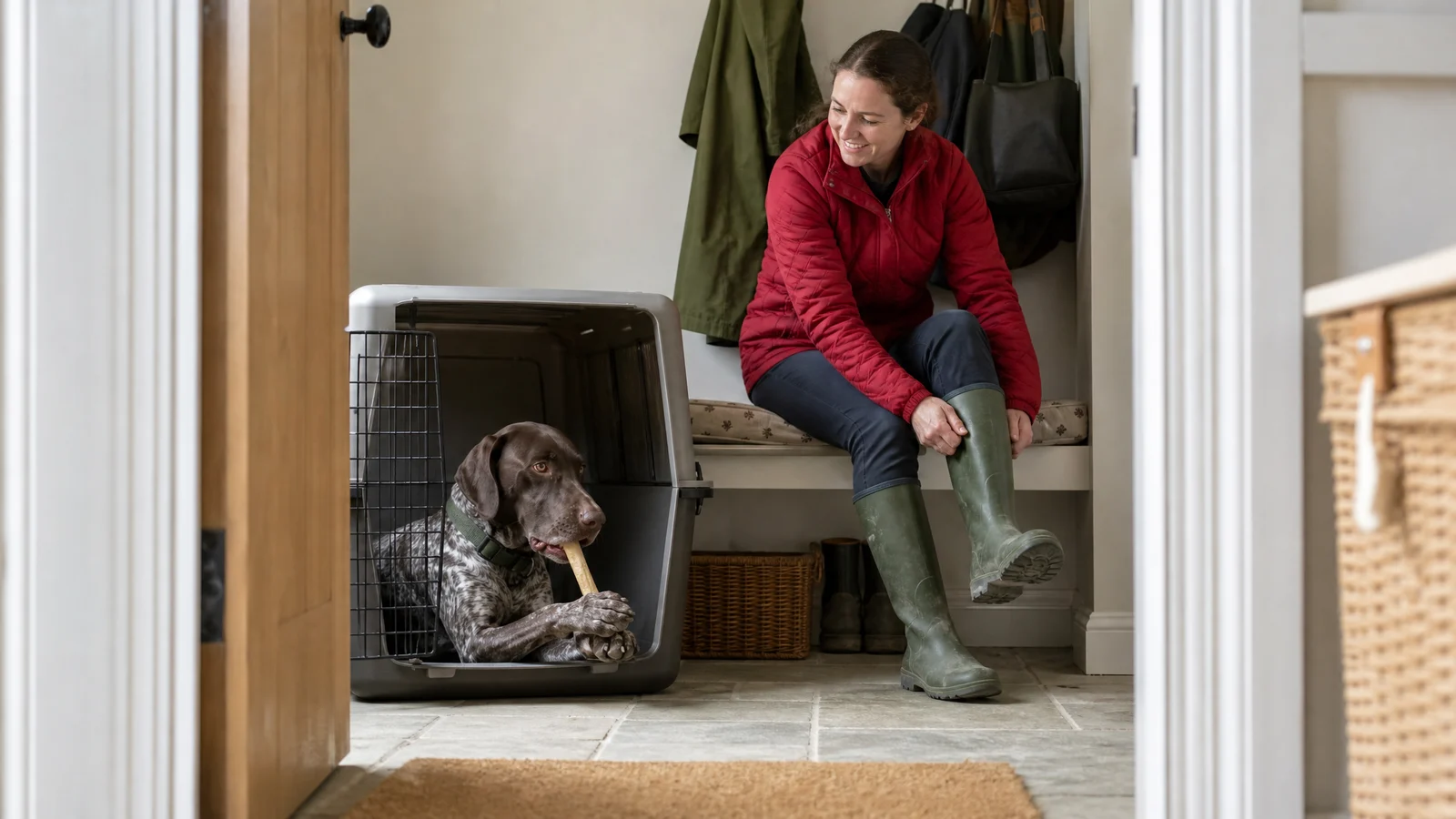 Training basicsPreventing Separation Anxiety in a German Shorthaired Pointer
 Training basicsFour on the Floor: Teaching a German Shorthaired Pointer Not to Jump
