 GSP
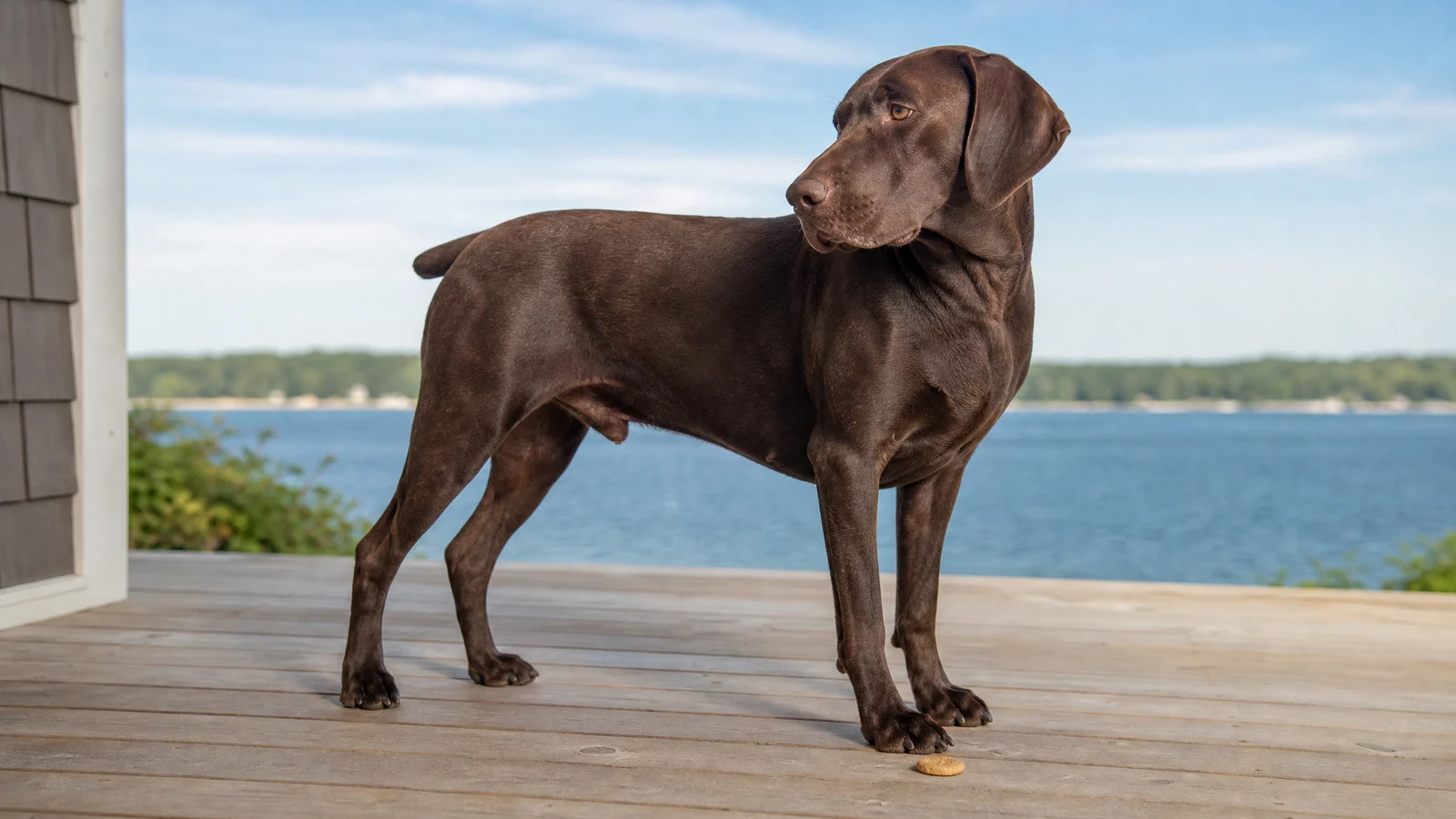
Think back to the last thing your German Shorthaired Pointer got hold of that you wished they had left alone. Leave it is the lesson that works in the second before that happens, by making the turn away worth more than the grab.
A GSP makes up their mind fast. They are smart and quick to learn, and with a very high energy level and a strong prey drive, a dropped crust or a skittering wrapper can look like the best find of the day. You will not win a race to the item, so the plan is to teach your dog that stopping short pays better than taking.
Everything below is built for a keen, quick learner. Start with the setup, then climb the stages one rung at a time.
Leave It Command Basics for a German Shorthaired Pointer
Stopping short is all the cue asks for: your dog turns away from something they could take but have not yet taken. That keeps leave it apart from drop it and from trading, which only begin once an item is already in your dog's mouth, and it keeps the first lessons simple enough to teach in a kitchen.
The reason to put in the effort is safety. Guidance from American Humane's walking tips says teaching leave it can prevent dogs from picking up harmful objects like discarded food or trash, and a dog with this much energy covers a lot of ground, so there is plenty to find.
Gather two kinds of treat before you start: a plain, low-value one that becomes the practice item and a clearly better one that pays for every correct turn. Add a flat surface such as the floor, a word like "yes" or a clicker to mark the moment, and a leash for the third rung. Plan on short, regular sessions rather than one long one. A GSP learns quickly with consistent practice, and a dog who stops while still keen comes back to the next session wanting more.
Building Leave It in Small Stages
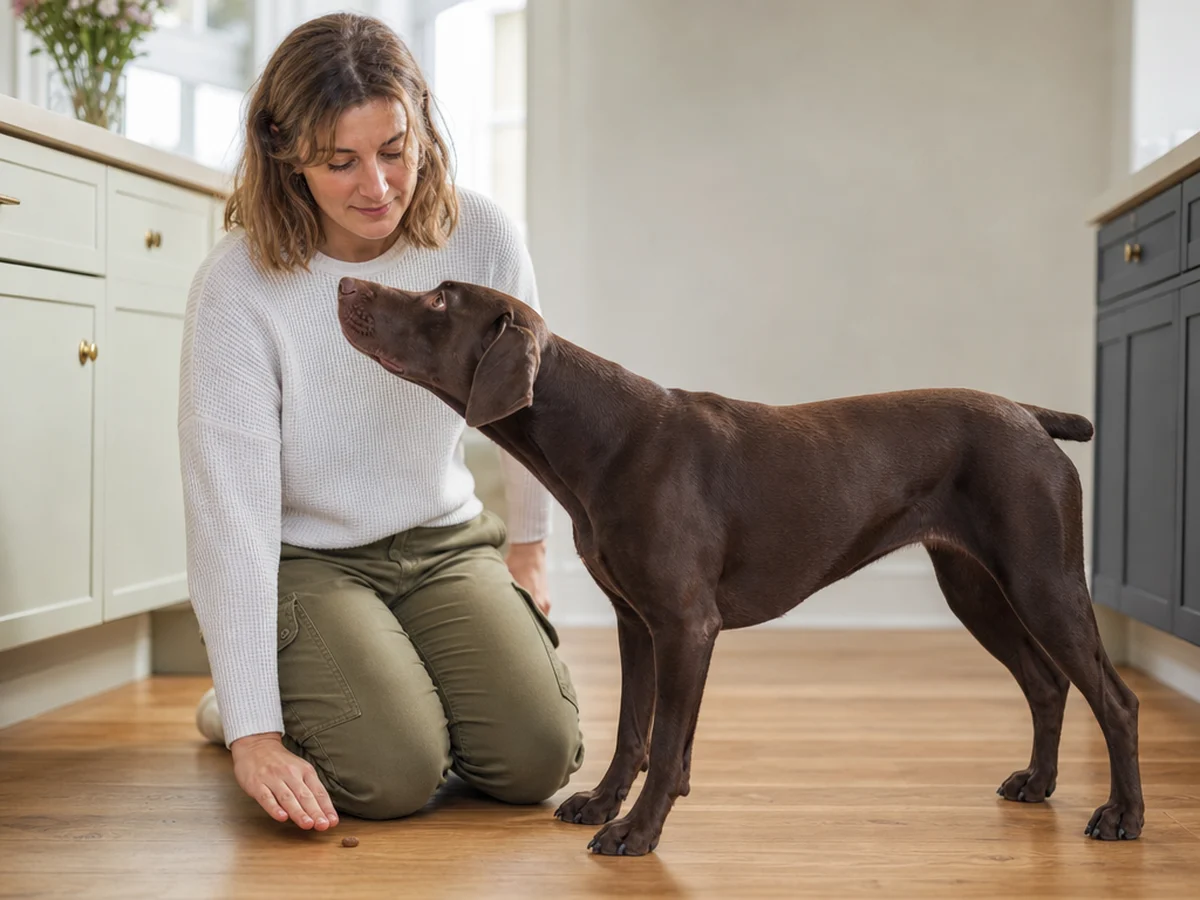
With the treats and the floor ready, the lesson becomes a ladder in which every rung changes just one thing. Stay on a rung until your dog does it smoothly several times in a row, then climb to the next.
- Cover the treat. Put the low-value treat on the floor and cover it with your hand. Your dog will sniff and nudge, and the instant they back off or look away, mark and pay with the better treat from your other hand. If they paw or mouth at the hand, keep it still and wait, since the turn away is the only thing that earns a reward.
- Show it, ready to cover: Lift your hand a little so the treat is visible, and be ready to put the hand back down if your dog dives. Pay for the same turn away as before. A dive only means the step was a little large, so cover the treat again and repeat the previous rung until it feels easy.
- Toss it out of reach with the leash on and slack. Your dog will lean and pull toward it at first. Wait without speaking, and mark and pay the moment the leash softens or your dog glances at you. The reward always comes from your hand, never from the floor.
When your dog stalls on any rung, the usual cure is to make that rung easier with a duller treat, a closer hand or a quieter room, not to ask again with more force. We like to keep a smart GSP moving, though: when a rung feels easy, climb, since a quick learner gains nothing from repeating what they already know.
Taking Leave It From Practice Spot to Real Life
Your dog now turns away from a tossed treat, which works in the kitchen but has not yet met the world. Two jobs remain: give the behavior its word, and take your hand out of the picture.
Adding the Word, Then Fading Your Hand
Say "leave it" once, in an ordinary voice, just before you cover or toss the treat, so the sound arrives ahead of a turn you already get. Then wait quietly and pay for the turn. Repeating the word teaches your GSP that the first one does not count.
Next, retire the hand in steps: cover the treat, then hold an open hand just above it, then leave it uncovered on the floor with your hands at your sides, paying for the turn each time. When the word alone does the job, the lesson no longer depends on your fingers.
Changing Items and Places Gradually
Begin with dull things from around the house and work up to high-value items gradually, since a dog who meets something irresistible before they are ready only practices grabbing. After that, change the place: another room, the yard, then a quiet stretch of your usual walk, adding just one change at a time. Keep the leash loose, as you would for loose-leash walking.
A GSP who nailed the kitchen may act as if the lesson never happened on the sidewalk, and that is a cue to make the step easier for a while, not a sign your dog forgot what you taught.
Leave it lowers the odds of a grab but does not replace keeping hazards out of reach, so if your dog ever swallows something that could be harmful, call your veterinarian right away. Regular veterinary visits are also the time to mention any sudden change in how your dog treats food or objects.
Where Leave It Gets Tricky Around the House
Real homes add details the ladder cannot settle on its own. Three of them deserve a plain answer before you ask your dog for more.
Can I say it from across the room?
Not at first. Distance is a separate challenge from the turn itself, so teach the turn with the treat close, then add one step back at a time while the word keeps working. If your dog stops responding, you moved too far too soon, so shorten the distance again and pay generously.
What if my GSP just stares at the treat?
Give them a few quiet seconds, because the look away can arrive on its own. If it does not, cover the treat again or swap in a duller one, and pay for any small shift of attention toward you, even a flick of the eyes. Staring means the rung is a little too hard, and the cure is an easier rung, not a longer stare-down.
Should I say it again if ignored?
Say it once. A second and third try teach your GSP that the first one is optional, and a dog already surging toward the item is not in a spot to learn. Calmly walk your dog away from the item, make the next attempt easier, and mark and pay as soon as the turn shows up.
German Shorthaired Pointer Self-Control Needs a Yes
Each answer above leaves your dog turning away from something, and a GSP says no most easily when a good yes is close by. A dog with this much energy and prey drive needs a purpose, and one without it can turn destructive, so the mouth needs somewhere legitimate to work.
Keep that yes easy to find. A sturdy chew within reach when the shoes come out, a scatter of treats in the grass and a regular game of fetch give a keen mouth and nose real work, and our guide to chew toys and chewing manners has ideas for the first of those. Then every leave it is one small no inside a day crowded with yeses, and your GSP can afford to give it.
Ignoring a dropped crust covers only a sliver of what your GSP will learn, and the e-book we send to readers who join this site gives every other need the same thorough, jargon-free attention at no charge.
 Training basicsHow to Teach a German Shorthaired Pointer to Focus on You
 Training basicsClicker Training a German Shorthaired Pointer
 BehaviorHow to Fix German Shorthaired Pointer Separation Anxiety
