 GSP
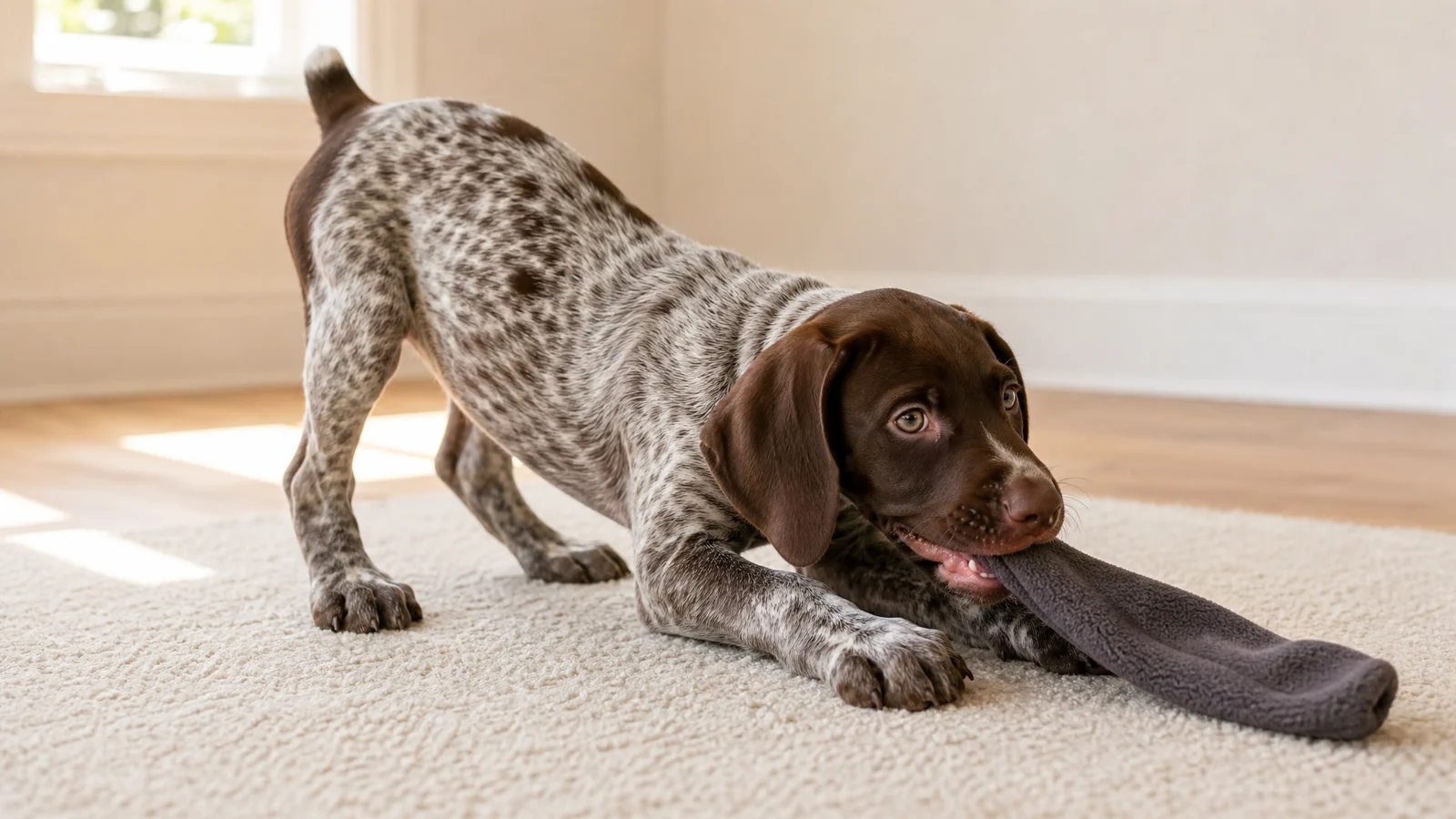
By the end of the first week, a GSP puppy has often discovered that hands, sleeves and shoelaces make wonderful targets, and it can seem as if a breed with boundless energy has packed every bit of it into one very small mouth. That is normal for a puppy, it is fixable, and it does not mean you have a rough dog on your hands. Much of what looks like fierceness is simply a young, keen dog trying a favorite game on the nearest thing that moves.
The core move is simple. When teeth touch skin the fun pauses, and when the mouth lands on a toy the fun comes straight back.
This page shows how to answer each bite in the moment and how to arrange the day so fewer of them happen. Most of it is quiet, repetitive work, which suits a breed that learns quickly when training stays consistent.
Why Play and Sore Gums Drive GSP Puppy Biting
A bite is easier to answer once you know what it is asking for, and for a puppy this young the answer is usually play, sore gums, or both at once. A GSP adds a third ingredient, which is a lot of energy and a lot of love for people, all of it arriving through the mouth.
Play That Gets Too Rough
Puppies usually learn bite inhibition during play with other puppies: a bite that lands too hard tends to end the game for a moment, and the puppy who bit learns to ease off. Your puppy left that classroom when they came home, which makes you the one who has to keep the lesson going.
With a GSP the lesson needs to be clear, because the breed is happiest with plenty of play and loving attention. A puppy with that much to offer will gladly use their mouth in every game you allow.
Gums That Hurt
Teething adds a second push. The timeline of puppy teething puts the shedding of baby teeth at around 12 to 16 weeks, when adult teeth begin to emerge, and treats the process as a painful one, so a safe chew toy is relief and not only a distraction. By about six months old or so, all of the puppy teeth should be out, and your vet can check that the mouth is moving along as it should.
Ending German Shorthaired Pointer Puppy Biting in the Moment
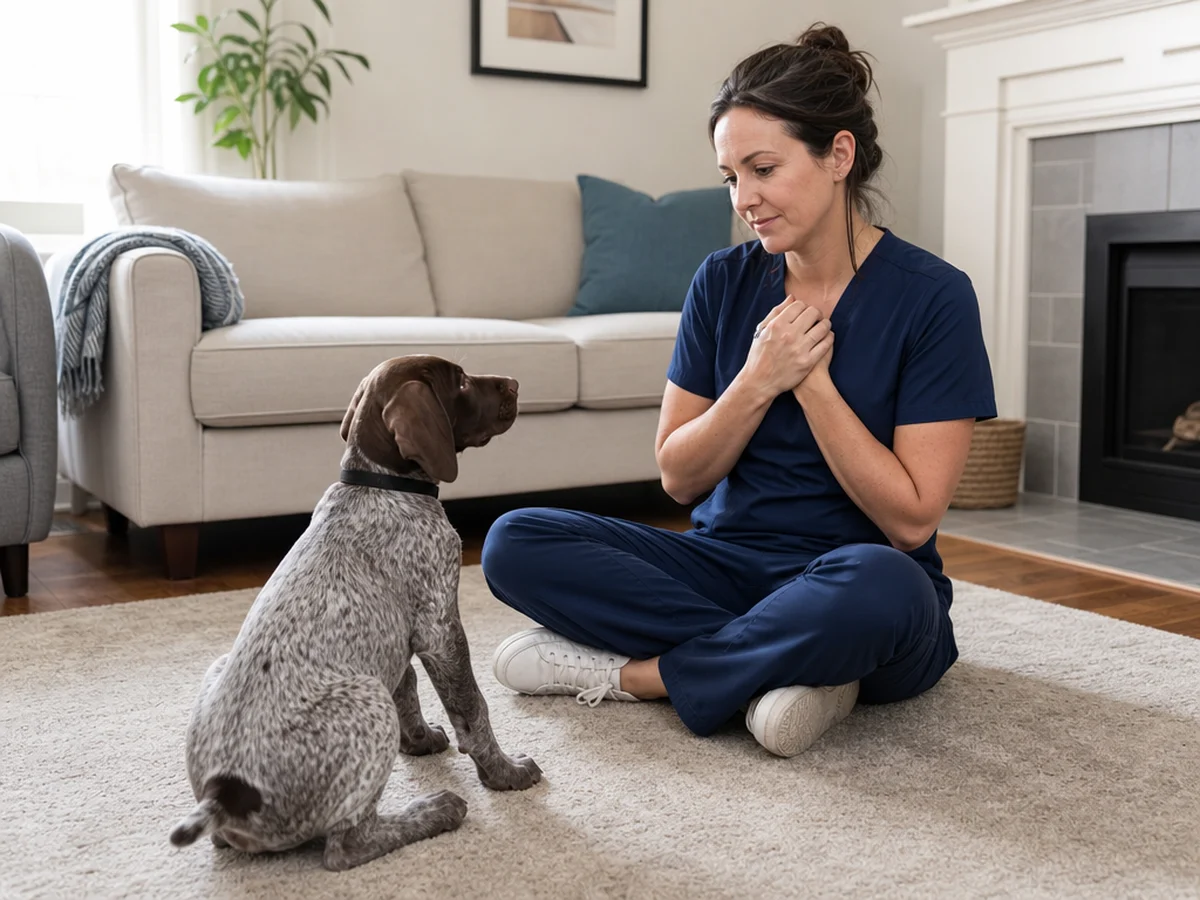
Whether the bite comes from play or from sore gums, the response is the same, and it works because it removes the one thing the puppy was after, which is you. A calm pause teaches more than a lecture ever could, so this is the sequence we recommend, in the order it happens:
- Go still and quiet. Stop moving your hands or feet, let the limb go limp and keep your voice flat, because pulling away fast turns the bite into a tug game that the puppy enjoys.
- Step Away: Stand up, or move to the far side of a baby gate, so the puppy can see the game leave the moment the teeth arrived.
- Wait for calm: Give the puppy a short break, long enough for the wild energy to drop, and skip the eye contact, talking and petting until the mouthing stops, since all three pay a puppy who is still biting.
- Come back with a toy already in your hand, held low and still, so the first thing the puppy's mouth finds is something they are allowed to hold.
- Pay the right target. The second the mouth closes on the toy, say a bright yes and start the game again, so the puppy learns that this is how play begins.
The sequence is dull on purpose. For a puppy as people-focused as a GSP, you leaving the game is the strongest message you have, and it needs no raised voice, so you can run it the same way at breakfast and at bedtime.
A Puppy Who Follows and Grabs
Some puppies chase you across the room, grabbing at trouser legs as you leave. Put the baby gate between you instead of walking away, keep your hands out of reach, and wait on the far side until the mouth goes quiet. Then return with the toy and begin again, because the pause only teaches something when the toy follows it every single time.
When the Pause Stops Working
If the puppy keeps picking your hand over the toy, check three things. Is the toy interesting enough? Drag it low along the floor and make it dart, because a still toy loses to a wiggling hand. Is the puppy overtired? Rest comes before more practice, as the next section explains.
Is everyone in the house doing the same thing? One person who laughs and plays along teaches the mouth that hands are fair game, whatever the rest of you do, so agree on the sequence before the next lesson begins.
Less Biting Starts With Naps, Exercise and Chews
The pause deals with the bites that happen, and the rest of the day decides how many happen at all. A puppy with extra energy, nothing to do or too little sleep may chew on you as a result, and a tired puppy can bite more, which is why a nap is as much a part of this plan as a toy.
That matters more than usual in a GSP, a breed with a very high energy level that needs a purpose and real mental work. Without a job, the mouth finds one of its own. How much running and walking suits a growing puppy is covered in our guide to walks, play and rest, so here we look only at what the mouth is doing.
Three Outlets for the Mouth
Three outlets give the mouth a better place to go. Brain work is one: a short nose game, such as a few treats hidden in a rolled towel or scattered in the grass, tires the mind without any extra running.
A chew station is another. Keep a few safe chews in the room where you spend the evening, and swap them around so each one still feels new to the puppy. A quiet nap spot away from the family traffic gives a puppy who is winding up a place to switch off, and steering them there early works better than waiting for a meltdown.
Offer all three before the mouth gets busy and not after. And at regular vet visits, mention gum soreness or chewing that seems out of the ordinary, so anything unusual gets a proper look.
Fixes for Biting at Hands, Feet and Clothes
Rest and outlets lower the number of bites, but a few habits keep turning up. The targets are usually hands, feet and clothing, and in our experience each one responds best to its own small fix.
Hands and Wrestling
Hands get mouthed most during petting and rough games. While you stroke, hold a treat in your other hand and feed small bites, so the puppy learns that being touched pays. For rough games, swap wrestling with your hands for fetch or tug, which keep all the fun and take the teeth out of the picture. A puppy who has rolled and grabbed at hands all week will test the new rule, so hold it steadily.
Ankles and Trouser Legs
Feet are different because they move. Stop walking the instant a puppy grabs on, and keep a tug toy in your pocket or on a nearby shelf. Wave the toy low to the floor, and start moving again only when the puppy's teeth are on the toy and off your trousers. The walking itself becomes the reward for choosing the toy.
When a puppy hangs from a sleeve, fold your arms in against your body and stand still. A boring sleeve loses its appeal fast, so offer a toy the moment the grip loosens.
Kids, Visitors and a Mouthy German Shorthaired Pointer
Everything so far gets harder when the hands belong to a child, or the person in the doorway is a guest who is thrilled to meet the puppy. A GSP puppy tends to bond closely with the kids in the house, which is lovely, and it also means plenty of excited mouths aimed at small hands. Our guide to whether the breed is a good family dog covers the wider picture, so this section stays on teeth.
Adults need to run the rules. Young children often squeal, flap and run when a puppy mouths them, and all of that excites a puppy and makes the mouthing worse. Teach children to stop moving, step out of the game and let a grown-up take over, and keep puppy and child apart with a gate while the habit is still strong.
Guests are the other flashpoint. Before the doorbell rings, put the puppy on a leash or behind a gate, and keep a small pot of treats by the door to toss on the floor, so the puppy has something better to do than leap at people and grab at their clothes. Ask visitors to stay calm and leave the greeting to you until the puppy has settled.
Ask every guest to follow the same rules. A puppy cannot tell a favorite aunt from a stranger, so a rule that bends for one person bends for all.
Owner Questions About Tug, Treats and Biting
A handful of situations tend to trip people up even when the steps above are going well. Each one has a short answer here, and the last marks the point where outside help is the better plan.
Can I play tug with a biting puppy?
Yes, once the puppy knows a drop cue, because tug gives the mouth a proper target and keeps the closeness. Start the game with the toy and not your hands, and end it calmly the moment teeth reach skin. Restart with the toy after a pause, and if the puppy gets too wound up to let go, finish the game and offer a chew instead.
Should I treat my puppy for letting go?
Not straight away. A treat at the instant a mouth leaves your hand can make the bite the first link in a chain that ends in food. Pay a calm pause or a toy in the mouth instead, and keep treats for the moments when the puppy chooses something else, such as a sit when guests arrive.
Does a puppy class help with biting?
It can. A class gives your puppy supervised play with other puppies, which is where much of the bite lesson starts, and an instructor who can watch your timing and adjust it. Ask to observe a session first, and choose a class built on rewards for good choices.
When is biting a job for a trainer?
Most puppy mouthing is loose and wiggly, even when it hurts. A stiff body is a different signal, and so is mouthing that starts to control your movements or leaves you no easy way to step away. That is not social play, and the Wisconsin Humane Society's advice is to stop what you are doing and contact a certified, force-free, professional trainer. Biting that seems painful for the puppy is a question for your vet.
Giving Up Wrestling for a Gentler German Shorthaired Pointer
Tug, treats and the pause all come down to the same trade: your hands stop being toys. That is the real cost of this plan, because the pause and the toy stash are easy, and wrestling is the game many people reach for first with a playful puppy.
A GSP is happiest with plenty of play and loving attention, so the trade only works if the closeness survives. It does when the game still starts with you, still gets loud and still leaves the puppy feeling well played with, and the teeth are simply aimed at fetch, tug and a chew by your feet.
Gentle teeth are one early milestone in a long list. Leave your email through this site and our e-book comes to you, covering the rest of your GSP's training in a calm, unhurried voice.
 CareGerman Shorthaired Pointer Grooming and Handling Training
 BehaviorGerman Shorthaired Pointer at 1 Year and Up: When Do They Calm Down?
 BehaviorGerman Shorthaired Pointers With Cats and Other Dogs
