 GSP
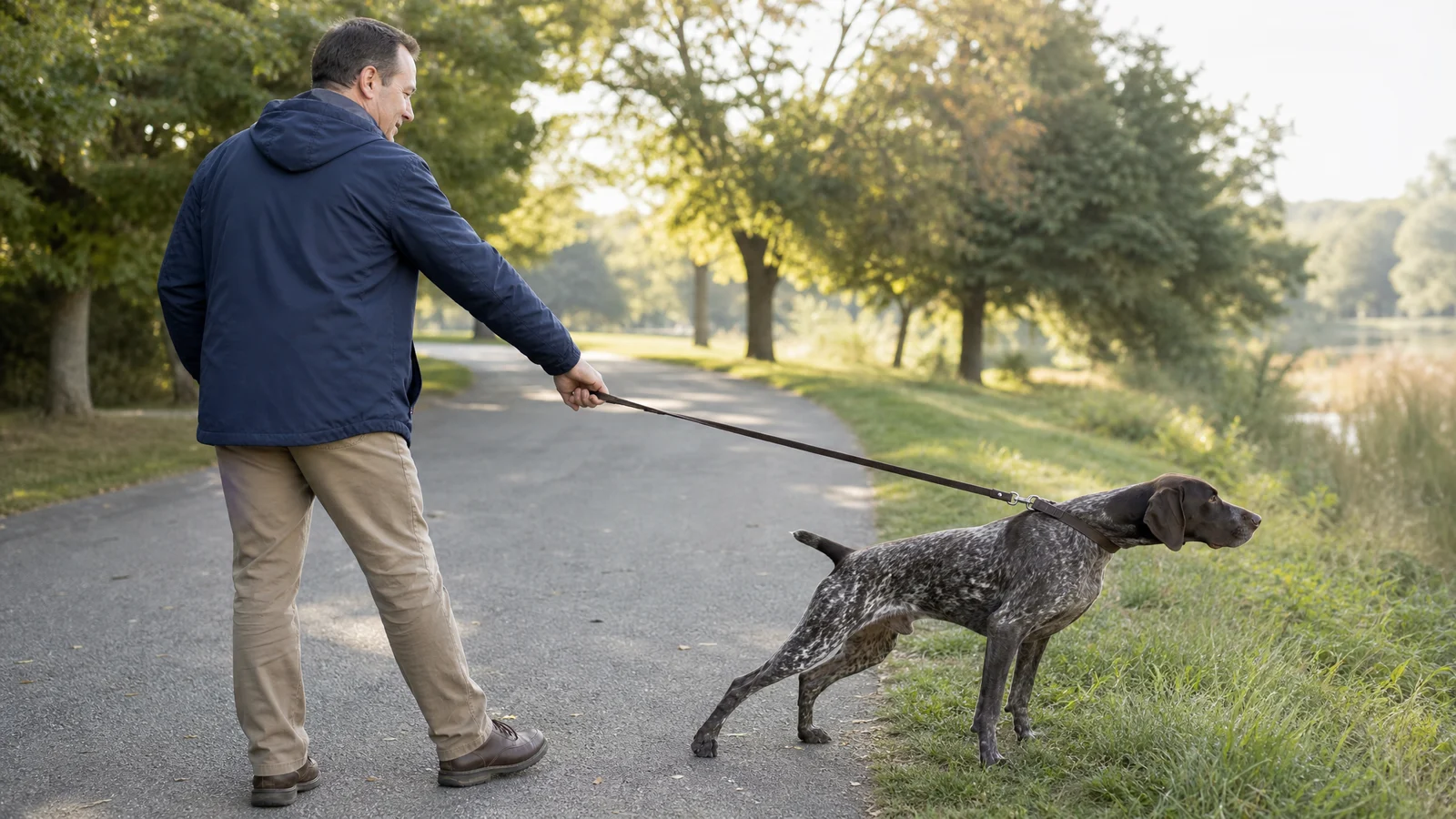
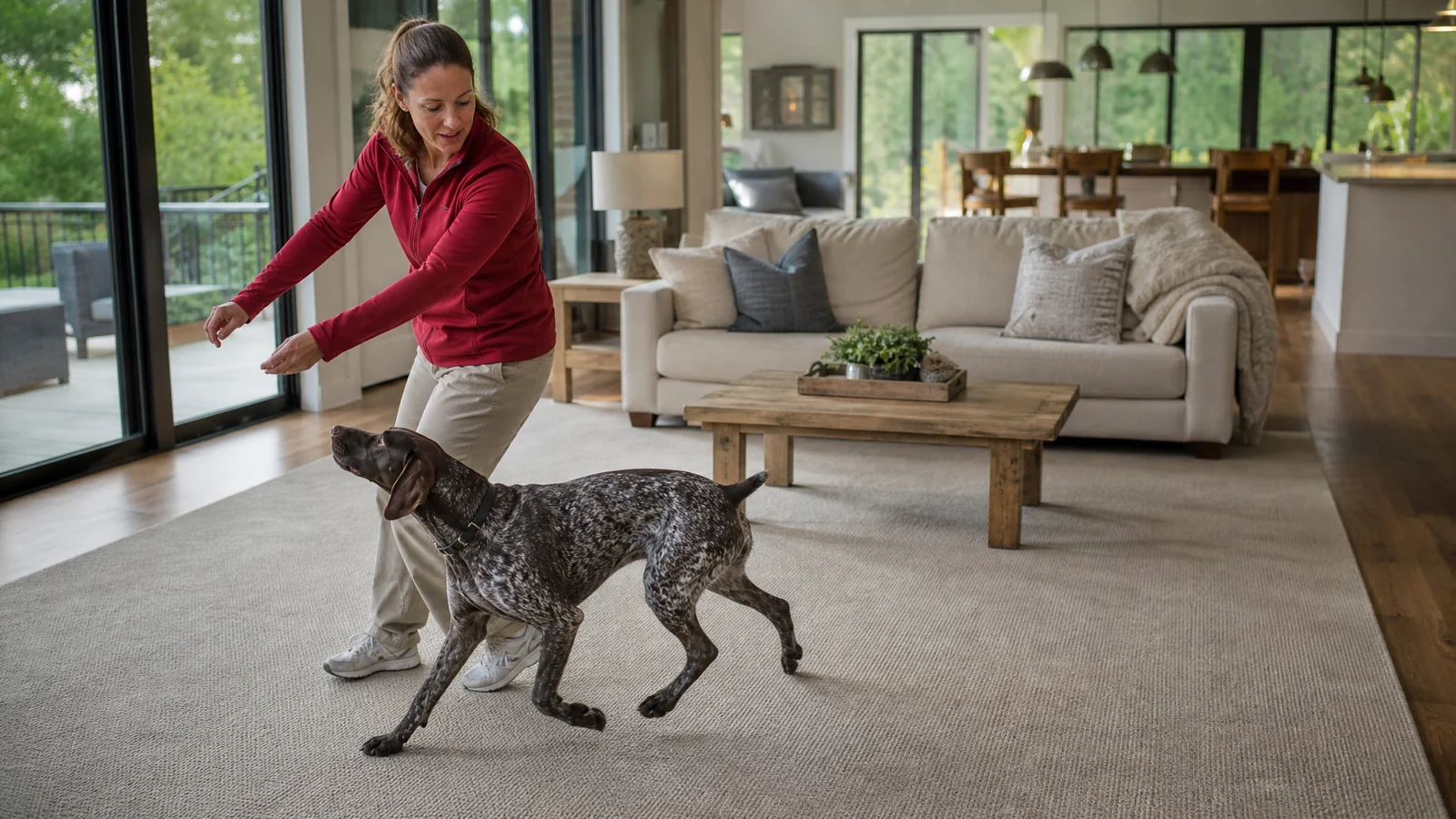
Count the steps your German Shorthaired Pointer takes from the front door before the leash goes tight, and the number is usually small. That is not stubbornness. A GSP covers ground with enthusiasm, and each time that enthusiasm earns another stride, the habit gets stronger.
The way out is to make a loose leash the only thing that moves the walk forward, and to pay your dog well whenever they find it. This page covers the gear, the stopping and turning that teach the rule, and what to do when a squirrel or another dog tests it. Short answers to the usual sticking points come near the end.
How Pulling Became a German Shorthaired Pointer's Best Idea
To change a habit, it helps to know who has been teaching it, and with pulling the teacher is usually the walk itself. Every time your dog leans into the leash and the person on the other end follows, the lean is paid with exactly what the dog wanted: forward motion toward the next smell, the next corner, the next dog. A tight leash that works even some of the time is a habit worth repeating.
A Breed Built to Learn Fast
A German Shorthaired Pointer is well equipped to learn this lesson quickly. The breed brings three things to it:
- very high energy
- a strong prey drive
- enough smarts to pick things up fast when sessions are consistent
In our experience, that combination means the pull is rarely defiance. It is a quick learner doing what has worked, at speed.
The Encouraging Half
That is the encouraging half of the story. A dog who learned to pull in a few weeks can learn that slack is what works, and the same keenness drives the second lesson. What you change is the payoff: the walk only moves when the leash is loose, and the rest of this page shows how to make that rule plain.
Gear and a Quiet Spot Before Pulling Practice
With the rule clear, the next job is setting the first lessons up so your dog can win them. Gather three things before you step outside:
- Treats worth walking for. Small, soft and quick to swallow, and better than everyday kibble, because the first sessions will compete with every smell on the block.
- A leash you can hold comfortably in one hand, ideally a plain six-foot one, so you are not wrestling the handle while you try to stay still.
- Quick treat access: a pouch or pocket you can reach without looking, because fumbling for a treat is how the moment to pay gets missed.
Those three items make every repetition cheap and quick, which matters because a GSP gives you many chances per walk and you want to use each one. Preparing the kit once also means you never have to break the pause to find something.
Equipment can help in one more way. A harness with a front clip is a reasonable way to manage pulling while the lessons take hold, but it only softens the force; the learning still comes from what happens when the leash tightens. If your dog seems stiff, reluctant to walk or uncomfortable in any piece of gear, mention it at your regular veterinary visits instead of pushing on with practice.
Choosing the First Training Spot
Choose where to start with care. Pick the spot with the least going on: a hallway, a fenced yard, the driveway on a quiet morning. A dog with a squirrel in sight or another dog across the street cannot learn what slack means, so save the busy places for later. Boring ground also gives you something to build on, because once your dog gets it there, every harder place is just a step up.
Stop German Shorthaired Pointer Pulling With One Pause
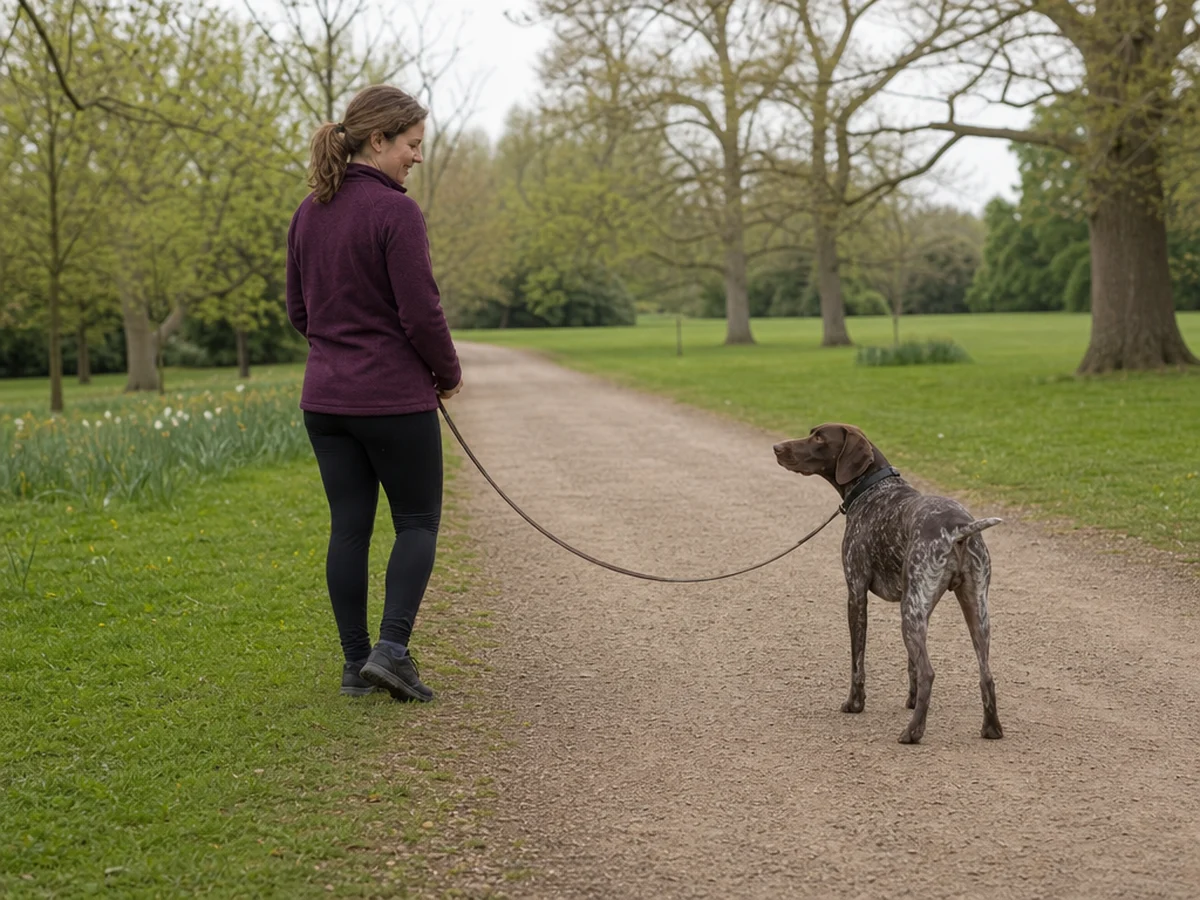
Gear and a quiet spot only set the stage. The lesson itself happens in the half second after the leash goes tight, and it runs the same way every time:
- Walk forward with treats ready and your leash hand relaxed at your side.
- The instant the leash tightens, stop and stand still. Plant your feet, keep your hand quiet and say nothing, because a tug or a word gives your dog something new to react to.
- Wait. Your dog will either ease the tension or turn back to see why the walk stopped, and either one counts.
- When the leash goes slack, mark it with a cheerful "yes" and pay a treat right beside your leg, which teaches your dog where good things happen.
- Walk on, and repeat at the next tight moment, however soon it comes.
Each step has a job. Standing still takes away the reward your dog was after, the wait gives them time to work out what changed, and paying at your side builds a spot they will start choosing on their own.
Expect plenty of stops at the start. It helps to know what slack looks like, and according to the AKC, the leash should be hanging in a J-shape with your dog's attention back on you, while you might have to stop and start every step or two at first.
Keep each session short and end while your dog is still keen, because a GSP who is still eager tomorrow will learn faster than one who was worn flat today. Stopping on a good repetition is worth more than squeezing in one more tired one.
When Your Dog Braces Instead
Sometimes your dog stays braced at the end of the leash and nothing changes after a patient wait. When that happens, take a step toward your dog or turn a few degrees to give the moment a fresh start, and pay the first sign of slack that follows, even if it is tiny. Waiting longer rarely helps a dog who has no idea what you want, while a small change of picture gives them a new chance to get it right.
Turning Away Before Pulling Starts
Stopping answers a pull after it starts, and turning can head it off before it gets going. Once your dog understands the pause, add the turn for the moments when they surge ahead too fast for you to react.
Spotting the Lean Before the Pull
A leash does not go from loose to tight in an instant. Your dog's shoulders lean forward, their pace quickens and the curve in the line starts to flatten. The moment you see that, turn and walk the other way at a brisk, cheerful pace, calling your dog along.
The turn works because it changes where the walk is going, so pulling ahead no longer gets your dog where they were aiming. Walk briskly, too. A lively GSP bored by a crawl will pull simply to speed things up, and a good pace makes it easier for them to stay beside you.
Paying the Catch-Up
When your dog catches up and the leash curves again, mark and pay beside your leg, then carry on in the new direction. Pay the catch-up and not only the arrival, because the catch-up is the moment your dog chooses slack.
GSP owners who have worked through this often describe slow walks at first, with a short trip taking far longer than it used to, and a better payoff later. That slowness is normal. You are not covering ground yet, you are teaching a rule, and a rule taught well saves distance later.
German Shorthaired Pointer Leash Manners Near Squirrels and Dogs
A quiet driveway is one test, and a squirrel racing across the lawn is the real exam. GSPs have a strong prey drive, so movement at the edge of the path can pull harder than any treat in your pocket, and the same stop-and-turn plan has to hold up at that moment.
Distance does most of the work. Practice at a range where your dog can still notice the trigger and still take a treat, then close the gap a little at a time as the slack holds. If your dog is already straining and fixed on it, you are too close, so turn away, put room between you and pay when the leash loosens.
Getting In Before the Fixation
Get in early. Ask for something easy before your dog locks on, such as a sit, a nose touch to your hand or a quick "look at me", and reward it while the squirrel or the other dog passes. Earning your dog's attention before they lock on is far easier than winning it back once they are fixated, and treats do the heavy lifting here, so bring better ones than usual.
Not every tight leash is a pulling problem. A dog who barks, lunges or freezes at other dogs needs more than loose-leash practice, and our German Shorthaired Pointer leash training guide covers the lunging side of the walk. Sort out which problem you have before adding more pulling practice, because a dog who is frightened or overexcited by another dog is not choosing to pull, and more stops will not fix that.
Keeping Pulling From Creeping Back In
Once the leash stays loose near squirrels, the new risk is drift, because the old habit returns the first time pulling pays again. Three habits keep that from happening:
- Thin the Treats Slowly: keep paying often while the walk is hard, and space the treats out only as slack becomes reliable.
- Keep the rule on hurried days, with no exceptions when you are late, since one tight-leash dash across the street teaches your dog that the rule has an off switch.
- Switch up the route. New streets and new smells test the rule in fresh places, so a skill that holds on your block gets a chance to hold everywhere.
The most useful stand-in for a treat is something your dog already wants badly, and that is a sniff. Adding a cue for when your dog may explore turns the chance to sniff around into a reward, an idea explained in this Fear Free piece on sniffing and walks, which treats walks as enrichment opportunities.
So after a stretch of loose-leash walking, say your release word and let your GSP go nose-down on the same loose leash. They are not pulling to get there, they are being invited, and that difference is the whole lesson.
Sticking Points Owners Raise About Pulling
Three details decide whether the first week of practice turns into a habit. Each is easy to get wrong, so here they are in plain terms.
How long should one practice walk last?
Keep it short. Dogs learn best in short, engaging bursts, so keep leash training sessions around 5-10 minutes at a time and end on a positive note. A GSP with energy to spare may seem to want more, but a brief, successful session beats a long one that ends in frustration. You can spend the rest of the outing on an easy stroll or a sniff stop with the same rules in mind.
Will a tired GSP pull less?
Often, yes, up to a point. A dog with energy to spare has a harder time holding slack, so a run or a game of fetch before practice helps them think. It will not replace the lesson, though, because pulling is learned and only changes when the pull stops paying. Treat exercise as the warm-up for practice, not a substitute for it.
Why did pulling return after a good week?
Usually something changed: a harder place, a thinner treat schedule or a rushed day when pulling got your dog where they wanted to go. Go back to the quieter spot, pay generously again and let the leash earn its way back to busier streets. Many GSPs also test old rules again as they grow up, and our page on the teen months of training covers how to keep the basics steady through that stage.
Pulling Fades and the Walk Takes Over
When this works, the leash slowly drops out of the conversation. Somewhere along the block you realize you have not thought about it, the line is hanging in its curve, your GSP is reading the sidewalk, and you are looking at the neighborhood instead of at the strain in your arm.
That is what the stops, the turns and the paid catch-ups were for: a walk that a keen dog and a person share, instead of one they pull through in opposite directions. A loose leash gets your GSP out the door, but plenty more waits beyond the curb, and our e-book, delivered by email once you join the list, treats each of those lessons thoroughly while staying easy on a tired reader.
 Exercise and jobsEasy Tricks to Teach a German Shorthaired Pointer
 Exercise and jobsHow to Teach a German Shorthaired Pointer to Shake and High Five
 Exercise and jobsHow to Teach a German Shorthaired Pointer to Spin
