 GSP
A trick is one of the quickest ways to give a German Shorthaired Pointer's energy a job that fits in a living room. These dogs are smart, friendly and keen to please, so a new move rarely needs much persuading. What decides the result is the method. Below you will find three beginner tricks (touch, under the bridge and catch), each split into the small stages a dog really learns in, with a plain sign for when to move on and a fix for when a stage stalls.
Everything here runs on rewards, a quiet room and a handful of small treats, so you can start today with what you already have at home. Keep every session fun and upbeat, and your dog needs no earlier trick training to begin.
Beginner German Shorthaired Pointer Tricks Worth Starting With
The first trick you pick shapes how your dog thinks lessons work, so it pays to choose ones that go well. Touch, under the bridge and catch are the three we would start with, because each builds on a dog following your hand or a treat, and each ends in a movement small enough for a living room.
All three run on the same loop: you give a cue or hand signal, lure the behavior, and reward it. Start in a distraction-free environment, with the television off and no other pets wandering through, and you will probably want to begin indoors and move outside once your dog has the trick down.
Choose one marker word, such as "Yes," and say it the instant your dog does the right thing, then deliver the treat. The word tells your dog exactly which moment earned the reward.
If you are still building those reward basics, our complete GSP training guide covers them. One rule carries through every stage below: move on when your dog does the current step smoothly several times in a row, and not before. A dog who is guessing at one step will guess again at the next, so waiting costs you less than rushing.
German Shorthaired Pointer Tricks Step by Step, Beginning With Touch
Touch comes first because it is the quietest of the three and gives your dog an easy early win. In our experience it is also the trick that makes the other two simpler to teach, since it gives you a way to point your dog's attention at your hand.
Paying for the First Nose Bump
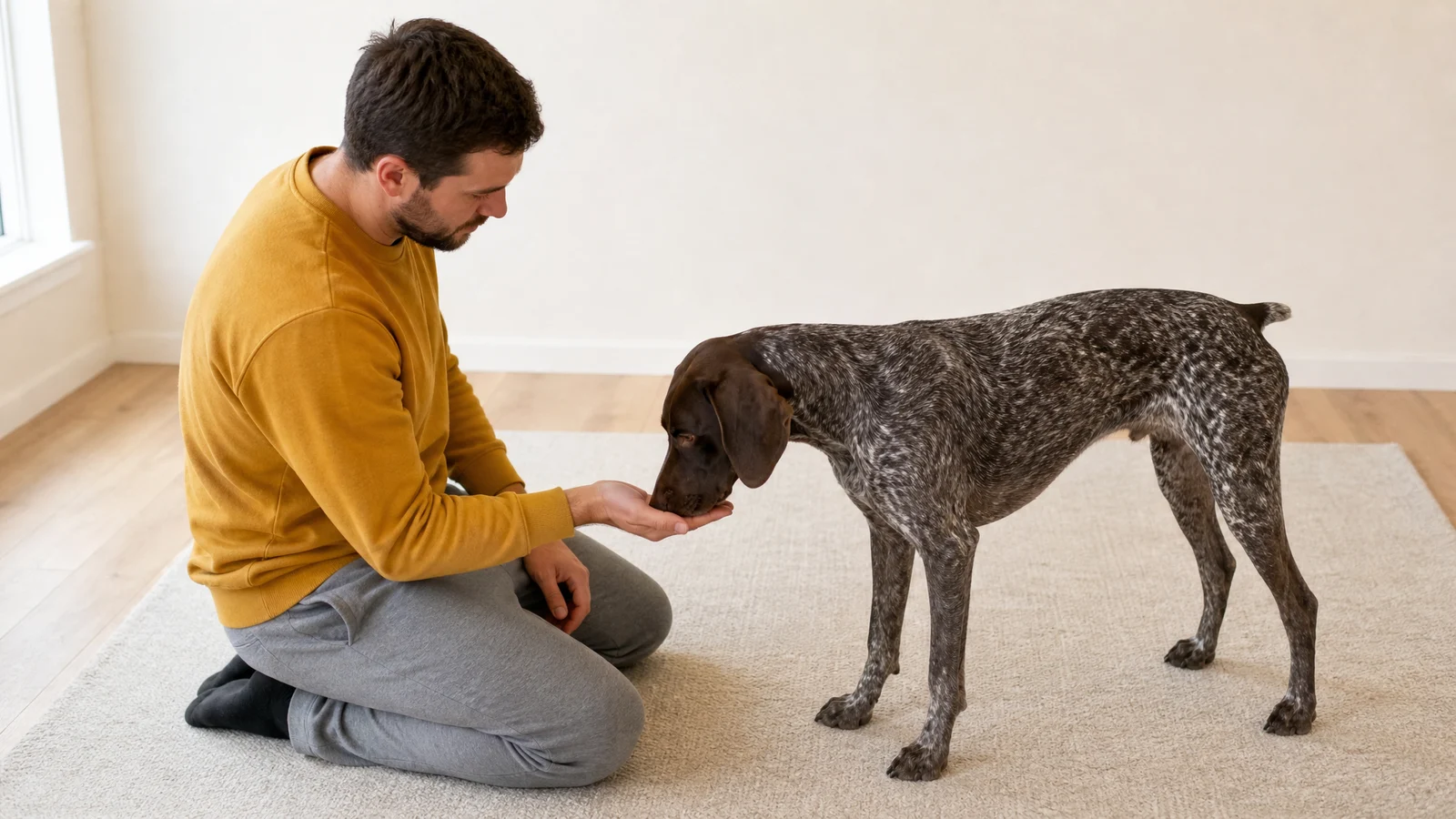
Dogs sniff everything, and your hand is no exception, so touch starts with a flat hand held palm out, an inch or two from your dog's nose. Where their nose goes, their head and body follow, which makes touch useful for everything from obedience to tricks (see AKC's nose targeting guide). Work through the first stage in this order:
- Hold your flat hand, palm out, close to your dog's nose and wait while they sniff it.
- The instant their nose bumps your palm, say your marker word.
- Pay right away with a treat held directly in front of your open palm, so the reward appears exactly where you want the nose to go.
- Repeat in different spots around the room, keeping distractions to a minimum.
Move on when your dog bumps your palm several times in a row, instead of sniffing and waiting to see what happens. If they hesitate, the next stage is the fix.
When Your GSP Hesitates at Your Hand
Some dogs sniff the air near your hand and stop short of touching it. For the first few tries, rub a little treat scent on your palm so leaning in is the obvious move. If they still will not place their nose on you, pay for a little less: reward a look toward your hand, then a lean toward it, then wait for a little more before you mark. Each small ask builds on the last, until the nose lands in your palm.
Adding the Word Touch
Once your dog reliably bumps your palm from a few inches away, it is time to name the behavior. Say "touch" just before you present your hand, then mark, praise and pay when the nose lands. The order matters, because a word that arrives after the action only describes what your dog already did. Say it the same way each time, in a calm voice.
Moving the Target Farther Away
With the word in place, make the hand harder to reach a little at a time. Move it a few inches farther away, then keep building toward several feet, and try it higher, lower, closer to your body and off to one side. After that, add distractions a little at a time, starting with something like another family member in the room, and pay generously whenever the setting gets harder. Take your time over this stage.
The Under the Bridge Trick With Your Knees
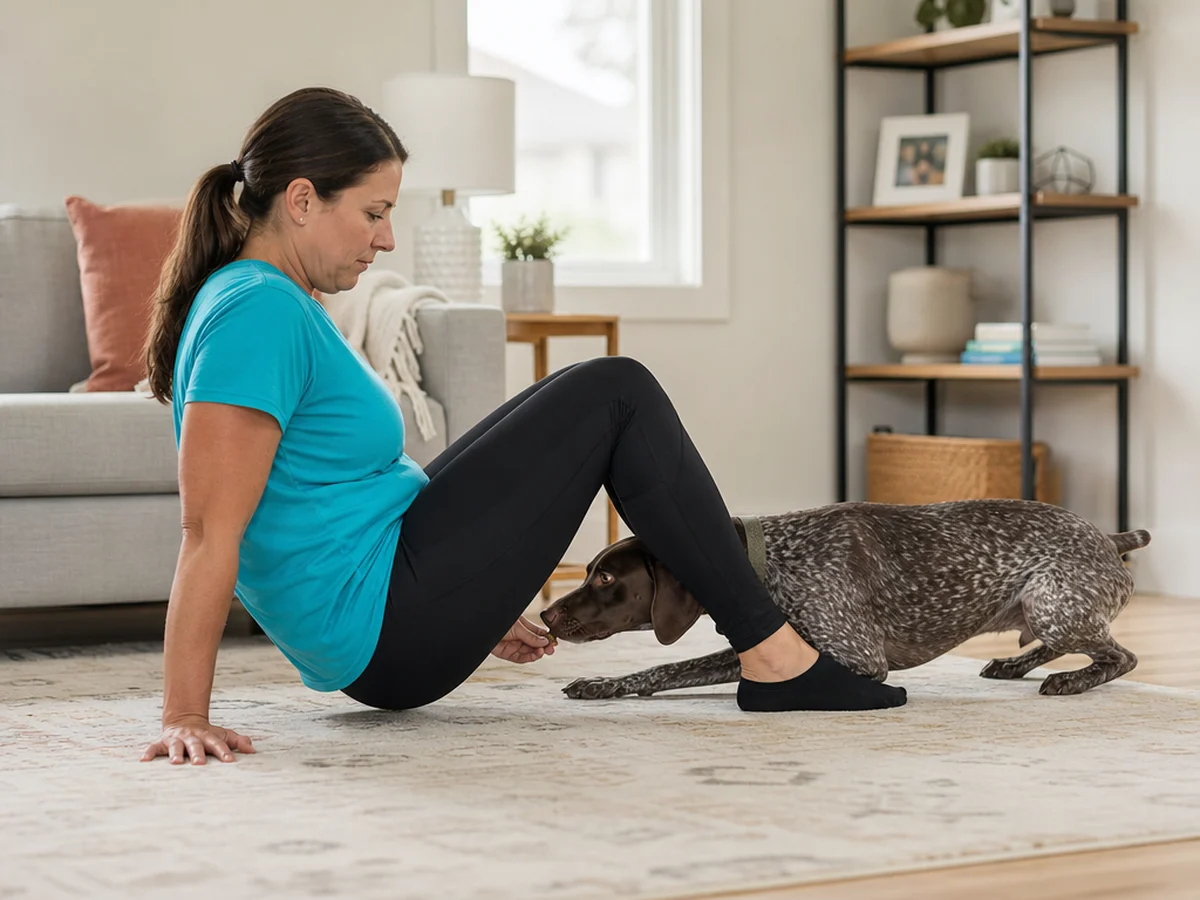
Touch teaches your dog to follow a hand, and this trick asks them to follow it lower and a little farther, through a tunnel made from your own legs. It keeps a restless dog moving, which suits a breed with this much energy.
Setting Up the Tunnel
Sit on the floor and raise your knees to make a triangle, with your dog on one side of your body and a treat or toy in your hand on the other. Pick a treat or toy your dog is truly excited about, because the reward does most of the work of getting them under. Make the opening wide enough that they can pass through comfortably, since a tight squeeze is a poor first experience.
Luring Your Dog Through the Gap
Now the lure does the teaching, so keep your movements slow and let your dog work out each part. Here is the order:
- Reach the treat or toy under your legs and let your dog sniff it.
- Lower it toward the ground and slowly move it under your legs, so your dog lowers their body to follow.
- The moment your dog is through, praise them and hand over the treat or toy.
- Repeat until the route feels familiar to your dog.
Your dog is ready for a word when they follow the lure through the gap smoothly several times in a row. If they sniff and stop at the opening, pay for the sniff, then ask for one step more on the next try, the same patient shaping that works for touch.
Adding the Word and Dropping the Lure
Once they are moving through smoothly, add a cue such as "under" or "bridge" as they pass beneath your knees. When they do it consistently, stop luring: give the cue first, then praise and treat after they have gone under your legs. The treat now follows the trick instead of leading it, which is the point where your dog starts to know the word and not just the food.
A Catch Trick That Starts With Treats
Catch adds speed, and a GSP has plenty of it, so the job here is keeping the tosses gentle and the pace relaxed. A dog who is keyed up learns less than a dog who is paying attention.
Gentle Underhand Tosses
Start with your dog in front of you and get their attention with a treat in your hand. Then follow these steps, tossing gently and underhand each time:
- Show the treat so your dog's eyes are on you.
- Toss it gently underhand toward them.
- If they catch it, praise them lavishly.
- Repeat a couple of times each session.
Move on when catching has become routine, with your dog taking tosses smoothly several times in a row. Until then, there is no reason to make the throw any harder.
When a Toss Is Missed
Misses are part of the lesson. If the treat drops, try to scoop it up before your dog can gobble it, then toss again, so the floor never becomes the reward. Keep your mood light, because a miss is just a free retry. When your dog is catching treats reliably, start tossing a lightweight toy they enjoy, again gently. When they catch it, praise them and follow up with a treat, which keeps the catch worth repeating even for a dog who would rather keep the toy.
Catch is a quick burst of fun, and a GSP's energy needs bigger outlets too, which our page on jobs for an athletic GSP covers. If a catch your dog managed easily suddenly looks awkward or unwelcome, mention it at their next regular vet visit.
Trick Questions Once the Basics Work
These three questions sit at the edges of the lessons above, where a keen dog gets ahead of the plan or a trick leaves the quiet room. Each answer builds on stages you already know.
What if my GSP is too excited to learn?
Start with touch, the least physical of the three, and keep the room quiet so there is little to get excited about. A GSP's energy is very high and needs real outlets, so it helps to have daily activity covered, as our GSP exercise needs page explains. If your dog still cannot settle, end on any calm moment and try again later.
Can I use a toy instead of treats?
Yes, for under the bridge and catch, where a toy your dog loves works as well as a treat. Keep your marker word and praise exactly as they were, so the toy is the reward and the word is still the signal.
When can we practice outside?
Once a trick is solid in the quiet room, take it through small distractions, then new places: toys, other pets and people at home first, then the yard or driveway, and finally public places such as a park. Expect your dog to need extra help in each new place, so lower the bar and pay generously there.
A Lively Trick, Then a Still One
Put the three tricks in an order and a session gains a shape. Catch and the run through your knees spend energy, while touch asks for one quiet movement toward your hand, so a session that ends on touch hands your dog a calm job to finish with. That is the thing to take from these three: a GSP with this much energy gets more from a session when you choose its order on purpose. Begin with the dog you have that day, and let their mood decide which trick goes first.
Wondering what a keen GSP should learn once touch, the bridge and the catch feel easy? Our e-book takes that question much further, going deep on what a GSP needs to learn and keeping the wording plain.
 Exercise and jobsHow to Teach a German Shorthaired Pointer to Shake and High Five
 Exercise and jobsHow to Teach a German Shorthaired Pointer to Spin
 Exercise and jobsHow to Teach a German Shorthaired Pointer to Roll Over
