 GSP
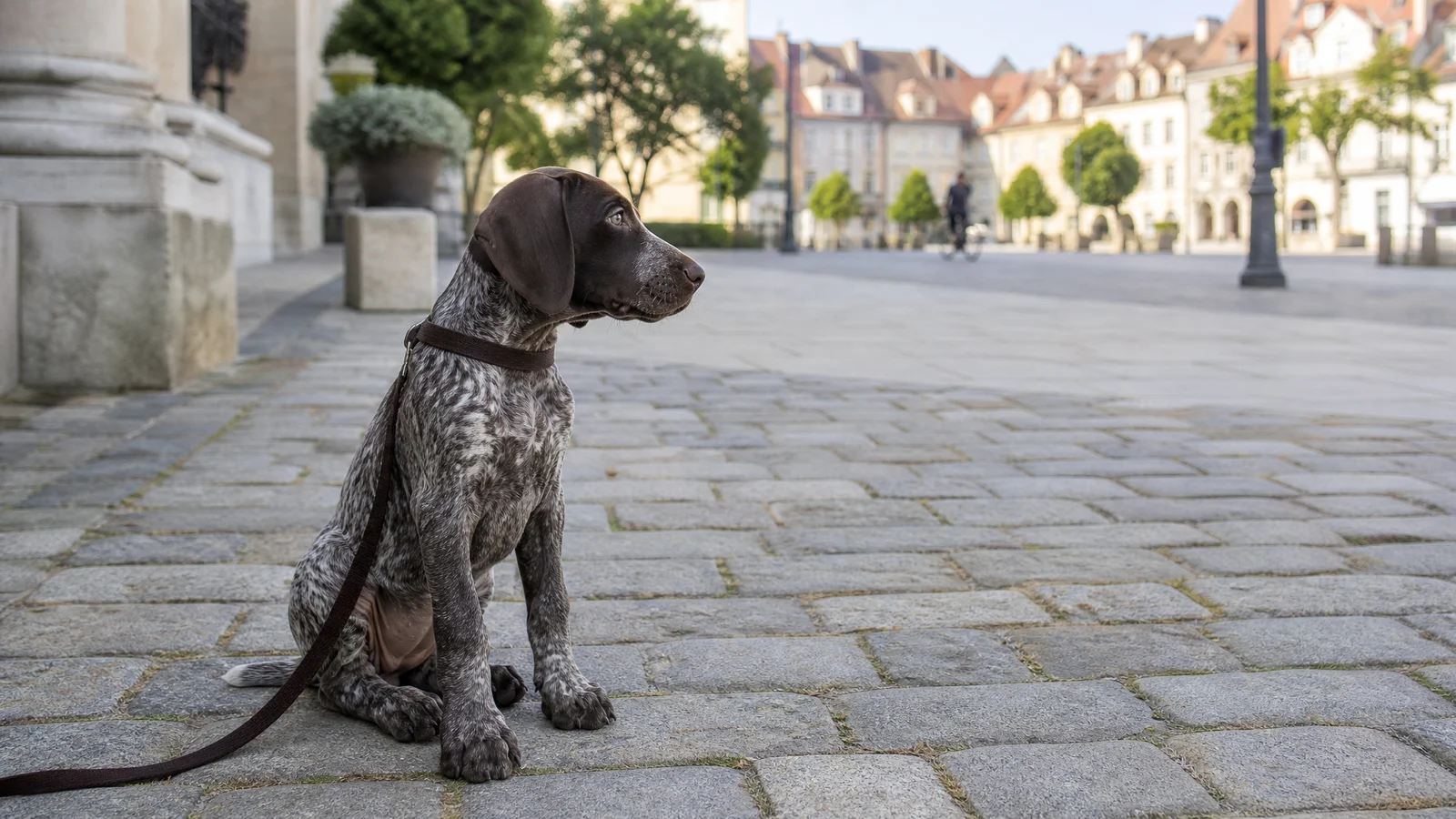
From the first week, your German Shorthaired Pointer puppy is sorting the world into safe and strange, whether you plan for it or not. The doorbell, the vacuum and the neighbor's dog all get filed under good news or bad news, and those files tend to stick.
Your puppy probably arrived with the breed's friendly streak already switched on, which makes this job look easier than it is. A keen, social puppy can learn the wrong lesson as quickly as a shy one, for example that every person is a trampoline and every dog a playmate.
Read on for a plan that begins safely at home, moves outdoors at the pace your puppy sets and keeps going once the easy window has passed. It favors short, rewarded outings, which suit a busy, eager puppy far better than one big day of exposure.
A Friendly Puppy Still Needs Socializing, and the Clock Is Short
That sorting does not pause while you get organized. The greatest window of learning in a dog's life starts around 3 weeks of age and closes between 16 and 20 weeks, so a puppy who comes home at 8 weeks has only part of it left. Every week spent waiting for the perfect start uses up some of that window. Two risks make that window easy to waste:
- The breed's reputation hides the problem. German Shorthaired Pointers are friendly by standard and by nature, so nobody worries about a puppy who bounds up to every visitor. As GSP people, we still call that a head start and not a finished job, since a puppy who learns only that every person and dog means a party can grow into a teenager who hauls toward each one.
- Even a bold puppy meets something frightening. A rough first meeting teaches as firmly as a pleasant one.
The goal is not more exposure but better exposure. The sections below start with staying safe while vaccinations are in progress, then move on to the teaching itself.
Safe Starts for a German Shorthaired Pointer While Vaccines Finish
Staying safe does not mean staying home. Waiting for the last vaccine before doing anything is tempting, but it burns weeks of the window, and plenty of useful practice needs no public ground at all: a car ride that ends back at your house, a friend's clean yard, new floor surfaces at home, calm visitors who come to you and household noises played at a low volume.
Puppy Training Classes Worth Joining
A good class is the other safe route, and the details matter. According to this checklist for puppy classes, classes can start as early as 7 to 8 weeks, and the puppy should have at least one set of vaccines and a first deworming at least 7 days earlier. The class should require proof of vaccination, meet somewhere easy to disinfect, preferably indoors, and teach with rewards, since punishment can cause fear and anxiety.
Visit before you enroll if the school allows it. You want to see puppies getting breaks, treats and room to step away, with nobody pushed toward another puppy or person to keep to a schedule, because that is the same pacing you will use on your own. Keep regular vet visits on the calendar through puppyhood too, since your vet knows the vaccine schedule and can tell you which places are fair game this week.
This is general information, not veterinary advice. Your veterinarian knows your puppy's vaccine schedule and health, so ask them which places and which classes are safe right now.
Socializing Your GSP With Treats and Distance
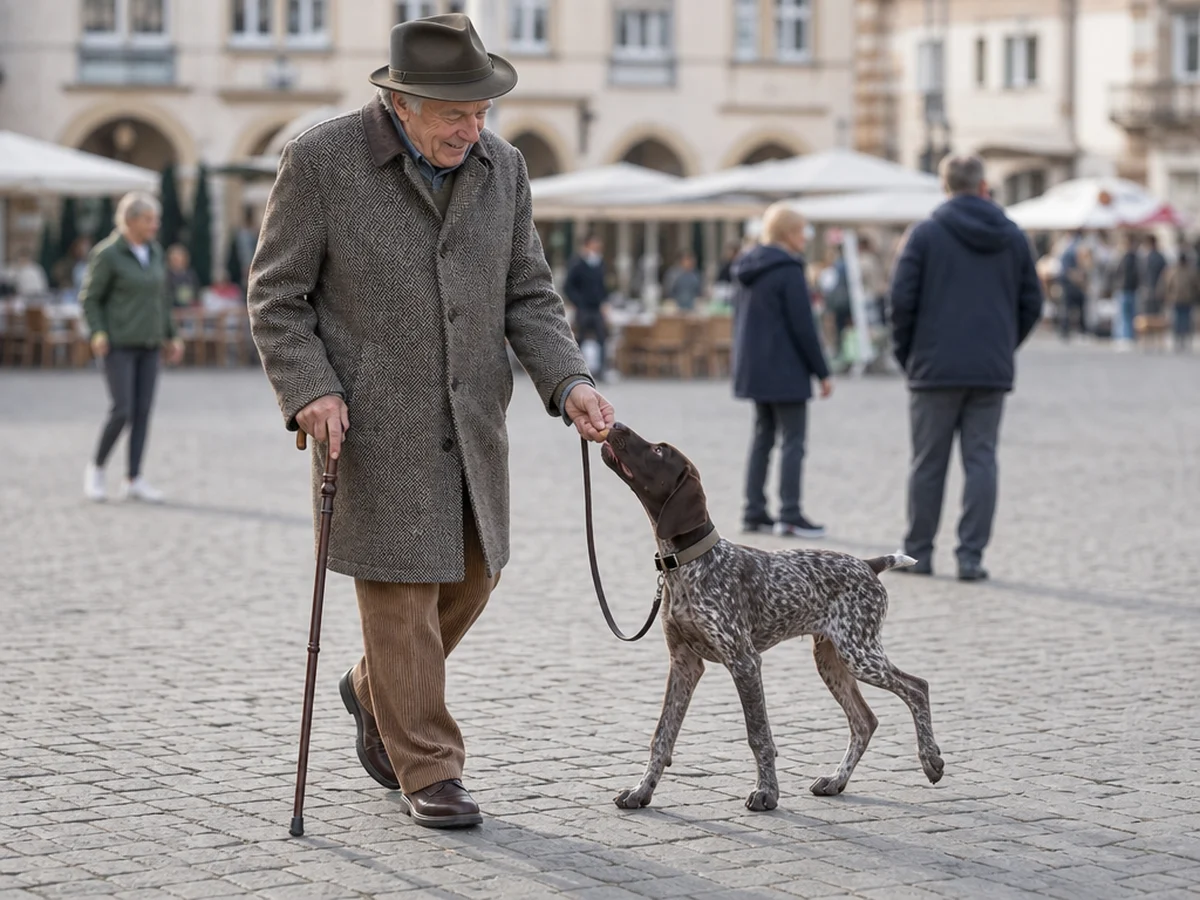
With safe places chosen, the teaching comes down to two moves: pay for every new thing, and let your puppy decide how close to get. Both serve one rule, that quality matters more than quantity, because a puppy who is frightened by a child has not been socialized to children and has simply learned that children are frightening.
A Routine You Can Repeat Anywhere
The same short routine works for a vacuum, a stranger or a new floor surface. Run it slowly, and stop whenever your puppy stops looking comfortable:
- Choose the distance. Stand far enough from the new thing that your puppy can notice it and still take a treat without hesitating.
- Let them look first: give your puppy a moment to take in what is there before any food appears, so the treat follows the noticing.
- Feed, then pause after a few treats, and watch what your puppy does with their body and face before you offer more.
- Read the answer. Carry on or add distance depending on what you see, using the table below as your guide.
- End while it is still easy by letting the food stop when the thing goes away, and heading home before your puppy runs out of steam.
The pause in the third step is the easiest part to skip. A puppy who is fed nonstop never gets the chance to show you whether the new thing is actually fine, and you lose your best source of information.
Reading Your Puppy's Answer
Your puppy's body tells you the next move, so watch it before you decide whether to step closer or farther away. This table sorts the common answers into what to do next.
| What you see | What to do |
|---|---|
| Loose body, soft face and interest in the treats | Keep going, and move past or closer to the new thing at a relaxed pace. |
| Tense, stiff or too worried to take food | Add a few feet of distance and offer a few more treats. |
| Still stressed after more distance | Leave calmly, and try again another day from much farther away and at a slower pace. |
None of those rows asks your puppy to sit, lie down or perform. New places are for soaking things in, and cues can come later, once your puppy walks into a new setting with confidence.
Socializing in Pieces, From People to Sounds and Surfaces
Food and distance work on anything, so the next job is choosing what to practice. Treat people, places, sounds and handling as separate projects, because a puppy who meets a crowd, a siren and a slippery floor in the same minute cannot sort out which one to worry about.
People Who Look and Move Differently
Beyond your household, a well-rounded puppy meets adults and children of different ages, people in hats, uniforms or sunglasses, someone using a cane or wheelchair, and a person on a bike or scooter. Introduce them one at a time, let each stay still while your puppy decides whether to approach, and pay for calm curiosity. A scooter looks nothing like the people at home, so give that first sighting plenty of distance and food.
Places and Surfaces
Several times a week, give your puppy a new space to explore where nobody asks for anything, such as a friend's house or the building where classes meet, and check with your vet about which outdoor spots are safe yet. At home, scatter part of a meal around a step stool, a cardboard box, a tarp lying flat or a broom laid on the floor, and let your puppy decide how close to get. Objects turn into chances to eat instead of things to worry about.
Sounds Played Low and Short
Start with the doorbell, knocking, the vacuum and traffic, played at the quietest volume you can manage while your puppy eats. When the sound stops, the food stops, and early sessions should last less than a minute. If your puppy will not eat, the sound is too loud or the treats are too dull, so change one of those before you try again.
Gentle Handling at Home
Touch your puppy's paws, ears, mouth and sides in tiny steps with a treat after each one, and let different calm people take turns. Handling is the piece that pays off at the vet and the groomer, where a stranger's hands are part of the visit, and it is easy to practice on a sleepy evening.
Dog and Stranger Greetings for a German Shorthaired Pointer Puppy
Objects and noises hold still, but people and dogs have opinions, and a friendly breed attracts plenty of both. This is where a social puppy can pick up the habit of launching at everyone, so it helps to decide ahead of time which hellos you will accept.
Strangers Who Want to Say Hello
Puppies draw crowds, but a full-grown, bouncing dog draws far fewer, so do not build the expectation that every person means attention. When someone walks by, drop a few treats on the ground, which teaches your puppy that passing people are a cue to look at you. When you do allow a hello, give the person a short brief first:
- Crouch and wait. Ask people to get low and let your puppy come to them, which keeps all four feet on the ground, and if your puppy does jump up, the person stands calmly and walks away.
- Toss, don't hand. For a puppy who hangs back, a stranger can toss treats from a few feet away and let your puppy approach to sniff and gather information.
- "Sorry, we're training" is a full answer. Say it politely whenever a hello would be too much, because you owe nobody a longer explanation.
A puppy who skips some hellos is not being deprived, because waiting beside you is how good things happen. Children deserve a plan of their own, which the GSP family dog guide lays out, and the rule here is the same: one calm child at a time.
Meeting Other Dogs Without a Scrum
The first few dogs your puppy meets set the tone, so choose calm, stable, friendly adults who will not rush them, and widen the circle to different sizes and coats only after those meetings go well. Meeting does not have to mean touching. Watching a dog from a distance while your puppy eats treats counts, and so does walking past a dog without a greeting.
Skip the dog park while your puppy is young, since they can be overwhelmed, hurt or pick up rough play habits there. Rather than greeting unfamiliar dogs on leash, simply walk by while your puppy eats. A cat or a second dog at home is a longer project, covered in our guide to cats and small pets.
Socializing a German Shorthaired Pointer Past the Puppy Window
The window closes on schedule, and the work does not stop with it. Many puppies grow warier of new things as they mature, and the teenage months are demanding for this breed anyway, so an easygoing GSP may suddenly eye a stranger or an unfamiliar object with suspicion. Expect that and meet it with distance and food, not with a scolding.
Keeping New Faces and Places Coming
Dogs tend to stay sociable only when they keep meeting unfamiliar people, so keep adding new faces and new places at a pace you can sustain. Vary your walking route, borrow a friend's calm dog for a leashed stroll and keep handling paws, ears and mouth so vet visits stay easy. Plan to continue well into adulthood, because emotional maturity can take years.
When Something Still Scares Your Puppy
Move away until your puppy can eat again, let them recover, and finish with something easy they enjoy. Fear that gets punished tends to grow, so never scold a puppy for being afraid. A puppy who is fearful again and again, or who barks, lunges or hides at new things, deserves help from a trainer who uses rewards, and a sudden change in a previously confident puppy is worth a call to your vet.
Puppy Obedience Training Beside Outings
A GSP picks up cues quickly, which makes it tempting to let lessons crowd out outings. Teach cues at home in short, rewarded sessions, and keep outings first while the window is still open, since a cue is only useful if your puppy can stay calm enough to hear it. Cues are the part this puppy will learn easily either way, and a confident attitude toward the world is the part with a deadline.
Car Rides, Visitors and Other Puppy Outing Doubts
The leftover details are small, but each one decides whether an outing helps your puppy or just fills the afternoon. These four matter most for a keen, social puppy.
Do car rides count as socializing?
They can, when the ride is short and ends somewhere good. Park in a quiet spot, feed a few treats while your puppy watches the world through the window, and drive home, so the car comes to predict calm things as well as vet visits.
What if my puppy fears only one thing?
That is common, since puppies are afraid of things here and there as part of growing up. Keep the distance large and the treats good for that one thing, and carry on with the rest of the plan. If the fear is constant, or turns into barking, lunging or hiding, ask a trainer who uses rewards for help.
Do outings count as exercise?
Not much. A GSP puppy has the breed's very high energy, and a slow walk past a noisy street is brain work more than exercise. Fit outings around the activity in your GSP puppy exercise plan, and let a tired puppy end the day with a nap instead of one more new thing.
Should visitors hand my puppy treats?
For a confident puppy, yes, and a treat from a crouching visitor makes greetings rewarding. For one who hangs back, ask visitors to toss the treats a few feet away, so your puppy can approach or not as they choose.
Socializing Works When the World Turns Into Background
Whatever the outing, the goal underneath it stays the same. The puppy you are building is one for whom a bike bell, a delivery truck or a stranger on the sidewalk has become background, noticed for a second and then set aside for the next good smell. That calm is what lets the breed's enthusiasm go where you point it, whether that is a trail, a training class or a friend's living room.
It comes from the quiet outings you repeat, not from any single big day, and the plain ones are the ones worth repeating. Outings are the first lesson of many, and our free e-book carries a GSP puppy's schooling well beyond the sidewalk, covering the skills still ahead in plain wording. Joining this site's mailing list brings the e-book straight to you.
 Training basicsHow to Teach a German Shorthaired Pointer to Sit
 Training basicsHow to Teach a German Shorthaired Pointer to Stay
 Training basicsHow to Teach a German Shorthaired Pointer to Lie Down
