 GSP
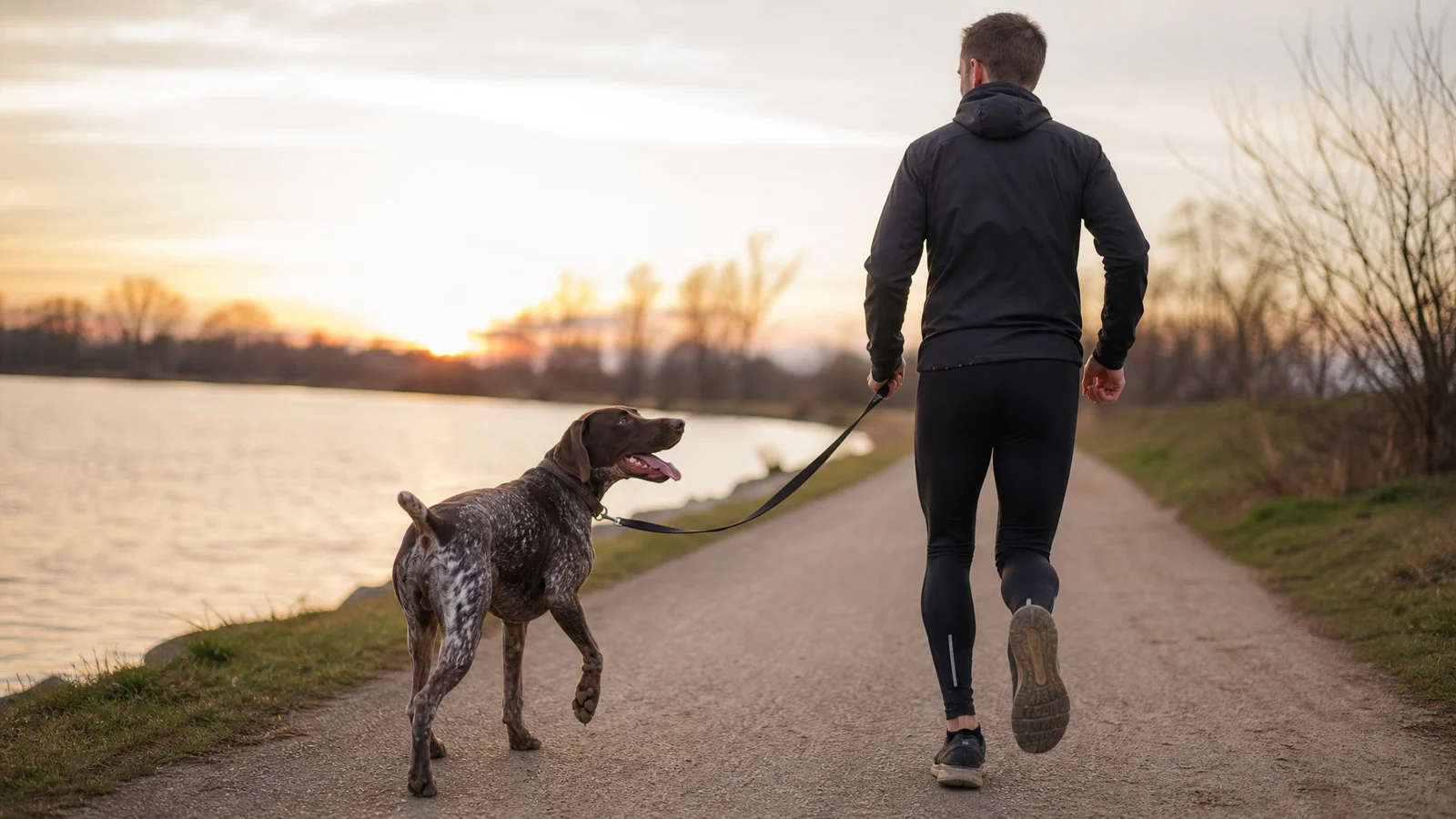
Owners describe the same evening again and again. The dog has been walked twice, the leash is back on the hook, and at nine at night they are still tearing laps around the living room.
Nothing is wrong with that dog. The German Shorthaired Pointer rates 5 of 5 for energy level and 5 of 5 for mental stimulation needs, so two leashed walks cover only part of what a GSP is built to do. The leftover drive has to go somewhere, and it tends to come out as pacing, chewing and a dog who cannot switch off.
Meeting those needs is what turns the breed's drive into a relaxed housemate. Read on for a full exercise day of running, hiking and brain games, followed through one example household from morning to bedtime and from summer to winter.
An Exercise Plan for One German Shorthaired Pointer Household
To make the advice concrete, we will follow one invented household all the way through, from the first walk of the day to the last. It is a hypothetical example built for illustration, not a particular dog. Swap in your own details as you read, whatever your GSP's coat color, build or background.
The example dog is an eight-month-old German Shorthaired Pointer living in a townhouse with a small patio. The owner works from home, so the dog is rarely alone but also never gets a natural break in the day. Here is what that setup gives and what it lacks:
- The owner is home, so short training and play breaks can be spread across the workday instead of crammed into one block.
- The patio suits sniffing games and a sandbox, but it is far too small to count as running space.
- A secure fenced area for off-leash running has to be found away from home, such as a fenced park or a field you can book or share.
- Eight months is adolescence, when the body is nearly grown but impulse control is not. The breed can be extremely challenging from 6 months to 3 years old, so this is when a plan matters most.
The target is ample activity twice a day, such as brisk half-hour walks or running in a securely fenced area, with mental work filling the gaps. Some breeds need one to two hours a day, and working breeds need significantly more. Many GSP owners land on roughly one to two hours, much of it off-leash, and some go well beyond that.
The breed's parent club asks members in its code of ethics to give dogs regular exercise in a safe area. Regular means every day, and safe means fenced or otherwise controlled.
What Does Exercise Look Like on a Weekday?
A schedule sticks when you understand why each slot exists. Running burns physical energy, while food puzzles, sniffing and short training sessions use up the mental energy that running leaves behind. The table shows one weekday for the example dog.
| Part of the day | What happens |
|---|---|
| Early morning | Main outing: a brisk walk or run in a secure fenced area, then a calm cool-down |
| Breakfast | Meal from a food puzzle, once the dog has cooled down |
| Mid-morning | Rest on a bed with a chew while the owner works |
| Midday | Short training session and a find-it scent game on the patio |
| Afternoon | Sniff walk around the neighborhood, with the dog choosing where to stop |
| Early evening | Second main outing: running, ball play or a longer walk |
| Late evening | Dinner after another cool-down, then quiet chewing and a settle on a mat |
The two main outings do the heavy lifting, and everything else is smaller and cheaper. If you can only protect two things, protect those.
The twice-a-day pattern shapes this layout, and there is a cause-and-effect reason to split the work in two. One long outing leaves a long stretch of unspent drive afterward, and with the owner at home that stretch lands in the middle of the workday. Two outings, with thinking games between them, keep the dog from building up pressure.
Timing around meals matters because the breed is prone to bloat. Avoid feeding right after running or vigorous exercise, and give at least an hour after eating and drinking before any running or rough play. That is why breakfast sits after the cool-down and dinner comes after the evening outing.
This is general information, not veterinary advice. Ask your veterinarian about meal timing around exercise for your own GSP, especially given the breed's bloat risk.
Many owners also report that a steady routine helps house behavior. When exercise and off-leash time happen at predictable times, bathroom needs become predictable too, and indoor accidents tend to drop. Keep regular veterinary visits on the calendar as well, since a vet can tell you whether your dog's body is ready for the routine you plan.
Morning Run Exercise for a German Shorthaired Pointer
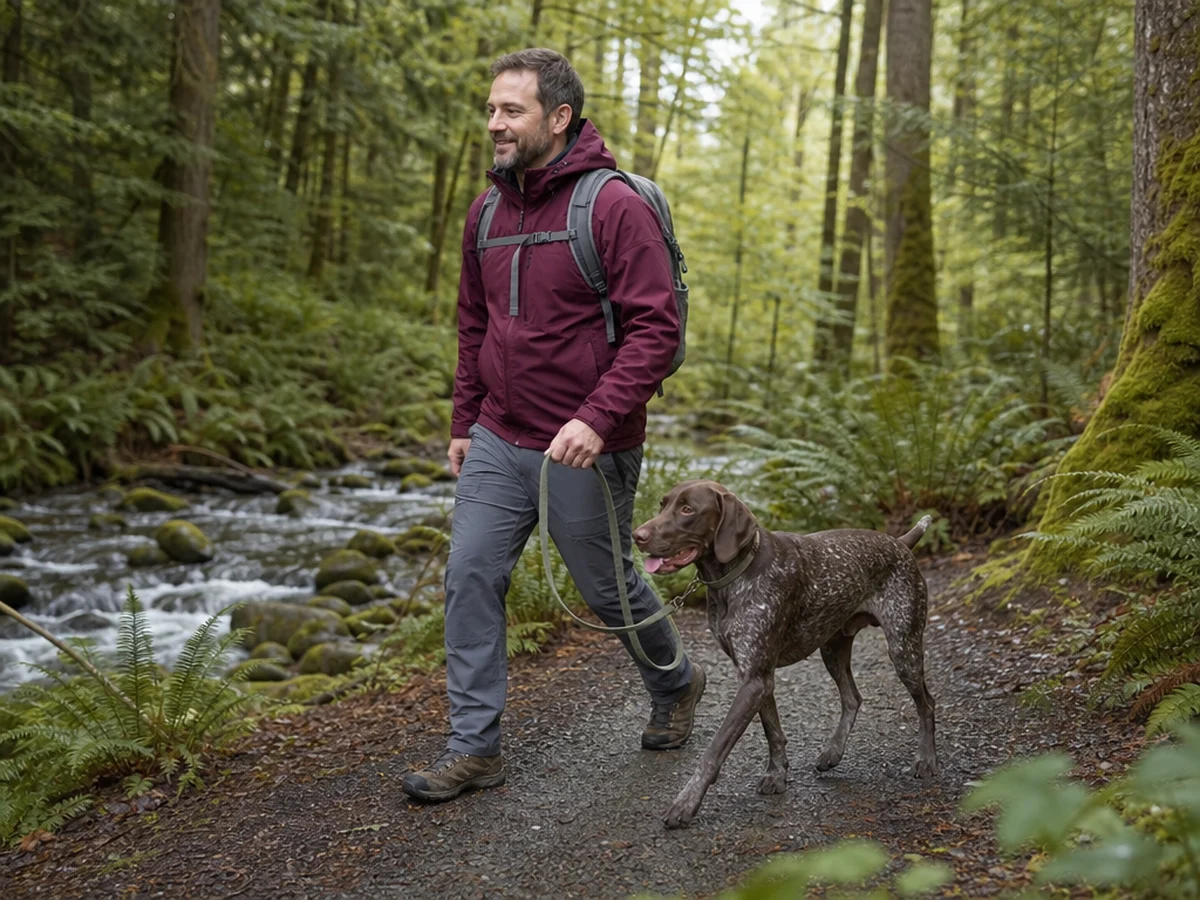
The morning outing sets the tone for the day. A dog who gets a proper first outing is usually easier to work around, and one who does not tends to spend the morning pestering you. Two questions decide how to do it well: what kind of movement, and how hard.
Brisk Walking Versus Running
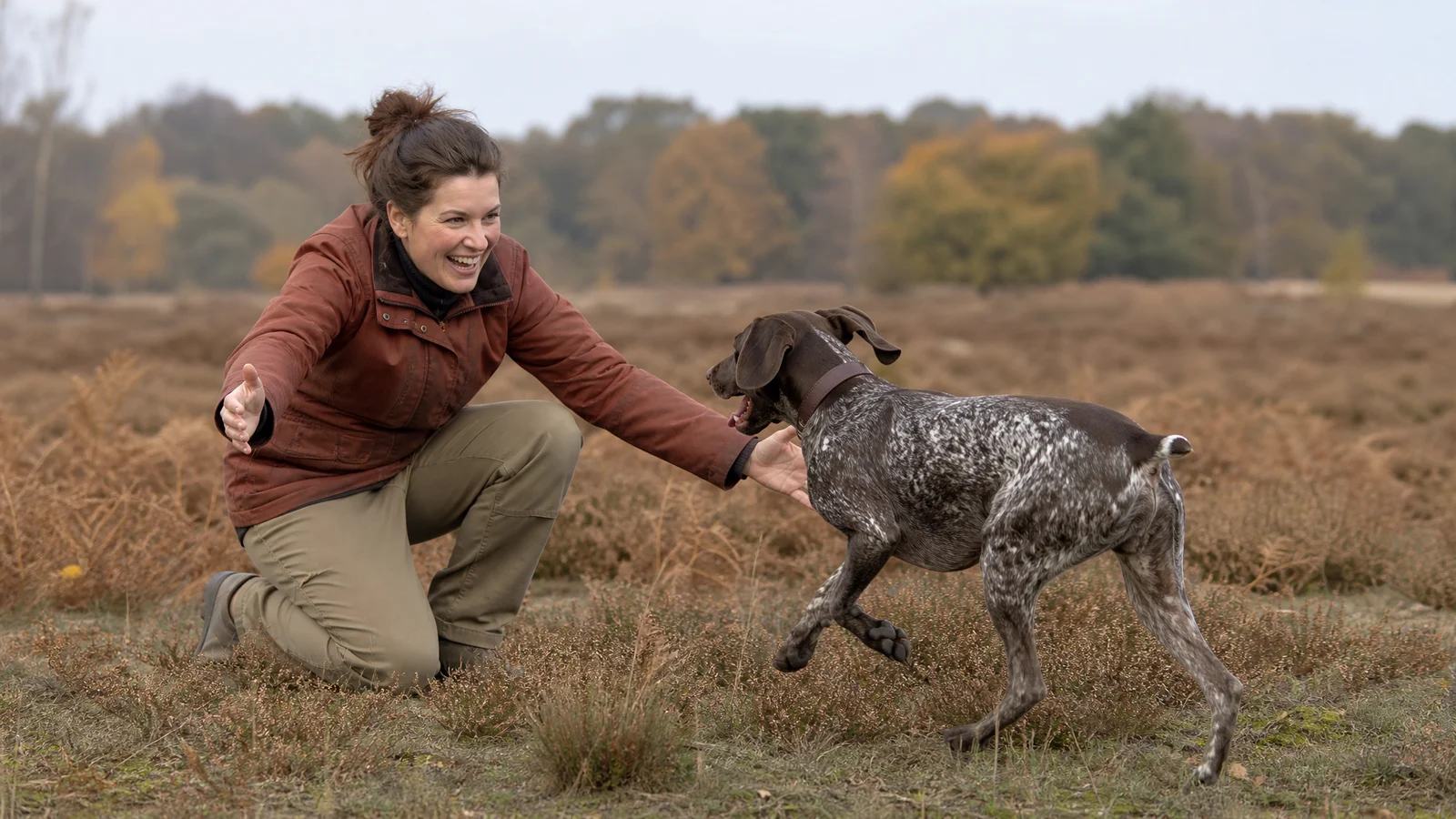
A brisk leashed walk is a fine outing and a good place to practice loose-leash manners. Running is different because it lets a GSP use the speed and endurance the breed was built for. Owners often describe their dogs thriving on off-leash runs in woods, trails, parks or farms, covering far more ground than the humans and moving nimbly over rough ground.
That is why a secure fenced area matters. A lap around the block does not do the job, and neither does a small patio. A common piece of advice says a yard is enough for an energetic dog, but most yards are too small to produce real running and many dogs simply stand in them. Go out with the dog, throw a ball, and make the space an activity instead of a waiting room.
Setting the Pace for a Growing Dog
Some owners run, bike or even train for marathons with their GSP and report that the dogs keep up easily, including a young puppy on a 3.5-mile run. That shows the stamina is there. It does not show the joints are ready. A dog who is still growing can look tireless while the body is still developing, and an enthusiastic dog will not tell you when to stop.
So build up slowly. Start with a short warm-up walk, run at a steady, comfortable pace, and finish with a cool-down walk. Choose grass or dirt over sidewalks when you can, and ask your veterinarian when longer, harder distances make sense. Until then, let your adolescent set a natural pace with free running and keep structured jogging modest.
Use a marker word and treats during the outing too. Call the dog back a few times, reward, then release them to run again. The recall becomes part of the fun instead of the end of it.
Brain Games Between Exercise Sessions
Mental work tires a GSP as much as physical exercise does. The reason is that the breed was developed to search, think and work alongside a person, so a dog who runs hard but never thinks is still working at half capacity. Sniffing and rooting around count as real stimulation, even when the dog is barely moving.
Indoor Games
These fit the workday gaps, especially when weather or deadlines cut the run short.
- Feed some meals from food puzzles, since every meal is a chance for enrichment. Some owners choose puzzles that make the dog hunt for the food by scent.
- Play find-it: ask for a wait, hide a few treats behind furniture or under a towel, and release the dog to search. Make early rounds easy so success builds confidence.
- Run short training sessions several times a day. Keep each one brief, because many owners find the dogs get bored, stressed or frustrated when a session drags on.
- Give the dog a household task, such as bringing a named toy from a toy box on cue. It uses the breed's willingness to work and keeps retrieving as play.
- Use a flirt pole or a quick hallway sprint on cold or wet days to let some energy out indoors.
For cues and reward timing, see our complete GSP training guide.
Outdoor Games
On the patio and around the neighborhood, the same ideas scale up. Scatter treats in the grass, let the dog sniff a new area at their own speed, or fill a kiddie pool with play sand for a dog who likes to dig. A sandbox like this gives a digger an approved spot for the habit.
Ball throwing and Chuck-it play are popular, and several owners rely on hard fetch as a core exercise. Treat it as play and mix it with walking and thinking games, because fetch alone builds stamina more than calm. Swimming, beach days and varied outings also tire dogs well, since new places bring new smells.
One caution about scent games: in a home with two dogs, the second dog may reach the scents first and the GSP can lose interest quickly. Give each dog their own searches in separate spaces.
Is Weekend Hiking Enough for a German Shorthaired Pointer?
The example owner is tempted by a common plan: skip the weekday effort and take one big hike on Saturday. It sounds efficient but rarely works for this breed. The energy returns by Monday, and the wound-up, anxious behavior owners describe in under-exercised dogs shows up even when the weekend was big.
A hard hike after a quiet week is also a fitness problem. Muscles and paws that have not been conditioned are more likely to get sore, so a steady weekday base makes the weekend safer. Treat the hike as a bonus on top of the routine.
When you do plan a trail day, these steps help:
- Choose a trail where dogs are welcome and check the leash rules before you go.
- Build up the distance over several outings instead of jumping straight to the longest route.
- Bring plenty of water, take breaks in shade, and watch for sore paws or a dog who lags.
- Use a long line wherever the area is not fenced, since the breed has a strong prey drive and a wildlife scent can pull a dog far off.
- Practice recall with high-value treats, and call the dog back before other hikers, dogs or animals come into view.
- Step aside for other trail users, keep the dog close when passing and reward calm greetings.
Regular hikes can lead to more structured activities. Our article on sports and jobs for GSPs covers where that energy can go next.
Adjusting the Exercise Plan Through the Seasons
Weather changes the plan but not the dog's needs. When conditions get rough, shift the type of activity instead of dropping it, because a bored GSP will find their own entertainment.
Summer Heat
Run in the cool early morning and again late in the evening, and use midday for rest and brain games. Bring water, offer shade, and use swimming where it is safe. Some owners have had to cut back because of heat, injury or work and say the dog was still fine, so a lighter day now and then is not a disaster.
Cold and Short Days
In very cold weather many owners shorten walks and add indoor activities like a flirt pole, hallway sprints or wrestling. Some allow indoor zoomies as a way to blow off steam. When daylight is short, use visible gear, stick to familiar routes, and move more of the thinking games indoors.
Why the Plan Does Not Retire
Do not expect the need to fade with age. Owners report adult and older GSPs staying as high energy as ever, including dogs at 4, 7 and 8 years old. The amount and intensity may change, but the need for exercise and mental work stays.
Exercise Pays Off in a Settled Evening
Return to the living room at nine at night. In the example household, the plan is working if that room is quiet, with a dog sleeping or lounging, because the body is tired and the mind has been fed. After enough activity, many dogs rest well, and some are happy to lounge all day.
These signs suggest the plan is working:
- The dog settles within a reasonable time after an outing and sleeps well at night.
- They chew their own toys instead of furniture and shoes.
- Indoor accidents and wound-up evenings become rarer.
- They respond to cues, including recall, more reliably than before.
Other signs call for a professional. Phone your veterinarian if the dog limps, seems stiff, pants hard or is reluctant to move. Look for a qualified reward-based trainer if you see obsessive behavior, nonstop anxiety or destruction despite a full plan.
Some dogs stay restless even with a full schedule, which means enrichment alone is not enough. If you cannot keep the dog safely managed at home or on walks, get professional behavior help rather than adding more miles.
The lesson from this breed is simple. A GSP needs both a tired body and a busy mind, every day, and the daily plan is what delivers it. Give them that and the energy becomes enthusiasm instead of mischief. For more on what makes this dog tick, read about temperament and training for GSPs.
 Training basicsHow to Train a German Shorthaired Pointer with Rewards
 BehaviorIs a German Shorthaired Pointer a Good Family Dog?
 Training basicsHow to Call a German Shorthaired Pointer Back When Birds Flush
