 GSP
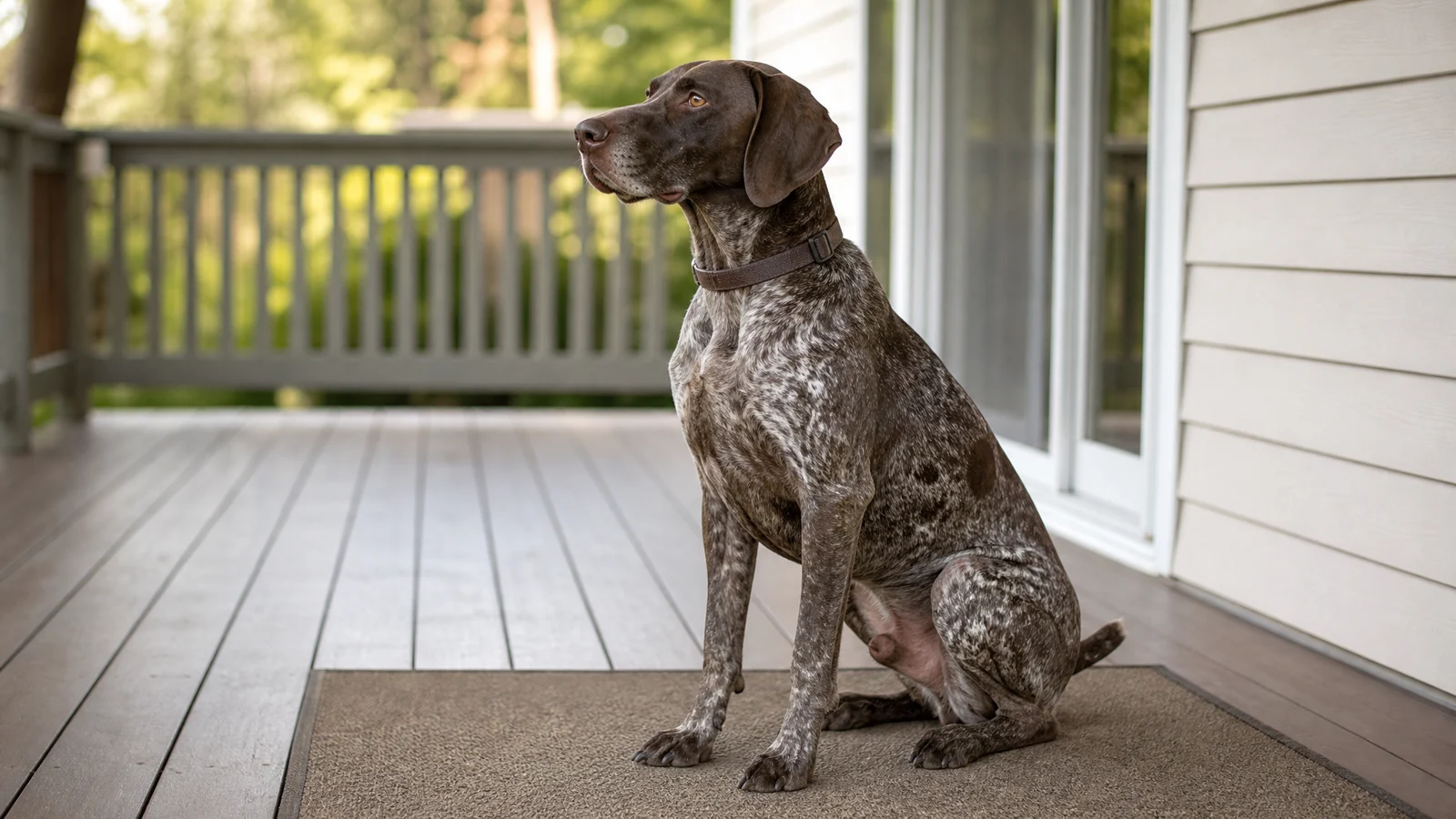
Teaching a stay to a German Shorthaired Pointer begins with the word that ends it. A dog who knows exactly when the hold is over is far more willing to give you one.
That order suits the GSP temperament. Your dog learns quickly when sessions are consistent, bonds firmly with the family and would rather be wherever you are, so a stay asks for the opposite of how a keen, high-energy dog likes to spend the day.
A reliable stay is also what stands between a quick dog and an open front door, which is why the order of teaching matters more than the number of repetitions. Below, you will find the release first, then the build, then the test that shows whether it holds.
Teaching a German Shorthaired Pointer to Stay Starts With the Release
The release comes first because it is half of the exercise. A stay means holding one position until you come back or say the word that frees your dog, and a GSP who never learned that word will pick their own ending, usually by bounding up to see what you are doing.
Choose a word you will use only for this job. "Break" and "free" work well, while "okay" slips into everyday conversation and ends a stay by accident. Have small treats ready and take the first rush of energy off your dog beforehand, since a fresh, bouncing GSP finds even easy steps hard. With your dog in a sit or down they already know, teach the word in four steps:
- Ask for the position, wait a second, then give a treat and say your release word right away.
- Invite your dog up as you say it by stepping away, patting your legs or clapping, so the word and the movement arrive together.
- Praise your dog for getting up, then ask for the position again.
- Repeat until the word alone brings your GSP to their feet, with no help from your hands or feet.
Move on when the word works smoothly several times in a row. From here on it is the best part of every stay, and your dog will be listening for it.
Adding a Stay Command and the First Few Seconds
With the release in place, the stay itself is only a few seconds of nothing, and that is the hard part for a GSP. Build it in three separate parts: how long your dog holds, how far you go and how much is happening around them. Right now you are working on only the first, so stay close and keep the room boring.
Ask for the sit or down, hold one flat hand out like a stop sign and say "stay." Wait a second or two, pay while your dog is still in position, then say the release word and let them move. Pay before the release, never after it, because the treat belongs to the stillness. If it follows the movement, getting up becomes the rewarding part, and a keen dog finds that out fast.
Add a few seconds at a time and slip in a slightly longer wait now and then among the easy ones. A bright, happy voice is what launches an excited GSP out of position, so keep your praise calm and low during the hold and save the cheerful tone for the release.
Testing the Stay With Distractions, Then Distance
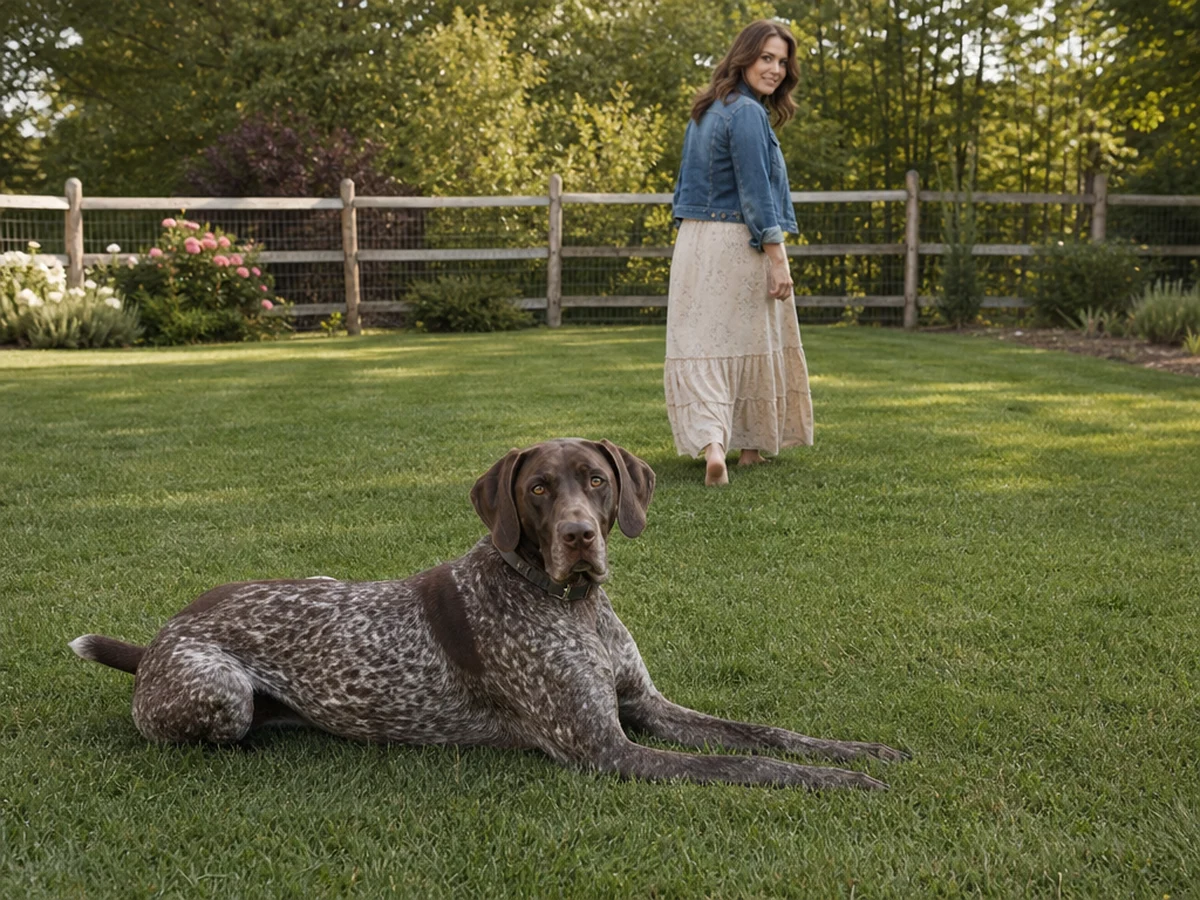
A hold that survives a quiet kitchen has not been tested yet. Keep building beside your dog until it lasts at least 30 seconds, because that is when distractions and distance can enter, one at a time. Whenever you add a new challenge, ask for less of the others, so a dog who holds for a long while in a quiet room may manage only a few seconds with a distraction nearby.
Begin with a distraction your GSP barely notices, such as a single clap or a shift of your weight, and pay for ignoring it. Work up to a toy hitting the floor and keep a moving ball for last, since it is a big ask of a dog this playful.
Distance comes last, because every step away is a small distraction of its own. Ask for the stay, take one step back, return, pay while your dog is still holding and then say the release word. Add a second step, then a third, until you can reach the far side of the room. When the doorway feels easy, the gate comes next, and our yard escape guide covers the setup that keeps the rest of the yard safe.
When a German Shorthaired Pointer Breaks the Stay
If your dog gets up before the release, skip the scolding, lead them back to the spot and ask for something easier. We trace most early breaks to one of two causes: your movement invited a follow, since a dog who bonds this firmly reads every backward step as an invitation, or the step was bigger than the hold behind it.
Keep your steps small and your hands quiet, and after a break drop back to the length or distance that worked and let your dog succeed several times before climbing again. If a dog who once held a position happily starts refusing it, mention the change at their next regular vet visit before assuming it is a training problem.
Stay Questions Beyond the Living Room
These three sit outside the build order but shape how the stay behaves in a real house: a second word for short pauses, a hold that falls apart outdoors and whether a marker belongs in the middle.
Is stay different from wait?
Yes. A wait is a short pause in any position that ends with a release almost at once, like holding back at a door or while a food bowl comes down. A stay keeps one position until you return or release. Cornell's stay-versus-wait guide explains why two separate words help a dog who does not generalize easily. Teach stay first and add wait later with the same release word.
Why does the stay fall apart outdoors?
A new place changes everything your dog was relying on. Treat it as a fresh start, ask for the short, easy version you used on day one, pay well and lengthen again from there. Try a few different rooms and the yard before the park, so each step up stays small.
Can I click during a stay?
Yes, if you already use a clicker. Click while your dog is holding, pay, and say the release word afterward, so the sound marks the stillness and not the movement. Skip the click at the release itself, because a dog can start to read it as the end of the exercise.
A German Shorthaired Pointer Stay Ends With Your Return
Whatever the distance, a stay ends the same way: you walk back to your dog, pay while they are still holding and only then say the release word. That return is worth guarding, even when it feels slow. Release from across the room and you cannot pay the stillness, and a dog soon learns that a certain distance means the hold is over and it is time to rush toward you.
In daily life this is the easiest step to skip, because the errand is done and your dog looks hopeful. A trip to the mailbox or a minute at the stove, where our counter surfing guide covers the kitchen side, is a stay like any other.
Walk back every time and a dog who loves to follow you learns the quiet trick of letting you come back to them. Once your stay holds, ask for our free e-book through this page and a copy heads to your inbox, with a place for every lesson a quick GSP still has ahead, from the next cue to the next stage of growing up.
 Training basicsHow to Teach a German Shorthaired Pointer to Lie Down
 Training basicsHow to Teach a German Shorthaired Pointer to Heel
 Training basicsHow to Teach a German Shorthaired Pointer to Leave It
