 GSP
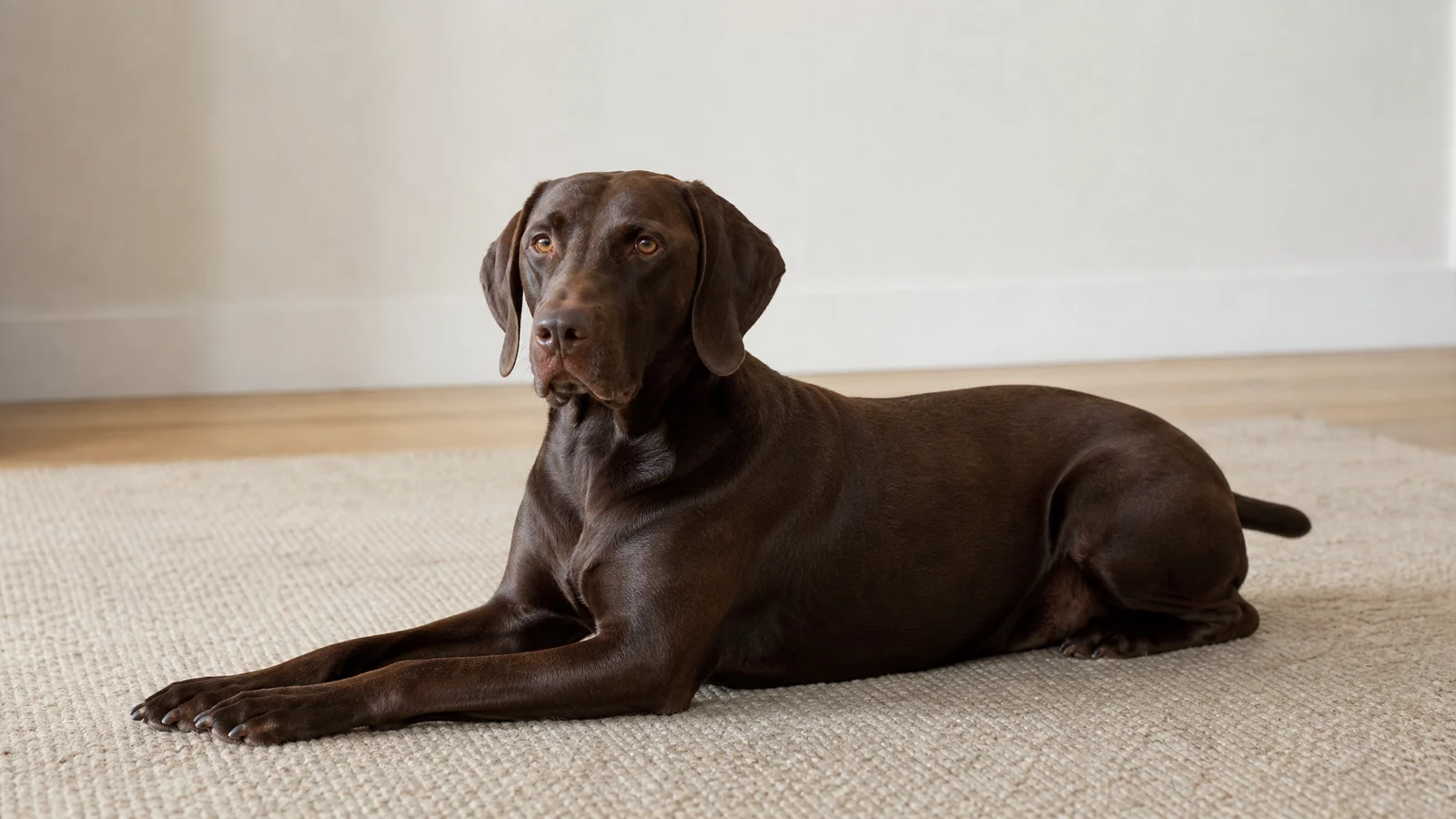
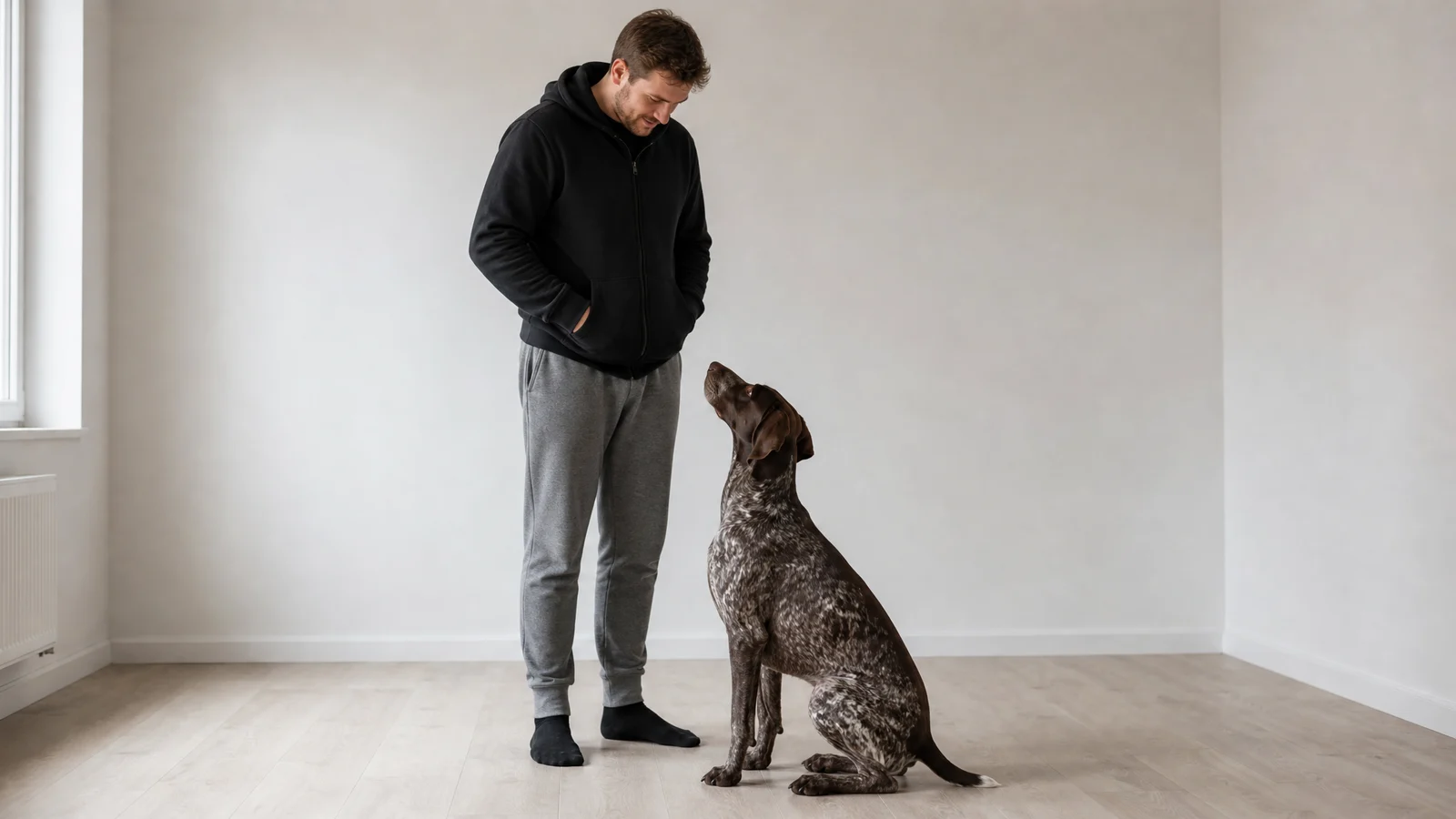
You are holding the ball, and your German Shorthaired Pointer is circling and ready to launch. A down gives that energy somewhere to land, and it can be taught in small steps.
A down is just a position, with the chest and elbows on the floor when you ask. For a dog with very high energy and a strong need for something to do, though, lowering the body cuts against every instinct. A food lure, a quiet room and quick payment will get you further than repeating the word. This guide takes the lure in stages, adds the word, fixes the usual stalls and ends with two ways to ask for the cue.
The short version is simple: lead a treat from nose to floor, pay the moment the elbows land, then swap the treat for an empty hand and add the word. Each stage below says what to do and what to try when your GSP stalls.
Why a Down Takes Planning With a GSP
The short version hides one catch: sit leaves a dog ready to spring, and down does not. The body hands its weight to the floor, which is a big ask of a dog with very high energy whose first answer to anything interesting is to move toward it. That is why the early lessons work best in a dull room with quick payment.
The upside is a quick mind. This intelligent breed learns fast with consistent sessions, as our look at temperament and trainability explains, and a dependable down gives you one calm thing to ask for when dinner is on the counter, alongside kitchen counter manners.
Luring Down From a Sit or Stand, Stage by Stage
With a quick mind on your side, the method can stay simple, because a lure works when the nose leads and the body follows. The effort goes into your hand speed, which should be slower than feels natural.
- Pick the spot and the moment. Choose a quiet, dull room and begin after a walk or play session, once the first rush of energy has passed. Keep tiny, soft treats ready so each payment takes only a second.
- Lure the nose to the floor: With your dog in a sit or a stand, hold a treat at their nose and lure a down by bringing it slowly and straight to the floor between their front paws. Give the treat when the elbows touch the floor to start, even if the hips are still up.
- Pay for more of the fold as soon as the elbows land every time. Wait a moment longer for the chest and hips to settle, and deliver the treat low on the floor so your dog stays put to eat.
- Release and Reset: Toss a treat a step away or use a release word so your dog stands, then lure again. Every stand is the starting line for another repetition.
Those four steps are the whole lure stage. An eager dog follows food, so the usual snag is a hand that moves too fast and pulls your dog up instead of down. Never press or pull your dog into position.
Keep these sessions short and stop while your dog is still keen. When the lure to the floor goes smoothly several times in a row, you are ready for the next stage.
Adding the Down Command for German Shorthaired Pointers
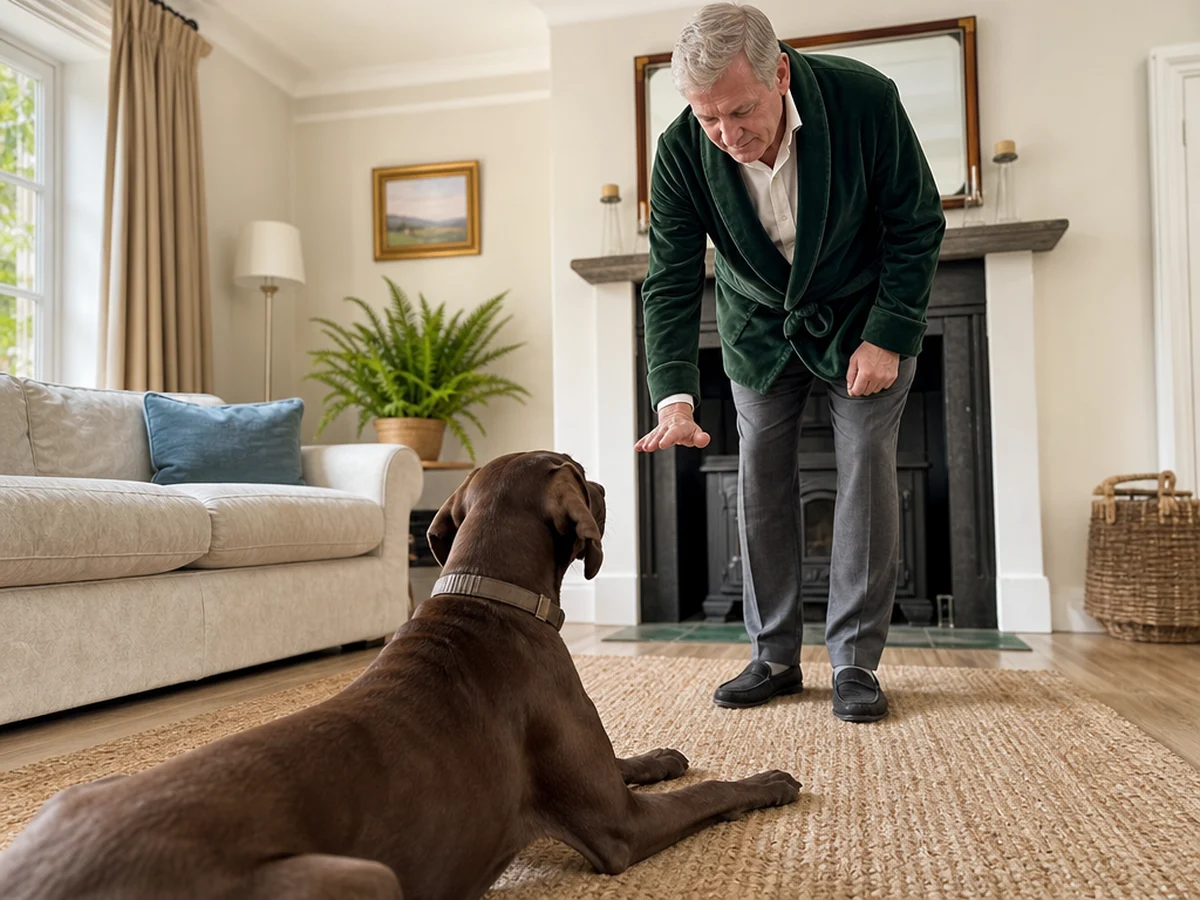
Once the lure goes smoothly, the treat has done most of its teaching. Make the same motion with the treat hidden in your other hand, lower the empty hand to the floor, and pay from the hidden one after your dog lies down.
A lure may be needed to start a new behavior, but treats work best when they quickly shift from leading your dog to arriving after the behavior, so the food never becomes a bribe. If your dog hesitates at the empty hand, go back to the lure for a repetition or two and then try again.
When the hand signal is reliable, add the word. Say “down” once, in a calm voice, as your hand starts toward the floor, then wait for the fold. A cue that arrives three times in a row soon turns into background noise.
When a GSP's Down Pops Up, Creeps or Stalls
Even with a good plan, most stalls we see in lively dogs come down to a hand that moved too fast or a reward that arrived late. The fix is nearly always to make the step easier before asking for more.
Hips Stay Up While the Elbows Drop
Pay the elbows for a few sessions, then lure a little farther back toward the chest so the hips have room to fold. Lower the treat more slowly, and if the floor is slippery, try a rug or mat.
Pops Up Before the Treat Arrives
Lively dogs often spring up the instant the lure stops. Say a short marker word such as “yes” the moment the elbows touch, then deliver the treat low between the front paws so your dog stays down to eat.
Creeps, Backs Off or Refuses the Floor
If your dog creeps forward, keep the lure closer to the chest. If they back away, shrink the step and reward even a dip of the head. Should your dog avoid lying down on any comfortable surface, mention it to your veterinarian at a regular check-up.
Loose Ends Once the Down Is Working
Three practical details round out the lesson. Each one is easy to overlook until a session goes sideways.
Can we practice down between rounds of fetch?
Yes, once the quiet-room down is smooth. Asking for a sit between rounds of fetch and rewarding calm behavior, such as relaxing or lying down, with petting and praise is a good way to help an over-excited young dog learn to pause. Start with a game that is already winding down.
How small should the treats be?
Small enough that your dog swallows each one in a second or two. Tiny, soft pieces keep the pace brisk and let you pay again and again without filling your dog up. Save a bigger, more exciting treat for the first down in a new place.
Will a good down make my GSP calmer?
A down is a position, not a mood. It gives a lively dog a job and gives you a way to ask for a pause, but calm comes mostly from a full day of exercise and mental work, which this breed needs plenty of.
Calm German Shorthaired Pointer Training With Word and Hand
Once the word and the hand signal both work, test each alone. Say “down” with your hands at your sides, then ask silently with the hand signal, and give the weaker one a few extra easy repetitions in the quiet room. The word reaches across a kitchen when your hands are full, and the hand signal reaches a dog in a noisy yard or one who is facing away.
A GSP who knows both has two ways to say yes to the same request, which is what calm training looks like for an energetic dog. Anyone who signs up through this page gets our free e-book by email, and it follows a GSP's education beyond this first cue, with every need covered in clear, complete terms.
 Training basicsHow to Teach a German Shorthaired Pointer to Heel
 Training basicsHow to Teach a German Shorthaired Pointer to Leave It
 Training basicsHow to Teach a German Shorthaired Pointer to Focus on You
