 GSP
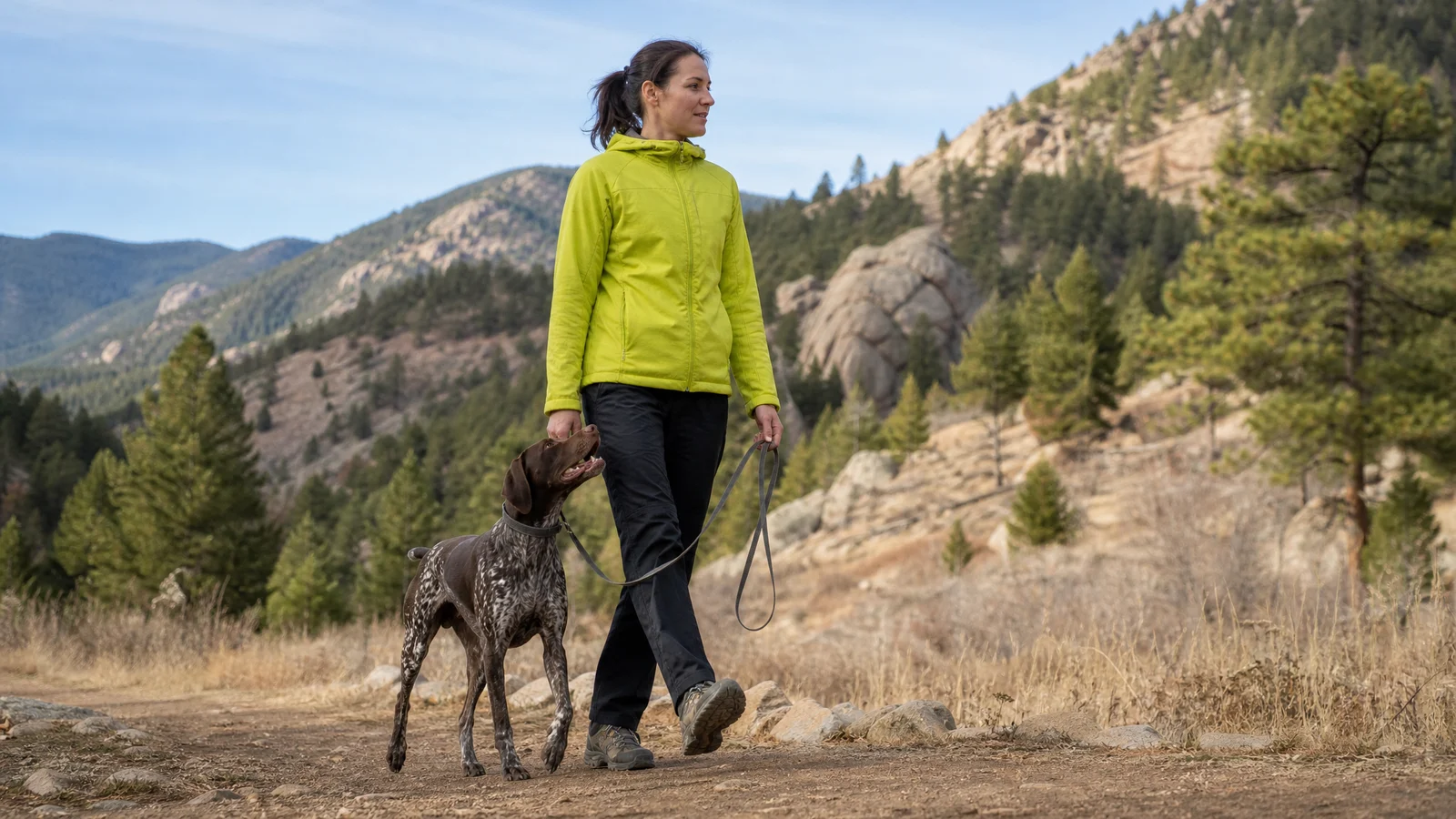
Heel is easiest to teach once your German Shorthaired Pointer has spent the first rush of their energy. A dog who is still fizzing treats your leg as one more thing to dash past.
That timing matters because a GSP is a quick learner who does best with consistent sessions, and also a dog with very high energy and a strong prey drive. Heel gives all of that drive one precise job for a few steps: a spot beside your leg, reached on purpose and paid for right there. It is a short gear for tight moments like a crowded doorway, never an all-day way of walking.
Read on for how to find the spot standing still, stretch it into steps and turns, and fix the stalls that follow, because even a keen GSP will slip somewhere along the way.
Where Heel Fits on a German Shorthaired Pointer's Walk
Before any treat comes out, settle what you are asking for. Heel is a precise place beside your leg, held for a short stretch and then released. A relaxed walk is a different job: the leash hangs loose, the nose gets to work and the two of you cover ground at an easy pace. Our guide to German Shorthaired Pointer leash training covers that everyday walk and what to do about pulling, so this lesson stays with the smaller, sharper skill.
Keeping heel short suits this breed. A GSP brings very high energy and a strong prey drive to every outing, and precision asked for over a long distance turns into a contest against both. A few well-paid steps at a crossing or a gate are a fair request, while a full mile of it is not.
Setting the German Shorthaired Pointer Heel Position
The smallest job comes first, with neither of you moving. Pick a quiet room, a handful of small soft treats and a leash that stays slack. Choose one side and stay with it.
Left is the traditional heel side for obedience and rally, though any side works if you never switch. Keep your treat hand at your chest, because food held out of reach stops your dog from simply following it or jumping for it, and pay with the hand next to your dog so they never cross in front of you to collect.
With that set up, you are ready for the first lesson, which is taught standing still. It takes four short steps, and the order matters because each one makes the next easier to reach:
- Call your GSP's name and point to the side you chose, at the level of your leg.
- The moment your dog steps up beside you, say your marker word, such as "yes", or click.
- Pay at your leg, so the food only ever arrives in the spot.
- After a couple of paid tries, stop calling and pointing. Wait, let your dog choose to come into the spot, then mark and pay every time they do.
Move on when your GSP swings into the spot smoothly several times in a row without a call or a point. If they leap at your treat hand or stare at it instead of at you, the hand is too close or too tempting, so bring it back to your chest and pay low and beside your leg until the spot is the only place food comes from.
Growing Heel From One Step to Real Turns
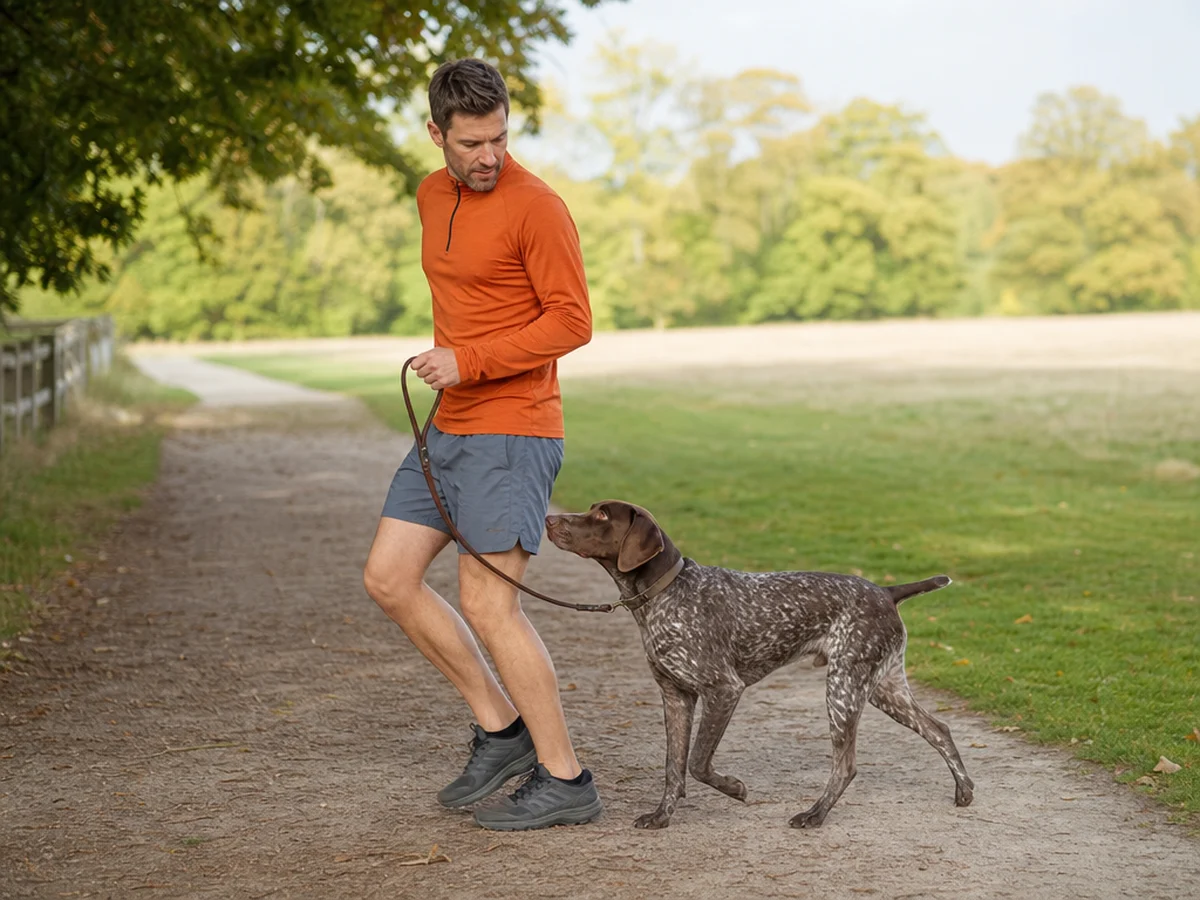
Once your dog finds the spot without help, the lesson becomes keeping it while you move. Each stage below is only a small stretch beyond the last one, which is exactly what a keen, quick dog needs to stay in the game instead of surging.
One Step and a Paid Pause
Take one slow step forward with your dog's shoulder staying level with your leg. Mark, pay at your leg and pause. One step is enough because it shows your GSP that the spot travels with you. Move on when they step along and stay level several times in a row. If they drift ahead, pay a few more standing tries before you ask for the step again.
Stringing Steps Together
Now add a second step, then a third, and pay at your leg after each short string. End every string with the same release word, such as "okay", and let your dog leave the spot. The release matters because it tells your GSP the job has a finish line, which makes them far more willing to start the next one. If the spot falls apart at three steps, shorten the string and pay sooner.
Wide Turns Before Tight Ones
Begin with a slow, wide curve, so your dog only has to speed up a little to stay level. Mark and pay the instant they land in the spot again. Then tighten the curve bit by bit, and later add a change of pace or a gentle zig-zag.
Adding the Heel Command to German Shorthaired Pointer Training
Say "heel" only once your dog is already moving into the spot on their own, and say it just before they arrive, so the word comes to mean the spot. Then mark and pay. Keep it short, say it once and always follow it with the spot, the pay and the release.
Why Heel Slips and How to Fix It
Even a quick learner slips, and a GSP's usual slip is speed. Each of the three trouble spots below has its own cause, so it helps to know which one you are looking at before you change anything.
A GSP Who Races Ahead
As GSP people, we know a dash ahead is rarely defiance. It is energy with nowhere else to go. When the leash tightens, it is your cue to stop walking and wait for your dog to come back to you before moving forward again. When they return to the spot, mark and pay there. Forward motion is what your GSP wants most, and now only the spot unlocks it.
A GSP Who Lags or Wanders
A dog who hangs back or sniffs is usually telling you the pay is too far away, too dull or too long between. Switch to a better treat, shorten the stretch and pay more often at your leg.
Heel That Falls Apart Outside
A spot that works in the hallway and vanishes at the curb is normal, because the world just got louder. Rebuild through a ladder of places: the hallway, the living room, a quiet driveway, then a calm sidewalk. The moment your dog stops finding the spot, drop one place down, pay generously and climb again. Keep regular vet visits on your calendar too, and if your GSP seems sore or unwilling to move beside you, pause practice and ask your vet.
Heel Answers for Trails, Treats and Distance
All three questions here come from the same place: heel is a short gear, and owners naturally wonder how it fits around the hikes, snacks and long walks that fill the rest of a GSP's day.
Should my GSP heel on a hike?
No. Ask for heel at the tight spots, such as a narrow stretch of trail or a moment when you pass other hikers, then release so your dog can move freely and sniff. Our guide to hiking with your GSP covers trail manners.
How close does my GSP have to stay?
In heel, close means the spot: shoulder level with your leg. On a relaxed walk the leash hangs loose and the distance can be looser too, so judge heel by the spot itself, not by a measurement.
Will I need treats on every walk forever?
Treats get the spot learned, and you will want them in new places and hard moments. After that, sniffing carries more of the pay, since adding a cue for exploring can improve a heel, because the chance to sniff around is a great reward for good behavior. Our nose-down sniff walks page gives that release plenty of room.
Heel as One Clear Answer on a Busy Walk
A busy sidewalk asks a thinking dog a dozen questions at once: the smell by the curb, the bike behind you, the dog across the street. Heel answers all of them with one instruction that pays, and a quick-learning GSP, who would rather have one clear job than a list of things not to do, can follow it easily. The spot beside your leg is the answer you give when the street is too full for anything more complicated.
Anyone who joins our list is emailed an e-book that takes every other need on a GSP's training list just as thoroughly, minus the jargon, and it costs nothing to receive.
 Training basicsHow to Teach a German Shorthaired Pointer to Leave It
 Training basicsHow to Teach a German Shorthaired Pointer to Focus on You
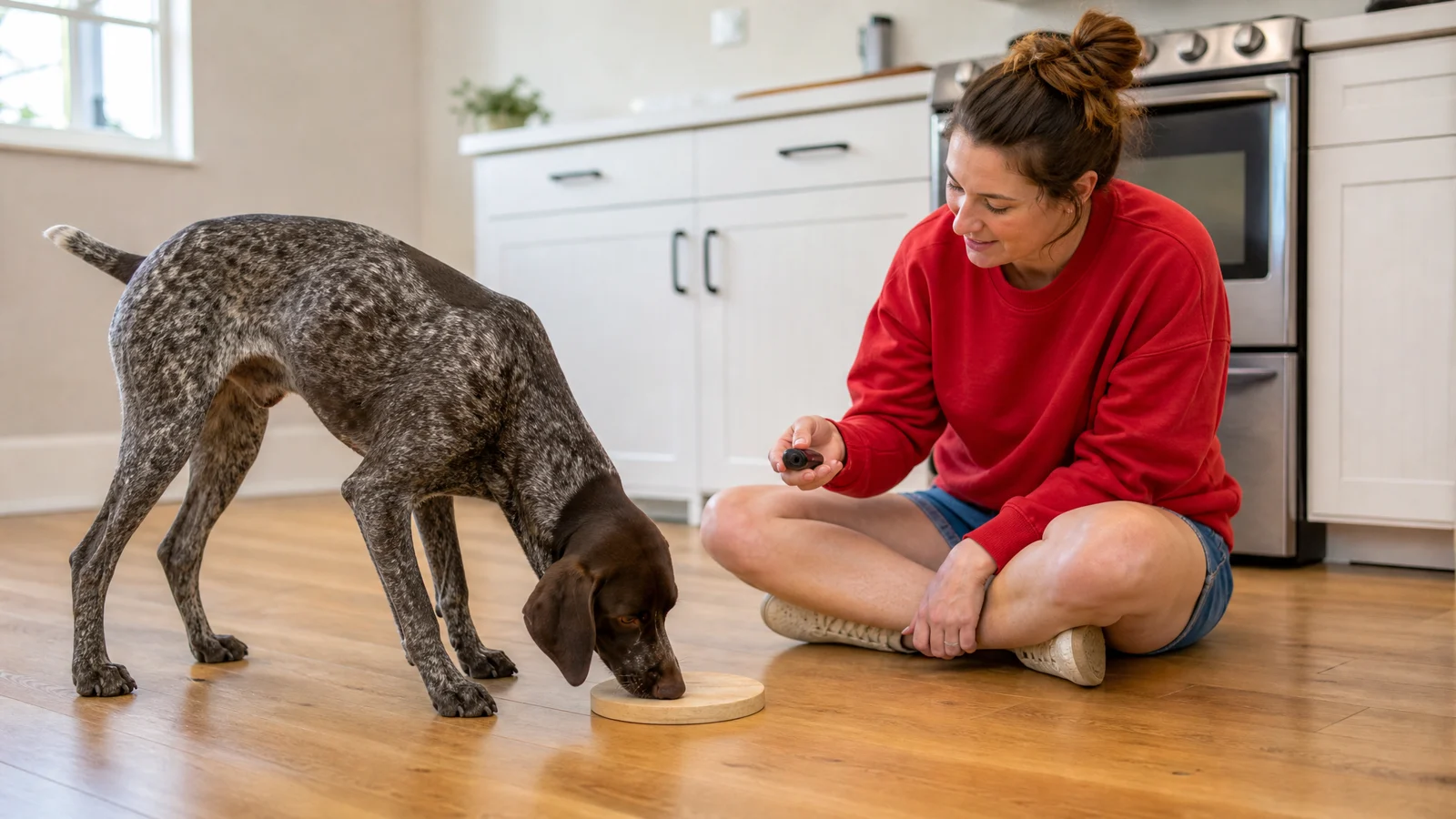 Training basicsClicker Training a German Shorthaired Pointer
