 GSP
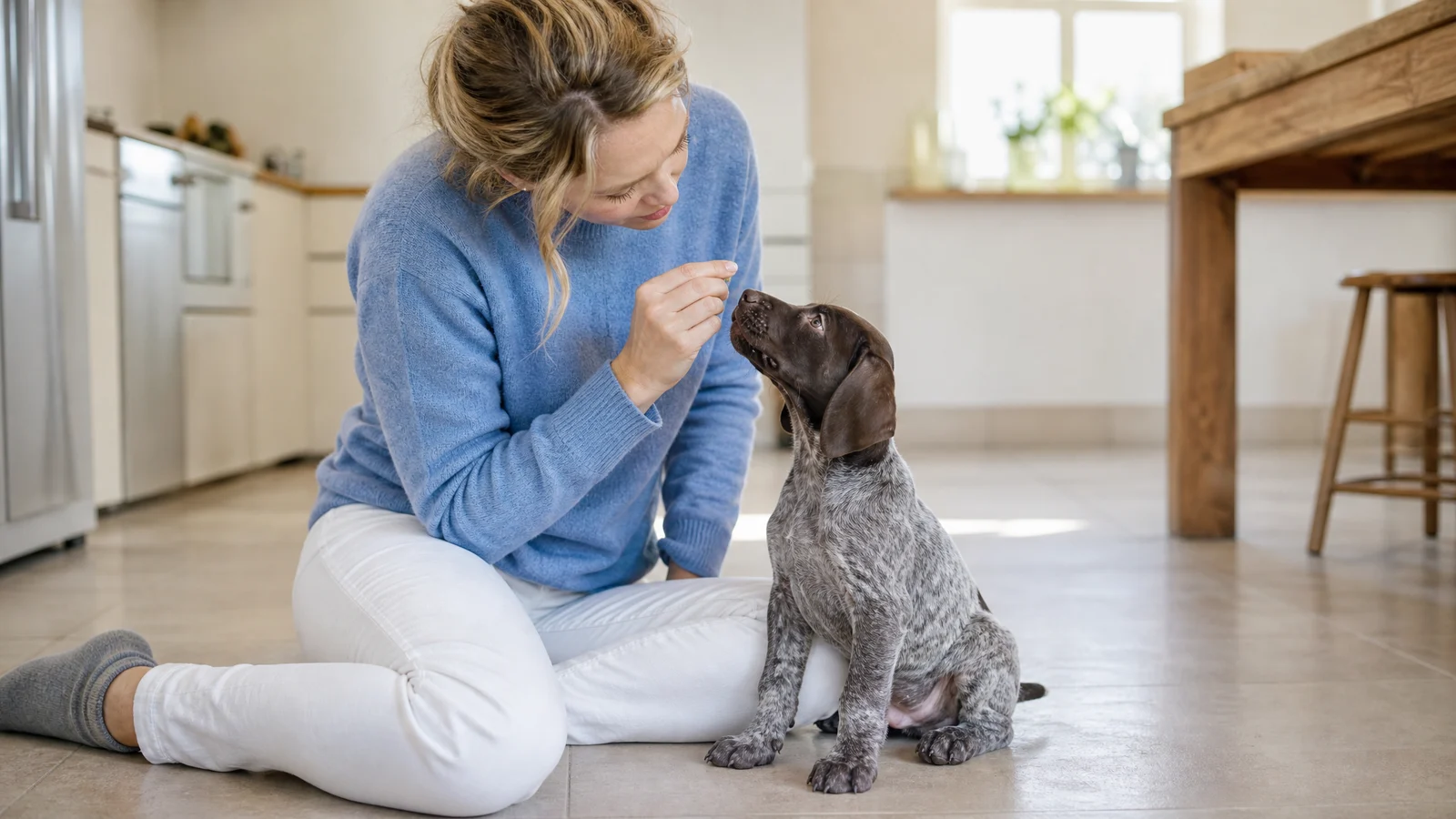
Two mistakes cost new owners the most with a German Shorthaired Pointer puppy. The way between them is to begin on arrival and keep each lesson small, which is easier than it sounds.
Pile on cues in the first week and the puppy is tired of listening before learning anything. Wait for the energy to settle and a dog who needs a purpose will invent one, usually at the expense of your shoes and your patience. Below you'll find how to set up the first week, four small lessons worth teaching right away, how to introduce the world safely, and what a good puppy class does for a busy GSP.
Why Puppy Training Can Start the Day You Arrive Home
Small is not the same as slow, and a GSP puppy shows the difference quickly. The breed is described as friendly, smart and willing to please, and a puppy of that kind forms strong bonds with the people at home, kids included. That means your puppy is already watching you from the first evening, so there is nothing to wait for.
What makes the early weeks tricky is the other half of the portrait: very high energy and a need for something useful to do. A GSP with no purpose tends to find one, and the results are seldom welcome. Starting at once gives that energy a route into learning, with you as the source of every good thing, instead of leaving the puppy to design a hobby.
Why Waiting Costs More Than Starting
You may hear that formal training can wait for an older dog. For a GSP that gets it backwards, because the harder, more headstrong stretch comes later, and the habits set in puppyhood are what you will lean on then. Our guide to the teen months shows what that stretch asks of you.
As GSP people, we would rather you spend a few minutes on something rewarding today than plan a perfect program for next month. The first steps need only a handful of small treats, a quiet room and a puppy who has napped. The GSP puppy timeline places each later stage, and the GSP temperament guide goes deeper on what makes this dog tick.
Setting Up a German Shorthaired Pointer Puppy's First Week
Starting at once begins with the house, since a puppy who is set up well makes fewer mistakes for you to untangle. A few decisions belong to the whole household before the puppy arrives, because rules are far easier to begin with than to take back. These are the choices worth making before day one, each with the reason that makes it stick:
- Which rooms and furniture are open to the puppy. Whatever you allow in week one becomes what an athletic, growing dog expects in month six, so choose rules you will still want to live with.
- Where the toilet spot is. Walk the puppy there first when they arrive, so the earliest lesson about outdoors is where going pays. The full routine lives in our potty training guide.
- A small starting area. The whole house on day one can overwhelm a new puppy, while a gated kitchen or one room with a bed, water and toys keeps the world at a size a young brain can handle.
- A place to rest. Young puppies sleep a great deal, and an overtired puppy is wild company, so a bed or crate in a quiet corner protects the naps your training depends on. Our GSP crate guide covers the setup.
- What the puppy may chew. A basket of safe chews within reach means the answer to a mouthy moment is always yes to something, and the choices are covered in our chew toy ideas.
Where Mouthing Fits in the First Week
Settled early, these five choices make every later lesson easier to read, because the puppy's surroundings stop sending mixed messages. Sharp little teeth will test the rules too. Playful mouthing is normal for a young puppy, and the method for it deserves its own page, so here we only promise that the answer is always a better thing to chew and never a scare.
Puppy Obedience Training in Minutes, Not Hours
With the house ready, the question becomes what the first minutes of teaching should hold. Minutes suit this puppy for a plain reason: a keen GSP will happily keep going long after the learning has stopped, and that is how a good session turns sloppy. Stopping early leaves the puppy wanting the next one.
That pattern matches the guidance in PetMD's puppy training guide, which treats the day a puppy comes home as the day training can begin: sessions of about five minutes each for a basic cue, a daily total you try to keep to no more than 15 minutes, and a finish on a positive note so the puppy is excited for the next session.
Four Lessons for the First Weeks
Four lessons cover most of what a new puppy needs in the first weeks. Each takes a few treats and a quiet room, and none needs more than a minute or two:
- Name check-in. Say the puppy's name once in a happy voice, and the moment the puppy looks at you, say a bright yes and hand over a treat. You are teaching that the name means good things are coming, which is the root of every later cue. If the puppy ignores you, wait a moment instead of repeating the name.
- Hands are good news is the second lesson: rest a hand on the puppy's chest or shoulder for a second while a treat is eaten, then lift it away. Starting where most dogs like to be touched keeps the lesson pleasant, and ears, paws and the collar can follow slowly, so the dog who grows up is easy to groom, examine and carry.
- Lure a sit: hold a treat just above the puppy's nose and glide it slowly back over the head. As the nose lifts, the rear lowers, so mark the instant it touches the floor and pay at once. Add a word only after the puppy folds into the sit without help, because a word attached too early means nothing yet.
- A Pause Before the Bowl: ask for a sit before the food goes down, then release the puppy to eat with a cheerful word. It is the easiest way to teach waiting, because the reward is already in your hands and the puppy has every reason to try.
Finishing Each Session Well
Run them in any order, and stop while the puppy is still keen, since four small lessons that end well teach more than one long session that ends in a tired scramble. We lean toward finishing with a few seconds of play, because a breed that loves play and attention takes the end of a lesson as good news too.
Puppy Socialization for a German Shorthaired Pointer at Home
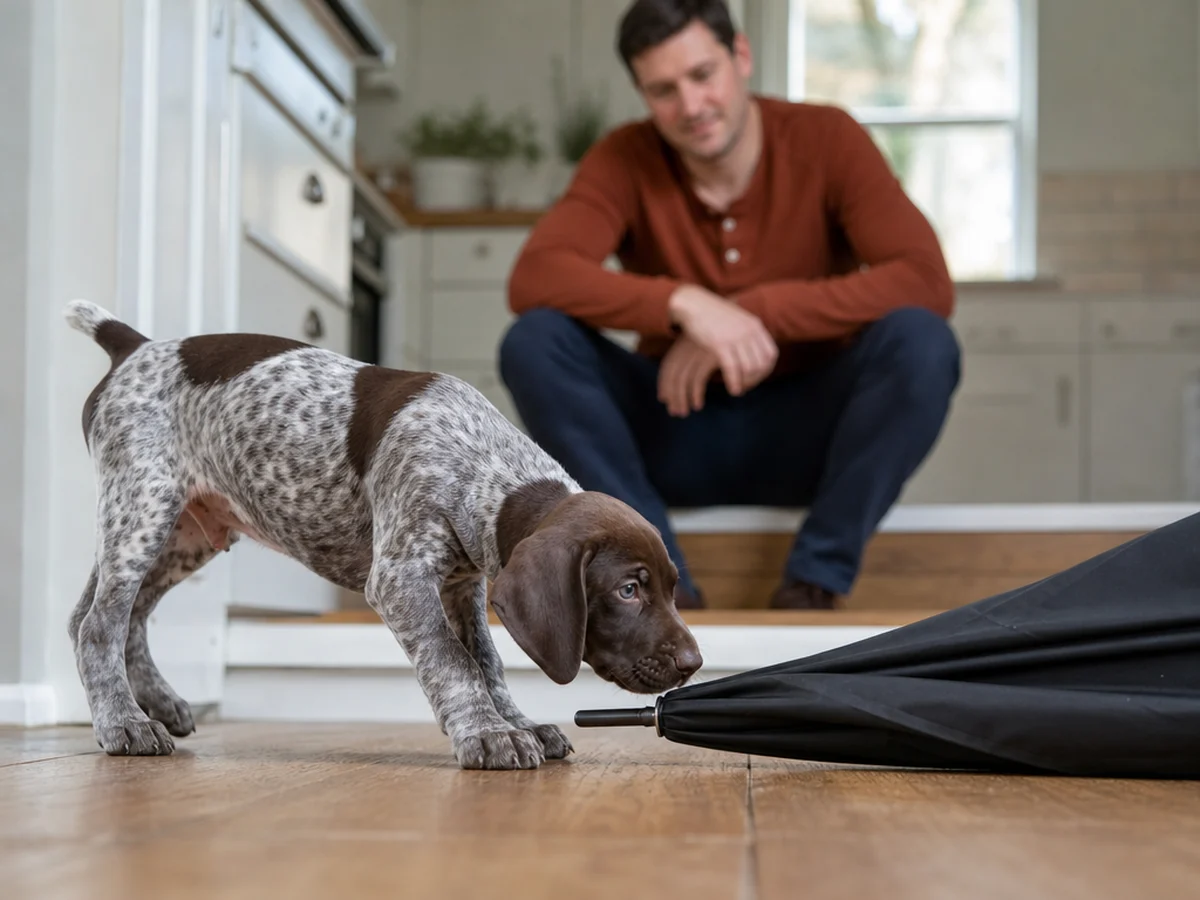
Lessons teach a puppy what to do, while socialization teaches what the world is like, and it works against a clock. Texas A&M's veterinary school describes the socialization stage as lasting between 3 and 12 weeks of age, when positive experiences help a puppy gain confidence. Until your vet says the shots are complete, the safer plan is to skip dog parks and pet supply stores in favor of a backyard or a friend's yard.
A puppy who arrives at eight weeks has only a few of those weeks left, so begin at home right away. Nothing on the list below needs a trip anywhere.
What to Introduce First
Start with what your household already holds: kitchen noise, the vacuum at a distance, a brush, a leash lying on the floor, a carrier and a short ride in the car. Pair each new thing with a treat, and invite a few friendly adults to sit down and let the puppy come to them. A puppy can also watch the neighborhood go by from your arms or from a blanket in the yard, which widens the world without the risks of a crowded place.
Letting the Puppy Say When
A friendly breed can still be overwhelmed, so let the puppy set the pace. Reward calm curiosity, let the puppy walk away from anything that feels like too much, and end each meeting while it is still going well. Our GSP socializing guide covers kids, other dogs and strangers in detail. If a puppy seems fearful rather than just cautious, mention it to your vet, who can guide what to do next.
Puppy Training Classes That Suit a Busy GSP
Home introductions eventually run out of new faces, and that is where a class earns its place. A GSP's friendly, social nature makes class a natural next step, and early training, socialization and puppy classes all suit the breed. A class gives a busy puppy something a household cannot: other puppies and unfamiliar people in a setting built for it, with someone watching who can spot trouble early.
Know what the class is for before you enroll. VCA's description of puppy socialization classes makes the aim clear: introducing a puppy to other animals and people in a safe environment, rather than drilling obedience or new tricks. That means a class can be a good fit even when your puppy has not mastered a single cue. Look for a positive reinforcement-based class in a space that is easy to disinfect, preferably indoors.
Before signing up, watch a session from the side. Treats and praise should be doing the work, puppies should be allowed to take breaks, and the instructor should be glad to talk about handling a high-energy dog. Regular vet visits are part of this plan anyway, so ask there when your puppy is ready to start and which classes the clinic trusts.
Smaller Worries in a Puppy's First Weeks
Three situations put this plan to work almost at once, and each deserves a straight answer. None of them changes the basics; each only changes where and how you apply them.
Can visitors pick up my puppy?
Hold off until the puppy shows they enjoy it. Ask guests to sit on the floor and let the puppy come to them, with a treat in hand, so the puppy chooses each meeting and can walk away. Keep the lifting for yourself, since you can read the wriggle that says enough.
Is my puppy too old to begin?
Probably not. Learning does not stop when the early socialization stretch closes, so start the small lessons and gentle introductions today at the puppy's current pace. If an older puppy seems fearful of people, objects or places, mention it to your vet before adding any pressure.
Why does my puppy follow me everywhere?
GSPs bond firmly to their families, and a shadowing puppy is that bond on display. It is lovely, and it also helps to practice short stretches apart while you are home, such as a gated room with a chew while you work nearby. The crate guide above covers alone-time practice step by step.
A German Shorthaired Pointer Puppy Who Pauses at Doors
Of everything on this page, the pause before the bowl is the lesson worth carrying to the door. A GSP is quick, curious and full of energy, and the moment a door opens is when those qualities can put a young dog in the street before anyone has said a word.
So treat every threshold, from the front door to the gate to the car door, as a place where sitting still earns the way forward. Ask for the same sit you taught at the bowl, wait a beat, and release with the same cheerful word before the puppy goes through. The pause costs seconds and builds a habit in the one spot where a keen dog's safety is decided.
A puppy who waits at the door has taken the first of many steps, and our free e-book, open to anyone who registers here, follows a GSP's training from these puppy weeks into adulthood, with every need covered and every explanation easy to grasp.
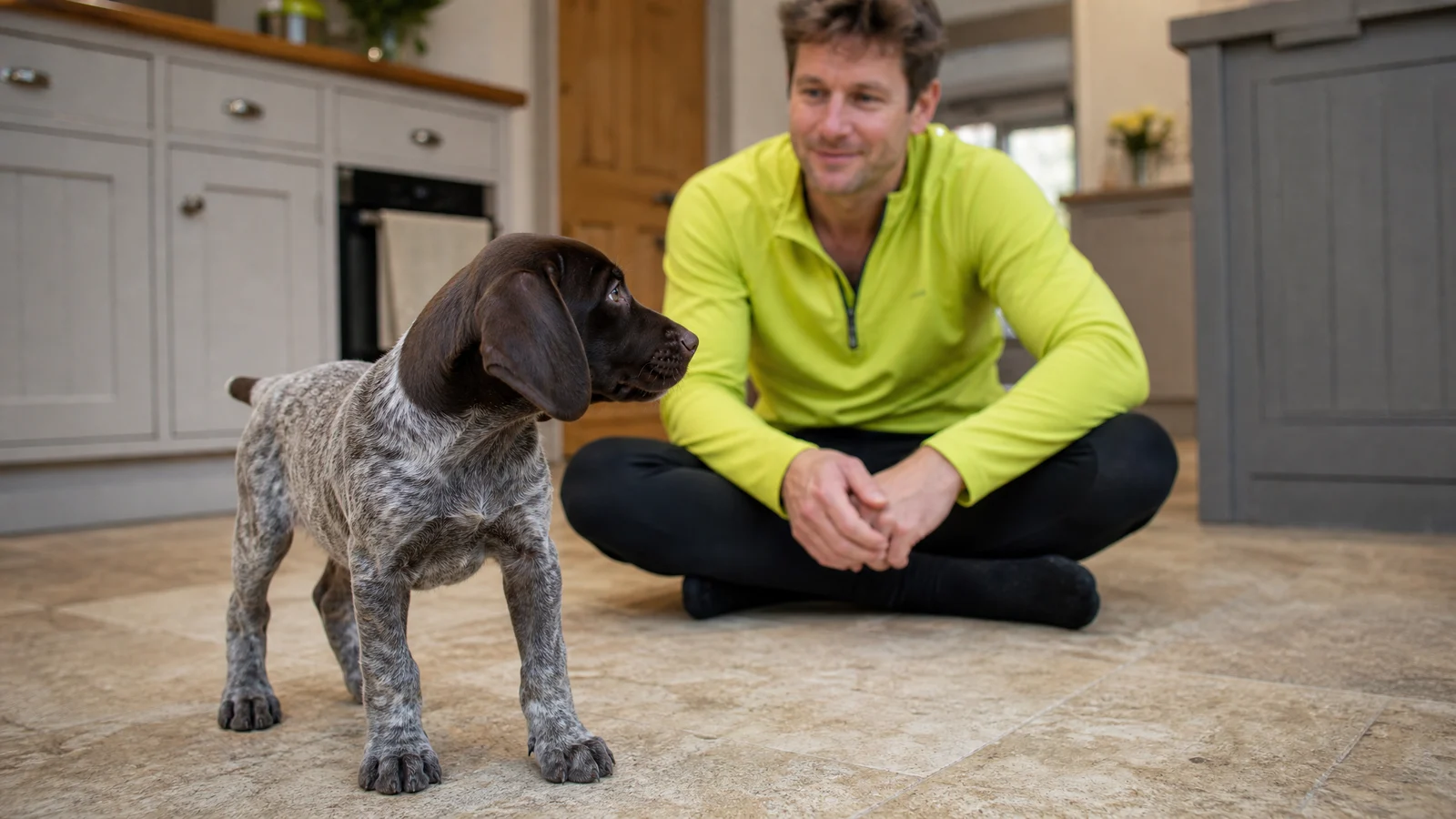 Puppy trainingGerman Shorthaired Pointer at 8 to 12 Weeks: First Steps
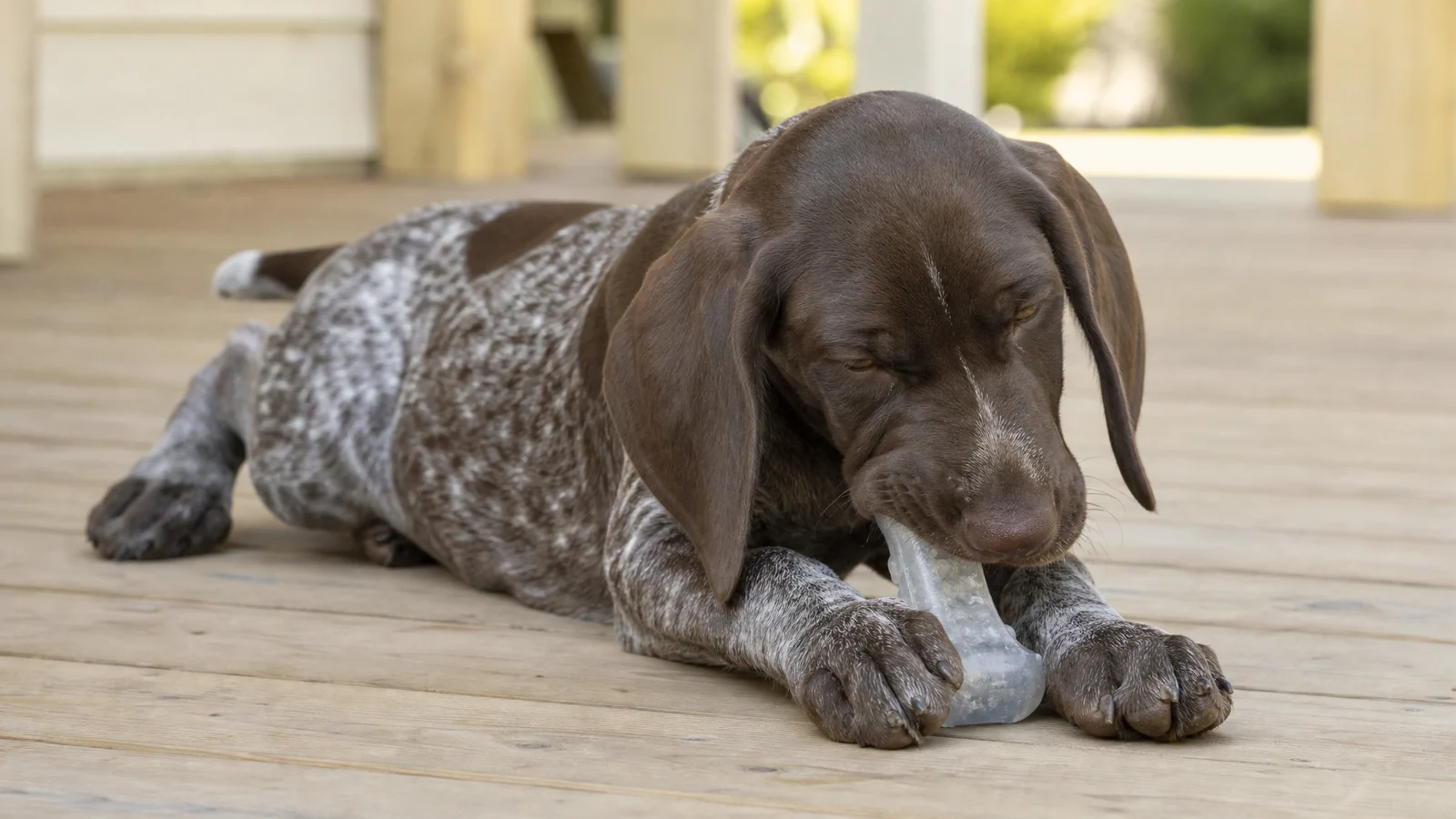 Puppy trainingGerman Shorthaired Pointer at 3 to 4 Months: Teething and Training
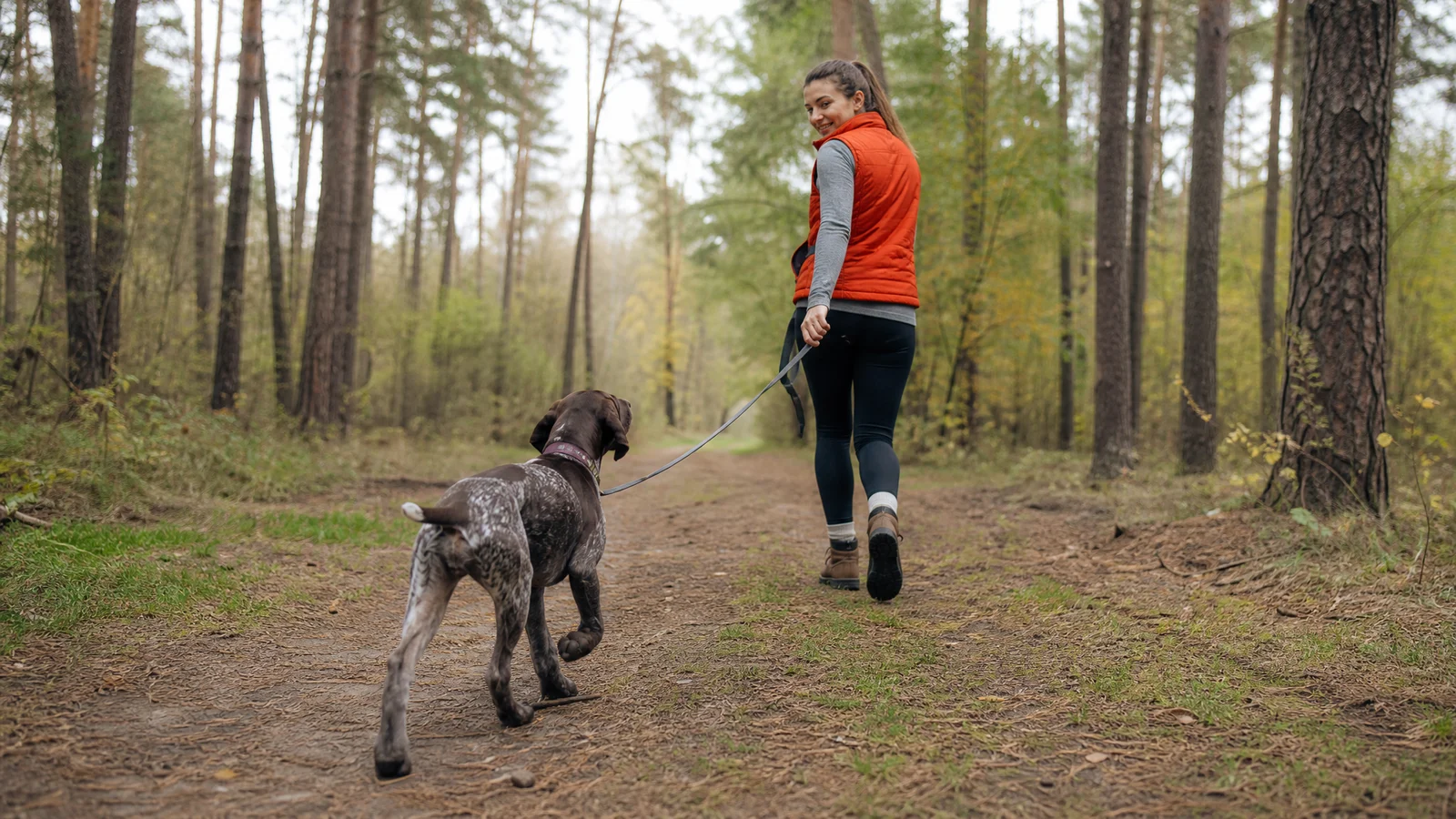 Puppy trainingGerman Shorthaired Pointer Puppy at 4 to 6 Months: What Changes
