 GSP
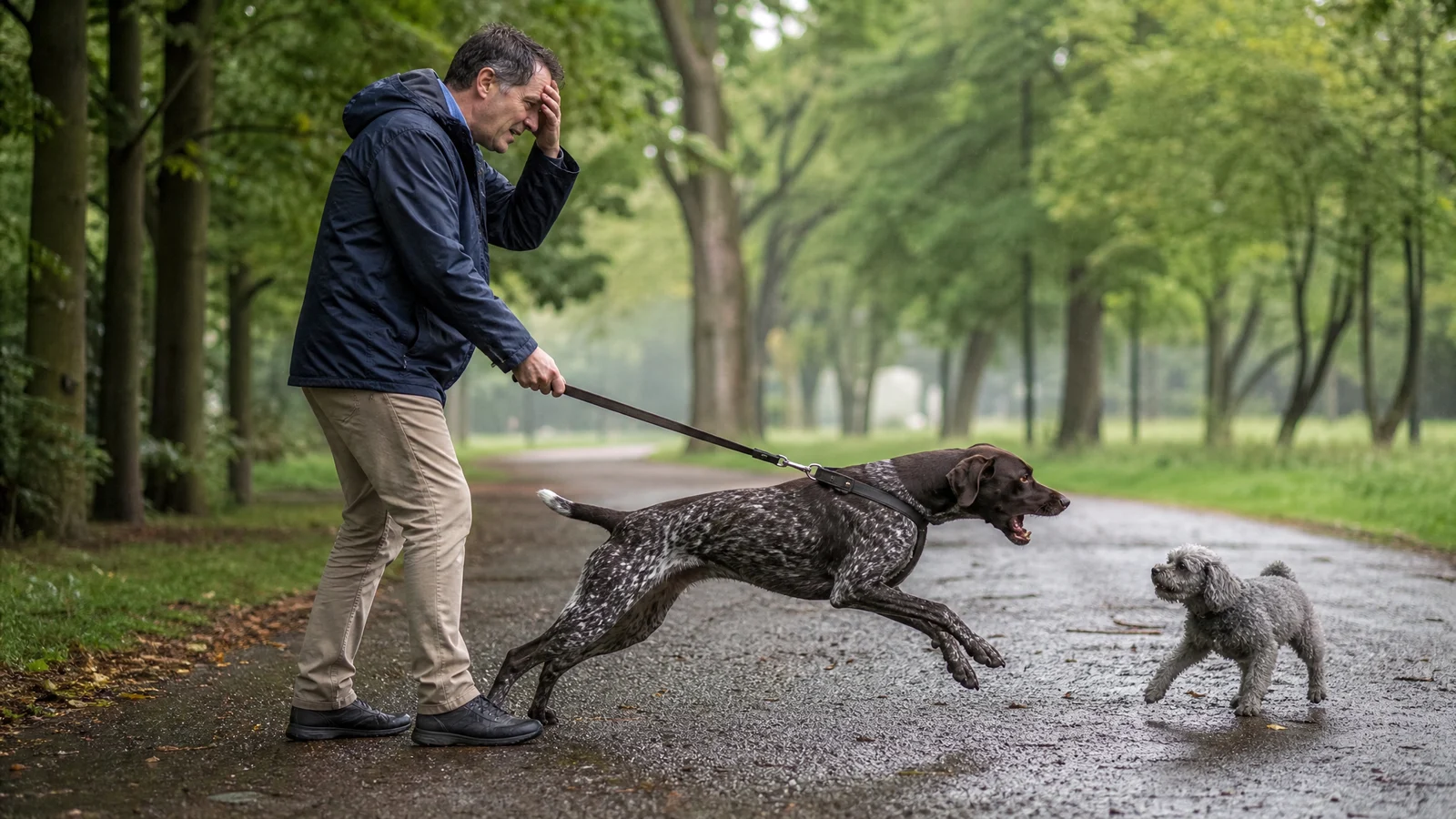
A leash lunge takes about a second, which is why it feels impossible to do anything about it. The help lives in the moments just before, while your German Shorthaired Pointer is still noticing the other dog, the bike or the stranger and has not yet decided what to do about it.
Below, you will find why a friendly, keen dog still reacts on leash, how to learn the distance where your GSP can think, and how to plan walks, teach a quick U-turn and practice slowly. We also cover when to bring in help, and answers to three everyday snags.
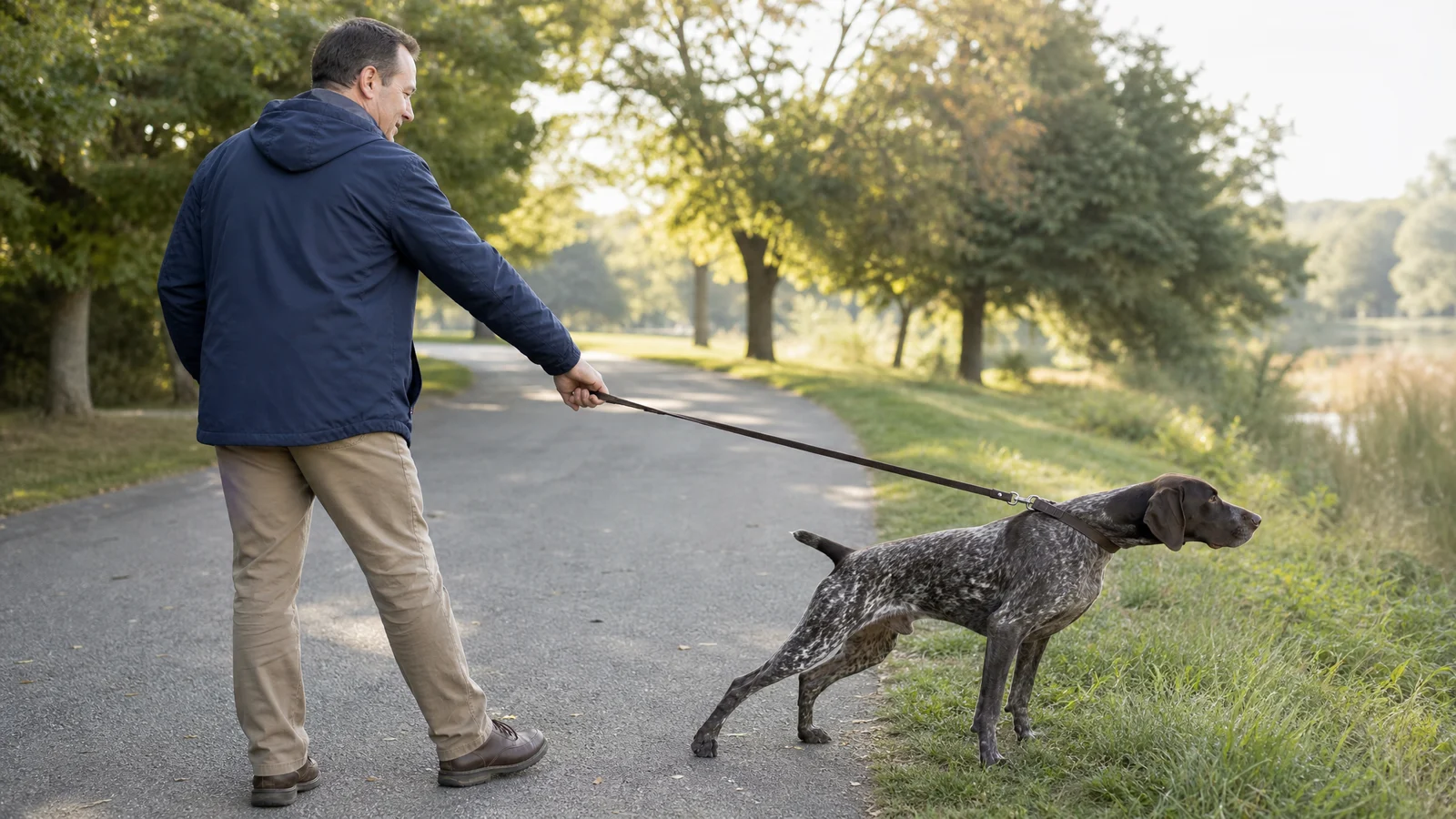
Ordinary pulling is a separate problem with its own fixes, which our GSP leash training guide walks through, so this page stays with dogs who bark, lunge or freeze when something appears.
Why German Shorthaired Pointer Reactivity on Leash Happens
Start with what the lunge does for your dog, because the answer decides everything else you try. At home a GSP is the friendly, intelligent, willing dog you know, and that is the dog you expected to meet on the sidewalk.
Then add the leash. This breed has very high energy and a strong prey drive, so movement is hard to ignore, and a strong body at the end of a short line turns a small reaction into a real event. Under the noise there can be worry, frustration or plain overexcitement, and from the outside those can look almost the same.
You do not need to know which one you are looking at to begin. What matters is the result they share. When the trigger moves on, or you retreat, the barking and lunging appear to have worked, and a behavior that works gets repeated. This page is built to interrupt that cycle by changing what your dog does before the reaction and what pays off when they manage it.
Finding the Distance Where Your Dog Can Still Think
If the lunge works because the trigger leaves, the first change is giving your dog the same relief without the explosion, and that starts with a number you find by watching. Think of it as your dog's threshold: the distance at which they can notice a trigger and still take a treat, still turn their head back to you and still move on.
Closer than that, your GSP stiffens, stares and stops eating, and nothing you ask gets through. The number is not fixed. It shrinks when your dog is tired, excited or fresh from a hard encounter, and it stretches on easy days. Our trainers treat the first outing as a measuring walk instead of a lesson: stay well back, watch what your dog does as another dog comes into view, and note where easy looking turns into staring.
Early Signs Your GSP Is Near the Limit
The reaction itself arrives late, and the earlier signals are what give you time to act. These are worth learning to spot at a glance:
- A sudden stillness: the easy trot stops and your dog's whole body locks onto the trigger.
- A hard stare: your GSP keeps looking at the trigger and cannot look away when you call.
- A refused treat: a dog who was eating happily a minute ago and now walks past food is telling you the distance is too short.
- A stiff body and closed mouth: the loose, wiggly walk turns tight, sometimes with raised fur along the back.
Any one of these is your cue to add distance right away, while your GSP can still walk away with you, rather than after the first bark. Acting this early also means you never have to untangle a full reaction on a short leash.
Choosing Walks for a Reactive German Shorthaired Pointer
Once you know your dog's distance, the cheapest way to protect it is to choose where and when you walk, since each lunge your GSP repeats makes the next one easier. Cornell's veterinary college describes a reactive dog as usually a fearful dog, and the advice that follows is to walk when other dogs are out of sight, skip the dog park, and remember that your dog does not have to be friends with every dog.
For a sociable breed that can feel backwards, but a dog who is stressed on leash is not helped by meeting everyone. Greetings are not part of this plan, and a calm walk past counts as a good outcome.
Pick routes with long sightlines and room to turn, such as wide paths, open fields and streets where a parked car can screen your dog from a passing one. Quieter hours help, and so does keeping outings short while you learn your dog's limits.
None of this means going without exercise, and a GSP will not accept that anyway. A dog-free outlet does the job: a long line in an empty field, fetch in a fenced yard, or nose games at home. Our GSP sniff walks guide shows how to build one from a quiet stretch.
Teaching a Reactive GSP a Quick U-Turn
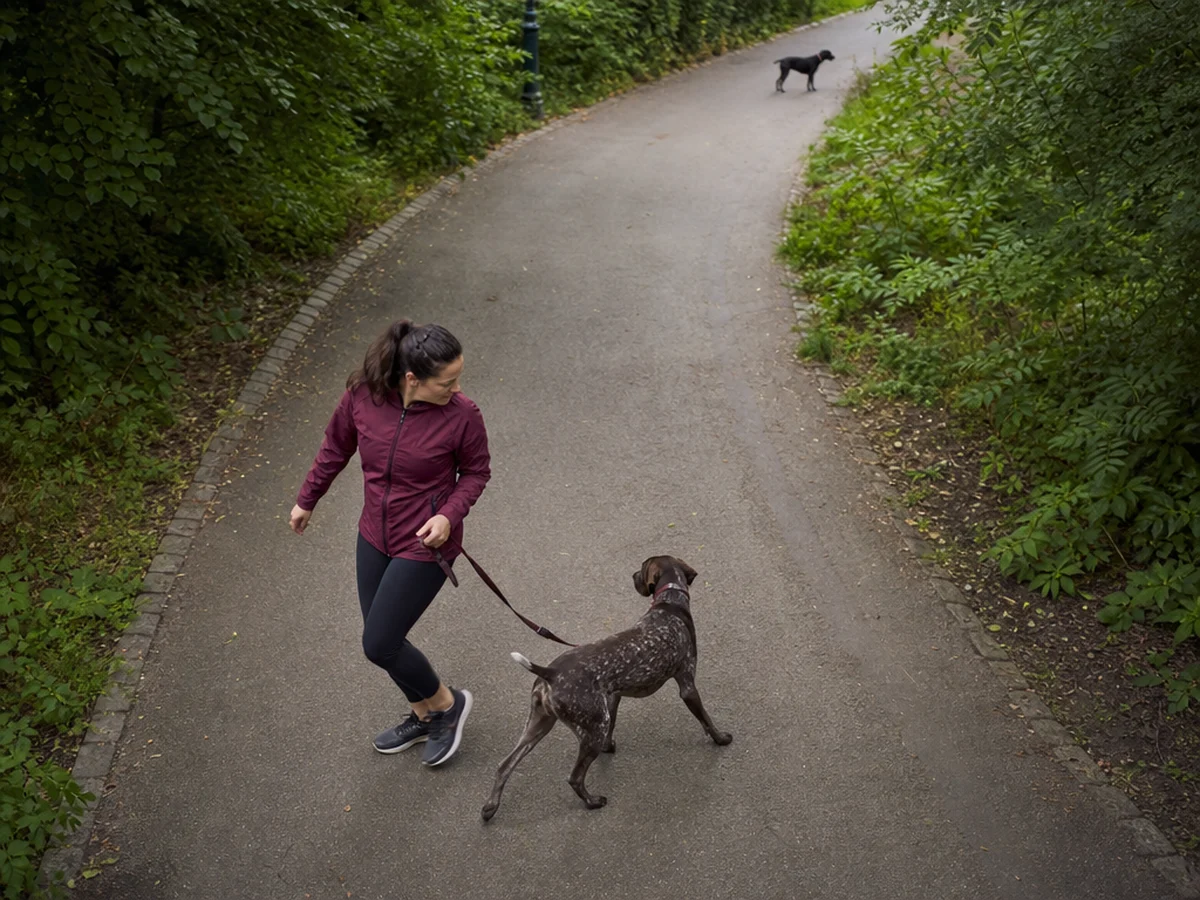
Even with careful routes, a dog sometimes appears around a corner, so you need an exit your GSP already knows. A U-turn is a quick about-face in the opposite direction with your dog following you away from the trigger. It only works in the moment if you taught it when nothing was bothering your dog, so it begins in the kitchen or a quiet yard with no other dogs in sight.
Five small steps teach it. Keep each repetition brief and easy, so your GSP succeeds almost every time:
- Stand with your dog on leash and pick a cheerful cue, such as "this way." Say it once in a light, happy voice.
- Turn away from your dog, not into them, and step off briskly, patting your leg so your GSP has something to follow.
- The moment your dog swings around and comes with you, mark it with a bright "yes" and give a treat beside your leg.
- Repeat in the yard, on your usual route and along a quiet sidewalk, still with no other dogs around, until your GSP spins with you almost as you finish the cue.
- Walk a few steps farther before you pay, so the reward comes after a short walk away from the spot where you turned.
On a real walk, say the cue at the first early sign, keep your voice light and keep walking until your dog can take a treat again. If your GSP is already stuck and staring, add distance first, because the cue only helps while your dog can still hear you.
Slow Training for a Leash Reactive German Shorthaired Pointer
Management and the U-turn keep your dog out of trouble, and training is how your GSP learns something new about what other dogs and people mean. In the Wisconsin Humane Society's step-by-step leash reactivity guide, you move closer to a trigger only a few feet at a time, check your dog's comfort at each distance and back away if your dog becomes stressed or reactive. It may be many weeks or months before your dog has the skills to work close to other dogs on leash.
That slow clock is the point: your GSP learns best at a distance where the work feels easy. Plan on starting far back and being patient about moving in.
One Practice Session, Start to Finish
Choose a spot where your dog will see other dogs but not be approached by them, such as the edge of a big parking lot or a wide park, and bring treats your dog loves. Then work through these steps:
- Stand well outside your dog's threshold, where your GSP can see a dog and is unlikely to react.
- The moment your dog notices the trigger, and before any reaction, start feeding. Dog first, treat second, so the sight of the dog predicts the food.
- Keep the treats coming steadily until the other dog leaves your dog's view or you walk away together.
- When your GSP looks at the trigger and then glances back at you, mark that glance and pay it.
- End while your dog is still relaxed and eating readily. Short sessions beat long ones.
- Move closer only after the work has felt easy at one distance, and only by a little.
If your dog stops taking food, you have gone past their limit. Add distance, take a break and start again at an easier spot. Backing up counts as progress in this plan, not a setback.
Adding a Calm Helper Dog
Once your GSP is relaxed at a distance while strange dogs pass, a helper makes practice easier to control. Ask a friend with a calm, steady dog to walk across the street or field while you feed your GSP. Have your friend edge a little closer only while your dog stays relaxed, and move back if your dog gets stressed. Tell the friend that hellos are not the goal, so the two dogs never meet face to face.
When Reactivity Needs More Than Home Practice
Home practice has limits, and knowing them keeps everyone safe while the work goes on. Mention any sudden change in how your GSP reacts at regular veterinary visits, because a change in behavior can have a physical cause that only a vet can rule out.
The reactive-dog article on the Fear Free site reaches the same place from the safety side: if there is a safety concern for you, your dog, other animals or other people, avoid walking your dog and contact a qualified behavior specialist, such as a board-certified veterinary behaviorist.
If your GSP has ever bitten or snapped at someone, start with a professional rather than the steps above. Look for someone who uses rewards, and who will watch you and your dog on a real walk so the plan fits your streets, not a generic one.
Reactive Walk Questions From GSP Owners
Three details tend to decide whether this plan fits a real neighborhood: triggers other than dogs, people who want to say hello, and how long the changes last. Each answer builds on the steps above instead of repeating them.
Does this work for bikes and joggers?
The plan is the same for any trigger: find the distance, pay for noticing and practice the U-turn. Each trigger gets its own distance, though, and a GSP who passes dogs calmly may still lunge at a jogger, because fast movement is hard for a high-energy dog with a strong prey drive to ignore. Start every new trigger farther back than you expect.
What if a stranger wants to pet my GSP?
You can simply say no, thank you. A clear line such as "we're in training" is enough, and your dog does not have to meet anyone. Step to the side so you stand between your dog and the person, and pay your GSP for staying calm.
Will my GSP outgrow it?
Do not count on it. A reaction that gets rehearsed tends to strengthen, while one met with distance and rewards can ease, and the adolescent stretch is the hardest one for this breed. Keep the plan steady through it, and see our teen months guide for how to pace the rest of training.
A Good Day for a Reactive Dog Skips the Hardest Street
The answers above all point the same way: your GSP gains more from a quiet outing that goes well than from a long one with a hard street in the middle. A walk you skip is not a day lost.
A dog with this much energy gets tired in other ways, through fetch in a fenced yard, nose games at home or open ground with nobody else on it, so skipping a crowded route costs your dog nothing they cannot get elsewhere. That leaves your effort for the places where practice can work.
Steady walks are a good start, and we will email you our complimentary e-book after you sign up, so every other part of your GSP's training has a clear, thorough guide as well.
 BehaviorHow to Stop a German Shorthaired Pointer Pulling on the Leash
 Exercise and jobsEasy Tricks to Teach a German Shorthaired Pointer
 Exercise and jobsHow to Teach a German Shorthaired Pointer to Shake and High Five
